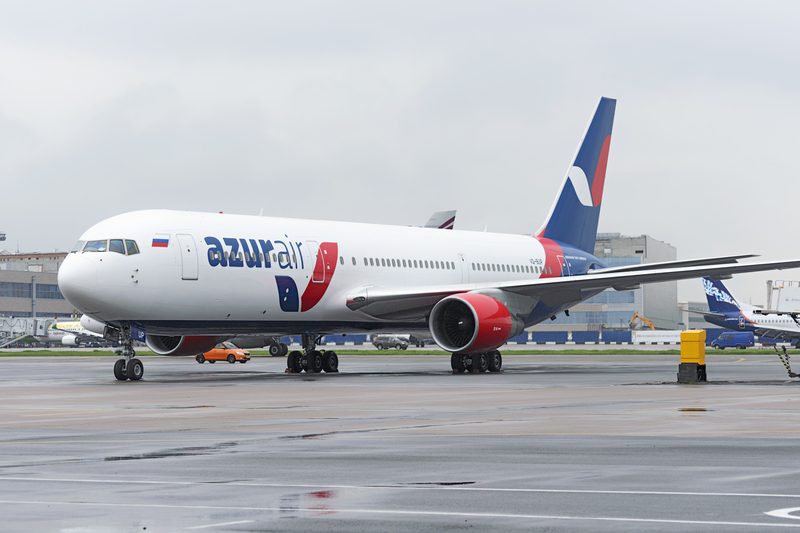
Azur Air has been placed under operational restrictions by Russia’s air transport regulator after an unscheduled inspection triggered by persistent delays, cancellations, technical issues, and complaints over passenger treatment. The measures run through June 8 and come with an unusually stark warning: if the airline does not correct the identified problems by then, Rosaviatsia says its air operator’s certificate could be revoked.

For a leisure carrier, that is about as serious as regulatory pressure gets without an outright grounding.
This is not just a paperwork dispute or a routine oversight finding. It is a case where the regulator has effectively said the airline must prove, within a fixed window, that it can stabilize operations, improve oversight, and restore confidence in the condition and management of its fleet.
Read our stories in your inbox
Two aviation newsletters. Zero fluff.
The Regulator Is Targeting Reliability And Safety At The Same Time
The inspection, carried out from February 19 to March 5, focused on several areas that go to the core of airline credibility: the condition of the fleet, compliance with mandatory maintenance and flight-preparation requirements, the handling of operational disruptions, and the way passengers were treated when flights fell apart.
That combination matters.

Sometimes a regulator acts because an airline is commercially messy but technically sound. Sometimes it acts because of a narrower technical concern. Here, the picture appears broader. Rosaviatsia is linking the airline’s recent operational disorder with questions about airworthiness management, maintenance discipline, and flight safety processes.
For an airline audience, that is the key takeaway. This is not being framed merely as poor punctuality. It is being framed as disruption serious enough to warrant a wider look at how the airline is being run.
Azur Air Has Been Given Time — But Not Much Latitude
Rosaviatsia is not grounding Azur Air immediately. Instead, it has imposed restrictions for three months and ordered the carrier to produce a clear corrective plan.
That is a very Russian-style regulatory middle ground: keep the airline operating, but under visible pressure, with a hard deadline and the threat of certificate loss hanging over management.

The regulator says Azur Air must improve flight safety “in the shortest possible time” and conduct a thorough internal audit of its airworthiness and maintenance functions. The airline will also have to reduce its schedule.
That last point is particularly important. When a regulator orders a carrier to trim its program, it is acknowledging that the airline’s current operation may be larger than it can reliably support. In practice, schedule reduction is often one of the fastest ways to ease pressure on aircraft utilization, maintenance windows, spare coverage, and recovery planning.
This Is A Small Fleet, Which Makes Disruption Harder To Absorb
Azur Air’s fleet is not large, and that makes its recent operational instability more damaging.
The carrier operates about a dozen Boeing 767-300ERs and 757-200s, aircraft that remain useful in charter and leisure flying but are older types that require disciplined maintenance planning and robust technical support. In any airline, a small fleet can become operationally fragile when even one or two aircraft fall out of service unexpectedly. In a charter-heavy model, where schedules are often tightly built around holiday demand peaks, that fragility becomes even more visible to passengers.
That helps explain why delays and cancellations can snowball so quickly at airlines like Azur Air. There is less spare capacity, less fleet redundancy, and less room to protect the schedule when technical issues emerge.
The Russian Context Makes Fleet Management More Complicated
Any assessment of a Russian airline’s technical performance in 2026 also has to acknowledge the wider environment.
Russian carriers have been operating under prolonged supply-chain strain, sanctions-related parts constraints, and a maintenance environment that is far more complicated than it was before 2022. That does not excuse reliability failures or passenger-rights problems, but it does provide context for why older Boeing fleets in Russia are under such pressure.
For Azur Air, that pressure appears to have translated into a very public breakdown in schedule performance. Once that happens repeatedly, the regulator has little choice but to step in more forcefully, especially if it believes the causes go beyond isolated incidents.
Azur Air Is Pushing Back On The Severity
The airline, unsurprisingly, is trying to limit the damage.
Azur Air says it will promptly prepare a remedial plan and provide the regulator with detailed evidence of implementation. It also argues that its punctuality at the end of last year exceeded 90% and that the poor performance seen in the opening weeks of 2026 was caused by “a series of unrelated aviation events.”
That defense is understandable, but it has limits.
When a regulator imposes a three-month restriction window and explicitly threatens the AOC, it is signaling that it does not view the airline’s recent problems as random noise. It sees a pattern serious enough to require outside correction. So while Azur Air may be right that not every incident had a common root cause, the regulatory issue now is cumulative confidence, not just the explanation for one or two individual disruptions.
The Most Interesting Question Is What “Restrictions” Really Mean Operationally
One point worth handling carefully is the nature of the restrictions themselves.
Public reporting confirms that Rosaviatsia has limited Azur Air’s activities for three months and required a schedule reduction, but the regulator has not publicly spelled out every operational parameter in the same way some Western authorities might. That means the practical impact will likely be seen through the airline’s schedule behavior: fewer flights, more conservative planning, and closer scrutiny from supervisory bodies.
That ambiguity matters because Azur Air has claimed the restrictions will not affect its schedule and that passenger obligations continue to be met in full. That sounds optimistic, especially given the regulator’s explicit requirement to reduce operations. The truth will likely sit somewhere in the middle: the airline may keep flying broadly as planned in public-facing terms, but with internal constraints, extra oversight, and lower tolerance for dispatch risk.
This Is Now A Credibility Test For Management
The regulator has informed Azur Air chief Evgeny Korolev directly and demanded a clear plan to fix the problems.
That makes this not just an airline issue, but a management test.
The next three months will show whether Azur Air can convince Rosaviatsia that it still has operational control of its fleet and business. If the airline delivers a credible maintenance and safety remediation effort, trims its flying realistically, and stabilizes performance, the pressure may ease. If not, the threat to the AOC becomes far more than theoretical.
For any airline, certificate risk is existential. For a leisure carrier with a relatively small fleet and a reputation already under strain, it is even more so.
Bottom Line
Azur Air has entered a critical three-month window after Rosaviatsia imposed restrictions following an unscheduled inspection into delays, cancellations, technical issues, and passenger handling.
The airline has until June 8 to satisfy the regulator that it has corrected the identified problems. It has been ordered to reduce its schedule, improve flight safety quickly, and conduct a thorough internal audit of airworthiness and maintenance. If it fails, Rosaviatsia says the carrier’s air operator’s certificate could be revoked.
For aviation readers, the bigger story is not simply that Azur Air has been reprimanded. It is that Russia’s regulator now appears to view the airline’s recent disruption as serious enough to question whether its current operation is being run safely and sustainably. That makes the next few months decisive for the carrier’s future.
Keep reading FlyMag
Get the Daily Brief in the morning or the Route Watch weekly recap on Fridays. Or both.