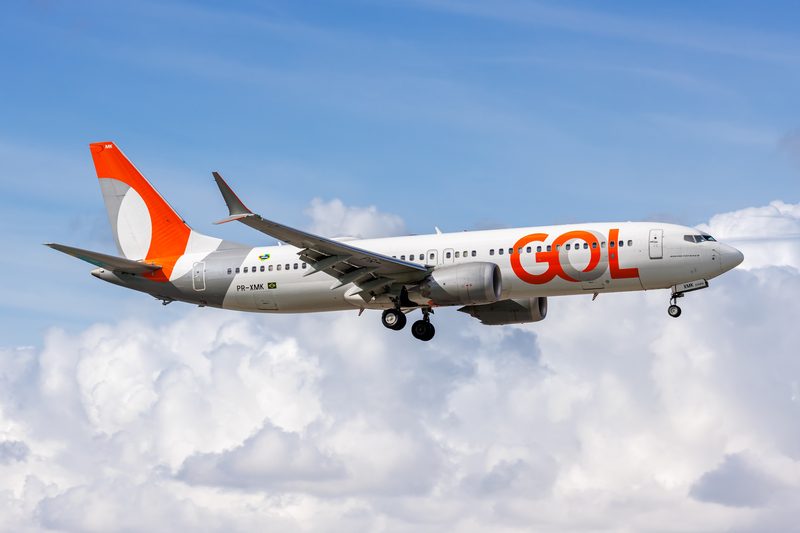
Brazil’s GOL Linhas Aéreas (G3) is about to do something it has never done in its commercial history: operate a true intercontinental passenger route with a widebody.
Beginning July 8, 2026, GOL plans to launch nonstop service between Rio de Janeiro–Galeão (GIG) and New York (JFK), operating three times per week. For an airline that built its entire model on the Boeing 737—high utilization, dense seating, tight turns—crossing the Atlantic from GIG to JFK is less a route launch and more a strategic pivot. It signals a new era where GOL intends to pair its domestic scale with long-haul lift, using widebodies to turn Rio into a meaningful gateway rather than a pure domestic base.
The schedule: a long-haul pattern designed for connectivity on both ends
GOL’s filed timings follow a classic overnight, business-and-leisure-friendly template:
Read our stories in your inbox
Two aviation newsletters. Zero fluff.
-
G3 7000: GIG 21:55 → JFK 06:55 (+1)
-
G3 7001: JFK 23:00 → GIG 09:55 (+1)

That structure matters for airline professionals because it’s not just “nice for passengers.” It’s practical for network design:
-
At GIG, a late-evening departure gives time to pull domestic feed from across Brazil into Rio. That’s key if GOL wants to leverage its internal network to fill an intercontinental flight without relying purely on local Rio–New York traffic.
-
At JFK, a morning arrival lands into the airport’s day-long domestic and international connection availability. Whether GOL sells those connections via interline, codeshare, or separate-ticket behavior, the timing makes onward travel feasible.
-
The late-night return from JFK back to Brazil is also operationally clean: it reduces the risk of missing prime daytime slots at JFK and keeps the widebody productive overnight, arriving into Rio mid-morning for potential onward connectivity and same-day aircraft planning.

The aircraft bridge: Wamos Air A330-200 first, then GOL’s own A330-900neo
The most important part of this story isn’t just that GOL is flying long-haul—it’s how it is getting there.
Phase 1: Wamos Air Airbus A330-200 (A332) as a launch bridge
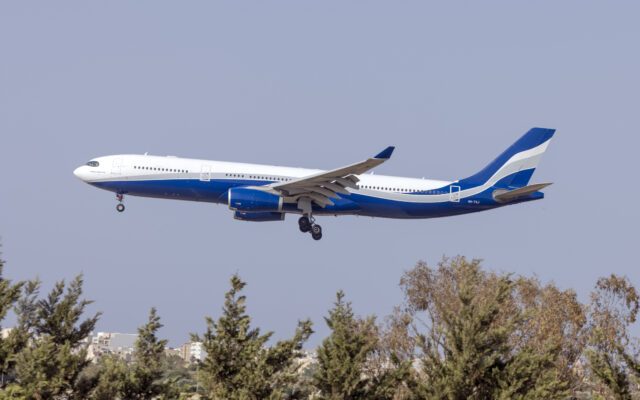
GOL plans to operate the initial GIG–JFK service using an Airbus A330-200 sourced from Wamos Air, a Spanish ACMI/charter operator. This is a common “risk-control” method when an airline enters a new fleet type and a new operating category at the same time.
For operations teams, the Wamos bridge solves several immediate problems:
-
Certification and readiness compression: Introducing a widebody requires training pipelines, manuals, spare parts strategy, tooling, maintenance program approvals, and station handling upgrades. A wet-lease/ACMI-type solution can provide operational capability while the airline builds its own internal muscle.
-
Reliability protection: Long-haul irregular operations are expensive—especially at a foreign outstation. An ACMI operator brings existing widebody experience, which can reduce early teething pains.
-
Commercial launch timing: A route can be sold and established even if the airline’s owned/leased widebody fleet is not yet delivered.
Phase 2: Airbus A330-900neo (A339) becomes the long-term platform
GOL’s longer-term plan is to bring in Airbus A330-900neo widebodies as part of the Abra Group fleet strategy. Five A330-900neos are expected to be positioned with GOL initially, with deliveries spanning 2026–2027, and the aircraft are being framed as the foundation for additional intercontinental routes beyond New York.
The A330-900neo is a very deliberate choice for a first-time widebody operator:
-
Right-sized widebody economics: It can carry meaningful passenger and cargo volume without the trip-cost profile of larger 777-class aircraft.
-
Range headroom: The A330-900neo’s mission envelope comfortably supports Brazil–U.S. East Coast flying and opens credible options to Western Europe.
-
Fleet strategy clarity: Unlike a one-off leased widebody, a planned A330neo subfleet creates a long-term maintenance and crew-training “home” for long-haul operations.
GOL has also signaled that New York is not the endgame. The airline has spoken publicly about adding direct services from Rio (GIG) to Paris (CDG) and Lisbon (LIS) later in 2026, using the new widebody capability to build a broader international portfolio.
Why this route matters: turning Rio (GIG) into a real long-haul gateway
GOL’s decision to base long-haul strategy around GIG is arguably the most consequential part of the announcement.
Brazil’s long-haul gravity has historically skewed toward São Paulo’s Guarulhos (GRU), where corporate demand, connectivity, and alliance presence are deep. For Rio, long-haul viability has often been more cyclical—strong in peak seasons, vulnerable in downturns. GOL is now attempting to change that by anchoring widebody flying at Galeão and feeding it with the airline’s domestic strength.
In network terms, this is the play:
-
Use GOL’s domestic connectivity to aggregate demand into GIG
-
Deploy widebodies where point-to-point demand is strong enough to support a nonstop
-
Grow beyond “single route” status into a repeatable long-haul platform
If it works, GIG benefits as well. A widebody route isn’t just a flight; it’s a magnet for downstream capacity, cargo flows, and airport commercial activity.
Cargo: the quiet economic lever on GIG–JFK
A widebody into JFK isn’t only about passengers. It’s about belly freight.
For carriers launching long-haul, belly cargo often acts as a stabilizer—particularly when passenger demand is seasonal or fare-sensitive. Brazil–U.S. cargo flows include high-value and time-sensitive categories where reliability and direct lift matter, and JFK’s freight ecosystem is deep enough to support consistent throughput.
When a route is new, cargo also has another advantage: it can be contracted, planned, and priced with a different demand curve than leisure passengers. That can help underpin the economics while the passenger market matures.
Operational reality: what changes when a 737 airline starts flying widebodies
For aviation professionals, the interesting question isn’t “can GOL fly to New York?”—it’s “what has to change inside the airline to do it consistently?”
A first long-haul route forces upgrades across areas that short-haul airlines often keep lean:
-
Crew planning and legality: Long-haul pairings, rest rules, and reserve coverage behave differently than domestic duty days.
-
Maintenance posture: Widebodies require different tooling, spares strategy, and line-maintenance agreements at outstations like JFK.
-
Station operations: Widebody turn requirements—catering volume, water/waste servicing, baggage loading systems, and handling equipment—add complexity and cost.
-
Disruption resilience: A single canceled widebody flight can strand hundreds of passengers and disrupt aircraft rotation for days if the fleet is small.
The Wamos A330-200 bridge should reduce early risk, but the real test begins when GOL transitions into operating its own A330-900neo metal at scale.
Competitive positioning: what GOL is really selling on GIG–JFK
GOL is not trying to out-premium legacy long-haul carriers on day one. Its best lever is something else: network utility plus price discipline.
A Rio–New York nonstop gives GOL a clean product to sell:
-
Nonstop convenience (no forced connection via GRU or other gateways)
-
Better schedule utility for many leisure travelers and VFR traffic
-
A “new entrant” pricing story that can stimulate demand if capacity is right-sized
At the same time, GOL will need to prove it can deliver a long-haul experience that doesn’t break the economics. That means balancing ancillary revenue expectations with a service level passengers accept on a 10-hour flight.
Bottom Line
GOL’s planned Rio de Janeiro (GIG)–New York (JFK) nonstop, launching July 8, 2026, is a milestone not just for the airline but for Brazil’s competitive long-haul landscape. It’s GOL’s first true long-haul passenger route and the opening move in a strategy to transform GIG into a widebody gateway.
The rollout is being staged intelligently: Wamos Air A330-200 flying first to get the route into the market, followed by GOL’s own Airbus A330-900neo fleet as deliveries ramp in 2026–2027. If GOL can execute the operational transition cleanly—crew, maintenance, station support, and disruption recovery—this won’t just be a summer novelty. It will be the foundation for a genuinely new chapter in GOL’s network.
Keep reading FlyMag
Get the Daily Brief in the morning or the Route Watch weekly recap on Fridays. Or both.