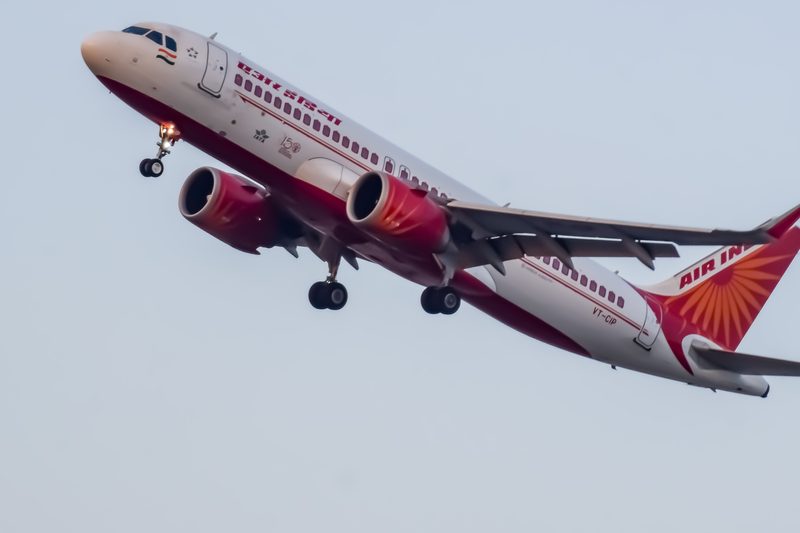
India’s aviation regulator has fined Air India ₹1 crore (about $110,000) after the carrier operated an Airbus A320 on eight passenger flights without the required Airworthiness Review Certificate (ARC)—a serious compliance lapse that regulators said undermined public confidence in the airline.

The flights took place over November 24–25, 2025, linking major domestic markets including New Delhi (DEL), Bengaluru (BLR), Mumbai (BOM), and Hyderabad (HYD). The aircraft involved has been identified in reporting as VT-TQN. Air India later reported the non-compliance to the regulator and says it has closed the gaps that allowed the aircraft to be dispatched.
What an ARC is, and why it’s non-negotiable
For airline professionals, this is basic but critical: the ARC is an annual airworthiness review sign-off that confirms an aircraft remains compliant with continuing airworthiness requirements following inspections, records reviews, and required maintenance actions. It’s not a “nice-to-have” document—it is the legal basis that allows the aircraft to remain in commercial service.
Read our stories in your inbox
Two aviation newsletters. Zero fluff.
Operating without a valid ARC is a high-severity breakdown because it indicates the system intended to prevent an unapproved aircraft from flying—maintenance tracking, release-to-service processes, and operational cross-checks—failed more than once.

How the lapse happened: “systemic failures,” not a single missed checkbox
Air India’s internal review described systemic procedural failures that allowed the A320 to return to service without the certificate being renewed after the aircraft had been in maintenance for an extended period. In parallel, the regulator noted that pilots did not fully follow standard pre-departure checks designed to confirm the aircraft’s documentation status before flight.
That combination matters. In most airlines, ARC validity is protected by overlapping barriers:
-
maintenance planning and airworthiness tracking systems,
-
the Continuing Airworthiness Management Organization (CAMO) review and sign-off,
-
engineering release procedures,
-
and flight deck document checks before departure.
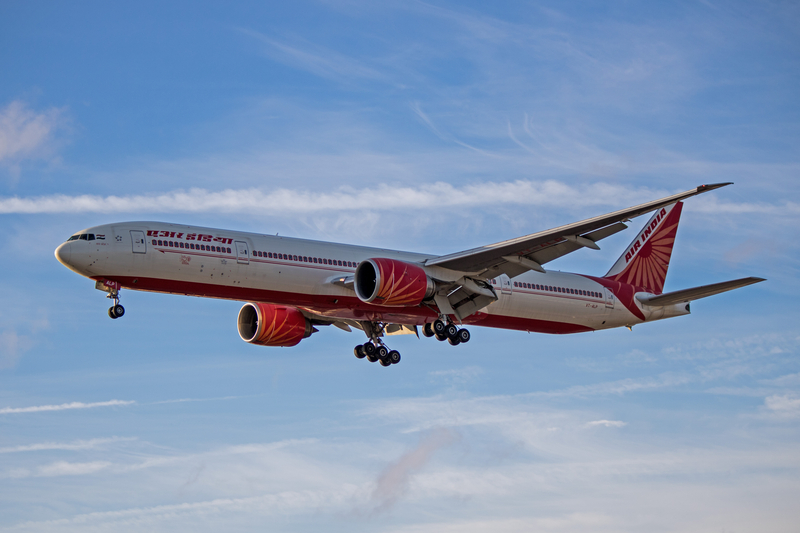
When an aircraft flies eight sectors without the required certificate, it suggests that multiple barriers failed repeatedly—not just once.
Accountability: CEO named, two airworthiness managers suspended
The DGCA’s penalty order held CEO Campbell Wilson accountable in his capacity as the airline’s “accountable manager,” a designation that puts ultimate responsibility for safety and compliance systems at the top of the organization.
In addition to the fine, two senior officials in Air India’s airworthiness management chain were suspended, reinforcing the regulator’s view that this was a governance and process-control issue—not simply an isolated oversight.
Air India has been instructed to pay the ₹1 crore penalty within 30 days.
Why this matters operationally, even if the aircraft flew safely
It’s important to separate two concepts:
-
Aircraft safety on those specific flights, and
-
The integrity of the compliance system that protects the traveling public.
The regulator’s concern is the second. A modern A320 can operate safely on any given day, but regulators don’t certify “good days”—they certify systems. If certificate control can break down, it raises uncomfortable questions about documentation discipline, audit readiness, and whether similar gaps could exist elsewhere unless the process is rebuilt.
For an airline like Air India, which has been working to modernize operations and restore brand trust, documentation lapses are especially damaging because they’re preventable and they hit the credibility of the airline’s safety culture.
Bottom Line
Air India was fined ₹1 crore (~$110,000) after an Airbus A320 operated eight flights across routes including DEL, BLR, BOM, and HYD without a valid Airworthiness Review Certificate. The regulator cited systemic failures and suspended two senior airworthiness executives, while holding the CEO accountable as the airline’s responsible manager for compliance. The incident is a sharp reminder that in airline operations, safety isn’t just about how an aircraft flies—it’s also about whether the compliance machinery that authorizes that flying is airtight, every time.
Keep reading FlyMag
Get the Daily Brief in the morning or the Route Watch weekly recap on Fridays. Or both.