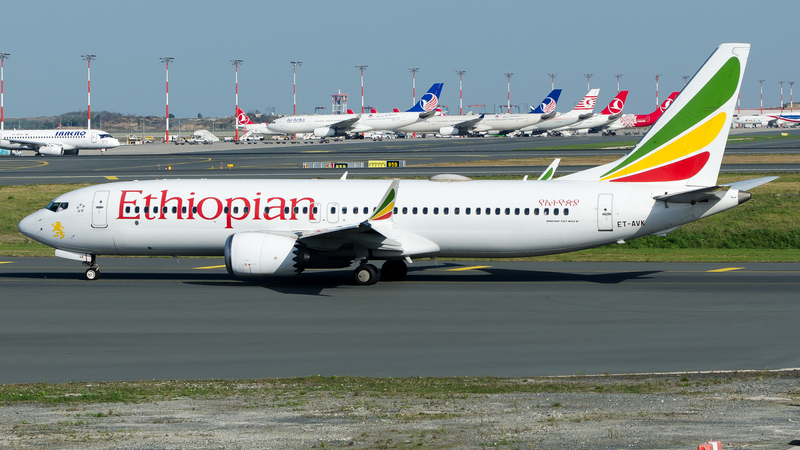
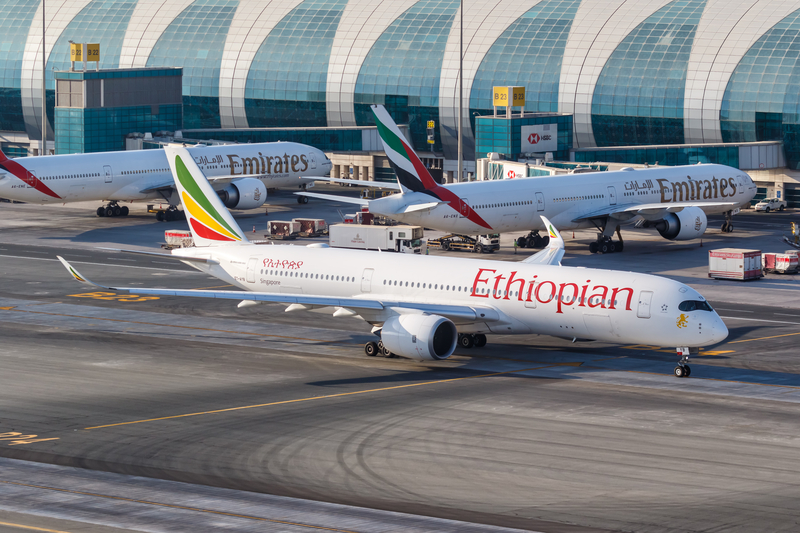
Ethiopian Airlines has suspended passenger flights from Addis Ababa Addis Ababa Bole International Airport (ADD) to three airports in the Tigray region—Mekelle Airport (MQX), Axum Airport (AXU), and Shire Indaselassie Airport (SHC)—after reports of clashes raised fresh fears of instability.

From an operational perspective, ADD–Tigray flying isn’t just another domestic rotation. It’s a lifeline corridor that supports government travel, business movement, NGO and aid logistics, and day-to-day mobility for communities that have already endured long periods of disruption. When the national carrier steps back, the knock-on effects show up immediately—on the ground, in terminal queues, and across connecting banks at ADD.
What we know so far
Passengers reported receiving cancellation notices citing “unplanned circumstances,” with no detailed public explanation at the time. That absence of specifics is notable in itself: airlines typically avoid unnecessary detail when the driver is security-related, because conditions can change by the hour and because public statements can inadvertently create additional risk for staff, customers, and local partners.
Read our stories in your inbox
Two aviation newsletters. Zero fluff.
What matters for aviation professionals is the practical outcome: the schedule break cuts off the fastest connection between the capital and key northern markets. Surface alternatives exist, but they’re slower, capacity-constrained, and—during periods of tension—more exposed to disruption.
The airports involved are operationally non-trivial
Tigray’s main commercial airports are shaped by terrain, altitude, and performance margins—factors that airline dispatch and flight-ops teams can’t ignore.

MQX (Mekelle) sits at roughly 7,400 feet elevation and, importantly, has a long runway (about 3,600 meters). That runway length gives performance flexibility, but the density altitude reality remains: high-elevation operations penalize takeoff performance, particularly in warmer conditions, and can tighten payload/range planning for jets.
AXU (Axum) is also high (near 7,000 feet) with a shorter runway (about 2,400 meters). Even when runway length is technically adequate, high/hot performance and obstacle environment can drive conservative dispatch decisions—especially if alternates, ground support, or diversion planning become more complex under rapidly shifting security conditions.
SHC (Shire Indaselassie) is another elevated field (about 6,200 feet) with a runway around 2,480 meters. On paper it’s workable for a range of equipment, but in practice, weather variability and the broader operating environment can quickly become the limiting factor.
For crews and dispatchers, these aren’t “set-and-forget” domestic stations. They demand real-time weather awareness, careful alternates planning, and confidence in local supportability.
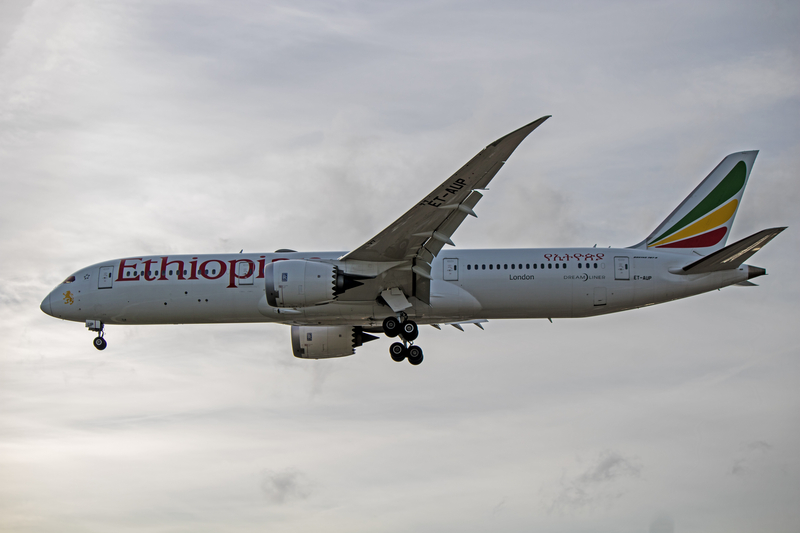
Aircraft type: why turboprops often make sense here
On ADD–Tigray sectors, Ethiopian has historically used a mix of equipment based on demand and operational constraints. The airline’s turboprop backbone—most notably the De Havilland Dash 8-400 (Q400)—is well-suited to missions like these: strong short/medium-field performance, efficient block times over relatively short stage lengths, and better economics when loads are variable.
The Q400’s performance profile can be especially attractive at higher elevations where smaller-gauge lift is needed without paying the operating cost of a larger narrowbody. That said, Boeing 737-family aircraft also appear on domestic missions across Ethiopia when demand spikes or when the network needs additional capacity and schedule resilience.
The key point: the “right” aircraft on paper can still be the “wrong” aircraft on the day if security constraints reduce alternates, compress departure banks, or create uncertainty around station handling. When risk rises, the most efficient schedule is often the one you don’t operate.
The wider context: aviation reacts fastest when politics turns volatile
The flight pause is unfolding against a backdrop of mounting political strain and renewed reports of fighting in disputed areas. For airlines, the immediate triggers are usually very practical: airspace and route-risk assessments, crew duty-of-care, the reliability of airport access and security perimeters, and the ability to protect passengers during irregular operations.
Even a short suspension can create a cascade. Domestic passengers in Ethiopia frequently build itineraries around onward connectivity at ADD—regional links, international departures, and time-sensitive business travel. Once the northbound flights are pulled, misconnects increase, customer service loads spike, and reaccommodation quickly becomes a capacity math problem rather than a simple rebooking exercise.
What to watch next if you’re tracking the operation
If service resumes, the early signals won’t necessarily be a press release—they’ll be operational.
You’ll typically see:
-
Schedule reappearance in booking channels (often before any public narrative changes)
-
Station readiness indicators: staffing, handling capability, local access to terminals and ramp
-
Route-risk posture: continued advisories, airspace avoidance practices, and any constraints on alternates
-
Fleet assignment stability: whether the carrier returns with its usual domestic workhorses (like the Q400) or upgauges/changes patterns to rebuild reliability quickly
In other words: the “why” may stay vague publicly, but the “how” shows up clearly in the data.
Bottom Line
Suspending flights from ADD to MQX, AXU, and SHC is a high-impact move because it removes the fastest connective tissue between Ethiopia’s capital and a strategically sensitive region. For Ethiopian, it’s also a reminder of how quickly network planning becomes risk management: aircraft capability, runway performance, station support, and duty-of-care all matter—but in volatile environments, the deciding variable is often whether the airline can guarantee a safe, reliable operation end-to-end.
Keep reading FlyMag
Get the Daily Brief in the morning or the Route Watch weekly recap on Fridays. Or both.