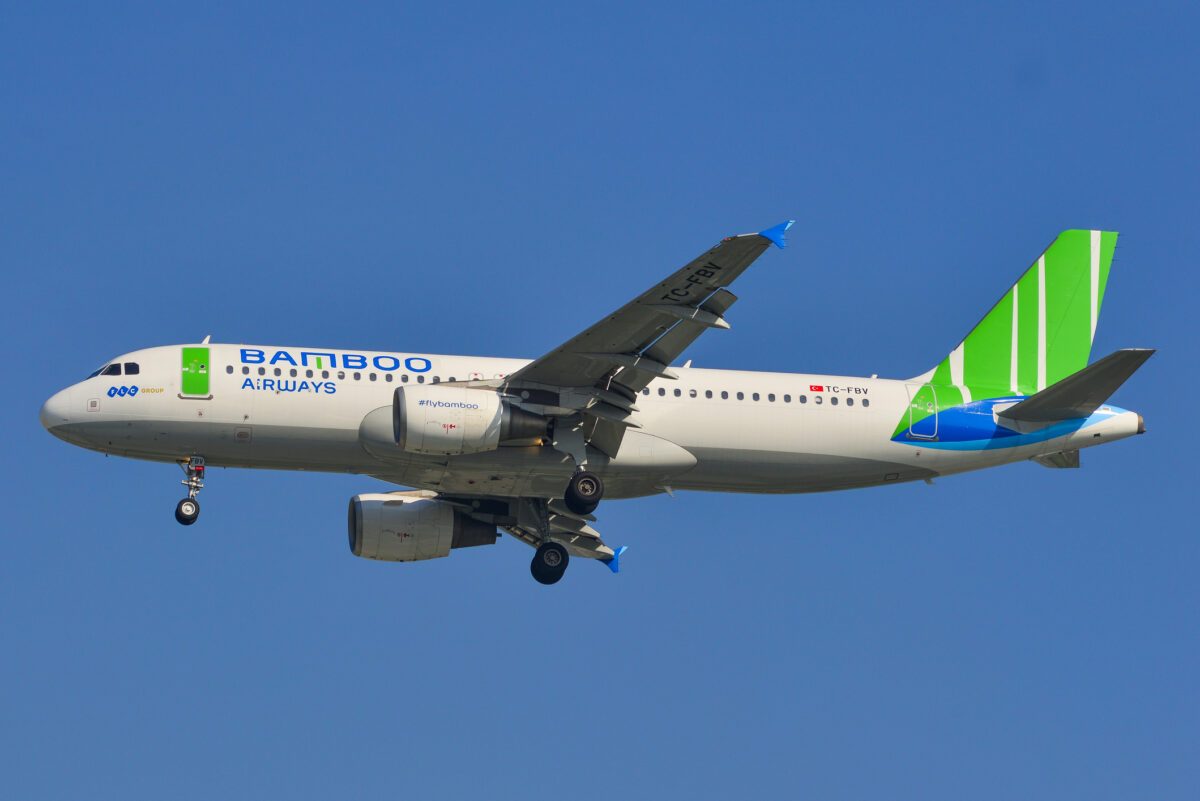
Bamboo Airways has removed its last Airbus A320neo from service, ending the type’s nearly seven-year tenure with the Vietnamese carrier.

The aircraft, MSN 9306 and formerly registered VN-A596, was withdrawn at Hanoi Noi Bai (HAN) at the end of July. Recorded flight activity shows that it operated Bamboo Airways passenger services through July 24, followed by several movements later in the month.
The A320neo subsequently left Hanoi for Jakarta (CGK) on August 22 under the registration VQ-CDF. Updated aircraft records identify it with CDB Aviation and list the airframe as stored at CGK following its return from lease.
Read our stories in your inbox
Two aviation newsletters. Zero fluff.
The transfer means Bamboo Airways no longer operates an A320neo. The airline’s website continues to carry A320neo cabin and product information, although the departure of VN-A596 closes the type’s operational chapter at the carrier.
VN-A596 Carried Bamboo’s Fly Green Identity
VN-A596 was delivered to Bamboo Airways in October 2019 and entered service the following month. Powered by CFM International LEAP-1A engines, the aircraft was configured with eight business-class seats and 168 economy seats, giving it a total capacity of 176 passengers.

The aircraft was easily identifiable through its special “Fly Green” colors, which placed a stylized bamboo forest and prominent environmental messaging across the fuselage. Its arrival coincided with Bamboo’s campaign to replace disposable plastic service items with recyclable or biodegradable alternatives.
The Civil Aviation Authority of Vietnam described the aircraft at the time as the first Airbus A320neo to enter a Vietnamese airline fleet. That gave VN-A596 significance beyond its role at Bamboo: it introduced the re-engined A320 variant to commercial service in Vietnam before the type became more widely represented in the country.
During its final period of operation, VN-A596 was deployed across Bamboo’s domestic network. Its July flying included sectors linking Hanoi with Da Nang (DAD), Phu Cat (UIH) and Ho Chi Minh City (SGN), as well as rotations through other domestic stations. The combination of 176 seats and a small business cabin allowed Bamboo to use the aircraft on both trunk services and thinner leisure-oriented routes.
A New-Generation Aircraft Leaves a Contracting Fleet
The A320neo was one of the youngest and most fuel-efficient aircraft available to Bamboo Airways. Airbus says the A320neo family combines new-generation engines with aerodynamic improvements to deliver lower fuel consumption and noise than previous-generation single-aisle aircraft.
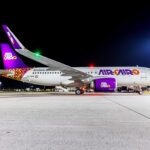
Those economics normally make an A320neo an asset that an airline would seek to retain. Its departure therefore reflects Bamboo’s immediate fleet and financing requirements rather than a judgment on the aircraft’s suitability for the Vietnamese market.
Bamboo expanded rapidly after beginning operations in 2019, assembling a mixed fleet that included A320-family narrowbodies, Embraer regional jets and Boeing 787-9 widebodies. The carrier later reduced its network and returned aircraft as it underwent a financial and operational restructuring.
VN-A596 remained after Bamboo’s other A320neos had left the fleet, making it the final example of the type and one of the last direct links to the airline’s initial expansion phase. Its return leaves Bamboo without a new-generation Airbus narrowbody at a time when fuel-efficient aircraft are in strong demand across Southeast Asia.
Expansion Plans Now Point Toward New Aircraft
The retirement comes as Bamboo Airways continues to outline a recovery strategy centered on rebuilding its fleet. In early 2026, the airline said it maintained eight aircraft after restructuring and wanted to increase that number to 20 during the year. Its longer-term objective is to return to a 30-aircraft operation.
Bamboo has said it plans to add between eight and 10 aircraft annually through 2030. In discussions with investors, the airline has also emphasized the need for support from aircraft leasing and purchasing companies as part of its fleet expansion program.
That growth plan may not recreate the fleet Bamboo operated before restructuring. The carrier has reopened discussions with Boeing and has proposed leasing Boeing 737 MAX aircraft as its next new-generation narrowbody. Bamboo said the MAX could improve fuel efficiency, control costs and provide greater flexibility as it rebuilds its network.
The airline’s stated interest in the 737 MAX does not amount to a finalized fleet decision, but it raises the possibility that VN-A596 will remain Bamboo’s last A320neo for some time. Any move to the MAX would also require a new pilot, engineering and maintenance support structure alongside the airline’s existing A320-family capabilities.
Bottom Line
The departure of VN-A596 is more than the removal of a single leased aircraft. Bamboo Airways has relinquished a relatively young, efficient narrowbody while it works to secure the capital and lessor support required for another expansion cycle. That underlines the gap between the airline’s long-term fleet ambitions and the aircraft resources available for its current operation.
For lessors, the A320neo remains a liquid asset that can be placed elsewhere without changing an airline’s broader restructuring prospects. For Bamboo, replacing that capacity will matter more than preserving fleet continuity. The carrier must decide whether to rebuild around the Airbus commonality it already possesses or accept the transition costs associated with introducing the 737 MAX.
The next aircraft Bamboo brings in will therefore be a stronger indicator of its direction than the retirement itself. Additional older A320-family leases would point to a lower-cost interim solution, while a firm MAX commitment would signal a longer-term change in narrowbody strategy.
Keep reading FlyMag
Get the Daily Brief in the morning or the Route Watch weekly recap on Fridays. Or both.