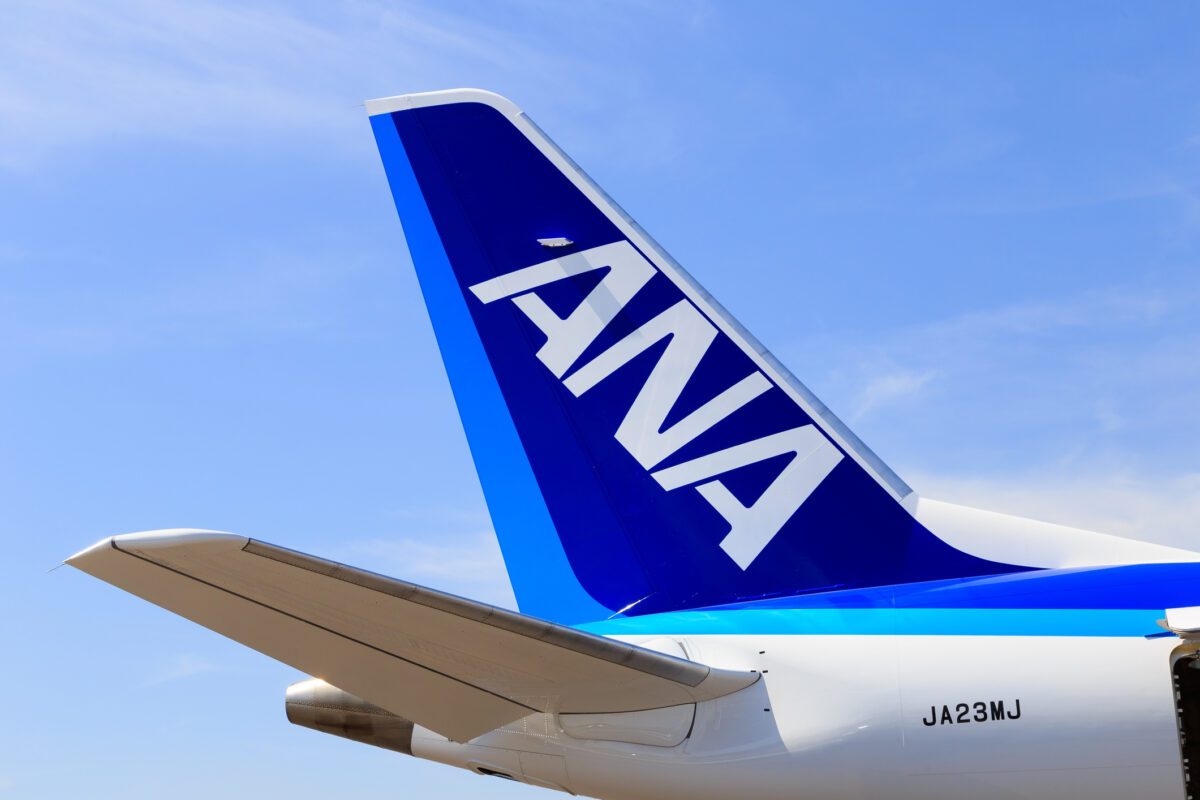
ANA Holdings has signed a firm purchase agreement for eight additional Embraer E190-E2 regional jets, completing a transaction that the Japanese airline group approved in July.


The agreement announced by Embraer raises ANA Holdings’ firm commitment for the E190-E2 from 15 to 23 aircraft. The group continues to hold options for another five, giving it a potential fleet of 28 E190-E2s.
ANA expects its first aircraft to arrive in 2028. The latest eight jets are tied to a planned operating arrangement under which IBEX Airlines will fly ANA services using the E190-E2 from fiscal 2029.
Read our stories in your inbox
Two aviation newsletters. Zero fluff.
A July Fleet Decision Becomes a Firm Contract
ANA Holdings’ board approved the additional eight aircraft on July 29. The subsequent contract with Embraer moves those jets into the manufacturer’s firm backlog.
The expansion follows ANA’s original E190-E2 selection in February 2025. That transaction covered 15 firm aircraft and five options as part of a wider order for 77 Boeing, Airbus and Embraer jets intended to renew the group fleet and support growth through the end of the decade.
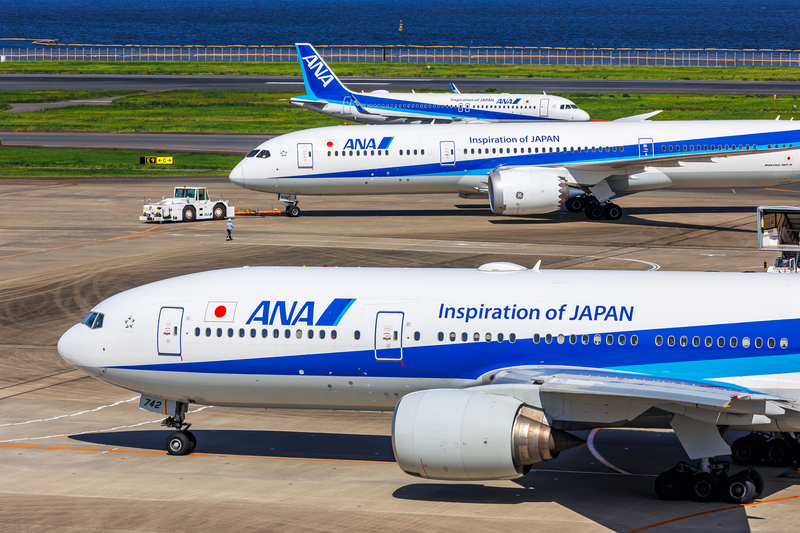
ANA selected the E190-E2 to fill a capacity gap in its domestic operation. Its present fleet jumps from 74-seat De Havilland Canada Dash 8-400 turboprops to Boeing 737 and Airbus A321 narrowbodies with considerably more capacity. A jet in the approximately 100-seat category gives the carrier another way to match capacity with demand on regional services, off-peak frequencies and routes that cannot consistently support a larger narrowbody.
ANA’s planning material describes the E190-E2 as part of a broader shift toward smaller aircraft on domestic routes. The group wants narrowbody, regional jet and turboprop equipment to account for about 90% of its domestic fleet by the end of fiscal 2030, compared with 85% at the end of fiscal 2019.
The order also makes ANA the first Japanese airline scheduled to introduce the second-generation E-Jet. Earlier Embraer models have operated in Japan since 2009, giving the manufacturer an established local support presence before ANA’s first delivery.
IBEX Will Operate ANA Flights
The extra aircraft support a new relationship between ANA and IBEX that goes beyond their existing codeshare arrangement. Under the companies’ planned ACMI structure, ANA will control route and frequency planning and sell the flights, while IBEX will provide the aircraft and crews and conduct the operation.
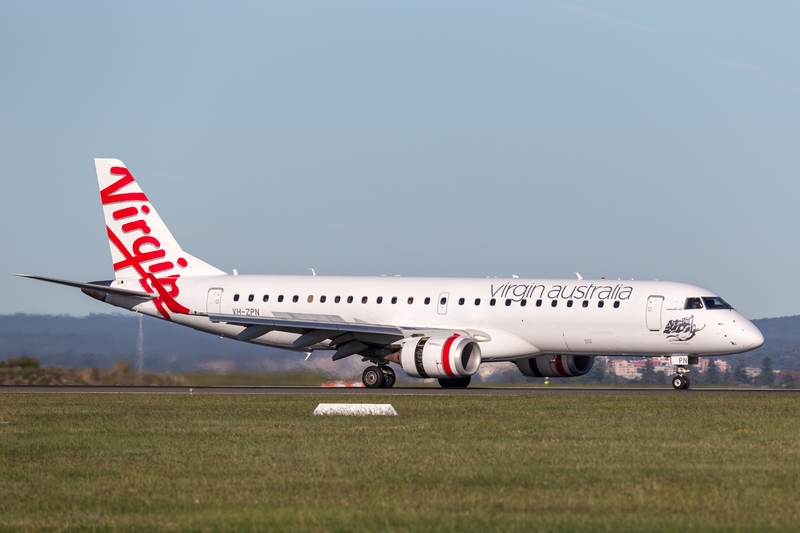
ANA will take responsibility for maintenance management of the common E190-E2 fleet. The companies are targeting the start of operations during fiscal 2029, which runs from April 2029 through March 2030, subject to regulatory approval. They have not assigned the aircraft to specific routes.
The arrangement gives ANA access to regional-jet capacity without having to operate every flight with its own crews. IBEX, in turn, gains a defined role in ANA’s domestic network and a pathway into a new aircraft generation supported by the larger group’s maintenance organization.
IBEX currently operates an all-Bombardier CRJ700 fleet. Its published aircraft specifications show a 70-seat, four-abreast cabin and a range of 2,794 kilometers. The airline reported nine CRJ700s in service as of March 31, 2025.
Moving into the E190-E2 therefore represents a substantial gauge increase. ANA describes the incoming jet as a 100-seat-class aircraft, putting roughly 30 more seats into each departure than an IBEX CRJ700 while preserving the regional jet’s two-by-two seating arrangement.

The partnership establishes a successor platform for IBEX’s single-type CRJ operation while creating commonality with ANA’s own regional fleet. The eight-aircraft order closely matches the scale of IBEX’s existing operation, although the companies have not published an aircraft-by-aircraft retirement schedule for the CRJ700s.
E190-E2 Adds Capacity Without a Mainline Narrowbody
The E190-E2 is powered by two Pratt & Whitney PW1900G geared turbofans and combines those engines with a new wing and updated systems. Embraer markets the type with a maximum range of 2,950 nautical miles, or 5,463 kilometers, although ANA’s domestic mission profile will place greater emphasis on economics over short sectors than on maximum-range capability.
Embraer’s standard layouts range from 97 seats in a three-class arrangement to 114 seats at 29-inch pitch. A 106-seat single-class cabin at 31-inch pitch is also offered. ANA has characterized its aircraft as approximately 100-seat jets.
The four-abreast cabin eliminates middle seats, an attribute shared with IBEX’s CRJ700s. The E2, however, provides a wider cabin and significantly greater overhead-bin volume than the first-generation E-Jet, addressing two common operational constraints on regional aircraft.
Embraer says the E2 family reduces fuel consumption by 19% compared with the previous E-Jet generation. For ANA, the more important comparison will be against the larger aircraft that the E190-E2 can replace on lightly booked departures, and against the smaller equipment it can supplement where demand has outgrown 70-seat capacity.
Japan Pushes Airlines Toward Greater Cooperation
The ANA-IBEX plan follows a review of Japan’s domestic aviation market by the Ministry of Land, Infrastructure, Transport and Tourism. In its May 29 report, the ministry called for greater use of regional aircraft and selected forms of airline cooperation to preserve domestic connectivity as operators contend with changing demand, higher maintenance costs and other cost pressures.
ANA and IBEX are applying that policy direction through a model that separates network control from flight operation. The structure allows ANA to retain responsibility for the customer proposition and commercial schedule while assigning the flying to an established regional operator.
Fleet commonality is central to making the arrangement workable. Rather than place IBEX in a separate equipment pool, ANA intends to use the E190-E2 as a shared operating platform. That should allow maintenance oversight, training and aircraft allocation to be organized across a larger base than IBEX could support independently.
Bottom Line
The additional order turns the E190-E2 from a limited fleet experiment into a meaningful part of ANA’s domestic strategy. With 23 firm aircraft, the group will have enough scale to use the type across its own operation and a contracted regional platform rather than confining it to a small number of specialized routes.
IBEX stands to gain a long-term fleet solution as the CRJ700 becomes harder to support and increasingly restrictive in capacity. The E190-E2 is not a like-for-like replacement: its larger cabin changes the economics and demand threshold of the routes it serves. ANA’s control over scheduling will be important in deciding where that additional gauge can improve unit costs without diluting yields.
The next milestones will be the allocation of aircraft between ANA-operated and IBEX-operated flying, regulatory approval of the ACMI structure and disclosure of the first routes. ANA’s five remaining options provide a straightforward expansion mechanism if the 100-seat category proves effective in stabilizing regional services.
Keep reading FlyMag
Get the Daily Brief in the morning or the Route Watch weekly recap on Fridays. Or both.