American Airlines (AA) has received U.S. Department of Transportation approval to restart daily nonstop service from Miami International Airport (MIA) to Caracas Simón Bolívar International (CCS) and Maracaibo La Chinita (MAR)—a major step toward restoring U.S.–Venezuela commercial flying for the first time since 2019.

The authorization is valid for two years and follows a Transportation Security Administration (TSA) validation of Venezuelan airport security procedures—an essential prerequisite before the U.S. government will allow regular passenger operations to resume on a route previously barred for security reasons.
American has not yet published a restart date. In practice, DOT approval is the green light for the economic authority to operate; the operational start still depends on final coordination across security, station setup, and schedule planning.
Read our stories in your inbox
Two aviation newsletters. Zero fluff.
Why this approval matters: a route that’s been politically “closed” since 2019
In 2019, the U.S. government suspended direct commercial passenger and cargo flying between the United States and Venezuela under a DOT order tied to a Department of Homeland Security determination that conditions threatened passenger and aviation security. That order effectively removed Venezuela from U.S. airline route maps overnight.
This week’s DOT approval represents a formal reversal of that posture. It doesn’t suggest Venezuela has become “easy” from an operations standpoint—only that U.S. agencies are now satisfied enough with the required security benchmarks to allow service to proceed.
For American, it’s also a return to familiar territory. The airline has historically been one of the most prominent U.S. carriers serving Venezuela, and it has framed the restart as a way to re-open long-standing business and family travel links.
The flights: daily MIA–CCS and MIA–MAR, but with a careful aircraft strategy
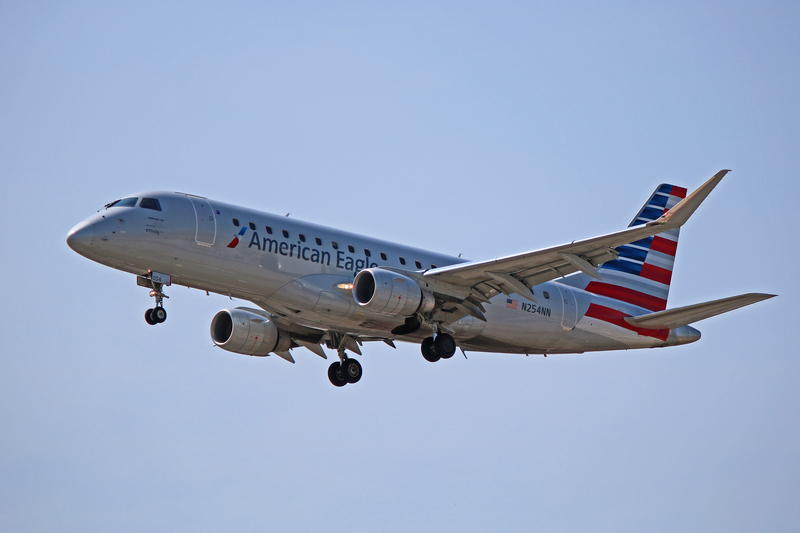
American will operate the flights via its wholly owned regional subsidiary Envoy Air (MQ) under the American Eagle brand, using Envoy’s Embraer E170/E175 fleet.
That aircraft choice is a signal in itself: American is entering the market with a smaller gauge that allows it to offer daily frequency without committing large mainline capacity before demand patterns re-stabilize.
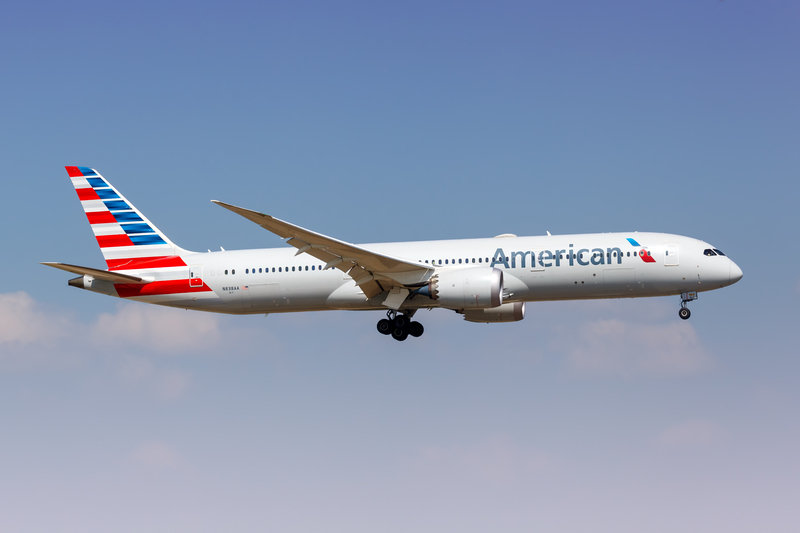
What to expect from Envoy’s Embraer aircraft
Envoy operates Embraer E170s and E175s, both 2–2 cabin regional jets with no middle seats:
-
E170: typically in the 65–70 seat range depending on configuration
-
E175: typically around 76 seats in U.S. mainline-partner layouts
Both types are powered by GE CF34-series engines and are well suited to medium-length international sectors where reliability, frequency, and right-sizing matter more than pure seat volume.

Stage length: comfortably inside the E-Jet envelope
From a performance standpoint, both routes are well within E-Jet range:
-
MIA–CCS: about 1,180 nautical miles
-
MIA–MAR: about 1,040 nautical miles
Those distances generally translate to block times in the 2.5–3.5 hour range depending on winds and ATC flow—an ideal mission profile for E170/E175 aircraft that are designed to cycle efficiently and maintain schedule discipline.
Why TSA validation is the real “gate” for restart
The TSA’s role here is not procedural—it’s foundational.
When U.S.-based carriers fly internationally, U.S. security policy extends into how last-point-of-departure airports handle passenger screening, access control, and airside protections. If the TSA does not validate the required standards for a given airport environment, the route may be commercially attractive but operationally non-starter.
In this case, the TSA’s security validation—reported to have occurred shortly before DOT approval—was the enabling trigger for the two-year permit. That sequencing is typical: security validation first, economic authority next, then the airline publishes a start date once it can staff and resource the station.
The FAA “Category 2” nuance: what it actually does (and doesn’t) mean
Venezuela remains assessed as Category 2 under the FAA’s International Aviation Safety Assessment (IASA) program. This point is often misunderstood, and it matters for how the market might evolve.
Category 2 is a rating of a country’s civil aviation authority oversight against ICAO standards. In practical terms, it primarily affects airlines of that country (and codeshare arrangements), not whether a U.S. airline can fly into the country.
So while IASA Category 2 may constrain Venezuelan carriers’ ability to expand or establish certain arrangements with U.S. partners, it does not automatically prevent American from operating MIA–CCS or MIA–MAR once DOT and TSA prerequisites are met.
Why Miami (MIA) is the obvious relaunch gateway
If any U.S. airport was going to restart Venezuela service first, it was Miami (MIA).
American’s Miami hub is its principal gateway to Latin America and the Caribbean, with deep station infrastructure for immigration processing, multilingual customer support, irregular operations recovery, and high-frequency connectivity to the rest of the U.S. network. That matters on a relaunch like this, because early service periods often involve:
-
demand volatility (VFR-heavy markets can spike hard and then normalize),
-
higher customer service load (documentation questions, rebooking needs),
-
and heightened operational sensitivity (even minor disruptions can create outsized downstream issues when schedule options are limited).
Launching with Envoy’s E-Jets also fits Miami well: American Eagle operations are already integrated into MIA’s AA ecosystem, meaning the airline can restore service without rebuilding an entirely new station process.
What still has to happen before the first flight departs
Even with DOT approval in hand, there are several practical steps that typically precede the first commercial departure:
-
final schedule filing and slot coordination
-
station staffing and vendor onboarding at CCS and MAR (handling, catering, fueling, security processes)
-
customer communication and reaccommodation policies for early-day disruptions
-
crew planning and route proving (especially if operational conditions differ from past years)
American has not yet provided a start date, which suggests the airline is still aligning those operational pieces before it commits publicly to a launch timeline.
Bottom Line
American’s DOT approval to restart daily nonstop flights from Miami (MIA) to Caracas (CCS) and Maracaibo (MAR) is the most significant U.S.–Venezuela commercial aviation development since the 2019 suspension. With TSA security validation completed and a two-year operating permit granted, the path is now open for American to relaunch service—most likely with Envoy Air’s Embraer E170/E175 regional jets as a disciplined, right-sized way to rebuild frequency before scaling capacity.
The remaining question is the only one that matters to passengers and airport teams: when American will publish the restart date.
Keep reading FlyMag
Get the Daily Brief in the morning or the Route Watch weekly recap on Fridays. Or both.