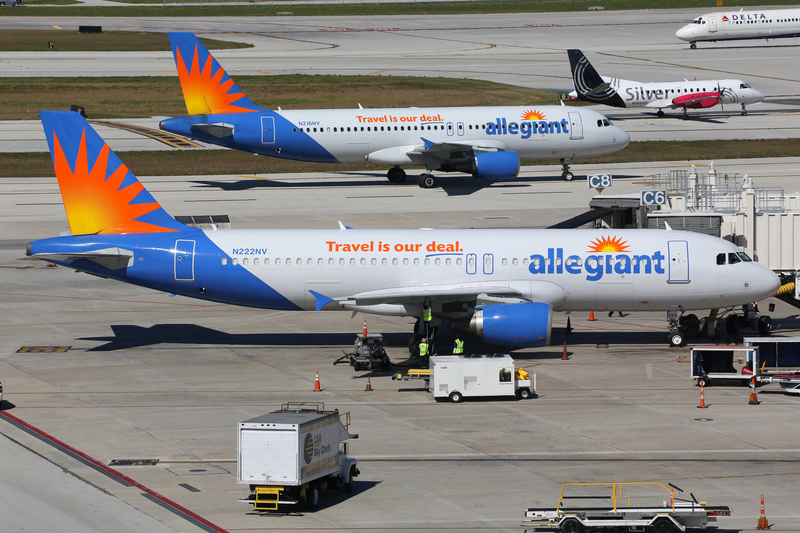
Allegiant Air (G4) is about to do what it does best: open (or re-open) a batch of thin-to-medium leisure markets at once, timed perfectly for late-winter demand. Over February 12–13, 2026, the ultra-low-cost carrier will kick off 13 new nonstop routes across the U.S., touching a wide mix of airports—some long familiar to Allegiant’s playbook in Florida, and others notable additions in California.

This is not a “big hub carrier” style expansion. Allegiant’s model is built around nonstop point-to-point flying, often two or three days per week, designed to stimulate price-sensitive demand rather than chase daily frequency. That makes these launches particularly interesting for industry watchers: the markets are frequently unserved, the schedules are intentionally selective, and the aircraft utilization strategy is optimized for peak days, not business-travel cadence.
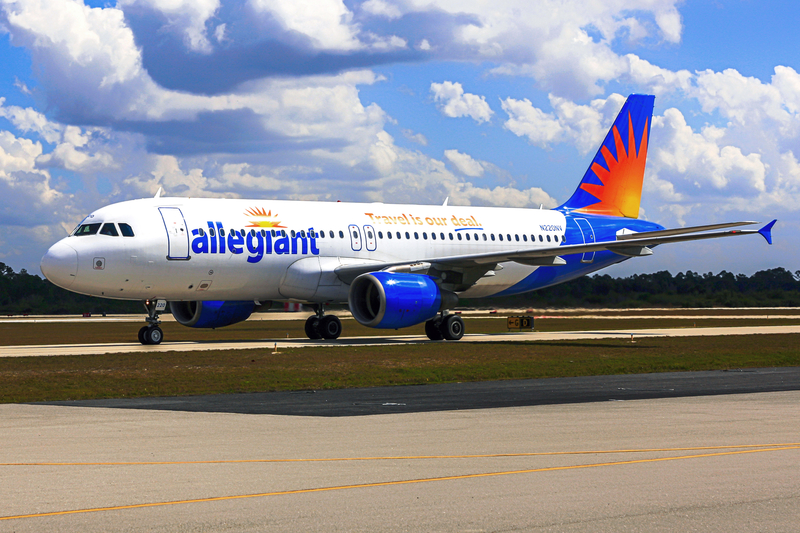
Operationally, these flights will be flown by Allegiant’s narrowbody fleet—historically Airbus A319/A320 aircraft, with an increasing presence of Boeing 737-8-200 (the 737 MAX 8-200). The MAX 8-200 variant is configured for high-density ULCC flying and is widely used to improve unit costs versus older-generation narrowbodies, especially on leisure-heavy sectors where seat cost is the battleground.
Read our stories in your inbox
Two aviation newsletters. Zero fluff.
The 13 routes launching February 12–13
Below is the full list of routes that begin service over the two-day window, with airport codes included throughout:
Launching Thursday, February 12, 2026
-
Burbank (BUR) – Provo (PVU)
-
Fort Lauderdale (FLL) – Chicago Rockford (RFD)
-
Fort Lauderdale (FLL) – Rochester (ROC)
-
John Wayne/Orange County (SNA) – Phoenix–Mesa Gateway (AZA)
-
John Wayne/Orange County (SNA) – Tri-Cities/Pasco (PSC)
Launching Friday, February 13, 2026
-
Albany (ALB) – Fort Lauderdale (FLL)
-
Bloomington/Normal (BMI) – Phoenix–Mesa Gateway (AZA) (seasonal)
-
Punta Gorda (PGD) – Atlantic City (ACY) (operating Mondays and Fridays)
-
St. Pete–Clearwater (PIE) – Atlantic City (ACY)
-
Sarasota–Bradenton (SRQ) – Rochester (ROC)
A small but important correction for readers who track inaugurals closely: Albany (ALB) – Fort Lauderdale (FLL) begins February 13, not February 12.
Why BUR matters: Allegiant’s Los Angeles basin entry is finally “real” at Hollywood Burbank
The most strategically interesting part of this wave is Hollywood Burbank (BUR). Allegiant’s BUR entry is meaningful because BUR sits in a dense, competitive airspace where airport choice is often a consumer preference decision—especially for travelers who prioritize a quicker curb-to-gate experience versus driving to a larger field.
BUR also gives Allegiant a different kind of catchment compared with the carrier’s typical secondary-airport approach. It’s still not LAX, but it’s absolutely a meaningful Greater Los Angeles airport, and the two new BUR routes—BUR–BLI and BUR–PVU—fit Allegiant’s “underserved nonstop” profile. These are not frequency plays; they’re demand-stimulation plays.
Florida remains the engine room: FLL, SFB, SRQ, PGD, and PIE all in play
It’s hard to talk about Allegiant without talking about Florida. This particular launch set leans heavily into that reality:
-
Fort Lauderdale (FLL) gets new spokes to CHA, RFD, ROC, plus the new ALB link beginning Feb. 13. For FLL, this is classic Allegiant: northbound leisure and VFR demand, priced to compete with one-stop options and to siphon traffic from larger network carriers without matching their frequency.
-
Orlando Sanford (SFB) – Huntsville (HSV) reinforces Allegiant’s habit of pairing a leisure-heavy Florida endpoint with a mid-size inland market that values nonstop access and often has limited low-fare competition.
-
Sarasota–Bradenton (SRQ) – Rochester (ROC) is particularly on-brand: SRQ continues to grow as a higher-income leisure gateway on Florida’s Gulf Coast, while ROC has a strong base of winter leisure demand and visiting-friends-and-relatives traffic.
-
Punta Gorda (PGD) – Atlantic City (ACY) and St. Pete–Clearwater (PIE) – Atlantic City (ACY) lean directly into the Northeastern seasonal flow—Florida leisure traffic heading north and south in winter and early spring.
Market structure: where Allegiant will face nonstop competition—and where it’s alone
Allegiant often prefers markets where it can be the only nonstop. In this batch, that pattern largely holds.
The standout competitive exception is Albany (ALB) – Fort Lauderdale (FLL). That market already has nonstop service, and Allegiant’s entry increases price pressure at exactly the time winter demand peaks. Notably, this route is also timed around other carriers’ seasonal scheduling decisions, which is typically when Allegiant likes to move—launching when capacity or frequency is changing elsewhere.
In contrast, routes like SNA–PSC or BUR–BLI are the kind of “new map lines” that can work well for Allegiant because the airline isn’t trying to win a daily-frequency contest. It’s offering a nonstop that didn’t exist, with a schedule designed to match leisure trip patterns (weekend starts, two-night or three-night stays, and school/work-friendly departure days).
Aircraft and performance context: why narrowbodies are the whole story here
Every route in this set is narrowbody-appropriate, and that’s exactly the point. Allegiant’s network is built on aircraft that can economically serve lower-frequency leisure routes while keeping costs predictable:
-
Airbus A319/A320 aircraft are well suited to shorter stage lengths and smaller market demand profiles.
-
The Boeing 737-8-200 adds a higher-density option that can lower unit costs further—useful on peak days, leisure-heavy sectors, and routes where the airline wants to drive fares down while protecting margins.
From an ops standpoint, these mid-February launches also tend to be lower-risk than peak-summer adds. Winter and shoulder-season flying can be “cleaner” for schedule reliability in many parts of the country (weather exceptions aside), and leisure loads are easier to manage with twice-weekly patterns because missed demand can be rolled to the next operating day without the same business-travel expectations of daily service.
Bottom Line
Allegiant is launching 13 new nonstop routes across February 12–13, 2026, highlighted by its first wave of service from Hollywood Burbank (BUR) and a Florida-heavy set of additions touching Fort Lauderdale (FLL), Orlando Sanford (SFB), Sarasota–Bradenton (SRQ), Punta Gorda (PGD), and St. Pete–Clearwater (PIE). The network logic is pure Allegiant: selectively timed frequencies, largely unserved airport pairs, and narrowbody economics—typically on Airbus A319/A320 aircraft, with growing deployment flexibility from the Boeing 737-8-200. For the U.S. domestic market, this isn’t just “more routes”—it’s a clear signal that Allegiant continues to prioritize underserved nonstop leisure demand, even as the broader industry keeps consolidating capacity into fortress hubs.
Keep reading FlyMag
Get the Daily Brief in the morning or the Route Watch weekly recap on Fridays. Or both.
Share this story
Composed for each network — click to share, or copy the composed text for your own timing.