Air India (AI) is stepping into the capacity gap created by the ongoing West Asia airspace disruption with a short, sharp burst of additional flying: 78 extra flights between March 10 and March 18, 2026, adding 17,660 seats across nine routes (both directions combined).

The airline is deploying the extra lift from its two principal long-haul gateways—Delhi (DEL) and Mumbai (BOM)—to five European capitals and hubs plus New York (JFK), while simultaneously bolstering regional “pressure valve” routes to Malé (MLE) and Colombo (CMB).
For network planners, this is the signature response you’d expect from a carrier whose geography suddenly becomes more valuable when Gulf hub connectivity is constrained: add frequency where aircraft economics work, protect schedule reliability with known routings, and feed those services with strong domestic connectivity.
Read our stories in your inbox
Two aviation newsletters. Zero fluff.
The nine routes Air India is boosting
Air India’s additional flying is concentrated on corridors that can absorb high volumes quickly and that are strategically useful for onward connections:
Europe (from DEL):
-
DEL–London Heathrow (LHR)
-
DEL–Frankfurt (FRA)
-
DEL–Paris Charles de Gaulle (CDG)
-
DEL–Amsterdam (AMS)
-
DEL–Zurich (ZRH)
Europe (from BOM):
-
BOM–London Heathrow (LHR)
United States:

-
DEL–New York (JFK) (subject to regulatory approval)
Indian Ocean / regional:
-
DEL–Malé (MLE)
-
DEL–Colombo (CMB)
This mix is deliberate. It targets:
-
high-demand end markets (London, New York),
-
transfer-capable hubs (FRA, AMS, ZRH),
-
and regional recovery routes (MLE, CMB) where disrupted connections can strand travelers quickly when Gulf routings break.
Aircraft assignment: 787-8 to Europe, 777-300ER to JFK, A320neo to MLE and CMB
Air India is matching aircraft type to mission and demand profile:
Europe: Boeing 787-8 Dreamliner (B788)
The extra European rotations are scheduled on the Boeing 787-8, a long-haul workhorse that gives Air India a strong blend of range, cargo capability, and right-sized capacity. In Air India’s typical configuration, the 787-8 seats about 256 passengers (18 Business + 238 Economy), though cabin layouts can vary by tail as the fleet is progressively refreshed.
Why the 787-8 makes sense here:
-
Lower trip cost than larger widebodies for frequency boosts
-
Solid belly-cargo capability for time-sensitive shipments
-
Reliable long-haul utilization for dense hubs like LHR/FRA/CDG/AMS/ZRH
New York (JFK): Boeing 777-300ER (77W) — pending approvals
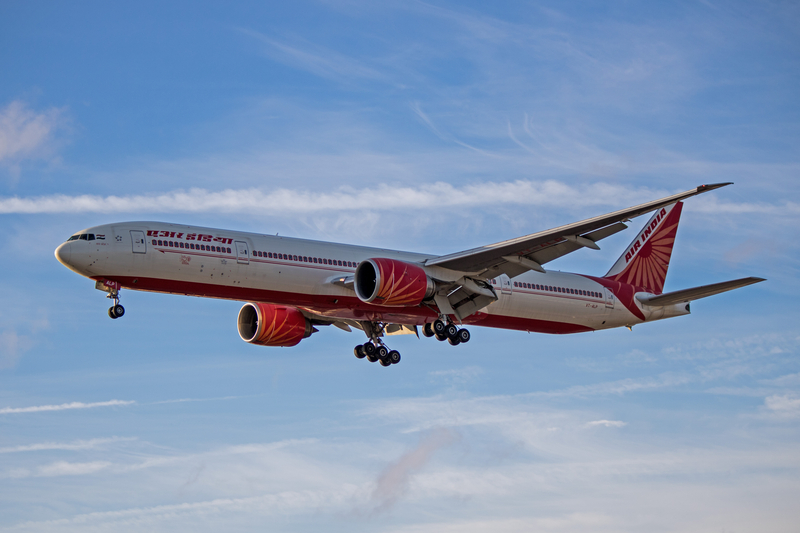
The planned DEL–JFK additional flights are intended to operate with the Boeing 777-300ER, Air India’s high-capacity flagship. The airline’s published 777-300ER interior spec shows 4 First, 35 Business, and 303 Economy seats—342 total—making it the “bulk lift” tool when demand spikes.
This is also a regulatory-sensitive lane, which is why Air India is explicit: the extra JFK services are subject to requisite approvals.
Malé (MLE) and Colombo (CMB): Airbus A320neo (A20N)
The Indian Ocean supplemental flying is being handled by the A320neo, a cost-efficient narrowbody that’s ideal for high-frequency regional operations when widebody resources are better used on long-haul corridors. Air India’s A320neo configuration varies by subfleet, but the type’s mission fit is clear: fast turns, manageable capacity, and dependable uplift for short-notice recovery demand.
The actual “extra” schedule: flight numbers, dates, and local times
Air India has published the additional flights by flight number and operating days (all times local):
London Heathrow (LHR)
-
AI165 DEL 12:25 → LHR 18:00 (Mar 11, 13, 15, 18)
-
AI166 LHR 19:30 → DEL 10:20+1 (Mar 11, 13, 15, 18)
-
AI4131 BOM 01:25 → LHR 06:40 (Mar 12, 14)
-
AI4130 LHR 08:10 → BOM 22:55 (Mar 12, 14)
Frankfurt (FRA)
-
AI121 DEL 12:30 → FRA 17:50 (Daily Mar 10–18, except Mar 14)
-
AI120 FRA 19:20 → DEL 08:50+1 (Daily Mar 10–18, except Mar 14)
Amsterdam (AMS)
-
AI4155 DEL 12:30 → AMS 18:00 (Mar 12, 14, 16)
-
AI4156 AMS 19:35 → DEL 09:00+1 (Mar 12, 14, 16)
Paris Charles de Gaulle (CDG)
-
AI177 DEL 14:30 → CDG 20:40 (Mar 15)
-
AI178 CDG 22:15 → DEL 12:00+1 (Mar 15)
Zurich (ZRH)
-
AI151 DEL 13:35 → ZRH 19:00 (Mar 10, 17)
-
AI152 ZRH 20:35 → DEL 10:00+1 (Mar 10, 17)
New York (JFK) — subject to approval
-
AI4101 DEL 05:35 → JFK 17:05 (Mar 12, 14, 17)
-
AI4102 JFK 20:05 → DEL 20:30+1 (Mar 12, 14, 17)
Malé (MLE)
-
AI3201 DEL 02:00 → MLE 05:45 (Daily Mar 10–18)
-
AI3202 MLE 06:45 → DEL 11:30 (Daily Mar 10–18)
Colombo (CMB)
-
AI3203 DEL 00:15 → CMB 04:00 (Daily Mar 10–17, except Mar 11)
-
AI3204 CMB 05:00 → DEL 08:45 (Daily Mar 10–17, except Mar 11)
Why these frequencies, and why now
This isn’t “new routes.” It’s Air India doing three operationally smart things in a constrained corridor environment:
1) Protecting reliability while others detour or pause
When West Asia routing becomes uncertain, airlines either avoid the region, accept significant detours, or reduce flying. Air India is saying it can maintain long-haul services using alternative routings assessed as safe, and it is backing that claim with more seats on core lanes.
2) Using Europe as a relief valve for displaced demand
When Gulf hubs are constrained, passengers who would normally connect via DOH/DXB/AUH are forced to re-route. Europe becomes the next-best transfer platform, and DEL is a natural bridging node between South Asia flows and Europe/North America.
3) Adding capacity where it won’t break the fleet
Air India is using:
-
787-8s to add Europe frequency without overshooting demand,
-
777-300ERs to create high-volume “backlog clearing” capability to JFK,
-
and A320neos on MLE/CMB where narrowbody economics are the right answer.
It’s a pragmatic allocation strategy that aims to move the most people with the least operational fragility during a one-week surge window.
Bottom Line
Air India’s 78 additional flights (March 10–18, 2026) are a targeted capacity response to an abnormal market: Gulf hub disruption has redirected long-haul demand, and Air India is positioning DEL and BOM as stable gateways by adding 17,660 seats across nine routes.
The aircraft choices underline the intent—787-8s to Europe for scalable frequency, 777-300ERs for heavy-lift relief on DEL–JFK (pending approvals), and A320neos to keep regional corridors like DEL–MLE and DEL–CMB moving. For travelers, it’s more availability and more schedule resilience during a week when reliable routings are at a premium. For the industry, it’s a clean example of how India–Europe capacity becomes a workaround corridor when West Asia connectivity breaks.
Keep reading FlyMag
Get the Daily Brief in the morning or the Route Watch weekly recap on Fridays. Or both.
Share this story
Composed for each network — click to share, or copy the composed text for your own timing.