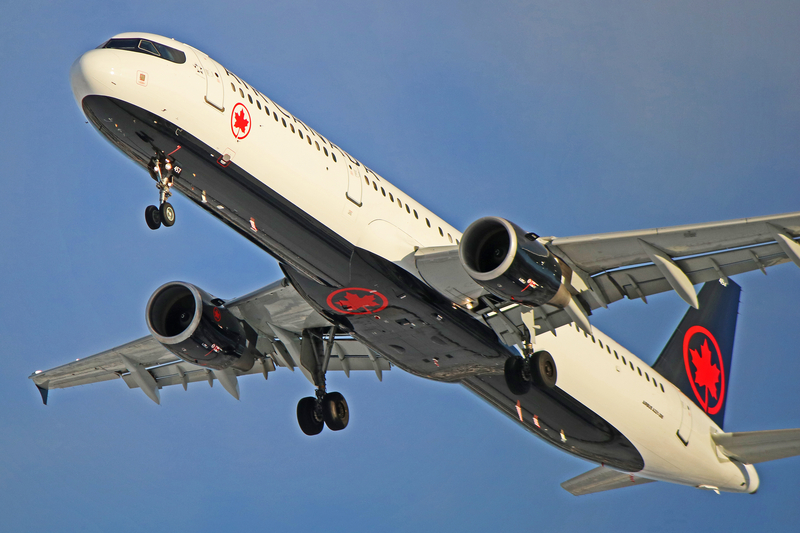
Air Canada has placed its first Airbus A321XLR into commercial service.

The aircraft made its first scheduled passenger flight on June 9, 2026. It operated as AC413 from Montréal–Trudeau International Airport (YUL) to Toronto Pearson International Airport (YYZ).
The flight marked a major fleet milestone for Canada’s flag carrier. Air Canada is now the first airline in Canada to operate the A321XLR.
Read our stories in your inbox
Two aviation newsletters. Zero fluff.
Its first international flight is scheduled for June 15. The aircraft will fly from Montréal (YUL) to Toulouse-Blagnac Airport (TLS), bringing Air Canada’s new single-aisle premium cabin onto a transatlantic route.
A New Aircraft For Thin Long-Haul Routes
The A321XLR gives Air Canada a new kind of aircraft.
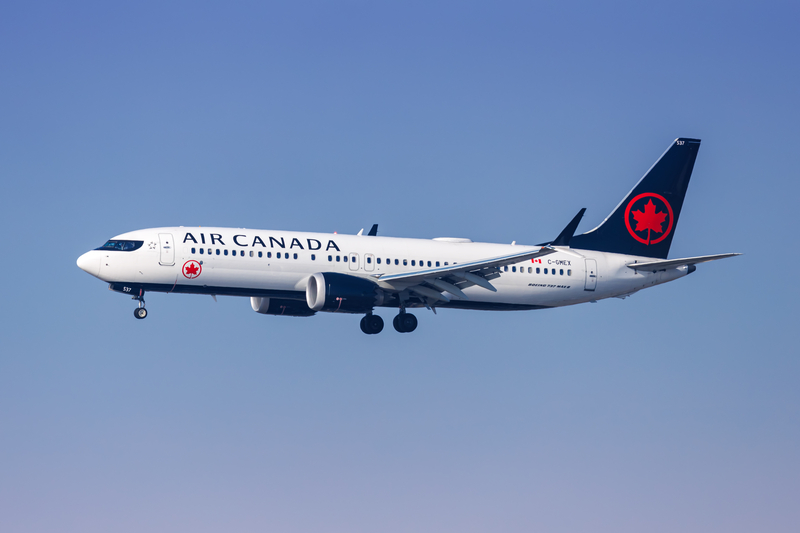
It is smaller than a widebody. However, it has the range to fly many long-haul routes that were once difficult to serve with a narrowbody aircraft.
That matters for Air Canada.
The airline can now match capacity more closely to demand. It can also serve thinner transatlantic markets without using a larger Boeing 787 Dreamliner or Airbus A330.
This is the core value of the A321XLR. It lets airlines open routes with less risk.
For Air Canada, that could mean new city pairs from Montréal (YUL) and Toronto (YYZ). It could also mean better seasonal flexibility on existing routes.
Toulouse Gets The First International Flight
The first international A321XLR service will link Montréal (YUL) with Toulouse (TLS).
That is an interesting choice.
Toulouse is the home of Airbus and one of Europe’s most important aerospace centers. It is also a strong business, technology, and leisure market.

For Air Canada, YUL–TLS is exactly the type of route the A321XLR was built to support.
It is long enough to benefit from the aircraft’s range. But it may not always need the capacity of a widebody.
The A321XLR gives Air Canada a premium product on the route while keeping seat count under control.
Lie-Flat Seats Come To A Canadian Narrowbody
The biggest passenger change is in the front cabin.
Air Canada’s A321XLR has 14 Signature Class lie-flat seats. They are arranged in a 1-1 layout.
That gives every premium passenger direct aisle access.
This is the first time a Canadian airline has offered lie-flat seats on a single-aisle aircraft. It is also the only lie-flat product from a Canadian carrier on a narrowbody aircraft crossing the Atlantic.
That is a major product shift.
For passengers, the experience should feel closer to a widebody premium cabin than a traditional narrowbody business class seat.
Economy Also Gets A Cabin Upgrade
The aircraft has 168 Economy seats.
Every seat has a seatback entertainment screen. Air Canada says the screens are 4K OLED displays, with 13-inch screens in Economy and 19-inch screens in Signature Class.
Bluetooth audio is also available.
That is useful for passengers who want to pair wireless headphones with the entertainment system. It also brings the narrowbody experience closer to what many passengers now expect on long-haul aircraft.
Each seat has personal device power. That includes the ability to keep phones, tablets, and laptops charged during longer flights.
Air Canada is also adding fast, free Wi-Fi for eligible customers. The airline says this includes Aeroplan members, United MileagePlus members, and Business Class passengers, with the service sponsored by Bell.
The “Glowing Hearted” Cabin Debuts
The A321XLR is also the first aircraft to carry Air Canada’s new Glowing Hearted cabin standard.
The design is meant to bring a more Canadian look and feel to the cabin. Air Canada says the finishes are inspired by the Canadian landscape.
That may sound like branding language. But the practical changes are real.
The cabin includes larger screens, Bluetooth audio, power at every seat, updated finishes, and a more premium narrowbody layout.
This is not just a new aircraft type. It is also the start of a new cabin generation for Air Canada.
Why The A321XLR Matters
The A321XLR has up to 4,700 nautical miles of range, according to Airbus.
That puts many transatlantic routes within reach from eastern Canada. It also gives Air Canada more flexibility on longer North American routes.
Airbus says the aircraft can deliver around 30% lower fuel burn and CO₂ emissions per seat compared with previous-generation aircraft.
The aircraft is powered by Pratt & Whitney GTF engines.
It also has extra fuel capacity compared with earlier A321neo variants. The biggest change is the addition of a rear center tank, which helps give the aircraft its long-range capability.
For airlines, that creates a useful middle ground.
The A321XLR is larger and more capable than a standard narrowbody. But it is smaller and cheaper to operate than a widebody.
A Better Fit For Seasonal Demand
Air Canada says it will add the A321XLR to its schedule gradually.
That is the right approach.
The aircraft gives the airline more control over seasonal demand. Some routes need a widebody in peak summer but not in shoulder seasons. Other routes may be too thin for a large aircraft but still strong enough for nonstop service.
The A321XLR helps solve that problem.
It can support new routes. It can also improve existing routes where a widebody may be too much aircraft.
For Montréal (YUL), this is especially useful. The airport has strong transatlantic demand, but not every European market needs a Boeing 787 or Airbus A330.
Part Of A Larger Fleet Renewal
The A321XLR is only one part of Air Canada’s fleet plan.
The airline expects to receive 30 A321XLRs. Of those, 15 will be leased and 15 are being acquired directly from Airbus.
Air Canada has also ordered 14 Boeing 787-10 Dreamliners and eight Airbus A350-1000s.
At the same time, the carrier continues to take delivery of the Canadian-built Airbus A220.
Together, these aircraft point to a clear strategy.
Air Canada wants more efficient aircraft, better cabins, and more flexibility across both short-haul and long-haul markets.
The 787-10 And A350-1000 Will Do Different Jobs
The A321XLR will not replace Air Canada’s widebodies.
Instead, it will sit below them.
The 787-10 will give Air Canada more capacity on high-demand long-haul routes. The A350-1000 will support even larger and longer missions when it enters the fleet later in the decade.
The A321XLR has a different role.
It is for thinner long-haul markets, off-peak flying, and routes where a smaller aircraft makes better commercial sense.
That mix should give Air Canada more options. It can use the right aircraft for the right route instead of forcing widebody capacity into markets that may not support it year-round.
A Narrowbody With A Widebody Feel
The passenger experience is what makes Air Canada’s A321XLR stand out.
Many airlines use narrowbodies on longer routes. But not all of them offer a true premium long-haul product.
Air Canada is taking a more premium approach.
Signature Class lie-flat seats, direct aisle access, large screens, Bluetooth audio, power at every seat, and Wi-Fi make this aircraft different from a standard short-haul A321neo.
That matters on transatlantic flights.
A single-aisle cabin still feels different from a widebody. There is only one aisle. Boarding and cabin movement can feel tighter. Lavatory access can also be more sensitive on longer flights.
But the product gap is shrinking.
For passengers in Signature Class, this will be a very different experience from traditional narrowbody business class.
Bottom Line
Air Canada’s first Airbus A321XLR has entered scheduled passenger service.
The aircraft debuted on June 9 as AC413 from Montréal (YUL) to Toronto (YYZ). Its first international flight is scheduled for June 15 from Montréal (YUL) to Toulouse (TLS).
The aircraft introduces a major product upgrade. It has 14 Signature Class lie-flat seats and 168 Economy seats. It also brings Air Canada’s new Glowing Hearted cabin standard into service.
For Air Canada, the A321XLR is more than a new aircraft. It is a new network tool.
It can open thinner long-haul routes, improve seasonal flexibility, and bring a widebody-style premium experience to single-aisle flying.
The result is important for passengers and for the airline’s network. Air Canada now has an aircraft that sits between its narrowbody and widebody fleets, and that could reshape how it serves Europe from Montréal and Toronto.
Keep reading FlyMag
Get the Daily Brief in the morning or the Route Watch weekly recap on Fridays. Or both.