Weather Diversion Leaves 373 Emirates A380 Passengers Onboard Overnight in Hangzhou
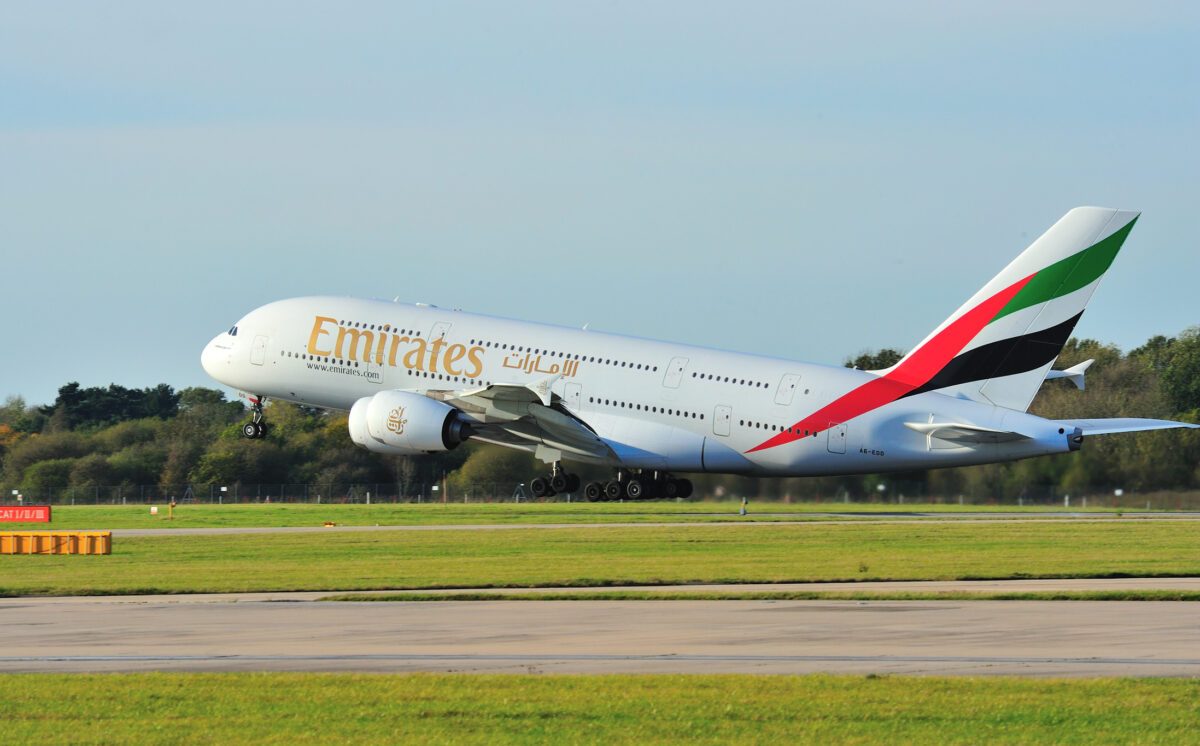
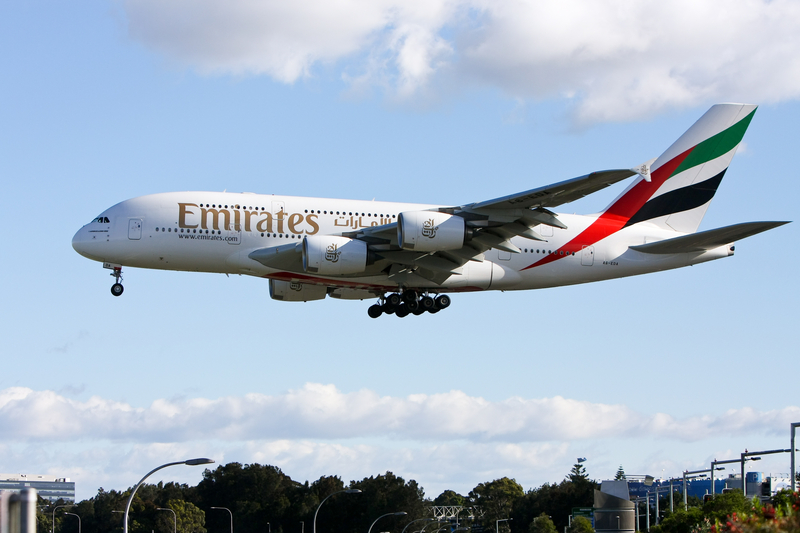
An Emirates Airbus A380 carrying 373 passengers remained on the ground at Hangzhou Xiaoshan International Airport (HGH) for more than 10 hours after severe weather forced the Dubai-to-Shanghai flight to divert.

Flight EK302 was traveling from Dubai International Airport (DXB) to Shanghai Pudong International Airport (PVG) on July 22, 2026, when thunderstorms prevented a safe arrival in Shanghai. The aircraft instead landed at Hangzhou Airport (HGH) at approximately 9:04 p.m. local time.
What was initially expected to be a temporary diversion developed into an overnight disruption involving crew duty limitations, international border procedures and an aircraft technical problem. The first passengers reportedly began leaving the aircraft at around 7:30 a.m., approximately 10 hours and 26 minutes after landing, while the full disembarkation process continued until around 9 a.m. Shanghai Daily’s account of the incident described passengers spending nearly 12 hours aboard the aircraft after it arrived in Hangzhou.
Read our stories in your inbox
Two aviation newsletters. Zero fluff.
Passengers Reported Increasingly Hot Cabin Conditions
Passengers said conditions inside the Airbus A380 deteriorated during the overnight wait, with the cabin reportedly becoming hot and poorly ventilated.
Videos circulated through Chinese social media showed travelers using handheld fans, standing near aircraft doors and asking when they would be permitted to leave. At least one passenger reportedly fainted, while emergency personnel and police attended the aircraft.
Some passengers said the air conditioning stopped providing effective cooling during the early morning hours. Emirates has not confirmed that the environmental control system failed, and its public response did not identify the technical problem affecting the aircraft.
The airline said Flight EK302 had diverted because of adverse weather and was subsequently delayed for an extended period because of a technical fault. Emirates apologized, acknowledged passenger dissatisfaction with the handling of the incident and said its customer affairs team would contact affected travelers. Meals, hotel accommodations and coach transportation to Shanghai were arranged according to passengers’ preferences.
The distinction is important. Passenger reports support the claim that the cabin became uncomfortably hot, but the available evidence does not establish whether the problem involved the A380’s air-conditioning packs, auxiliary power unit, airport-supplied ground air or another aircraft system.
A Short Diversion Became an Overnight Delay
The flight was originally expected to refuel at Hangzhou Airport (HGH) and continue to Shanghai Pudong Airport (PVG) shortly afterward.
Flight information initially showed a proposed 9:34 p.m. departure, only 30 minutes after the A380 landed. That departure was repeatedly postponed as the disruption became more complicated.
Local airport staff said the operating crew reached its maximum permitted duty period after arriving in Hangzhou. Once a crew times out, it cannot legally continue operating merely because the remaining flight is short. Emirates therefore needed another crew qualified to operate the Airbus A380.
That presented an unusual problem. Emirates already serves Hangzhou Airport (HGH), but its scheduled Dubai International Airport (DXB)–Hangzhou service uses the Airbus A350-900 rather than the A380. Emirates introduced the A350 on its Hangzhou route in October 2025.
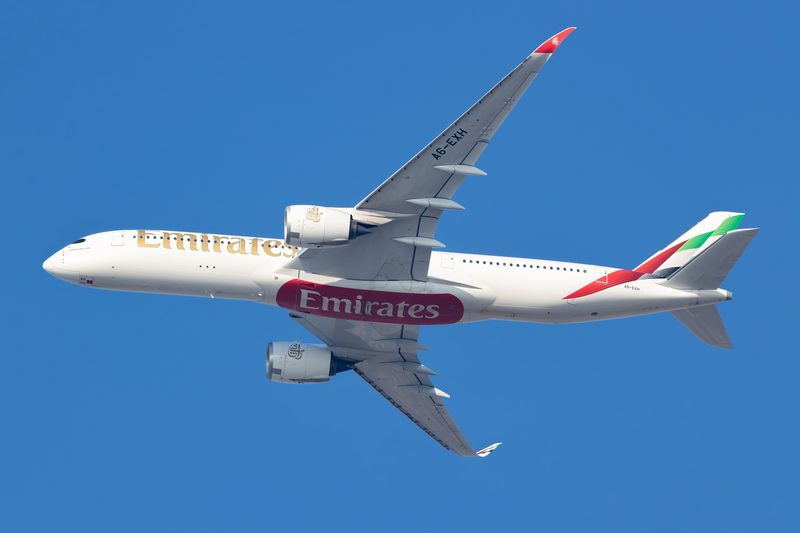
A350 pilots cannot simply substitute for an A380 crew. The aircraft have separate type ratings, operating procedures, cockpit layouts and training requirements. Local reports said an A380-qualified replacement crew had to travel from Shanghai, with the road journey itself taking longer than anticipated.
A technical issue was then reportedly discovered, preventing the replacement crew from immediately continuing to Shanghai Pudong Airport (PVG). Emirates has not disclosed the nature of that fault.
International Border Procedures Complicated Deplaning
Questions have also centered on why the passengers were not allowed to enter the terminal much earlier.
Passengers said cabin announcements referred to customs and border inspection procedures. An announcement made at approximately 6:05 a.m. reportedly explained that border personnel needed to be present before the aircraft doors could be opened and passengers could be transported to the terminal.
Emirates later disputed reports that Chinese border authorities had refused permission for passengers to leave the aircraft. Those positions are not necessarily incompatible: authorities may not have formally rejected a request, but the required personnel and procedures may not yet have been in place.
An international diversion is more complicated than a domestic flight landing at an alternate airport. Although the passengers were already traveling to China, they were scheduled to complete immigration and customs procedures at Shanghai Pudong Airport (PVG), not Hangzhou Airport (HGH).
Once the plan changed from continuing to Shanghai to ending the flight in Hangzhou, the airline, airport, immigration, customs and quarantine authorities needed to organize an unscheduled international arrival involving hundreds of travelers. Passenger documents, entry eligibility, baggage handling and transportation also had to be addressed.
That does not fully explain why the process lasted throughout the night, but it illustrates why opening the doors of a diverted international flight is not always an immediate option.
ID 122516761 | Air © Mark Rodel Dela Rosa | Dreamstime.com
The Airbus A380 Was Operating Below Full Capacity
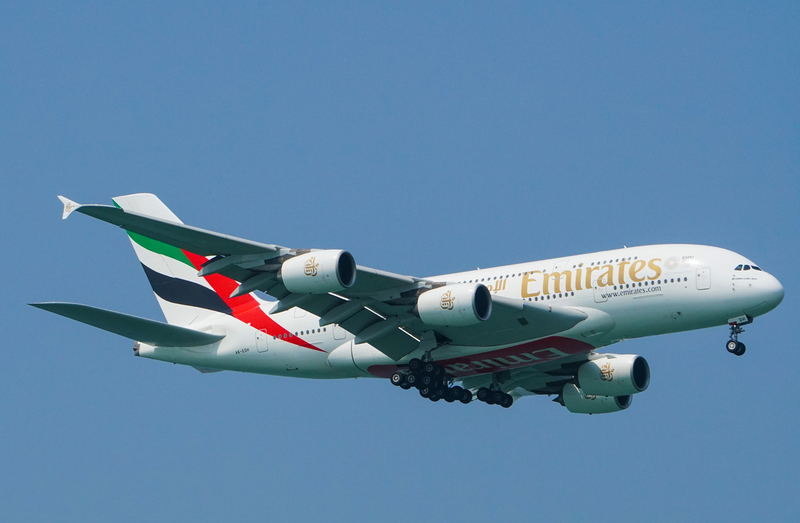
The aircraft involved was A6-EDV, an Airbus A380-861 with manufacturer serial number 101. It made its first flight in October 2011 and was approximately 14 years old at the time of the diversion.
The aircraft is configured with 517 seats: 14 private first-class suites, 76 business-class seats and 427 economy seats. With 373 passengers aboard, the flight was approximately 72% full, excluding operating crew.
The A380-861 is powered by four Engine Alliance GP7200-series turbofan engines. It is the world’s largest passenger aircraft and the only commercial airliner with two full-length passenger decks.
Emirates lists a maximum range of approximately 8,000 nautical miles for the A380 and operates several cabin layouts containing between 484 and 615 seats. The airline’s A380 fleet specifications give the aircraft a length of 238 feet and 6 inches and a wingspan of 261 feet and 8 inches.
The size of the aircraft added another layer of complexity to the diversion. Handling 373 passengers, their baggage and a double-deck widebody requires more ground equipment, buses, staffing and terminal space than a typical narrowbody diversion.
Hangzhou Airport (HGH) was capable of accepting the A380, but an airport’s ability to land and park a large aircraft does not mean it has an A380 flight crew, dedicated spare parts or all the ground resources normally available at an established A380 destination.
Emirates Operates Two Daily Shanghai Flights
Emirates currently operates twice-daily service between Dubai International Airport (DXB) and Shanghai Pudong International Airport (PVG).
Flight EK302 is scheduled as the airline’s A380-operated departure, while the second daily flight, EK304, uses a Boeing 777. Emirates publishes a normal flight time of approximately eight hours and 40 minutes between the two airports. The airline’s Shanghai schedule lists EK302 as departing Dubai Airport (DXB) at 2:50 a.m. and arriving at Shanghai Pudong Airport (PVG) at 3:30 p.m. local time.
Emirates also flies daily from Dubai Airport (DXB) to Hangzhou Airport (HGH), which became its fifth destination in mainland China in July 2025. The airline currently operates 49 weekly passenger flights to five mainland Chinese cities: Beijing, Shanghai, Guangzhou, Shenzhen and Hangzhou.
That existing Hangzhou presence likely made the airport a more practical diversion point than a facility with no Emirates operation. However, the use of an A350 on the scheduled Hangzhou route meant the station was not staffed or equipped in the same way as a regular A380 destination.
Weather Was Only the First Link in the Disruption
The decision to divert away from Shanghai Pudong Airport (PVG) was an operational safety decision made because of severe weather.
Airlines routinely divert when thunderstorms, wind, visibility, runway availability or airport congestion make continuing to the original destination unsafe or impractical. The controversy surrounding EK302 concerns what happened after the A380 landed safely.
Several individually manageable problems occurred in succession. The flight diverted late at night, the original crew reached its duty limit, no replacement A380 crew was immediately available in Hangzhou, a technical fault prevented the aircraft from departing and international-arrival procedures had not been prepared because the original plan was to continue to Shanghai.
Each additional complication reduced the available options. By the time it became clear that the aircraft would not continue promptly, hundreds of passengers had already spent several hours waiting aboard the A380.
The incident demonstrates that a diversion plan must account for more than runway length and fuel availability. For a large international aircraft, airlines must also consider crew qualifications, maintenance support, passenger-processing capabilities and whether the alternate airport can rapidly accommodate an unplanned termination rather than a short technical stop.
Bottom Line
Emirates Flight EK302 diverted from Shanghai Pudong International Airport (PVG) to Hangzhou Xiaoshan International Airport (HGH) on July 22, 2026, after severe weather prevented its planned arrival from Dubai International Airport (DXB).
The Airbus A380, registered A6-EDV, landed at approximately 9:04 p.m. with 373 passengers aboard. The first travelers reportedly began leaving more than 10 hours later, with the entire disembarkation process taking nearly 12 hours.
Passengers described increasingly hot and uncomfortable cabin conditions, and at least one person reportedly fainted. However, Emirates has not confirmed that the aircraft’s air-conditioning system failed. The airline attributed the extended disruption to a technical fault without identifying the affected system.
A combination of crew duty limits, the lack of an immediately available A380-qualified replacement crew, technical problems and international border procedures turned what was expected to be a brief weather diversion into an overnight ordeal.
Emirates has apologized and provided meals, hotels and ground transportation to Shanghai. The incident nevertheless raises serious questions about how airlines and airports should manage passenger welfare when an international diversion evolves from a short operational stop into a prolonged ground delay.
Keep reading FlyMag
Get the Daily Brief in the morning or the Route Watch weekly recap on Fridays. Or both.