Air China Opens Rare Fifth-Freedom A330 Route From Copenhagen to Iceland
Air China is adding Iceland to its network with an unusual one-stop route that will also create a new fifth-freedom service within Europe.

Beginning October 26, 2026, the Chinese flag carrier plans to operate three weekly flights from Beijing Capital International Airport (PEK) to Keflavík International Airport (KEF) via Copenhagen Airport (CPH).
The service will use an Airbus A330-300 and carry the same CA807 and CA808 flight numbers on both sides of Copenhagen Airport (CPH). It will be a direct, one-stop connection between China and Iceland rather than a nonstop flight.
Read our stories in your inbox
Two aviation newsletters. Zero fluff.
More importantly for travelers who are not beginning or ending their journeys in China, Air China is selling tickets exclusively between Copenhagen Airport (CPH) and Keflavík Airport (KEF). That gives the airline local fifth-freedom traffic rights between Denmark and Iceland and introduces a widebody aircraft with lie-flat Business Class seats to one of Europe’s largest Iceland markets.
Air China opened reservations for the new route on July 22, according to the initial winter 2026 schedule filing.
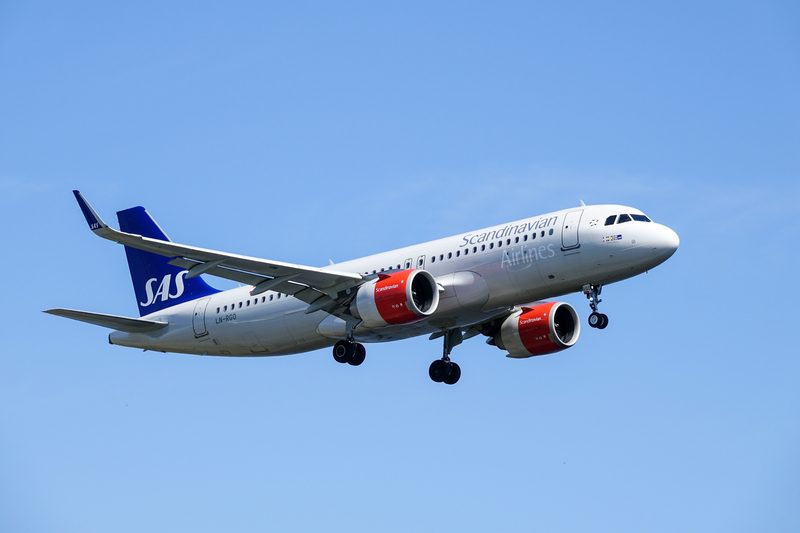
Air China’s Beijing–Copenhagen–Keflavík Schedule
Flights will operate on Mondays, Thursdays and Saturdays, with all times shown locally.
| Flight | Route | Departure | Arrival |
|---|---|---|---|
| CA807 | Beijing Capital Airport (PEK)–Copenhagen Airport (CPH) | 3:30 a.m. | 6:30 a.m. |
| CA807 | Copenhagen Airport (CPH)–Keflavík Airport (KEF) | 8:45 a.m. | 11:15 a.m. |
| CA808 | Keflavík Airport (KEF)–Copenhagen Airport (CPH) | 1:45 p.m. | 5:55 p.m. |
| CA808 | Copenhagen Airport (CPH)–Beijing Capital Airport (PEK) | 8:30 p.m. | 12:20 p.m. the following day |
The outbound schedule includes a two-hour-and-15-minute stop at Copenhagen Airport (CPH), while the return has a two-hour-and-35-minute stop.
The complete journey from Beijing Capital Airport (PEK) to Keflavík Airport (KEF) is scheduled to take approximately 14 hours and 45 minutes. The return to Beijing is slightly shorter at around 14 hours and 35 minutes.
Passengers traveling between China and Iceland will remain on the same flight number, although they may still need to leave the aircraft during the Copenhagen stop to complete immigration, security or other airport procedures.
The Chinese Embassy in Iceland described the new operation as the first scheduled direct air link between China and Iceland.
What Makes This a Fifth-Freedom Flight?
Fifth-freedom rights allow an airline to carry passengers between two foreign countries when the flight originates or ends in the airline’s home country.
In this case, Air China’s home country is China. The aircraft will leave Beijing Capital Airport (PEK), stop at Copenhagen Airport (CPH) and continue to Keflavík Airport (KEF).
Air China is permitted to sell all three potential journeys:
- Beijing Capital Airport (PEK) to Copenhagen Airport (CPH)
- Beijing Capital Airport (PEK) to Keflavík Airport (KEF)
- Copenhagen Airport (CPH) to Keflavík Airport (KEF)
Local Copenhagen–Keflavík fares are already available through Air China’s reservation system, confirming that travelers can book only the European portion of the service.
That makes the flight much more commercially flexible than a route dependent entirely on passengers traveling between China and Iceland.
Air China can combine long-haul Beijing–Copenhagen traffic, Beijing–Iceland tourism demand and passengers traveling only between Denmark and Iceland on the same Airbus A330-300.
The A330 Brings a Different Product to Iceland
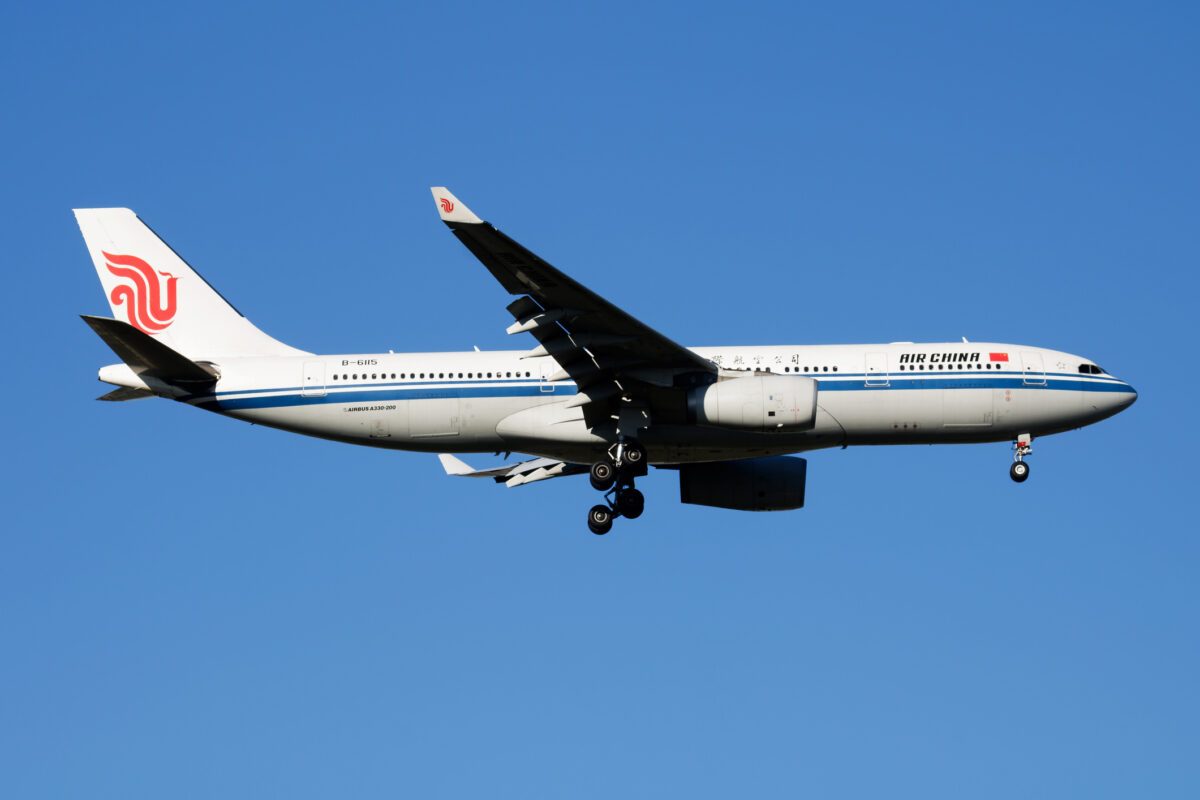
Air China will use an Airbus A330-300 on the route.
The twin-engine widebody is considerably larger than the Airbus A320-family and Boeing 737 aircraft normally used between Copenhagen Airport (CPH) and Keflavík Airport (KEF). Its cabin is also wider and typically provides a two-four-two Economy Class layout, leaving fewer middle seats than the three-three configuration found on most narrowbody aircraft.
Business Class is the principal attraction.
Air China operates A330-300s with forward cabins arranged in a two-two-two configuration. On aircraft equipped with its long-haul product, the seats convert into fully flat beds.
That is a significant improvement over the recliner-style premium seating normally offered on flights to Iceland.
Icelandair’s Saga Premium product provides wider seats, additional legroom, lounge access and enhanced service, but it does not offer fully flat beds. SAS generally operates Copenhagen–Keflavík flights with European-style Business Class seating rather than a dedicated lie-flat product.
Some North American airlines use lie-flat-equipped aircraft to Keflavík Airport (KEF) seasonally. Based on currently published schedules, however, Air China appears positioned to offer Iceland’s only regular year-round widebody service with flat-bed Business Class.
That makes the route distinctive, although calling it the most luxurious way to reach Iceland remains subjective. Air China’s A330 product is comfortable, but its two-two-two layout does not provide direct aisle access for every passenger.
The Published Seat Count Requires Clarification
Reports have described the aircraft as having 301 seats, including 30 Business Class seats and 271 Economy Class seats.
That combination does not match Air China’s published fleet information.
The airline’s official A330 cabin guide shows several configurations across its A330 fleet. Its 301-seat layout contains:
- 30 Business Class seats
- 16 Premium Economy seats
- 255 Economy Class seats
Air China also lists A330 layouts with 311, 283, 265 and 237 seats. The 237-seat version has 30 Business Class seats and 207 Economy Class seats, while the higher-density aircraft have smaller premium cabins.
The airline has not publicly guaranteed which individual A330 configuration will operate every Beijing–Copenhagen–Keflavík flight.
Aircraft assignments can also change for maintenance or operational reasons. Travelers booking specifically for the lie-flat product should examine the seat map for their departure rather than relying solely on the generic A330-300 designation.
Copenhagen Is a Logical Intermediate Stop
Copenhagen Airport (CPH) is an established Air China destination, giving the airline an existing operation, sales presence and ground-handling structure in Denmark.
Air China already links Beijing Capital Airport (PEK) with Copenhagen Airport (CPH), although its existing flights use different flight numbers. Extending another service from Copenhagen to Iceland is less complex than establishing an entirely new intermediate station.
Copenhagen is also one of Keflavík Airport’s largest European markets.
The route is currently served nonstop by Icelandair and SAS, giving Air China an established pool of passengers to pursue. Both airlines offer considerably more frequencies, but neither normally uses a lie-flat-equipped widebody on the route.
SAS actively markets nonstop Copenhagen–Reykjavík service, while Icelandair uses Copenhagen as an important European destination and connecting market.
Air China will therefore compete on product and aircraft size rather than frequency.
Three weekly flights are unlikely to attract travelers who need complete schedule flexibility. The service could nevertheless appeal to leisure passengers, aviation enthusiasts and premium travelers willing to organize their trips around the operating days.
A Widebody on a 1,337-Mile Route
The sector between Copenhagen Airport (CPH) and Keflavík Airport (KEF) covers approximately 1,337 miles.
That is a relatively short mission for an Airbus A330-300, an aircraft developed for medium- and long-haul international service. The westbound flight is scheduled for three hours and 30 minutes, while the eastbound return is blocked at three hours and 10 minutes.
Flying a widebody on a route of this length creates both benefits and costs.
The A330 offers more seats, additional cargo capacity and a more spacious passenger cabin. It can also provide a genuine long-haul Business Class product that competing narrowbody aircraft cannot match.
However, the A330 has a higher total trip cost than an Airbus A320neo or Boeing 737 MAX. Air China must generate enough revenue across the complete Beijing–Copenhagen–Keflavík rotation to justify deploying the larger aircraft.
The fifth-freedom sector helps reduce that risk.
Rather than carrying empty seats from Copenhagen Airport (CPH) to Keflavík Airport (KEF) after Beijing passengers disembark, Air China can fill the aircraft with travelers beginning their journeys in Denmark.
The Route Is Designed Around Several Passenger Markets
Air China does not need the China–Iceland market to support the entire aircraft by itself.
The flight can carry passengers between Beijing Capital Airport (PEK) and Copenhagen Airport (CPH), between Beijing and Iceland, and locally between Copenhagen and Keflavík.
That diversified traffic base is one of the greatest advantages of a fifth-freedom operation.
Chinese tourism demand provides the most obvious reason for extending the flight to Iceland. Statistics Iceland reported that hotel stays by Chinese visitors increased by more than 30% year over year in April 2026, indicating continued recovery in the market even without service from a Chinese airline.
The route also gives Icelandic travelers a one-stop connection to Beijing on a single Air China service. From Beijing Capital Airport (PEK), passengers can connect across the airline’s extensive domestic Chinese and Asian network.
Copenhagen–Keflavík passengers create a third source of revenue, particularly if Air China prices Business Class competitively against Icelandair and SAS.
Why Air China Is Not Flying Nonstop
The great-circle distance between Beijing Capital Airport (PEK) and Keflavík Airport (KEF) is approximately 5,820 miles.
An Airbus A330-300 can technically operate routes of that length under suitable conditions, but a nonstop Iceland service would depend almost entirely on traffic between China and Iceland. That would create considerably more commercial risk.
Stopping in Copenhagen gives Air China access to a much larger established market.
It also allows the airline to divide the journey into two more manageable sectors and use an airport it already serves. The carrier can generate revenue from passengers and cargo between Beijing and Denmark before continuing to Iceland.
The disadvantage is additional journey time. A nonstop flight would be faster, while the Copenhagen stop adds more than two hours to the itinerary in each direction.
Still, a one-stop flight on the same airline is simpler than an itinerary requiring separate tickets or a connection between unrelated carriers.
The Winter Launch Is an Interesting Choice
Air China will begin the service at the start of the northern winter schedule rather than during Iceland’s busiest summer tourism period.
An October 26 launch positions the route for northern lights tourism, winter holidays and travel around the Chinese New Year period.
Winter operations also introduce challenges.
Weather at Keflavík Airport (KEF) can include strong winds, snow and rapidly changing conditions. The A330 is fully capable of operating in that environment, but disruptions in Iceland could affect the complete aircraft rotation back through Copenhagen Airport (CPH) to Beijing Capital Airport (PEK).
A delayed Keflavík departure could create missed slots, crew-duty complications or onward delays at Copenhagen and Beijing.
Three-times-weekly service provides some recovery time between rotations, but it also means passengers affected by a cancellation may have to wait several days for the next Air China departure.
Air China Adds New Competition Without Matching Frequency
Air China will enter a route where Icelandair and SAS have strong advantages in frequency, brand recognition and local distribution.
Icelandair can also connect passengers through Keflavík Airport (KEF) between Europe and North America. SAS can feed travelers through its Copenhagen Airport (CPH) hub from destinations across Europe.
Air China’s advantage will be its widebody cabin and lie-flat Business Class seating.
The carrier may also use attractive introductory fares to develop local awareness. Because the Copenhagen–Keflavík sector is part of a longer aircraft rotation, Air China may be able to price otherwise empty seats aggressively while protecting higher-yield revenue from passengers traveling to or from Beijing.
Award travelers could also find the route interesting because Air China is a member of Star Alliance. Availability and partner redemption pricing will depend on the loyalty program used and the inventory Air China releases.
Bottom Line
Air China will launch three weekly flights from Beijing Capital International Airport (PEK) to Keflavík International Airport (KEF) via Copenhagen Airport (CPH) on October 26, 2026.
The route will use an Airbus A330-300 and operate as a fifth-freedom service between Denmark and Iceland, allowing passengers to book only the Copenhagen Airport (CPH)–Keflavík Airport (KEF) segment.
That creates one of Europe’s more unusual short-haul premium opportunities: a roughly three-hour flight aboard a widebody aircraft with lie-flat Business Class seats.
The route is also commercially more sophisticated than a simple China–Iceland service. Air China can combine passengers traveling between Beijing and Copenhagen, Beijing and Iceland, and Copenhagen and Iceland on the same aircraft.
One important detail remains unresolved. Although reports describe a 301-seat aircraft with 30 Business Class and 271 Economy Class seats, that configuration does not appear in Air China’s official fleet information. Its published 301-seat A330 has Business, Premium Economy and Economy cabins.
The exact aircraft layout should therefore be treated as subject to confirmation.
Even with that caveat, Air China is introducing a product that Iceland’s year-round market rarely sees. Icelandair and SAS will retain the frequency advantage, but neither normally offers a flat bed between Copenhagen and Keflavík.
For travelers who can work around a three-times-weekly schedule, Air China could become the most comfortable—and certainly one of the most unusual—ways to fly between continental Europe and Iceland.
Keep reading FlyMag
Get the Daily Brief in the morning or the Route Watch weekly recap on Fridays. Or both.