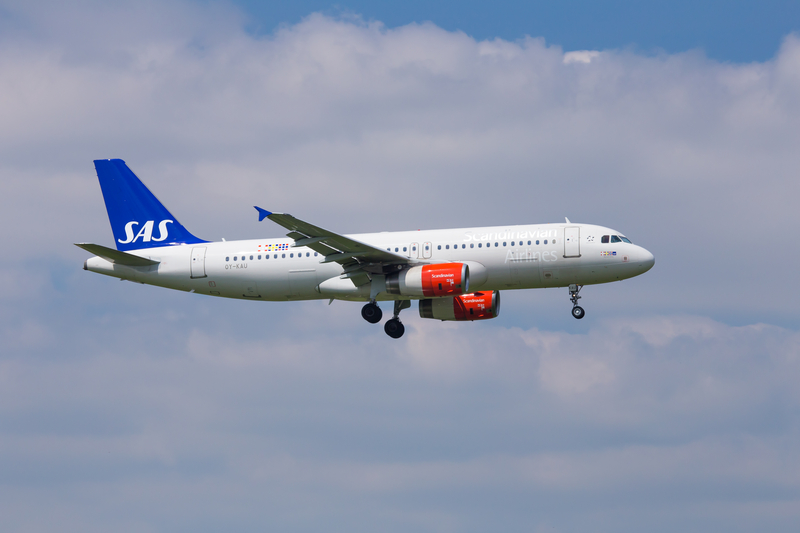
What should have been a routine late-evening hop from Munich (MUC) to Copenhagen (CPH) turned into an all-night ordeal on the ramp, after passengers were boarded onto a remote-stand aircraft and later told they could not be brought back to the terminal once the flight was canceled.

The flight in question—Lufthansa (LH) LH2446 from Munich Airport (MUC) to Copenhagen Airport (CPH)—was scheduled to depart at 21:30 and arrive at 23:05 local time, a short sector of roughly 500 miles that typically blocks about 1 hour and 35 minutes gate-to-gate. Instead, passenger accounts describe a rolling delay that ended with the flight canceled—followed by hours waiting onboard because onward transport back to the terminal could not be arranged.
How the night unfolded on Lufthansa’s MUC–CPH run
According to multiple passenger reports circulating widely online, travelers were still taken out to the aircraft at a remote stand at Munich (MUC) despite the developing delay. Once onboard, the departure time continued to slide, until the operation was ultimately called off.
Read our stories in your inbox
Two aviation newsletters. Zero fluff.
At that point, most passengers would expect the standard remote-stand reversal: stairs repositioned, doors opened, and buses returning everyone to the terminal. Instead, passengers say they remained seated while the crew periodically updated them that buses were being sought. Later in the night, they report being told that Munich (MUC) had effectively transitioned into its overnight posture and that driver availability had become the limiting factor—meaning the aircraft could not be safely offloaded at the stand.
Passengers were eventually returned to the terminal in the early morning hours and rebooked onward to Copenhagen (CPH), but not before spending much of the night in short-haul seating with limited onboard provisions.
Why remote stands can become a dead end after hours
For aviation professionals, the most telling operational detail here is the remote stand.
A remote stand is not just “parking without a jet bridge.” It’s a dependency chain:
-
You need mobile stairs positioned at the correct doors.
-
You need buses (and qualified drivers) to move passengers across controlled airside routes.
-
You need airside coordination—ramp control, handling supervision, and, depending on the airport, security staffing—to run that move safely.
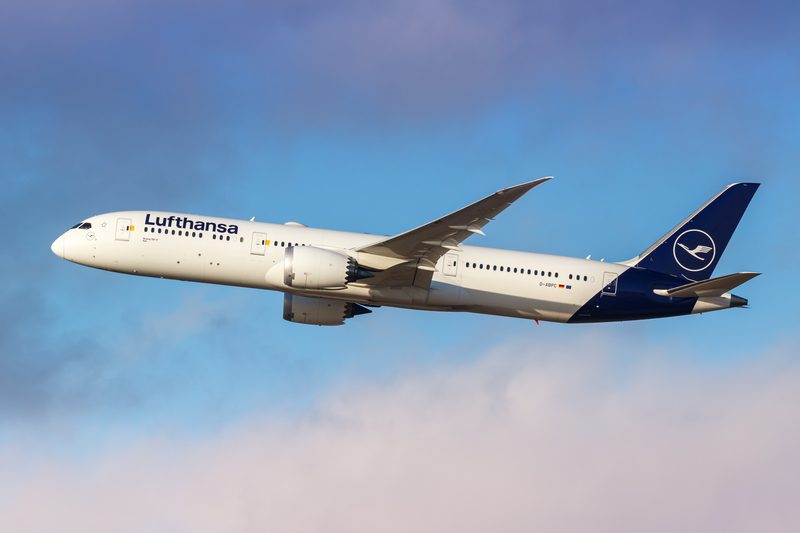
If any one element drops out—especially buses and drivers—the aircraft can become functionally isolated even though it’s physically parked at a major hub. This is why most airports treat remote-stand passenger handling as a tightly scheduled service with defined operating windows, rather than an on-demand capability that can be spun up at 02:00.
Could the aircraft simply taxi to a gate? Sometimes, yes—but that’s not always operationally available. Gate availability late at night is constrained by arrivals, curfew-driven sequencing, tow plans, and the fact that terminal operations (staffing, security posts, gate readiness) often scale down sharply after the last departure banks.
The aircraft: Airbus A320neo realities when a “short hop” becomes a night onboard
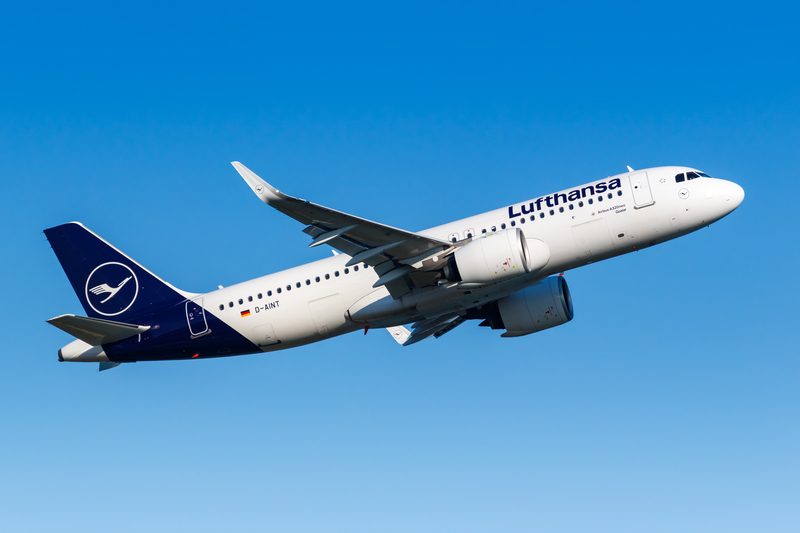
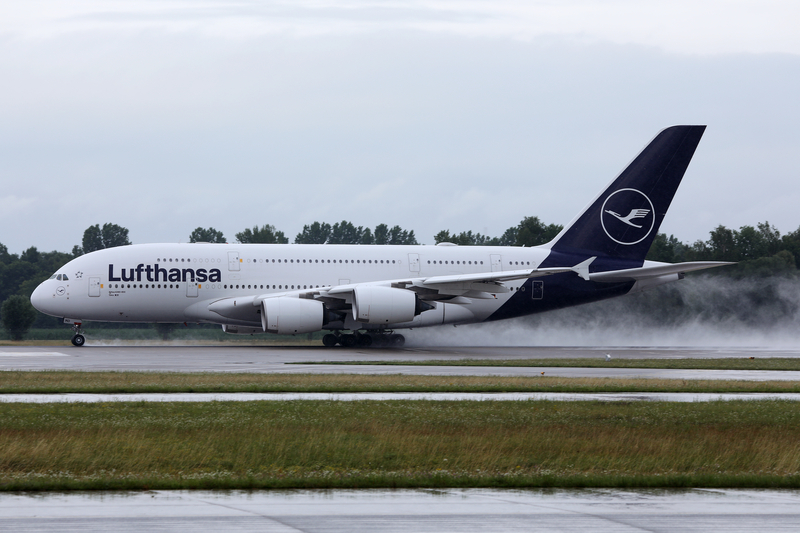
LH2446 was operated by an Airbus A320neo (A20N), a narrowbody built for high-frequency short- and medium-haul work. In Lufthansa configuration, the type is commonly set up around 180 seats, and the airframe’s technical profile reflects its mission: 37.57 m length, 34.10 m wingspan, and Pratt & Whitney PW1133G geared turbofan engines.
On a flight designed to be airborne for about an hour, the cabin is provisioned accordingly—limited catering, limited spare water, and typically no pillows or blankets. Once you extend a short-haul boarding into an overnight stay, the product mismatch becomes obvious:
-
Tight pitch and fixed recline limitations in short-haul seating
-
Minimal comfort inventory (blankets/pillows are not standard)
-
Finite galley stock, because the planned service cycle is short
-
Lavatory servicing constraints if the aircraft is parked longer than scheduled on a remote stand
None of this excuses the outcome, but it helps explain why these situations deteriorate quickly once the operation moves from “late departure” to “extended ground-hold without infrastructure.”
Curfew pressure: Munich (MUC) doesn’t operate like an all-night airport
Munich (MUC) is a major European hub, but it is not operationally “24/7” in the way some North American hubs are. The airport’s night-flight regime includes a core restriction window from 00:00 to 05:00, with additional constraints in the shoulder periods.
That matters because once a flight slides toward midnight, the decision tree changes. The airline may still be working the problem—crew legality, ATC slots, technical release, passenger connections—but the airport’s ability to support normal passenger movements and gate processes is also narrowing. In other words, the closer a delayed departure gets to the curfew boundary, the more likely the operation becomes a cancellation, and the more important it is to execute a clean, well-resourced deplaning plan immediately.
If the flight truly was not going to depart, keeping passengers onboard at a remote stand through the airport’s overnight operating posture is almost the worst possible outcome: you’ve canceled the flight but left customers in the most infrastructure-limited place you can put them.
The bigger issue: hub resilience isn’t just aircraft and gates—it’s staffing models
This is what makes the incident so jarring to industry observers: Munich (MUC) is a Lufthansa cornerstone hub, where scale should translate into recovery options.
But modern hub operations are only as resilient as their most “unsexy” links—third-party handling contracts, shift handovers, late-night staffing minimums, and the contingency processes that bridge the gap between “we can’t depart” and “we can safely deplane.”
When a flight is at a contact stand, the terminal is the fallback. When it’s at a remote stand, the fallback is a coordinated airside transport system. If that system is not guaranteed after a certain hour, then the decision to board passengers to a remote stand during a rolling delay deserves scrutiny—because it creates a scenario where the operation can fail in a way that feels unacceptable, even if every individual team is acting within their constraints.
Bottom Line
Lufthansa’s LH2446 from Munich (MUC) to Copenhagen (CPH) became an operational cautionary tale: passengers boarded a remote-stand Airbus A320neo for a short night flight, only to face a cancellation and—by their accounts—hours confined onboard because buses and staffing to return them to the terminal weren’t available in the overnight window.
At a hub like Munich (MUC), the expectation is not perfection, but predictable recovery. This incident will likely prompt hard questions about remote-stand boarding decisions during rolling delays, after-hours airside transport guarantees, and the escalation protocols that should prevent a canceled flight from turning into an involuntary overnight stay on the apron.