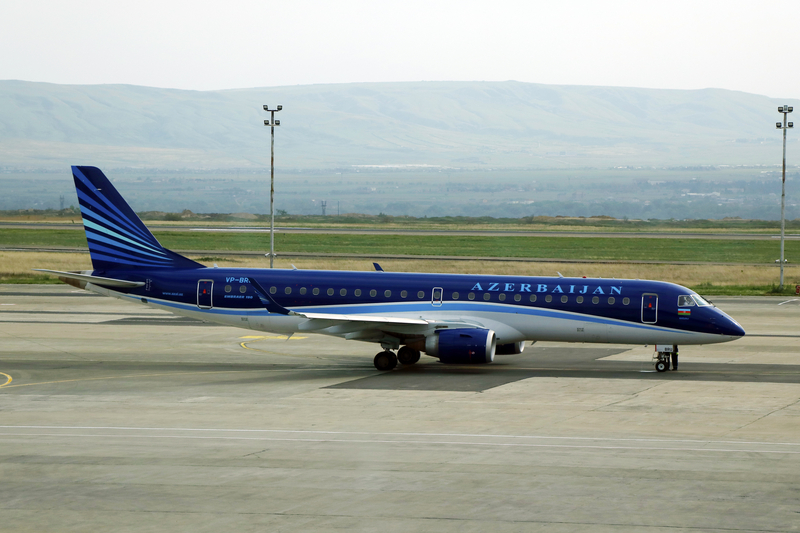
Azerbaijan has temporarily restricted parts of its southern airspace after drones launched from Iranian territory entered the Nakhchivan Autonomous Republic, triggering immediate aviation safety concerns around Nakhchivan International Airport (NAJ). The precautionary closure was implemented via a short-notice NOTAM, keeping civilian traffic clear while emergency and security teams assessed the situation and the surrounding airspace environment.
The timing couldn’t be more sensitive. Airlines are already threading an increasingly complex route map across the Middle East and adjacent regions, with multiple air corridors constrained by elevated security risk. In that context, even a short-lived restriction in Azerbaijan—particularly near the country’s southern edge—can ripple quickly into dispatch planning across Europe–Central Asia and Europe–Asia routings.
What Happened Near Nakhchivan (NAJ)
Reports indicate that several drones crossed into Azerbaijani territory over the Nakhchivan region, with at least one unmanned aircraft impacting near the airport complex. Authorities initiated emergency procedures, and the airspace restriction was designed to minimize risk from:
Read our stories in your inbox
Two aviation newsletters. Zero fluff.
-
potential additional airborne threats,
-
debris or unexploded remnants near critical airport infrastructure,
-
uncertainty around runway/taxiway safety and terminal integrity,
-
and the wider security posture in the immediate area.

Aviation regulators tend to act conservatively in scenarios like this because “unknowns” are the most dangerous variable. If there is any possibility of ongoing threat activity or airside contamination, the safest operational decision is to clear the airspace and buy time for assessment.
Why Nakhchivan (NAJ) Is a High-Sensitivity Airport
Nakhchivan (NAJ) is not just another domestic point on Azerbaijan’s route map. It is the primary aviation gateway for an exclave that is geographically separated from mainland Azerbaijan, making air travel one of the most practical and reliable ways to maintain routine connectivity with the capital region around Baku (GYD).
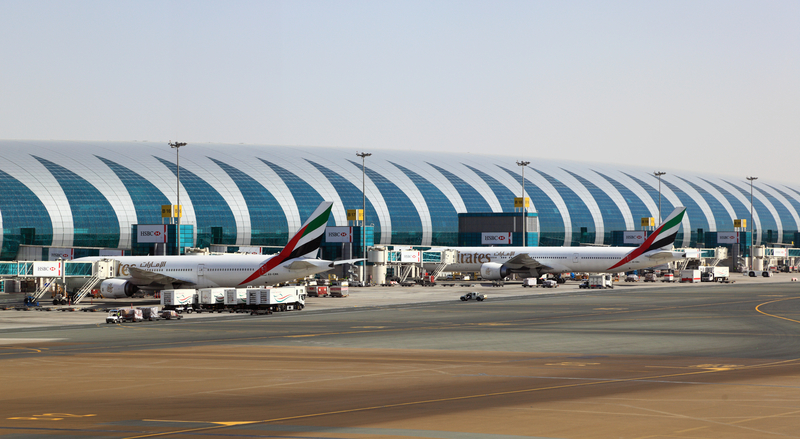
NAJ’s airfield capability also adds to the urgency of any incident nearby. The airport is equipped with two long parallel runways—each roughly 3,300 meters (about 10,827 feet)—providing robust performance margins for:
-
narrowbody commercial aircraft such as the Airbus A320 family and Boeing 737 family,
-
government and military aircraft movements,
-
and high-weight operations that require runway length headroom.

Long runways are a strategic asset—but they also require strict risk management. Any impact near terminal areas, apron zones, or runway environments raises immediate questions about debris, access control, and safe continuation of operations.
The Airspace Angle: Why Southern Azerbaijan Matters More Than It Used To
In a “normal” year, a brief restriction in southern Azerbaijan might be a localized disruption. In 2026, it’s a different story. As airlines increasingly avoid or limit exposure to certain Middle East air corridors, the Caucasus corridor—routing through areas around Azerbaijan and nearby FIRs—has become more operationally important.
When traffic concentrates into fewer viable routes, the system becomes less tolerant of disruptions. A short-notice restriction can force dispatchers into:
-
longer reroutes (more track miles and higher fuel burn),
-
revised alternates and ETOPS planning for long-range flights,
-
tighter crew duty margins due to longer block times,
-
and increased ATC complexity as flows compress into fewer airways and flight levels.
The impact isn’t always dramatic on a map—but it’s real in the operation. A few extra minutes per flight multiplied across hundreds of daily overflights is enough to create downstream scheduling pressure, missed connections, and higher costs.
What Airlines Typically Do When a NOTAM Closes a Key Area
When a region experiences an unexpected security event near an airport like Nakhchivan (NAJ), airline operations centers usually move through a familiar sequence:
-
Immediate avoidance of the restricted area, including updated flight planning and refiled routings.
-
Diversion and delay contingencies, especially if aircraft are already airborne and need alternates or holding decisions.
-
Gradual reopening in phases once authorities confirm the airfield and surrounding airspace are safe.
-
Conservative normalization, with carriers often continuing to avoid the area until stability is clearly re-established.
Even after a restriction is lifted, airlines may maintain reroutes temporarily because risk assessments are not updated in real time. They’re updated when the threat picture is reliably clear.
Bottom Line
Azerbaijan’s temporary restriction of southern airspace after a drone incursion near Nakhchivan International Airport (NAJ) highlights a growing reality for global aviation: as more airlines rely on alternative corridors to bypass higher-risk airspace, countries like Azerbaijan become more strategically important to network reliability.
Nakhchivan’s unique geography and NAJ’s role as the exclave’s primary gateway make any security incident near the airport operationally sensitive. And in today’s routing environment, even short-duration NOTAMs can have outsized effects—forcing detours, tightening crew and fuel margins, and adding friction to an already stressed regional air traffic map.
Keep reading FlyMag
Get the Daily Brief in the morning or the Route Watch weekly recap on Fridays. Or both.