Riyadh Air Moves Closer To U.S. Flights After DOT Approval
Riyadh Air has cleared an important U.S. regulatory step as it prepares for future flights between Saudi Arabia and the United States.
The new Saudi carrier has received approval from the U.S. Department of Transportation to operate flights to and from the United States.
The decision gives Riyadh Air the economic authority it needs for future U.S. service. It also brings the airline one step closer to entering one of the world’s most important long-haul markets.
Read our stories in your inbox
Two aviation newsletters. Zero fluff.
However, this is not a route launch.
Riyadh Air has not announced U.S. cities, launch dates, or schedules. The approval simply removes a major regulatory barrier.
What The DOT Approval Means
Foreign airlines cannot simply start flying to the United States.
They first need economic authority from the U.S. Department of Transportation. They also need safety authority from the Federal Aviation Administration.
Riyadh Air has now cleared the DOT side of that process.
That gives the airline permission to move forward with future passenger and cargo services between Saudi Arabia and the U.S.
It is a major step, but not the final one.
Before tickets go on sale, Riyadh Air will still need the normal route, safety, airport, crew, and operational approvals.
A Big Step For A Young Airline
Riyadh Air is still a very new airline.
The carrier was launched in 2023 and is owned by Saudi Arabia’s Public Investment Fund. It is part of the country’s larger plan to grow tourism, logistics, business travel, and non-oil industries.
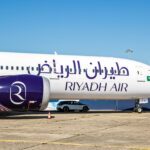
The airline wants to serve more than 100 destinations by 2030.
That is an aggressive goal.
To reach it, Riyadh Air needs access to major global markets. The United States is one of the most important.
A U.S. route would give the carrier access to high-value business traffic, premium leisure demand, Saudi–U.S. corporate travel, and long-haul connecting passengers.
The Boeing 787-9 Is The Launch Aircraft
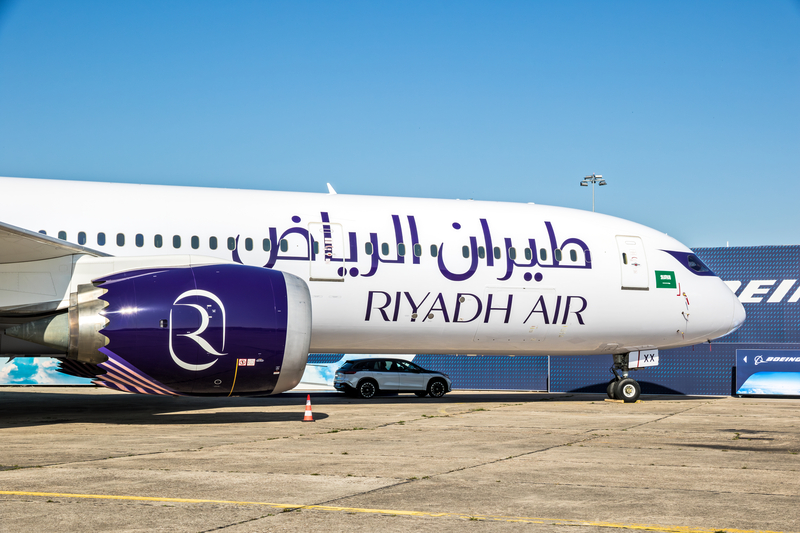
The Boeing 787-9 Dreamliner is central to Riyadh Air’s early network.
Boeing delivered the airline’s first two 787 Dreamliners earlier this month. They are the first aircraft from Riyadh Air’s order for up to 72 787s.
The 787-9 is a logical aircraft for future U.S. service.
It has the range for long intercontinental routes. It also has lower trip costs than larger widebodies, which gives a new airline more flexibility.
Boeing lists the 787-9 with a range of 7,565 nautical miles. That puts many U.S. cities within reach from King Khalid International Airport (RUH) in Riyadh.
A Premium-Heavy Cabin
Riyadh Air’s 787-9 cabin is designed around a premium passenger experience.
The airline says the aircraft will seat 290 passengers across four cabins: Business Elite, Business, Premium Economy, and Economy.
That includes four Business Elite seats, 24 Business seats, 39 Premium Economy seats, and 223 Economy seats.
This layout tells us a lot about the airline’s strategy.
Riyadh Air is not trying to launch as a low-cost carrier. It is aiming for a premium global network position, closer to the service model of large Gulf and Asian long-haul airlines.
That matters for U.S. routes.
Long-haul U.S.–Saudi flying will need strong premium demand to work well. Business travelers, government traffic, corporate accounts, and high-end leisure passengers will all be important.
No U.S. Routes Have Been Named Yet
Riyadh Air has not confirmed its first U.S. destination.
That is important.
New York, Washington, Los Angeles, and other major U.S. gateways may all make sense on paper. But the airline has not publicly announced a launch city.
For now, the DOT approval gives Riyadh Air the right to prepare.
The final route choice will depend on aircraft availability, slots, commercial demand, partnerships, airport handling, and network timing.
The airline is still building its fleet. It is also launching its first public network in phases.
That means U.S. flights may take time.
London Came First
Riyadh Air’s first major international public service is to London Heathrow (LHR).
The airline launched its first London flight using its new Boeing 787 fleet this month.
That route was an obvious first step.
London is one of the world’s most important premium long-haul markets. It also has strong Saudi business, government, student, and leisure demand.
U.S. service would be the next major symbolic jump.
A Riyadh–U.S. route would put Riyadh Air into direct long-haul competition with some of the world’s largest network airlines.
Delta Partnership Adds Strategic Weight
Riyadh Air already has an important U.S. partner.
In 2024, Delta Air Lines and Riyadh Air announced a strategic cooperation agreement.
Delta said it would be Riyadh Air’s exclusive partner in North America, while Riyadh Air would be Delta’s exclusive partner in Riyadh and beyond.
Delta has also announced its own nonstop service from Atlanta (ATL) to Riyadh (RUH), starting October 23, 2026.
That matters for Riyadh Air.
The airline can use a U.S. partnership to build feed before or alongside its own U.S. flights. Delta can also help connect passengers beyond the first U.S. gateway.
For a startup airline, that kind of partnership is valuable.
Saudi–U.S. Aviation Links Are Growing
The DOT approval comes at a time when Saudi–U.S. air links are expanding.
Delta’s planned Atlanta–Riyadh route will create a new nonstop link from the U.S. to Saudi Arabia.
Riyadh Air’s eventual entry would add a Saudi-operated competitor on the same broader country pair.
That could strengthen travel between the two countries.
It could also support Saudi Arabia’s Vision 2030 goals, which include growing tourism, attracting investment, and making the Kingdom a larger global business destination.
Aviation is central to that plan.
Saudi Arabia wants Riyadh to become a major global hub. Riyadh Air is one of the main tools for that strategy.
The Fleet Plan Is Ambitious
Riyadh Air’s fleet plan is large for a startup.
The airline has ordered up to 72 Boeing 787 aircraft. It also has plans for Airbus narrowbody and widebody aircraft, including the Airbus A321neo and Airbus A350.
That gives the airline a multi-type growth plan.
The 787-9 will handle early long-haul and regional routes. The A321neo can support thinner or shorter markets. The A350 can give Riyadh Air more range and capacity on future high-demand long-haul routes.
For U.S. flying, the 787-9 is the most likely first aircraft.
It is already arriving, and it gives Riyadh Air enough capability to start long-haul service without waiting for later fleet types.
Twenty-Two Destinations By 2027
CEO Tony Douglas has said Riyadh Air plans to serve 22 cities by March 2027.
That is a fast ramp-up.
The airline has announced routes including Cairo (CAI), Dubai (DXB), Jeddah (JED), Madrid (MAD), Manchester (MAN), and London (LHR). More destinations are expected as aircraft arrive.
Still, a fast launch creates risk.
Every new route needs aircraft, crews, maintenance coverage, ground handling, sales support, airport systems, and operational reliability.
A new airline can generate headlines quickly. Sustaining a network is harder.
That is why the U.S. approval is important, but not enough by itself.
Riyadh Air must now build the operating platform to support long-haul growth.
Why U.S. Service Matters
U.S. flights would give Riyadh Air more than prestige.
They would connect Saudi Arabia’s capital with one of the world’s largest business and aviation markets.
The United States has strong links to Saudi Arabia through energy, finance, defense, technology, education, tourism, and government travel.
There is also growing interest in Saudi Arabia as the country opens more tourism and entertainment projects.
For Riyadh Air, U.S. routes would support both origin-and-destination traffic and connecting traffic.
A traveler could fly from the U.S. to Riyadh, then continue to the Middle East, South Asia, Africa, or other parts of the airline’s future network.
That is the long-term hub strategy.
The U.S. Market Will Be Competitive
Entering the U.S. market will not be easy.
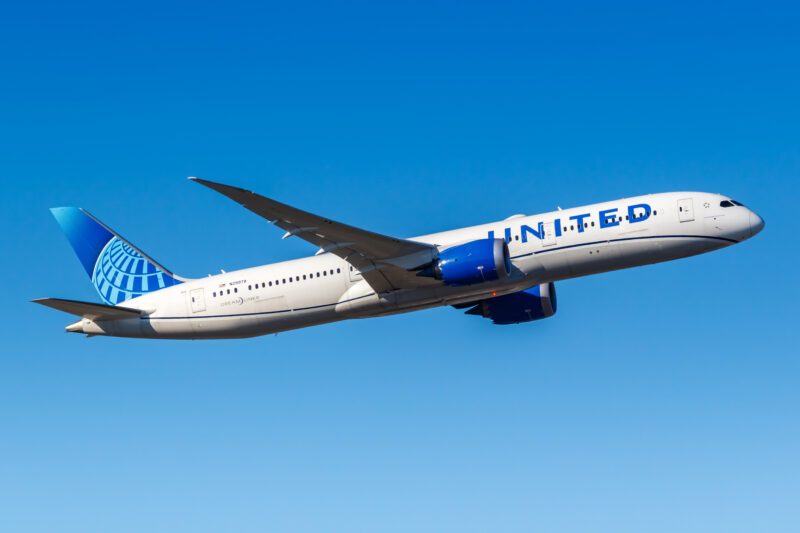
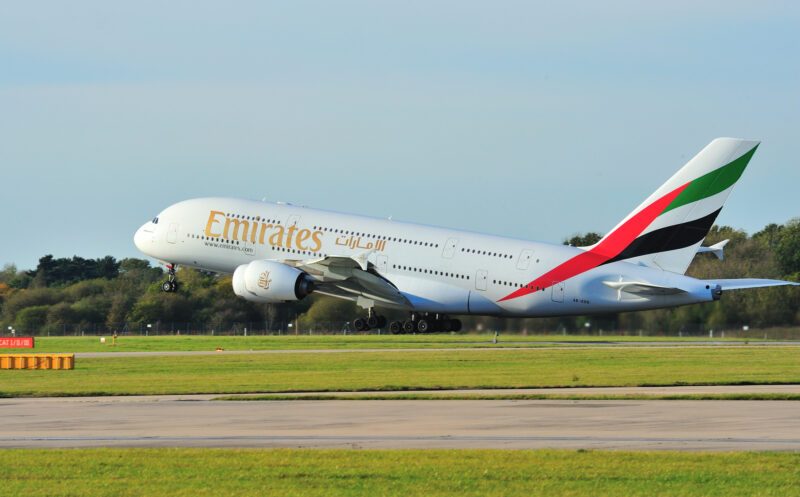
Riyadh Air will compete with large U.S. and global carriers. That includes Delta, United, American, Emirates, Qatar Airways, Etihad, Turkish Airlines, Lufthansa Group carriers, British Airways, Air France-KLM, and others.
Many of those airlines already carry passengers between the U.S. and Saudi Arabia through one-stop routings.
Riyadh Air will need to offer a strong schedule, reliable operation, competitive pricing, and a premium product.
It will also need brand trust.
That is especially important for a startup airline asking passengers to book long-haul travel across a new network.
Cargo Could Also Matter
The DOT authority also covers cargo rights.
That should not be overlooked.
Saudi Arabia is investing heavily in logistics. Riyadh Air has also created Riyadh Air Cargo as part of its broader business.
The belly space on 787-9 passenger aircraft can be useful on long-haul routes.
U.S.–Saudi cargo demand may include pharmaceuticals, e-commerce, industrial goods, energy-sector equipment, high-value shipments, and time-sensitive freight.
Passenger routes often become more attractive when cargo can help support the economics.
That could be true for future U.S. services.
Approval Is A Milestone, Not The Finish Line
The DOT approval is important because it removes a major barrier.
But Riyadh Air still has work to do.
The airline must complete safety and operational requirements, choose U.S. airports, finalize schedules, secure slots where needed, build sales channels, train crews, and ensure aircraft availability.
It must also prove that its operation can scale without losing reliability.
That is the real test.
Launching an airline is difficult. Launching a premium global airline with U.S. long-haul ambitions is even harder.
Riyadh Air now has the regulatory foundation. The next step is execution.
Bottom Line
Riyadh Air has secured a major U.S. regulatory milestone after receiving Department of Transportation approval to operate flights between Saudi Arabia and the United States.
The approval gives the airline economic authority for future passenger and cargo service. It does not mean U.S. flights will begin immediately.
No U.S. routes, launch dates, or schedules have been announced yet.
Still, the decision is significant. Riyadh Air is receiving its first Boeing 787-9 Dreamliners, building a premium long-haul product, and preparing to grow toward 22 destinations by March 2027.
The United States is one of the most important markets Riyadh Air could enter.
With DOT approval secured, a Delta partnership in place, and 787 deliveries underway, the airline has moved closer to turning its U.S. plans into real flights.
Now comes the harder part: choosing the right U.S. gateway, launching reliably, and proving that Saudi Arabia’s newest airline can compete on the world’s biggest long-haul stage.
Keep reading FlyMag
Get the Daily Brief in the morning or the Route Watch weekly recap on Fridays. Or both.