Aeromexico 737 MAX Steps In After Uruguay’s World Cup Charter Permit Problem
Uruguay’s 2026 FIFA World Cup campaign began with an unexpected aviation problem.

The national team’s planned charter flight from Mexico to South Florida was delayed on Sunday after the original aircraft did not have the required authorization to operate the trip to the United States.
The team was based in Playa del Carmen, Mexico, ahead of its Group H opener against Saudi Arabia at Miami Stadium. Uruguay had planned to travel from Cancun International Airport (CUN) to South Florida the day before the match.
Read our stories in your inbox
Two aviation newsletters. Zero fluff.
Instead, the team had to wait while a replacement aircraft was arranged.
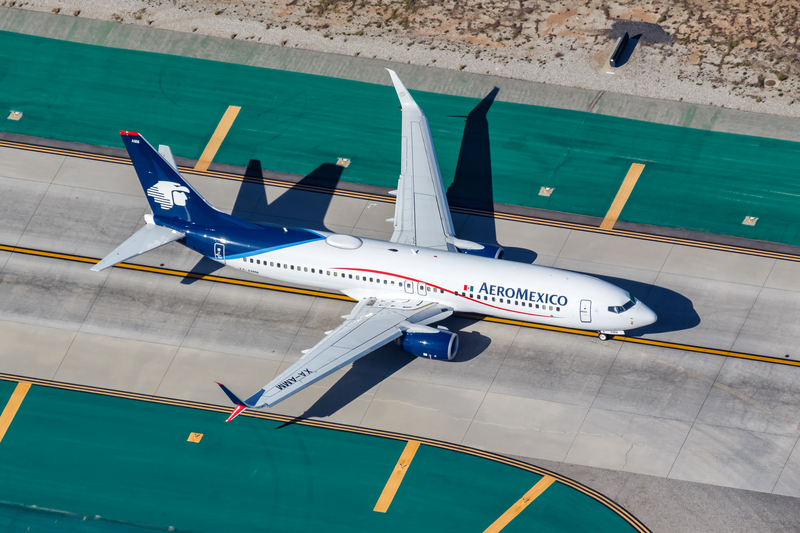
That aircraft was an Aeromexico Boeing 737 MAX 9, which operated a special flight from Cancun (CUN) to Fort Lauderdale-Hollywood International Airport (FLL).
The team arrived in Florida later than planned, less than 24 hours before facing Saudi Arabia.
FIFA Blamed An Airline Permitting Error
The problem was not a player visa issue.
It was also not a formal ban on the Uruguay squad entering the United States.
FIFA said the delay was caused by an airline permitting error in Mexico. According to Reuters, the governing body said the airline involved had apologized and that FIFA worked with airport and operational partners to minimize disruption.
That distinction matters.
International charter flights need the right permits, approvals, and operating documentation before they can fly into another country’s airspace or land at the destination airport.
If that paperwork is missing or incorrect, the aircraft cannot simply depart and sort it out later.
For a normal passenger, this kind of issue may sound minor. For a World Cup team, it can disrupt preparation, media obligations, security planning, and ground transport.
Uruguay Blamed FIFA For The Disruption
The Uruguayan Football Association was clearly unhappy with the delay.
Reports said the AUF blamed FIFA for the travel disruption because World Cup team transport is organized under the tournament framework.
The team remained at its base while the situation was resolved.
Uruguay had chosen the Mayakoba Training Center in Playa del Carmen as its tournament base. That location made sense because Uruguay’s first two group matches were in Miami, while its third is scheduled in Guadalajara, Mexico.
On paper, the base was practical.
In this case, the problem was not geography. It was the aircraft paperwork.
Aeromexico Provided The Replacement Aircraft
Aeromexico eventually operated the replacement flight.
Flight-tracking data identified the aircraft as XA-MJJ, a Boeing 737 MAX 9. The special flight operated as AM9687 from Cancun (CUN) to Fort Lauderdale (FLL).
The aircraft departed Cancun late Sunday afternoon and arrived in South Florida that evening.
Fort Lauderdale (FLL) was a practical choice. It is close to the Miami area and about a short drive from the stadium in Miami Gardens, depending on traffic.
That allowed Uruguay to reach its South Florida base even after the original aircraft issue.
The delay still affected the team’s schedule. But the replacement aircraft prevented a much bigger travel problem.
Why Fort Lauderdale Worked
The match was played at Miami Stadium, the tournament name for Hard Rock Stadium in Miami Gardens.
That stadium is geographically closer to Fort Lauderdale (FLL) than to some parts of central Miami.
For a charter movement, FLL can be a useful South Florida arrival point. It has customs facilities, long runways, and extensive international handling experience.
It also avoids some of the congestion at Miami International Airport (MIA).
For a national team arriving on a tight schedule, the most important factors are speed, security, ground transport, and handling reliability.
Fort Lauderdale offered a workable solution.
The Aircraft Was A 737 MAX 9
The replacement aircraft was an Aeromexico Boeing 737 MAX 9.
The 737 MAX 9 is the stretched version of the 737 MAX 8. It gives airlines more seats while retaining narrowbody economics.
AeroLOPA lists Aeromexico’s 737 MAX 9 with 181 seats. The layout includes 16 Clase Premier seats and 165 Economy seats.
That made it a suitable aircraft for a team movement.
A national team charter does not need a widebody for a short Cancun–South Florida sector. But it does need enough seats for players, coaching staff, medical staff, media staff, security personnel, officials, and baggage.
The MAX 9 offered enough capacity and range for the job.
A Short Flight, But A Big Operational Problem
Cancun (CUN) to Fort Lauderdale (FLL) is a short international flight.
The sector is roughly one hour and 40 minutes in the air.
That makes the disruption more striking.
The issue was not aircraft performance or route distance. It was authorization. Without the correct paperwork, the original aircraft could not operate the planned movement.
This is one reason major sports travel is so complex.
Teams do not just need an aircraft. They need permissions, handling, security, immigration coordination, baggage planning, arrival slots, ground transport, and schedule protection.
A problem in any one part of that chain can affect the whole movement.
The Press Conference Was Also Affected
The delay also affected Uruguay’s pre-match media schedule.
Head coach Marcelo Bielsa and defender José María Giménez were expected at a pre-match press conference in Miami. Reports said that event was delayed but still took place.
That matters because FIFA media obligations are part of World Cup operations.
Teams are expected to meet specific media requirements before matches. A travel delay can therefore create more than a transportation problem.
It can also create regulatory and tournament-administration pressure.
In this case, Uruguay made it to Florida in time, and the match went ahead as scheduled.
The Match Ended In A Draw
Uruguay opened its World Cup campaign against Saudi Arabia on June 15.
The match ended 1-1.
The travel delay did not stop Uruguay from playing, and Bielsa downplayed the disruption before the match.
Still, the timing was far from ideal.
Arriving in South Florida less than 24 hours before a World Cup opener is not how any national team wants to begin a tournament.
Even if the players rested at the hotel during the delay, the lost time still compressed their travel, media, and match-preparation window.
Why This Matters For Aviation
This was a football story, but it was also an aviation logistics story.
The 2026 FIFA World Cup is spread across the United States, Mexico, and Canada. That creates a massive air-transport challenge.
Teams, officials, fans, media, sponsors, and staff are moving across borders throughout the tournament.
That means permits and documentation matter more than usual.
A domestic team bus issue can often be solved quickly. An international aircraft authorization issue is different. If the aircraft is not cleared, it cannot operate the flight.
Uruguay’s delay shows how one paperwork problem can disrupt a high-profile team movement even when the aircraft, crew, airport, and destination are otherwise ready.
A Reminder For Charter Operators
Sports charters require precise planning.
For aircraft operators, the checklist is long. It includes overflight permits, landing permits, crew documentation, insurance, customs arrangements, passenger manifests, and airport handling.
The higher the profile of the passenger group, the more visible any mistake becomes.
In this case, the operational problem became international news because it involved a World Cup team.
The original aircraft has not been publicly identified in verified reporting. That makes it important not to overstate the details.
What is known is that Aeromexico provided the replacement aircraft that carried Uruguay to South Florida.
Bottom Line
Uruguay’s World Cup travel plans were disrupted after the aircraft originally assigned to fly the team from Cancun (CUN) to South Florida lacked the required authorization to operate the trip.
FIFA described the issue as an airline permitting error in Mexico. Uruguay’s federation blamed FIFA for the disruption.
Aeromexico eventually operated a replacement flight using a Boeing 737 MAX 9, registered XA-MJJ. The aircraft flew the team from Cancun (CUN) to Fort Lauderdale (FLL), allowing Uruguay to reach South Florida before its Group H opener against Saudi Arabia.
The incident did not prevent the match from being played. But it did create an unnecessary complication less than 24 hours before kickoff.
For aviation professionals, the lesson is clear. Charter operations are not only about finding an aircraft. Permits, authorizations, documentation, and cross-border coordination are just as critical.
In this case, a paperwork issue disrupted a World Cup team. Aeromexico’s 737 MAX 9 provided the recovery.
Keep reading FlyMag
Get the Daily Brief in the morning or the Route Watch weekly recap on Fridays. Or both.