Iberia Opens Madrid-Monterrey As Mexico Becomes Its Largest Latin American Market
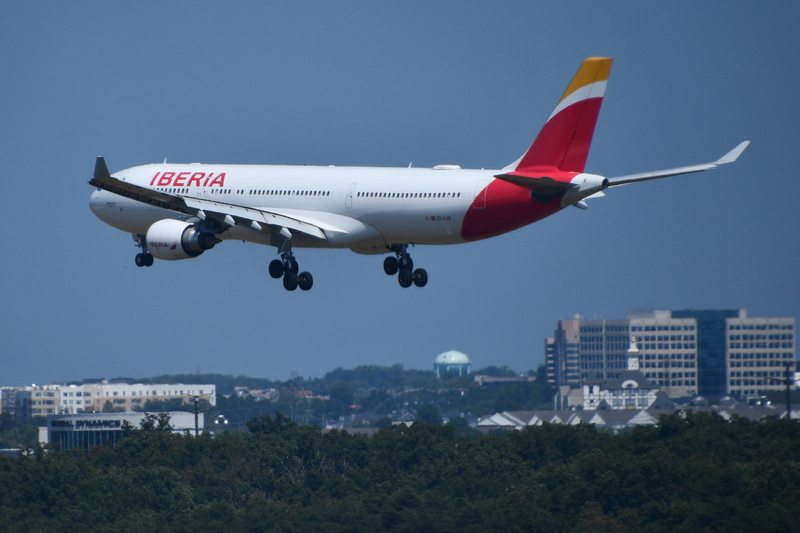
Iberia has inaugurated nonstop service between Adolfo Suárez Madrid-Barajas Airport (MAD) and Monterrey International Airport (MTY), giving northern Mexico a new direct link to Spain and strengthening Iberia’s already deep position between Europe and Latin America.

The new route began on June 2, 2026, and operates three times weekly on Tuesdays, Fridays, and Saturdays. Iberia is using the Airbus A330-200, a long-haul twin-aisle aircraft configured with 288 seats across Business and Economy cabins.
For Iberia, Monterrey (MTY) becomes its second direct destination in Mexico after Mexico City (MEX). For Monterrey, the route is a major international milestone, giving one of Mexico’s most important business and industrial regions a nonstop bridge to Madrid (MAD), Iberia’s largest hub.
Read our stories in your inbox
Two aviation newsletters. Zero fluff.
The route also arrives at a strategically useful moment. Mexico is now Iberia’s largest Latin American market by seat capacity, and Monterrey gives the airline a northern Mexican gateway that complements its long-established Mexico City (MEX) operation.
Three Weekly Flights Between Madrid And Monterrey
Iberia’s new Madrid (MAD)–Monterrey (MTY) service operates three times per week.
The outbound flight departs Madrid (MAD) at 1:10 p.m. and arrives in Monterrey (MTY) at 5:05 p.m. local time. The return flight leaves Monterrey (MTY) at 6:35 p.m. and arrives back in Madrid (MAD) at 1:05 p.m. the following day.
That schedule is designed around Iberia’s Madrid hub. The early-afternoon departure from Madrid (MAD) allows passengers from Europe, Spain, and beyond to connect into the Monterrey flight. The evening departure from Monterrey (MTY) gives Mexico-origin passengers a practical overnight crossing to Europe, arriving in Madrid early enough for onward connections across Iberia’s network.
The route is being flown by Iberia’s Airbus A330-200. The aircraft is well suited to a market like Monterrey: large enough to support long-haul demand and cargo, but not as capacity-heavy as Iberia’s larger Airbus A350-900.
That matters for a new route. Monterrey (MTY) is a strong business market, but it is still a new long-haul station for Iberia. A three-weekly A330-200 schedule gives the airline a measured way to build the route without overcommitting from day one.
Why Monterrey Matters
Monterrey is not a secondary leisure experiment. It is one of Mexico’s most important economic centers.
The city is the capital of Nuevo León and one of the country’s strongest industrial and corporate markets. Monterrey has deep links to manufacturing, steel, cement, automotive, logistics, higher education, finance, technology, and cross-border trade. Its business profile makes it one of the most logical Mexican cities for direct European service.
For Iberia, that is the core attraction. Mexico City (MEX) already provides enormous volume, government demand, corporate travel, tourism, and connections. Monterrey (MTY) adds a different demand base: northern Mexico’s business community, industrial corridors, and a region with strong international links.
The route also matters for passengers who previously had to connect through Mexico City (MEX), Cancún (CUN), the United States, or another European gateway to reach Madrid. A nonstop Monterrey (MTY)–Madrid (MAD) flight reduces journey time, simplifies baggage handling, and makes Europe more accessible from northern Mexico.
That convenience is likely to be particularly valuable for business travelers. A one-stop itinerary can be acceptable for leisure passengers, but corporate customers tend to value direct service when schedules and fares are competitive.
The Airbus A330-200 Gives Iberia A Balanced Entry Aircraft
Iberia’s choice of the Airbus A330-200 is important.
The A330-200 is a long-range widebody that gives Iberia enough reach to operate the Madrid (MAD)–Monterrey (MTY) sector comfortably. The aircraft’s 288-seat configuration provides a balanced cabin for a new long-haul route, with Business Class for premium and corporate demand and Economy for leisure, visiting-friends-and-relatives, and connecting traffic.
Iberia has been modernizing and expanding its long-haul fleet, with the Airbus A350-900 now serving many of the airline’s densest and most premium intercontinental routes. But the A330-200 remains useful in markets where the airline wants widebody capability without the larger gauge of the A350.
Monterrey (MTY) fits that category well.
The aircraft also supports Iberia’s operating model at Madrid (MAD). Iberia’s long-haul network is built around connecting flows between Europe and Latin America. The A330-200 allows the airline to add new long-haul destinations with a lower capacity commitment than the A350, while still offering a proper twin-aisle long-haul experience.
For passengers, the A330-200 also avoids the perception of a “thin route” being served by a narrowbody. This is a full long-haul product between Mexico and Europe.
Madrid Gives Monterrey Global Reach
The real power of the route is Madrid (MAD).
Madrid-Barajas is Iberia’s primary global hub and one of the most important Europe–Latin America connecting platforms. From Madrid (MAD), passengers arriving from Monterrey (MTY) can connect to more than 100 destinations across Spain, Europe, Africa, and Asia.
That makes the route much more than a Monterrey–Madrid local market. A passenger from Monterrey can fly nonstop to Madrid and continue to cities such as Barcelona (BCN), Valencia (VLC), Bilbao (BIO), Paris (CDG/ORY), Rome (FCO), Milan (MXP/LIN), London (LHR/LGW), Lisbon (LIS), Frankfurt (FRA), Zurich (ZRH), Brussels (BRU), Amsterdam (AMS), Athens (ATH), Marrakech (RAK), or other points in Iberia’s network.
The route also works in reverse. European passengers can fly to Madrid (MAD), connect to Monterrey (MTY), and access northern Mexico without routing through Mexico City.
That is especially useful for business travelers visiting Nuevo León, Coahuila, Tamaulipas, and the broader northeastern Mexico industrial region. Monterrey’s airport already has a strong domestic and international network, but a nonstop Iberia flight gives Europe a more direct path into the region.
Viva Partnership Extends The Route Across Mexico
Iberia’s agreement with Viva is another important part of the route strategy.
Through the partnership, Iberia customers using the new Madrid (MAD)–Monterrey (MTY) flight can connect beyond Monterrey to 32 Mexican destinations. The arrangement allows passengers to book connecting itineraries in one reservation and check bags through to the final destination.
That gives Iberia a much broader Mexico footprint than the Monterrey route alone would suggest.
From Monterrey (MTY), travelers can connect onward to cities across Mexico, including major business, leisure, and regional markets. That makes MTY function not only as a destination but also as a northern Mexican connecting point.
This is a smart move because Monterrey’s local market alone may not be enough to support year-round long-haul growth at scale. By adding Viva feed, Iberia can reach passengers from across Mexico who might prefer connecting through Monterrey instead of Mexico City.
The partnership also benefits Europe-origin travelers. A passenger from Madrid, Paris, Rome, or London can reach smaller Mexican cities on a more integrated itinerary, rather than stitching together separate tickets.
Mexico Is Now Iberia’s Largest Latin American Market
The Monterrey launch strengthens a market that is already central to Iberia.
With Madrid (MAD)–Mexico City (MEX) and the new Madrid (MAD)–Monterrey (MTY) route, Iberia expects to offer more than 820,000 seats between Spain and Mexico in 2026. That represents an 8% increase compared with the previous year and makes Mexico Iberia’s largest Latin American market by seat capacity.
That is a major statement.
Iberia has historically been one of the strongest airlines between Europe and Latin America, with deep networks to markets such as Argentina, Colombia, Peru, Chile, Brazil, the Dominican Republic, Puerto Rico, and Mexico. For Mexico to become the largest market in that portfolio shows just how important the country has become to Iberia’s long-haul strategy.
Mexico City (MEX) remains the core route, with Iberia operating multiple daily flights using Airbus A350 aircraft. Monterrey adds a second Mexican gateway and allows Iberia to diversify beyond the capital.
That diversification matters. Mexico’s economy is not concentrated only in Mexico City. Northern Mexico plays a major role in manufacturing, nearshoring, industrial exports, and cross-border trade. Monterrey is one of the clearest examples.
Nearshoring Strengthens The Business Case
The route also fits the larger nearshoring story.
As more companies move supply chains closer to North American markets, northern Mexico has become increasingly important. Monterrey and the surrounding region have benefited from investment in manufacturing, logistics, automotive production, technology, and industrial services.
That creates travel demand.
Executives, engineers, suppliers, consultants, investors, and government officials need reliable links between Mexico, Europe, and global corporate centers. A nonstop Madrid–Monterrey flight reduces friction for that travel and gives Iberia a stronger claim on business demand that might otherwise flow over U.S. hubs.
The route also supports Spanish companies operating in Mexico and Mexican companies with European ties. Spain and Mexico have deep commercial, cultural, and investment relationships, and Monterrey’s industrial base adds another layer to that connection.
For Iberia, this is exactly the kind of route that can mature beyond leisure traffic.
A Useful Route For The 2026 World Cup Year
The timing is also notable because Monterrey is one of Mexico’s host cities for the 2026 FIFA World Cup.
The tournament is being held across Mexico, the United States, and Canada, and Monterrey will be one of the Mexican host markets. While Iberia’s route should not be viewed only as a World Cup service, the event adds a useful demand boost and raises Monterrey’s international visibility.
European visitors traveling to matches in northern Mexico now have a direct Madrid (MAD)–Monterrey (MTY) option. Spanish fans, European media, sponsors, corporate guests, and tournament-related travelers could all benefit from the route.
More importantly, the World Cup gives Iberia a high-profile moment to introduce the market. New long-haul routes need awareness, and a major global sporting event can help place Monterrey on more international itineraries.
The route’s value, however, extends beyond the tournament. Iberia is building a long-term Mexico strategy, not a short-term event shuttle.
Stopover Hola Madrid Adds Another Sales Tool
Iberia is also using its Stopover Hola Madrid program to make the route more attractive.
The program allows passengers traveling through Madrid (MAD) to stop in the Spanish capital for up to nine nights without paying additional airfare for the stopover. Travelers can also access discounts on hotels, ground transportation, dining, and attractions.
For Monterrey-origin passengers, this is a smart sales tool. A traveler heading to Paris, Rome, Lisbon, London, or another European city can add several nights in Madrid without turning the journey into a separate ticketed trip.
For Iberia, it encourages passengers to route through Madrid rather than choosing a competing European hub. It also strengthens Madrid’s role as the natural gateway between Mexico and Europe.
Stopover programs are not new, but they are effective when a hub city has strong tourism appeal. Madrid does. For many Mexican travelers, Spain is not just a transit point; it is a destination.
Iberia’s Flight Plan 2030 Context
The Monterrey launch also fits into Iberia’s broader Flight Plan 2030 strategy.
Iberia has set out a long-term plan to expand its long-haul fleet and reinforce Madrid’s position as a major global hub, especially between Europe and Latin America. The airline has been adding new routes, increasing capacity in existing markets, and deploying newer long-haul aircraft to improve efficiency.
The decision to proceed with Monterrey despite rising fuel costs and a challenging international environment shows confidence in the underlying demand.
Fuel is a major pressure point for any long-haul airline. A new transatlantic route must generate enough premium and economy revenue to offset high operating costs, especially when using a widebody aircraft. Iberia’s decision to launch anyway suggests it sees Monterrey as more than a speculative market.
The route is backed by business demand, Mexico’s strong position in Iberia’s network, Viva connectivity, and Madrid’s ability to funnel traffic across Europe and beyond.
What This Means For Monterrey Airport
For Monterrey International Airport (MTY), Iberia’s arrival is a major network win.
MTY already has strong domestic and regional connectivity, but direct long-haul service to Europe is a different category. It positions Monterrey as a more internationally connected business gateway and gives the airport a new level of visibility in Europe.
Iberia flights will operate from Terminal A at Monterrey (MTY). The route gives the airport a direct link to one of Europe’s most important Latin America hubs and adds a major oneworld carrier to its international offering.
The route also helps Monterrey compete more effectively with Mexico City (MEX) as an international gateway. Mexico City will remain the country’s dominant long-haul airport, but Monterrey now has a stronger claim for northern Mexico-Europe traffic.
That matters for local economic development. Direct long-haul service can influence corporate travel patterns, investment decisions, tourism marketing, and a city’s broader global profile.
The Competitive Landscape
Iberia is not entering a completely empty Spain–Mexico market.
Madrid (MAD)–Mexico City (MEX) is already a large and competitive route, served by Iberia, Aeromexico, and other carriers over time. Monterrey has also attracted long-haul interest from other airlines, including Aeromexico’s previous and current ambitions on European routes.
What makes Iberia’s Monterrey route notable is the combination of network and brand.
Iberia has deep experience selling Mexico–Europe traffic, a large Madrid hub, oneworld connectivity, a strong Spain–Latin America identity, and corporate relationships on both sides of the Atlantic. Those strengths give it a credible platform from day one.
The challenge will be sustaining year-round demand at three weekly frequencies. Business travel helps, but the route will also need leisure, VFR, connecting, and partner-fed traffic. Viva’s 32-destination feed is therefore not a small detail; it is part of the commercial foundation.
Bottom Line
Iberia’s new Madrid (MAD)–Monterrey (MTY) route is a significant addition to the Spain–Mexico market and a major step for northern Mexico’s long-haul connectivity.
The route operates three times weekly on Tuesdays, Fridays, and Saturdays using Airbus A330-200 aircraft with 288 seats across Business and Economy cabins. Flights depart Madrid (MAD) at 1:10 p.m. and arrive in Monterrey (MTY) at 5:05 p.m., while the return leaves Monterrey at 6:35 p.m. and arrives in Madrid the following day at 1:05 p.m.
For Iberia, Monterrey becomes its second direct destination in Mexico after Mexico City (MEX), helping the airline offer more than 820,000 seats between Spain and Mexico in 2026. For Monterrey, the route provides a direct link to Madrid and one-stop access to more than 100 destinations across Spain, Europe, Africa, and Asia.
The route also has strong strategic logic. Monterrey is one of Mexico’s most important industrial and business centers, the Viva partnership adds 32 domestic Mexican connections, and the 2026 World Cup will raise the city’s global profile.
This is not just another long-haul route. It is Iberia extending its Latin America leadership into northern Mexico, while giving Monterrey a direct bridge to Europe through one of the most important hubs in the Spanish-speaking world.
Keep reading FlyMag
Get the Daily Brief in the morning or the Route Watch weekly recap on Fridays. Or both.