EL AL Brings Back San Francisco As U.S. Long-Haul Network Reaches Six Gateways
EL AL is returning to San Francisco, restoring one of the longest nonstop routes in its U.S. network and adding another major technology market to its long-haul Boeing 787 operation.

The Israeli flag carrier will resume nonstop service between Tel Aviv Ben Gurion Airport (TLV) and San Francisco International Airport (SFO) on October 25, 2026. The route will operate three times weekly using Boeing 787-9 Dreamliner aircraft, reconnecting Israel with the Bay Area after a gap of more than six years.
For EL AL, San Francisco (SFO) is not just another U.S. destination. It is a strategic business market, a technology corridor, and a major Israeli community link. The route connects Tel Aviv (TLV), one of the world’s most important startup and innovation centers, with Silicon Valley, one of the world’s most influential technology ecosystems.
Read our stories in your inbox
Two aviation newsletters. Zero fluff.
The result is a route that makes sense for business travel, visiting-friends-and-relatives demand, premium leisure traffic, and high-value nonstop connectivity between Israel and the U.S. West Coast.
San Francisco Returns After A Six-Year Absence
EL AL previously operated Tel Aviv (TLV) to San Francisco (SFO) from late 2018 until early 2020, when the route was suspended during the early stages of the COVID-19 pandemic.
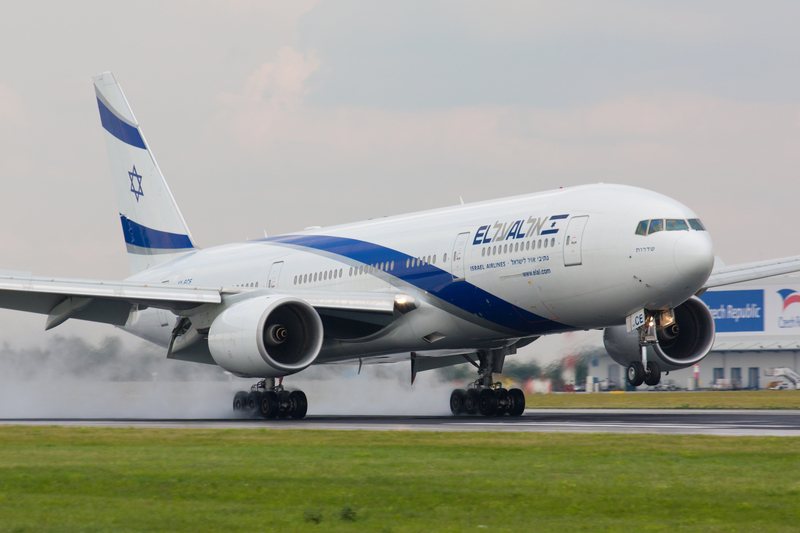
Its return in October 2026 marks a significant rebuild of EL AL’s West Coast presence. The airline already serves Los Angeles International Airport (LAX), which remains its longest U.S. route. San Francisco (SFO) gives EL AL a second West Coast gateway and a much more direct link to Northern California.
The new service will operate as LY49 from Tel Aviv (TLV) to San Francisco (SFO), with the return operating as LY50. The flight number LY49 is a deliberate nod to the San Francisco 49ers, giving the route a small but memorable local branding touch.
The planned schedule is built around an overnight departure from Tel Aviv and an afternoon return from San Francisco. Filed schedules show the westbound flight departing Tel Aviv (TLV) at 1:05 a.m., with a morning arrival into San Francisco (SFO). The return departs San Francisco (SFO) at 2:00 p.m. and arrives back in Tel Aviv (TLV) the following afternoon.
Depending on seasonal time changes and operational routing, the westbound sector is close to a 15-to-16-hour block time. The eastbound return is shorter, at roughly 13 to 14 hours.
A Long Boeing 787-9 Mission
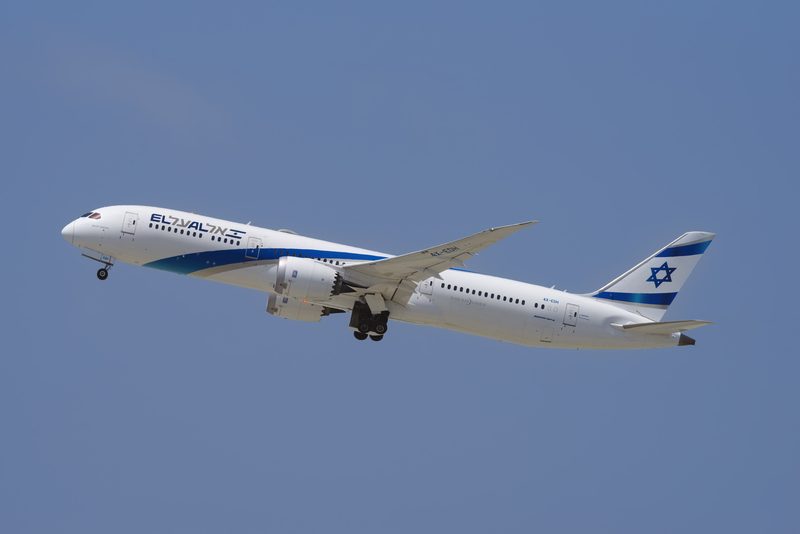
The San Francisco route will be operated by EL AL’s Boeing 787-9 Dreamliner.
The 787-9 is the core aircraft in EL AL’s modern long-haul fleet. It gives the airline the range, fuel efficiency, passenger comfort, and premium cabin capability needed for ultra-long sectors such as Tel Aviv (TLV) to San Francisco (SFO) and Los Angeles (LAX).
EL AL lists the 787-9 with a range of 13,700 kilometers, which comfortably covers the Tel Aviv–California mission profile. The aircraft is also far more efficient than the Boeing 747-400s and 767s that once formed the backbone of many EL AL long-haul routes.
For passengers, the 787 matters. The Dreamliner offers a quieter cabin, larger windows, improved cabin pressure, better humidity levels, and a more modern onboard environment than previous-generation widebodies. On a flight approaching 15 hours, those factors are not cosmetic. They affect passenger fatigue, sleep quality, and overall comfort.
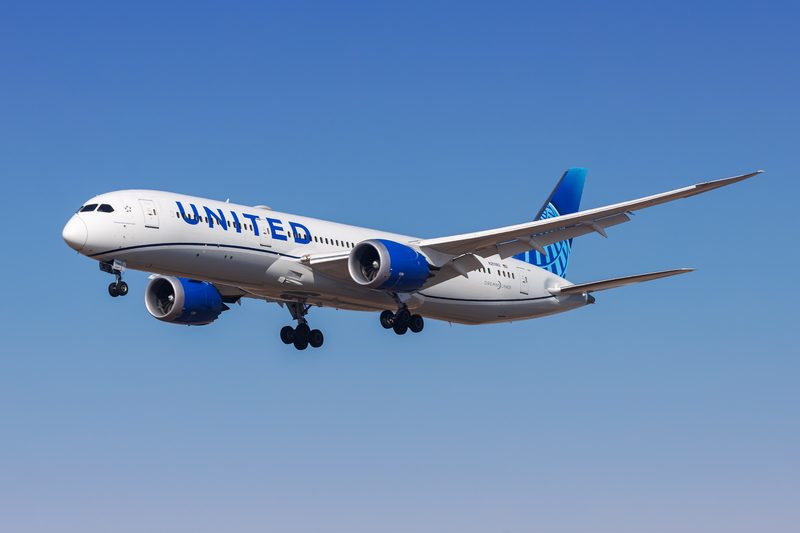
The aircraft also gives EL AL a competitive long-haul premium product. The airline’s Dreamliners feature Business Class, Premium Economy, and Economy, allowing it to sell the route across several demand segments: corporate travelers, technology executives, Israeli diaspora traffic, premium leisure travelers, and price-sensitive economy passengers.
Why San Francisco Makes Strategic Sense
San Francisco (SFO) is one of the most logical U.S. markets for EL AL to restore.
The Bay Area has a large Israeli and Jewish community, deep business ties with Israel, and a technology economy that overlaps heavily with Tel Aviv’s startup ecosystem. Companies, investors, founders, engineers, academics, and venture capital firms routinely move between Israel and Northern California.
Without a nonstop flight, many travelers have had to connect through Los Angeles (LAX), New York (JFK/EWR), European hubs, or other U.S. gateways. That adds time, complexity, and missed-connection risk to a market where nonstop service has obvious value.
The route also strengthens SFO’s position as a global technology gateway. San Francisco already has strong long-haul service to Europe, Asia, the Middle East, and Oceania, but a nonstop Israel link fills an important niche. For Silicon Valley, the route is not simply about tourism. It is about maintaining a direct physical link with one of the world’s most important innovation markets.
For EL AL, that makes San Francisco different from a purely leisure-oriented long-haul route. It has a clearer premium and business rationale.
Six U.S. Gateways For Winter
With San Francisco (SFO) returning, EL AL’s winter U.S. network will include six airport gateways:
| U.S. Gateway | Airport Code | Network Role |
|---|---|---|
| New York JFK | JFK | Largest U.S. market and major Israel–New York corridor |
| Newark | EWR | New York-area access and New Jersey connectivity |
| Boston | BOS | Technology, academic, medical, and community demand |
| Miami | MIA | South Florida, Latin America connections, and Jewish community traffic |
| Los Angeles | LAX | Longest U.S. route and major West Coast gateway |
| San Francisco | SFO | Silicon Valley, Bay Area, and technology-sector demand |
The distinction between cities and airports matters. EL AL’s U.S. operation includes both New York JFK (JFK) and Newark (EWR), giving the carrier two New York-area airport gateways. That is why the winter network is best described as six U.S. airport gateways rather than six separate metro areas.
The airline’s South Florida strategy has also shifted. EL AL previously served Fort Lauderdale (FLL), but the carrier moved to consolidate its South Florida operation at Miami (MIA). That gives Miami a more important role in EL AL’s U.S. network and avoids splitting the market between two nearby airports.
EL AL’s U.S. Position Has Strengthened
The San Francisco return comes at an unusual moment in the Israel–U.S. aviation market.
For much of the past two years, U.S. and foreign carriers have repeatedly paused, delayed, or reduced service to Tel Aviv (TLV) because of security concerns in the region. That left EL AL with an unusually strong position on nonstop U.S.–Israel flying.
That dominance has helped EL AL commercially, but it also comes with pressure. Passengers have complained about high fares during periods when foreign competition was limited, while the airline has had to manage demand spikes, repatriation flying, schedule instability, and security-related operational complexity.
The return of San Francisco (SFO) shows that EL AL is not simply defending existing routes. It is using the moment to expand long-haul reach and build for a future where the U.S.–Israel market becomes more competitive again.
Delta has said it plans to resume New York JFK (JFK) to Tel Aviv (TLV) service in September, while American has pushed its Tel Aviv return into January 2027. United’s Israel schedule has also been subject to repeated changes. That means the competitive picture remains fluid.
For now, EL AL remains the only airline with a broad nonstop U.S.–Israel network across both coasts.
A Growing Dreamliner Fleet
The San Francisco route also fits EL AL’s broader fleet strategy.
The airline has been expanding its Boeing 787 Dreamliner fleet and has announced plans to acquire up to 12 more 787 aircraft. That includes additional 787-9s and future 787-10s, giving EL AL more long-haul capacity and better aircraft economics over the next decade.
That matters because EL AL’s long-haul network is heavily U.S.-oriented. Flights to New York (JFK/EWR), Miami (MIA), Boston (BOS), Los Angeles (LAX), and San Francisco (SFO) are among the most important routes in the airline’s system. They require aircraft that can combine range, payload, premium cabin revenue, and fuel efficiency.
The 787-9 is especially useful because it can handle the longest North American routes while offering enough capacity to support high-demand markets. The future 787-10 will bring more seats but less range, making it better suited to dense long-haul routes where the mission profile fits.
For now, the 787-9 is the right aircraft for San Francisco. It has the range to operate the route and the cabin product to compete for premium travelers.
Los Angeles Remains The Longest U.S. Route
San Francisco will be one of EL AL’s longest flights, but Los Angeles (LAX) remains slightly longer.
The Tel Aviv (TLV) to Los Angeles (LAX) route covers roughly 7,500 miles and is a major long-haul mission for the Dreamliner fleet. San Francisco (SFO) is close behind, making it one of the airline’s longest scheduled services and a major aircraft-utilization commitment.
That is important from a network-planning standpoint. A 15-hour westbound flight ties up an aircraft for a long time. The aircraft cannot be quickly redeployed the way it could on a shorter European or regional route. EL AL must be confident that the route can generate strong yields, not just full cabins.
The business and technology demand between Israel and the Bay Area helps justify that bet. A leisure-only route of this length would be more difficult. A market with business, premium, community, and high-tech demand is a better fit for the 787-9.
Why Timing The Route For Winter Makes Sense
Launching San Francisco at the start of the IATA winter season is notable.
Many airlines launch new long-haul routes in summer, when demand is strongest. EL AL is instead starting San Francisco on October 25, which places the route into the winter schedule from day one.
That may seem counterintuitive, but it has advantages.
Business travel is less summer-dependent than leisure travel. The Bay Area–Israel market is driven by technology, investment, corporate, and community flows that can support demand outside peak vacation periods. Launching in winter also allows EL AL to build awareness before the stronger spring and summer travel periods that follow.
It also gives the airline time to mature the schedule before the 2027 summer season. If bookings perform well, EL AL can evaluate additional frequencies or seasonal adjustments later.
The filed March 2027 schedule has shown some variation, so the exact long-term frequency may still be refined. But the initial three-weekly launch gives the airline a meaningful presence without overcommitting capacity.
A Route With Symbolic Weight
For aviation followers, San Francisco is also symbolically important.
EL AL’s previous SFO service was short-lived, beginning in late 2018 and ending in early 2020. That means the route never had a normal multi-year period to mature before the pandemic reshaped international aviation. Its return gives the market a second chance under very different conditions.
Today, EL AL has a more modern Dreamliner fleet, stronger U.S. demand, reduced foreign competition in the Israel market, and a broader strategic need to expand long-haul capacity. San Francisco also remains one of the most important global business markets not yet restored in the carrier’s U.S. network.
In that sense, this is not just a route resumption. It is a correction of unfinished business.
What Passengers Can Expect
Passengers on the San Francisco (SFO) route should expect a true long-haul experience.
The westbound flight from Tel Aviv (TLV) will be among the longest nonstop flights in EL AL’s system. The overnight departure from Israel and morning arrival in California may be attractive for business travelers, allowing arrival at the start of the Bay Area business day. The return from San Francisco (SFO) in the early afternoon arrives in Tel Aviv (TLV) the following afternoon, a schedule that should work well for both business and leisure passengers.
The Boeing 787-9 will offer a more modern cabin than older EL AL widebodies, with Business Class, Premium Economy, and Economy. For a route of this length, the premium cabins will be particularly important. The Bay Area technology market is precisely the kind of long-haul sector where lie-flat seats and nonstop convenience can command a fare premium.
Economy passengers also benefit from the nonstop. Avoiding a connection in Europe, New York, or Los Angeles can save hours and reduce travel complexity, especially for families and travelers with checked bags.
Bottom Line
EL AL is bringing San Francisco (SFO) back to its U.S. network on October 25, 2026, with three weekly Boeing 787-9 flights from Tel Aviv Ben Gurion Airport (TLV).
The route restores a major West Coast connection that EL AL last served in early 2020 and gives the airline a second California gateway alongside Los Angeles (LAX). With San Francisco returning, EL AL’s winter U.S. operation will cover six airport gateways: New York JFK (JFK), Newark (EWR), Boston (BOS), Miami (MIA), Los Angeles (LAX), and San Francisco (SFO).
The aircraft choice is central to the strategy. The Boeing 787-9 has the range and cabin economics needed for a near-15-hour sector, while offering the premium product required for business-heavy demand between Israel and Silicon Valley.
For EL AL, San Francisco is more than a long flight. It is a high-value technology, community, and business route that strengthens the airline’s already dominant position in nonstop U.S.–Israel service.
The route’s success will depend on premium demand, schedule reliability, security conditions, and how quickly U.S. competitors return to Tel Aviv. But strategically, the logic is strong: Israel and Silicon Valley need a nonstop link, and EL AL now has the Dreamliner fleet to restore it.
Keep reading FlyMag
Get the Daily Brief in the morning or the Route Watch weekly recap on Fridays. Or both.