United Airlines has been steadily transforming San Francisco International Airport (SFO) into the carrier’s most ambitious transpacific gateway, and its latest route move makes that even clearer.

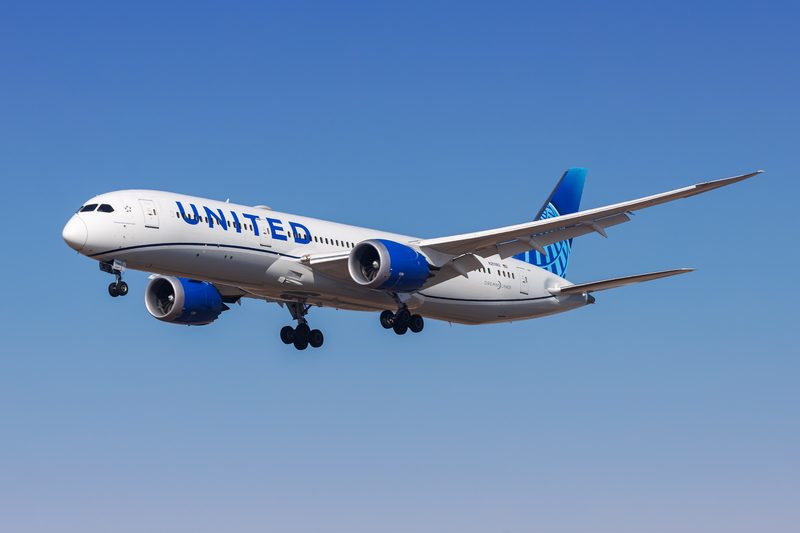
The newest addition is Sapporo New Chitose Airport (CTS) in Japan, which United will begin serving nonstop from December 11, 2026 with three weekly Boeing 787-9 flights through March 26, 2027. That route does more than add one more city to the map. It reinforces a much broader reality: United’s SFO hub now reaches 19 destinations across Asia-Pacific, making it the carrier’s most distinctive long-haul international platform.
For aviation readers, the bigger story is not just Sapporo. It is how United keeps using San Francisco to do things few other U.S. airlines are even trying.
Read our stories in your inbox
Two aviation newsletters. Zero fluff.
Sapporo Is A Rare Kind Of Long-Haul Route
United’s new SFO–Sapporo service is unusual by any standard.
This is not another summer Europe flight or a conventional trunk route to Tokyo, Seoul, or Sydney. It is a true winter-seasonal long-haul route built around demand for Hokkaido’s ski season, the Sapporo Snow Festival, and northern Japan’s broader winter tourism appeal.
That matters because airlines do not usually deploy a Boeing 787-9 on a niche, cold-weather destination unless they believe the market is real enough to support it. United clearly does.
And just as importantly, the route is not being sold only as a point-to-point service. United is using SFO’s domestic feed to turn Sapporo into a one-stop option from dozens of U.S. cities, which is what makes a niche long-haul market more viable.
San Francisco Now Reaches 19 Asia-Pacific Points
With Sapporo added, United’s SFO Asia-Pacific map reaches 19 destinations. That is what really sets the airport apart.
The current list includes major trunk markets and thinner long-haul plays, including:
- Hong Kong
- Manila
- Seoul Incheon
- Singapore
- Taipei
- Sydney
- Beijing
- Melbourne
- Osaka
- Shanghai
- Tokyo Haneda
- Tokyo Narita
- Auckland
- Brisbane
- Kaohsiung
- Papeete
- Adelaide
- Christchurch
- Sapporo
That mix is what makes SFO so strategically interesting. This is not simply a hub with a lot of Pacific flying. It is a hub with a very varied Pacific portfolio, stretching from the biggest business markets to unusual thinner routes that most U.S. airlines would likely avoid.
United’s Pacific Strategy Is About More Than Volume
The airline’s approach at San Francisco is not just about piling on frequencies.
Yes, some routes are huge trunk markets with serious scale, such as Hong Kong, Singapore, Manila, Taipei, and Seoul. But the more revealing piece is what United is doing around the edges. It is using SFO to build out “long-and-thin” growth, especially with the Boeing 787-9, to destinations that are important but not necessarily obvious.
That is why cities like Adelaide, Christchurch, Kaohsiung, and now Sapporo matter so much. They show United is trying to make SFO not just a big Pacific hub, but the most adventurous one in the U.S. market.
Japan Is Becoming A Huge Piece Of The Story
Sapporo also strengthens what is already one of United’s deepest country markets from San Francisco: Japan.
With Sapporo added, United’s SFO operation now includes:
- Tokyo Haneda
- Tokyo Narita
- Osaka
- Sapporo
That matters because Japan is one of the most important long-haul markets in the Pacific, with a mix of business, tourism, premium demand, and connection value. United already has a strong Japan position, and Sapporo makes that network feel even more differentiated.
Instead of only serving the obvious megacity gateways, United is now reaching further into the country in a way that few U.S. airlines can match.
The 787-9 Is The Aircraft Behind This Expansion
The aircraft doing much of the work behind this strategy is the Boeing 787-9.
That is no coincidence. The 787-9 gives United the range, efficiency, and right-sized capacity to serve routes that would be hard to justify with a larger 777. It is the aircraft that makes Sapporo possible in winter, just as it helped enable routes such as Adelaide and Christchurch.
For United, the 787-9 is not just a fleet asset. It is the enabler of a very specific strategy: take a powerful hub like SFO and use it to open premium-leaning, long-haul markets that are too niche for other aircraft to handle cleanly.
Los Angeles Is No Longer The Only Serious Pacific Gateway
One of the more interesting implications of all this is what it says about Los Angeles.
For decades, LAX was the obvious U.S. West Coast gateway to the Pacific. It still matters enormously. But United has built something at SFO that is more concentrated, more coherent, and arguably more innovative. It combines strong local Bay Area demand with premium traffic, tech-sector business travel, domestic feed, and an increasing willingness to serve unusual destinations.
That makes San Francisco not just a Pacific hub, but a serious rival to the traditional idea that Los Angeles should dominate U.S. transpacific flying.
The Next Growth Question Is Obvious
Once you look at the current map, the obvious question becomes: what comes next?
There are still plausible opportunities from SFO, especially in:
- secondary Japan markets
- additional China points if conditions allow
- India
- Southeast Asia
United’s history at SFO shows it is willing to return to previously served markets or launch routes that seem unusual at first if the long-term strategic case is strong enough. And with more widebody deliveries still expected, SFO is likely to remain the place where those experiments happen first.
Bottom Line
United’s new San Francisco–Sapporo route is exciting on its own, but the bigger significance is what it says about the airline’s broader Pacific strategy. With 19 Asia-Pacific destinations from SFO, United has turned San Francisco into its most important and most interesting long-haul international hub.
This is not just a case of having a lot of flights. It is a case of building a Pacific network that combines trunk routes, premium demand, domestic feed, and a willingness to serve thinner, more adventurous long-haul markets than most competitors would attempt. Sapporo is simply the latest proof of that.
Keep reading FlyMag
Get the Daily Brief in the morning or the Route Watch weekly recap on Fridays. Or both.