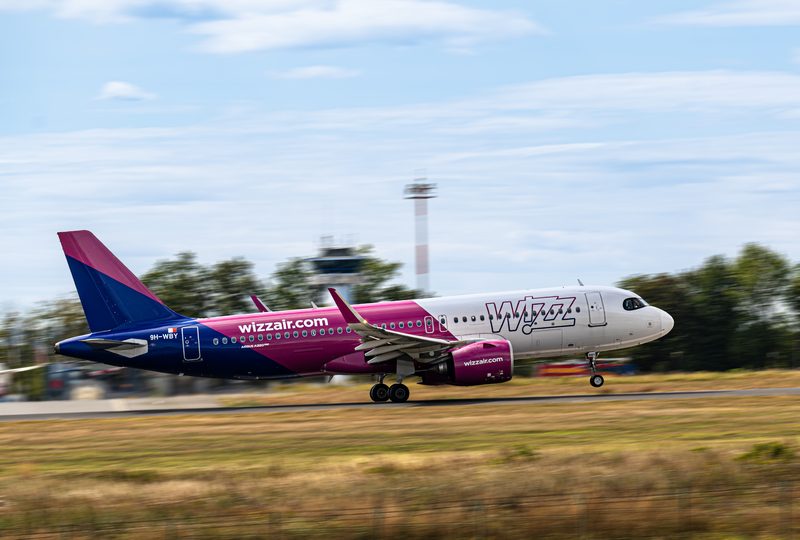
Wizz Air is strengthening its presence at Maastricht Aachen Airport (MST) for Summer 2026 with a 13-times-weekly schedule that gives the Dutch regional airport a much clearer place on the carrier’s map. Rather than building a broad-based network, Wizz is concentrating on a compact set of routes that fit Maastricht’s geography, catchment area, and traffic profile far better than a scattergun expansion would.

For the summer season, Maastricht will be linked with Katowice Airport (KTW), Lublin Airport (LUZ), Podgorica Airport (TGD), and Tuzla International Airport (TZL). That matters because it turns MST into a niche but useful gateway for flows that are often underserved from larger Dutch airports. In practical terms, Wizz Air is using Maastricht less as a classic leisure station and more as a precision tool for point-to-point traffic across Central and Southeast Europe.
The Route Mix Says a Lot About the Market
The strongest signal in the schedule is not just the number of flights, but where they are going. Katowice (KTW) is the largest component of the network, with service building to as many as five weekly flights. Lublin (LUZ) is scheduled twice weekly, while Podgorica (TGD) and Tuzla (TZL) each provide three weekly frequencies.
Read our stories in your inbox
Two aviation newsletters. Zero fluff.
That is a very specific network shape. Katowice and Lublin tie Maastricht into southern and eastern Poland, while Tuzla and Podgorica extend the airport’s reach into the western Balkans. For an airport sitting near the Dutch, Belgian, and German borders, that mix is commercially sensible. Maastricht does not need to imitate Amsterdam Schiphol Airport (AMS) or even Eindhoven Airport (EIN). Its value lies in serving traffic that benefits from direct access, shorter airport processing, and routes that may not justify larger-airport competition.
This is also why the schedule reads like a VFR-heavy and diaspora-oriented portfolio, with room for niche leisure and small-business demand rather than pure outbound sun traffic. That kind of traffic base can be especially attractive to an ultra-low-cost carrier when the airport itself offers a less congested operating environment.
A321neo Economics Are Central to the Story
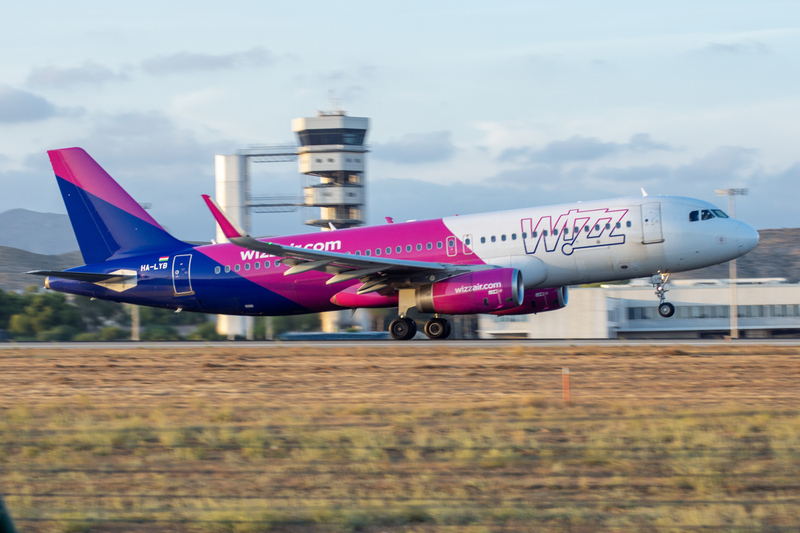
Aircraft choice is a big part of why this works. Wizz Air’s Maastricht operation is built around the Airbus A320-family platform, with the Airbus A321neo playing a central role. Filed schedules show the Maastricht–Lublin (MST–LUZ) and Maastricht–Podgorica (MST–TGD) routes operating with the A321neo, while Maastricht–Katowice (MST–KTW) is currently filed with a mix of Airbus A320 and A321neo service.
For airline professionals, that detail is important. The A321neo is one of the most efficient narrowbodies in the European short-haul market, and Wizz Air’s dense configuration allows it to push seat economics aggressively. In Wizz’s layout, the A321neo carries up to 239 passengers in a single-class cabin, giving the airline a powerful cost base on markets that may not need daily frequency but still benefit from larger-gauge aircraft on peak days.
That operating model suits Maastricht well. Instead of trying to force frequency-heavy business schedules into a regional airport environment, Wizz can use larger narrowbodies to concentrate demand while keeping unit costs low. On sectors such as MST–KTW or MST–TGD, that is often the more durable strategy.
Schedule Revisions Have Made the Network More Disciplined
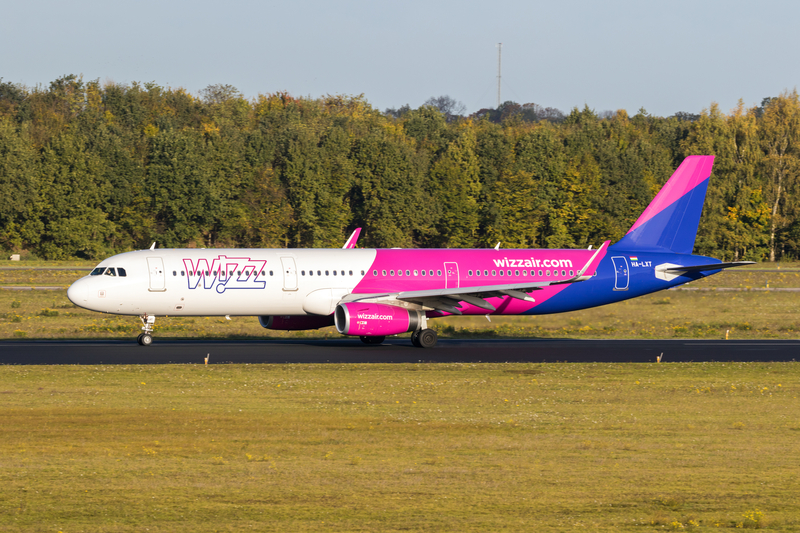
One of the more telling aspects of the Maastricht story is that Wizz Air has already adjusted its original plans. Earlier route plans from MST included Bucharest Băneasa Airport (BBU) and Chișinău International Airport (RMO), but both services were later suspended before the summer schedule fully took shape. At the same time, Wizz raised Katowice frequency, leaving Maastricht with a tighter and arguably more coherent four-route network.
That kind of refinement is often a healthy sign. It suggests the airline is actively matching capacity to real demand rather than chasing headline growth. In a market as cost-sensitive as intra-European low-cost flying, pruning weaker routes early and reinforcing stronger ones is usually a better long-term play than stubbornly defending every announced city pair.
From Maastricht’s perspective, the end result is still meaningful. A 13-weekly schedule is substantial for an airport of its size, particularly when the operation is concentrated on routes with a plausible structural base rather than purely seasonal opportunism.
Maastricht’s Role in the Dutch Market Is Growing Again
The timing is also favorable for Maastricht itself. The airport is gradually carving out a more visible role in the Netherlands as a flexible regional alternative, and that role is likely to become even more important beyond Summer 2026. With Eindhoven Airport (EIN) due to close temporarily in early 2027 for runway works, part of the displaced capacity from TUI and Transavia is expected to move to Maastricht.
That does not make MST a major hub, nor should anyone pretend otherwise. But it does reinforce a more realistic and potentially more valuable identity: a regional airport that can absorb niche scheduled demand, support selective carrier growth, and step in when the larger Dutch system comes under pressure.
In that context, Wizz Air is doing more than adding flights. It is helping restore Maastricht’s commercial relevance on the passenger side, one carefully chosen market at a time.
Bottom Line
Wizz Air’s Summer 2026 expansion at Maastricht Aachen Airport (MST) is more interesting than the raw number of weekly flights might suggest. The carrier is not building a broad leisure network. It is constructing a targeted operation centered on Katowice (KTW), Lublin (LUZ), Podgorica (TGD), and Tuzla (TZL), with Airbus A321neo-family economics doing much of the heavy lifting.
For Maastricht, that creates a clearer identity. For Wizz Air, it creates a focused, low-cost platform in a cross-border catchment that larger airports do not always serve efficiently. And for industry observers, the main takeaway is straightforward: after some early schedule revisions, this now looks like a more disciplined network plan than a flashy one—and that usually gives it a better chance of lasting.
Keep reading FlyMag
Get the Daily Brief in the morning or the Route Watch weekly recap on Fridays. Or both.