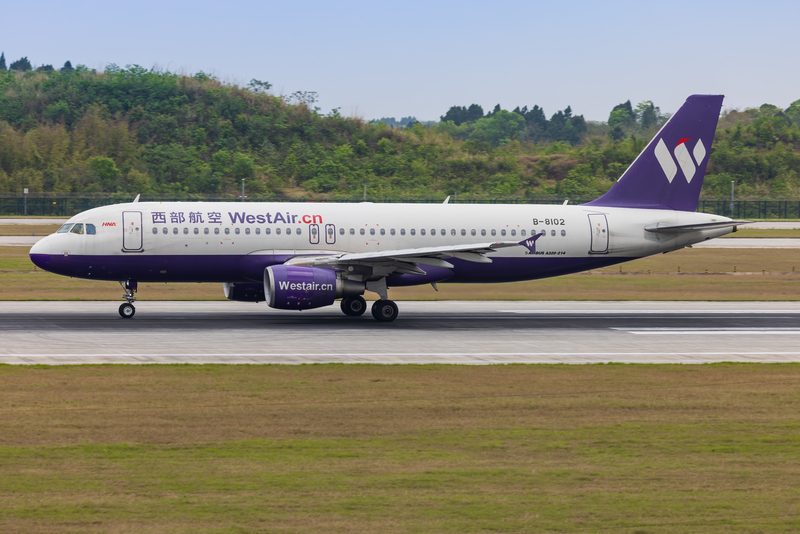
West Air has opened a new operating base at Taiyuan Wusu International Airport (TYN), giving the Chongqing-based carrier a stronger foothold in northern China and another platform from which to expand its developing regional network.
The base officially entered service on April 20, 2026, and its launch was paired with a new daily route linking Taiyuan Airport (TYN) with Ho Chi Minh City’s Tan Son Nhat International Airport (SGN) via Chongqing Jiangbei International Airport (CKG), operated with Airbus A320-family aircraft.
At first glance, this may look like a fairly routine base announcement tied to one new route. In practice, it is more strategic than that. For West Air, Taiyuan is not just another outstation. It is a northern China anchor that helps extend the airline’s reach beyond its traditional Chongqing-centered network and gives it another way to channel traffic into emerging Southeast Asian markets.
Read our stories in your inbox
Two aviation newsletters. Zero fluff.
Taiyuan Is Becoming More Important In West Air’s Domestic Strategy
The opening of a base at Taiyuan Wusu International Airport (TYN) is significant because bases usually mean more than parking aircraft overnight.
For a carrier such as West Air, a base brings operational commitment, crew deployment, scheduling flexibility, and the ability to grow local market relevance over time. It also suggests the airline sees Taiyuan as more than a spoke served from elsewhere. It now sees the city as a place worth building from.
That matters because Taiyuan sits in Shanxi Province, a region that is strategically useful for carriers trying to capture a mix of local traffic, domestic connections, and outbound leisure demand. By establishing a base there, West Air is positioning itself to compete more directly in northern China rather than relying solely on its long-established strength at Chongqing Jiangbei International Airport (CKG).
The New Route To Ho Chi Minh City Is Really A Chongqing-Linked Network Move
The route launched alongside the base opening connects Taiyuan Airport (TYN) with Ho Chi Minh City Airport (SGN) via Chongqing Airport (CKG), and that routing structure says a lot about West Air’s network logic.
This is not a simple point-to-point nonstop international launch from Taiyuan to Vietnam. It is a one-stop through service built around Chongqing, which remains the airline’s central hub. That gives West Air a way to market an international route from Taiyuan while still using Chongqing as the operational and commercial fulcrum.
In network terms, that is smart. It allows the airline to widen its international footprint from secondary Chinese cities without taking on the full risk of standalone nonstop service. It also improves utilization of the Chongqing system while strengthening Taiyuan’s role as a feeder point into Southeast Asia.
For West Air, this is less about bypassing Chongqing than about extending Chongqing’s reach.
The Airbus A320 Remains The Workhorse Behind The Expansion
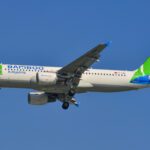
The service is being operated with Airbus A320-family aircraft, which is entirely consistent with West Air’s fleet and business model.
The A320 is well suited to this kind of operation. It offers enough capacity for a mixed domestic-international routing, relatively efficient economics on medium-haul sectors, and the flexibility needed for a carrier that is still selectively building out its regional international map. On a route pattern such as Taiyuan (TYN)–Chongqing (CKG)–Ho Chi Minh City (SGN), the type is a logical fit because it can handle both the domestic and international legs without requiring a larger-gauge commitment.
For an airline growing carefully, that matters. It means West Air can test and develop traffic flows without overcommitting capacity.
The Taiyuan Base Also Fits A Broader Southeast Asia Push
The Ho Chi Minh City route is not happening in isolation.
West Air has already been adding Southeast Asian flying in the Northern Summer 2026 season, including growth from Chongqing into markets such as Chiang Mai, Penang, and Vientiane. In that context, the Taiyuan–Chongqing–Ho Chi Minh City service looks like part of a wider regional strategy rather than a one-off route experiment.
That wider strategy appears to be built around using Chongqing Jiangbei International Airport (CKG) as the international gateway while feeding it from secondary Chinese cities such as Taiyuan. This is a sensible structure for an airline that wants to grow beyond the domestic market without immediately confronting the cost and complexity of building a major independent long-haul or multi-hub international system.
Put simply, Taiyuan strengthens the front end of West Air’s Southeast Asia plan.
Why Taiyuan Matters More Than The Route Alone
The more important story here may actually be the base rather than the Vietnam service.
Routes can come and go, particularly in a seasonal or developing market. A base is more meaningful. It implies a longer-term local commitment and gives the airline a better platform for future domestic and international additions. If West Air can build enough local brand presence and connecting utility at Taiyuan Wusu International Airport (TYN), then this opening could eventually support more than one Southeast Asian market and more than one route family.
That is especially relevant in China’s evolving domestic aviation landscape, where carriers are increasingly trying to unlock demand from second-tier and inland cities rather than relying only on the biggest coastal gateways.
This Is A Typical West Air Move In One Important Sense
West Air has rarely pursued expansion through headline-grabbing prestige markets. Its growth style has generally been more practical than flashy, relying on secondary cities, domestic feed, and carefully structured route development.
The Taiyuan base fits that pattern perfectly.
Rather than launching a bold nonstop intercontinental route or a massive local build-up, the airline is opening a new northern base and pairing it with an international service that still leverages Chongqing. That is a classic low-risk, network-led way to expand. It allows West Air to test demand, broaden its catchment, and improve aircraft utilization without betting too much on one unproven city pair.
For aviation professionals, that restraint is part of what makes the move credible.
Bottom Line
West Air’s new base at Taiyuan Wusu International Airport (TYN) is an important strategic step for the Chongqing-based carrier. It gives the airline a stronger foothold in northern China and supports a wider effort to connect inland Chinese cities with Southeast Asia through Chongqing Jiangbei International Airport (CKG).
The accompanying daily Airbus A320 service linking Taiyuan (TYN) with Ho Chi Minh City (SGN) via Chongqing is notable, but the bigger story is what sits behind it: West Air is gradually turning Taiyuan into a more meaningful operating point inside its broader network. For a carrier built around selective, practical expansion, that may prove more valuable than any single route launch.
Keep reading FlyMag
Get the Daily Brief in the morning or the Route Watch weekly recap on Fridays. Or both.