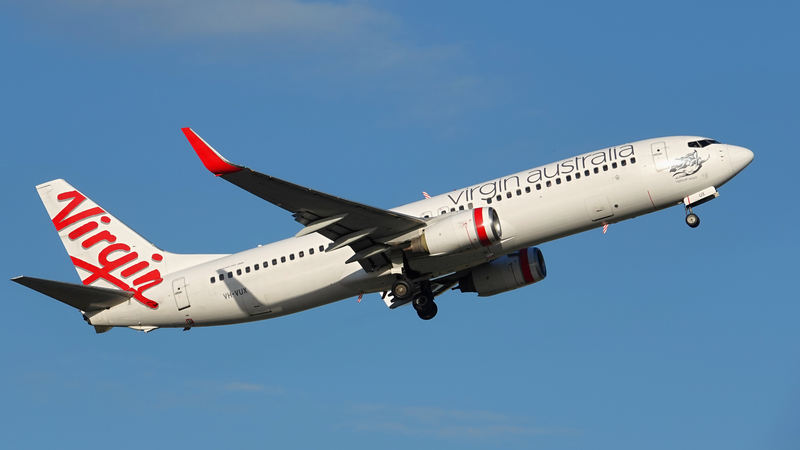
A cabin fire involving a passenger’s vape device forced Virgin Australia flight VA328 to declare urgency while descending into Melbourne Airport (MEL) on March 15, but the incident did not result in an aborted landing. Instead, the Boeing 737-800 continued its approach, landed safely at MEL, and taxied to the gate under escort from emergency crews.

That distinction matters.
In aviation reporting, “aborted landing” implies a very different operational event from what appears to have happened here. Virgin Australia’s crew issued a PAN call — the standard radio signal for an urgent situation requiring priority handling, but not one posing the immediate danger associated with a MAYDAY. The aircraft then completed a normal landing, with emergency services waiting as a precaution.
Read our stories in your inbox
Two aviation newsletters. Zero fluff.
So the real story is not about a go-around or missed approach. It is about how quickly a routine domestic flight can become a cabin-safety event when a lithium-battery device ignites.
The Incident Happened On Descent Into Melbourne
Virgin Australia flight VA328 had departed Brisbane Airport (BNE) for Melbourne Airport (MEL) when a vape device activated and began burning in the cabin during descent. According to the airline and airport reporting, cabin crew responded quickly to contain the device while the pilots advised air traffic control and requested priority handling into MEL.
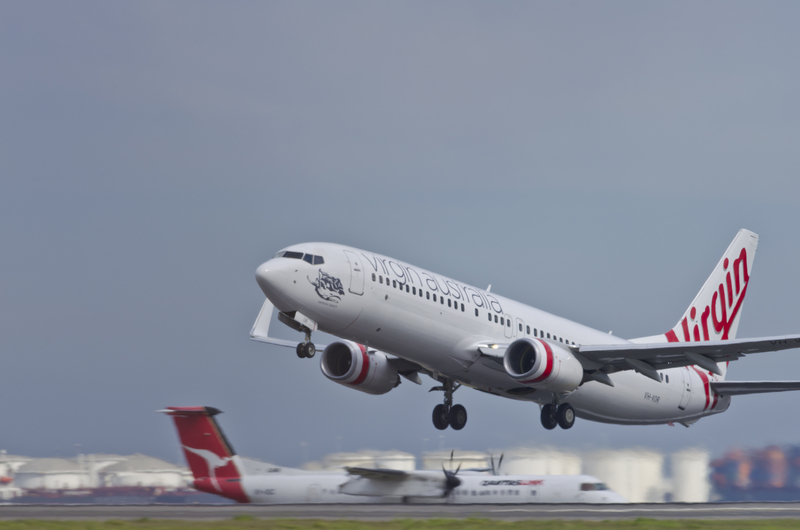
The aircraft involved was a Boeing 737-800, one of the core types in Virgin Australia’s domestic fleet. That is relevant because this was not some unusual charter or marginal operation. It was a standard trunk-route domestic service on one of Australia’s most heavily used city pairs.
The 737 landed safely, emergency vehicles followed the aircraft after touchdown, and passengers disembarked normally at the gate. From an operational standpoint, that is exactly what you want to see in a lithium-battery event: rapid cabin intervention, clear communication with ATC, precautionary emergency response on arrival, and no escalation beyond the device itself.
Why A PAN Call Matters
A PAN call often gets blurred in public coverage with “emergency landing,” but aviation professionals know the nuance matters.
PAN signals urgency. It tells controllers that the crew has a situation requiring attention and priority, but not one that is currently judged to be immediately life-threatening to the aircraft. In this case, that fits the available facts. The crew had a potentially hazardous cabin fire source — a burning vape device — but still retained control of the aircraft and completed the arrival safely.
That is also why describing the event as an “aborted landing” is misleading. The aircraft did not discontinue its approach. It continued to MEL and landed as planned, just with emergency services standing by and ATC aware of the issue.
For readers in the industry, accuracy on that point is important. Safety reporting loses value quickly when operational terminology is overstated.
Vapes Are A Growing Cabin Fire Risk
The broader issue here is lithium batteries.
Vapes and e-cigarettes contain small lithium-ion cells, and those batteries can overheat, short-circuit, or enter thermal runaway if damaged, poorly manufactured, crushed, or accidentally activated. Once that process begins, the device can produce intense heat, flames, toxic smoke, and continued reignition risk.
That makes even a small vape fire a serious onboard event.
Inside an aircraft cabin, the danger is not just the size of the fire. It is the combination of smoke, passenger alarm, confined space, and the difficulty of fully stabilizing a compromised lithium battery. A crew may extinguish visible flames quickly, but the device can remain hot and unstable long after the initial incident.
That is why cabin crews train specifically for battery-related fires rather than treating them like ordinary small onboard blazes.
Why These Devices Must Stay In The Cabin
This incident also underlines why airlines and regulators require e-cigarettes and similar lithium-battery devices to travel in carry-on baggage rather than checked luggage.
The rule is not a convenience issue. It is a damage-control issue.
If a battery overheats in the cabin, trained crew can intervene immediately. They can isolate the device, cool it, use firefighting equipment if needed, and monitor for reignition. If the same event occurs inside the hold, the response options are much more limited and the consequences potentially far worse.
Virgin Australia’s own policy reflects that logic. Vapes must be carried onboard, not packed in checked baggage. But the rule only solves part of the problem. Once the device is in the cabin, how it is stored and whether it activates accidentally still matter.
That is why airlines are paying closer attention not just to where batteries are carried, but how passengers use and stow them.
This Incident Fits A Broader Battery-Safety Pattern
The VA328 event did not happen in isolation.
Virgin Australia and other carriers have already tightened procedures around portable lithium-battery devices after a string of incidents involving overheating power banks and other electronics. In Australia, battery-fire awareness has risen sharply following several high-profile onboard events, including a 2025 Virgin Australia power-bank fire during descent.
That earlier case mattered because it showed how quickly a small consumer battery can create smoke, alarm, and real operational consequences inside a narrowbody cabin. The vape incident on VA328 reinforces the same lesson from a slightly different angle: it is not only power banks that are the problem. E-cigarettes are also a meaningful risk category, and in some cases an even trickier one, because their batteries and heating elements can be more prone to accidental activation or lower manufacturing quality.
For airlines, this means the safety challenge is getting broader, not narrower.
The Crew Response Is The Real Story
While the headline naturally centers on the vape, the more important aviation takeaway is the crew response.
By all available accounts, the cabin crew identified and contained the smoking device quickly, while the flight crew coordinated appropriately with ATC and Melbourne Airport emergency services. That is exactly how these events are supposed to be managed. The goal is to keep a localized battery incident from becoming a cabin-wide emergency, and that appears to be what happened here.
Melbourne Airport confirmed the Boeing 737 landed safely and that passengers disembarked normally. That outcome is never accidental. It depends on training, disciplined procedure, and a calm response in a moment that can feel much more dramatic inside the cabin than it later reads in a report.
For a domestic 737 flight nearing the end of its sector, that kind of execution matters enormously.
Bottom Line
Virgin Australia flight VA328 from Brisbane (BNE) to Melbourne (MEL) suffered a serious cabin-safety event when a passenger’s vape device ignited during descent, prompting the crew to issue a PAN call and bringing emergency services to the airport.
But the aircraft did not abort its landing.
The Boeing 737-800 continued its approach, landed safely at Melbourne, and taxied to the gate, where passengers disembarked normally. That makes this a lithium-battery cabin fire incident managed successfully by the crew — not a go-around story.
For aviation professionals, the bigger significance is clear. Vapes remain a real and growing onboard fire risk, especially in an era when passengers routinely carry multiple lithium-powered personal devices. And once again, a trained cabin crew made the difference between a contained event and something much worse.