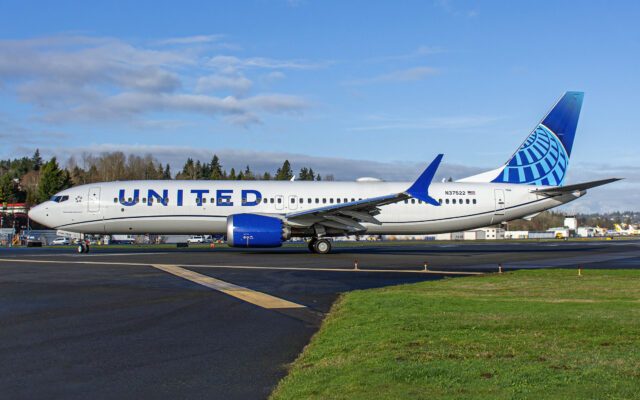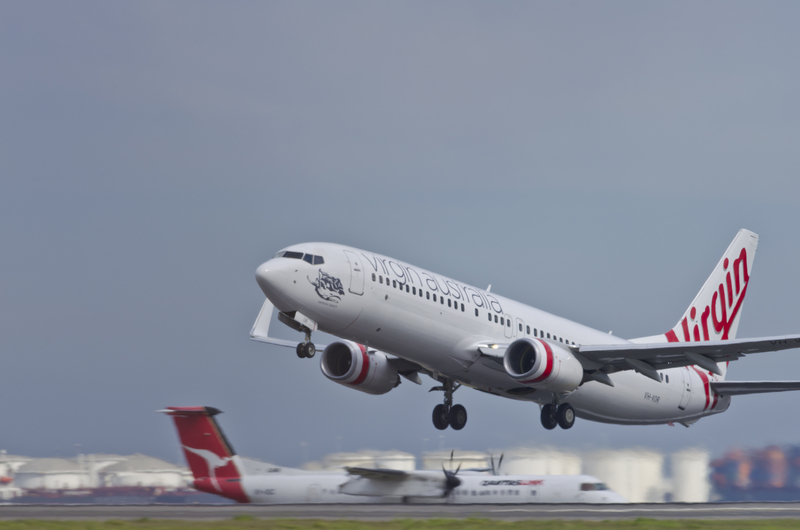
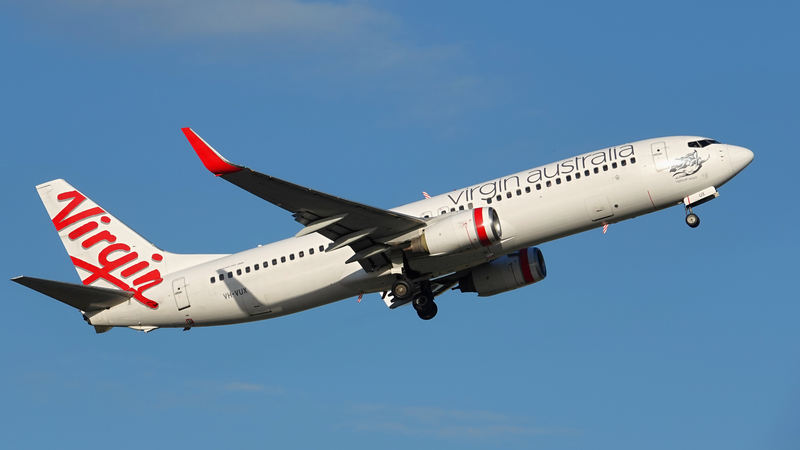
Virgin Australia (VA) is making a clear statement about confidence and balance-sheet strength: it will purchase nine of its twelve incoming Boeing 737-8 (737 MAX 8) deliveries scheduled for 2026, rather than dry leasing them as originally planned.

The decision, disclosed in a stock exchange filing, is being driven by a stronger financial position—anchored by an AUD 490 million operating profit for the six months ending December 2025—and a capital plan that signals Virgin is ready to invest more directly in ownership of its next-generation narrowbody fleet.
This is not just a finance tweak. It changes how Virgin manages long-term fleet economics, residual value exposure, and flexibility in a market where aircraft availability remains tight and leasing terms are still materially higher than pre-pandemic norms.
Read our stories in your inbox
Two aviation newsletters. Zero fluff.
The delivery plan: 12 incremental MAX 8s in 2026, orderbook closes out
Virgin expects twelve incremental 737-8s to arrive during 2026, which will complete its 26-aircraft MAX 8 orderbook.
The cadence is split across the fiscal year:
-
Four 737-8s in 1H 2026, including one already delivered on March 2
-
Eight more in 2H 2026, of which three will still be leased
In other words, Virgin is shifting the mix toward ownership for the majority of the 2026 intake while still maintaining some leased aircraft to preserve flexibility—an approach that often balances cost of capital against network uncertainty.
What ownership changes for Virgin: lower long-term cost, higher exposure
Why buy instead of lease? For airlines, it usually comes down to three things:
1) Lower lifetime cost when the balance sheet can support it
Ownership can reduce long-term cash cost relative to leasing—especially when lease rates are inflated. But it also ties up capital and exposes the airline to residual value risk.
2) More control over the asset
Owned aircraft can be sold, financed, or used in sale-and-leaseback transactions when market conditions are favorable. That optionality has real value for an airline managing cycles.
3) Signaling
In the airline world, choosing to buy aircraft often telegraphs confidence: management believes it will need the lift, can fund it, and can carry the asset through downturns.
Virgin’s CFO Race Strauss framed the choice in exactly those terms—strong cash generation enabling continued fleet investment and “value-accretive growth opportunities.”
Capex and sale-and-leaseback: a classic two-lever strategy
Virgin has earmarked AUD 850–950 million in capital expenditures for FY2026 (ending June 2026). At the same time, it expects AUD 200 million in sale-and-leaseback proceeds in the first half of 2026.
That combination—buy aircraft, then selectively sell-and-leaseback some of them—has become a standard airline playbook. It lets the airline:
-
take delivery without relying entirely on operating leases,
-
capture liquidity when pricing is attractive,
-
and still keep aircraft “on wing” while reducing capital tied up in the asset.
It’s also a practical hedge. If market conditions shift, Virgin can adjust the balance between ownership and leasing without changing the aircraft delivery stream.
The fleet context: MAX 8s now, MAX 10s later (and why conversion happened)
Virgin’s narrowbody plan has been shaped by delivery reality. The airline still holds 13 unfilled Boeing 737-10 commitments, part of the original 25-unit MAX 10 order. In 2024, Virgin converted twelve of those MAX 10 commitments into MAX 8s, explicitly citing delivery delays at the time.
That matters because it mirrors what many carriers have done: swap into earlier-deliverable aircraft rather than waiting on later-certification or later-slot models. For Virgin, the 737-8 is the practical workhorse that can arrive now and deliver immediate fuel efficiency and reliability improvements against older 737NG airframes.
What these aircraft will do in the network
Virgin’s 737 fleet is the backbone of its Australian domestic operation, especially across trunk routes such as:
-
Melbourne (MEL) – Sydney (SYD)
-
Brisbane (BNE) – Melbourne (MEL)
-
Perth (PER) – eastern seaboard sectors
The 737-8’s economics—better fuel burn and improved range relative to older 737-800s—gives Virgin more flexibility on longer domestic sectors and select regional missions while keeping fleet commonality high.
This purchase decision also helps Virgin in a less obvious way: maintenance planning. A younger, more standardized fleet reduces heavy-check complexity and improves dispatch reliability, particularly during peak travel periods where spare aircraft are scarce.
Regional fleet modernization: E190-E2 growth and Airbus exit
Virgin Australia Regional—centered on Perth (PER)—is also moving quickly to modernize:
-
Legacy Fokker 100 (F100) and Airbus A320-200 fleets are being phased out.
-
The airline has already added two Embraer E190-E2s, with two more expected by June 2026.
The E190-E2 is a very different tool from the 737-8: smaller gauge, excellent for thinner sectors, and a better match for regional routes where 737 capacity would be too much airplane. Virgin expects the A320-200 operation to wind down by the first half of 2027, with MAX 8 deliveries taking over much of that flying on the mainline side.
Where the group stands today: a mixed but converging fleet
Across the Virgin Australia Group (including Virgin Australia, Virgin Australia International, and Virgin Australia Regional), the fleet mix currently includes:
-
Airbus A320-200 (still in the system, but exiting)
-
Boeing 737-700 / 737-800 / 737-8
-
Embraer E190-E2
-
Fokker 100 (in late-stage phase-out)
The direction is clear: consolidate around Boeing narrowbodies for mainline and E2s for regional, while eliminating older orphan fleets that complicate maintenance and crewing.
Bottom Line
Virgin Australia’s decision to buy nine of its twelve incoming Boeing 737-8 deliveries in 2026—rather than leasing them—signals a stronger balance sheet and a willingness to invest directly in fleet renewal. Backed by robust profitability, sizable FY2026 capex, and planned sale-and-leaseback proceeds, the move reshapes Virgin’s cost base and asset strategy at a time when aircraft availability and lease pricing remain challenging.
At the same time, Virgin Australia Regional is progressing with E190-E2 deliveries and accelerating the phase-out of F100s and A320-200s, setting the group up for a more streamlined, modern fleet by 2027—with the MAX 8 as the mainline workhorse driving the next phase of domestic growth.
Keep reading FlyMag
Get the Daily Brief in the morning or the Route Watch weekly recap on Fridays. Or both.