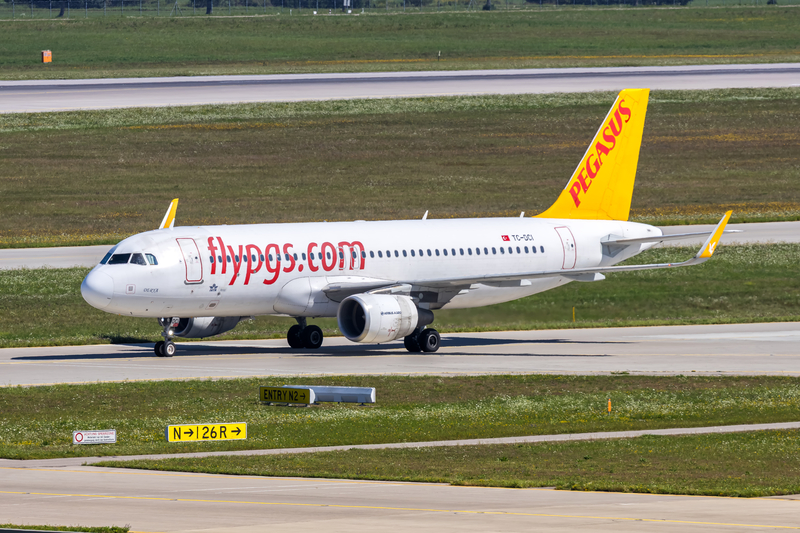
Pegasus Airlines has officially launched nonstop service between Istanbul Sabiha Gökçen (SAW) and Ljubljana (LJU), adding Slovenia as the carrier’s 55th country and giving both markets a new, price-competitive option that bypasses the traditional “big hub” routing.

For Pegasus, the strategic logic is clear: SAW is built to be a connection engine. For Slovenia, the win is equally straightforward: LJU gets a direct link into one of Europe’s most productive low-cost transfer hubs, opening up one-stop access to a wide swath of Pegasus’ network without forcing travelers through larger, often more expensive gateways.
Schedule and cadence: three weekly flights built for city breaks and connections
The route operates three round trips per week, with departures Mondays, Thursdays, and Saturdays—a pattern that works well for both short leisure breaks and connection-heavy itineraries.
Read our stories in your inbox
Two aviation newsletters. Zero fluff.
Pegasus’ published timings are structured as:
-
SAW–LJU: morning departures on Mondays and Saturdays, with an afternoon departure on Thursdays
-
LJU–SAW: late-morning returns on Mondays and Saturdays, with an afternoon return on Thursdays
That split is more than cosmetic. Morning SAW departures can pull in overnight and early-morning feed from Pegasus’ domestic Türkiye network, while the Thursday afternoon option adds flexibility for weekend-start traffic and reduces the “all-or-nothing” dependency on a single departure bank.
The aircraft: right-sized narrowbodies for a frequency-driven market
Pegasus is expected to operate the SAW–LJU sector with its core short-haul fleet—primarily the Boeing 737-800 and Airbus A320-family aircraft.
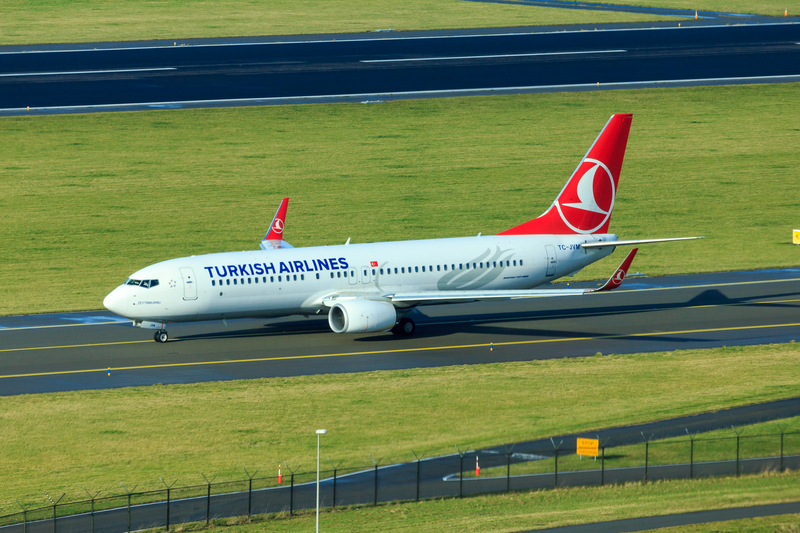
That’s the sweet spot for this kind of route:
-
High-cycle reliability for a short-to-medium European sector
-
Dense seating that keeps unit costs low and fares competitive
-
Quick turns that help protect punctuality even when SAW is running hot

The 737-800 and A320 are also “schedule-flexible” aircraft in Pegasus’ system—easy to swap depending on seasonal demand, maintenance rotations, or how connections are building over time. For LJU, that matters: as the route matures, Pegasus can adjust gauge without needing to reinvent the operation.
Why SAW matters: Pegasus’ real advantage is connectivity
Most travelers think of Istanbul as one airport. Airline planners don’t.
Sabiha Gökçen (SAW) is Pegasus’ home field and a different proposition from Istanbul Airport (IST): it’s optimized for the low-cost model, with shorter minimum connection logic and a network shaped around high-frequency narrowbody flying. For passengers from Slovenia, that means the new LJU–SAW flight isn’t only about Istanbul—it’s about what sits behind it.
From SAW, Pegasus can sell one-stop itineraries onward to a broad set of markets:
-
Türkiye’s major domestic cities (a significant driver of year-round demand)
-
Leisure-heavy Mediterranean points
-
Selected Middle East and Caucasus destinations where SAW is already an established connector
That’s why a three-weekly LJU link can still “feel” like a much larger expansion: it’s effectively plugging LJU into a hub that behaves like a low-cost version of a global connecting airport.
What it means for Ljubljana: a clean win for inbound tourism and outbound access
For Ljubljana (LJU), the route adds more than a new city pair—it adds network utility. Slovenia’s main international gateway has steadily pushed for broader connectivity, and an Istanbul-area link is particularly valuable because it improves options for:
-
Tourism flows in both directions
-
Business travel tied to trade and services
-
Visiting friends and relatives traffic that typically values nonstop simplicity and price
Just as importantly, the SAW link expands choice without requiring LJU to depend solely on legacy-carrier connecting hubs. In today’s European market, that diversity tends to improve resilience: when one connecting gateway is disrupted, travelers have alternatives.
Competitive context: a second Istanbul airport changes the dynamic
It’s also worth separating Istanbul as a city from Istanbul as an airline market.
The SAW–LJU service doesn’t just compete with connections—it competes with the broader Istanbul–Slovenia travel market, which includes service into Istanbul’s other gateway. The presence of two airports creates a subtle segmentation:
-
SAW: low-cost, connection-friendly, Pegasus-anchored
-
IST: legacy and long-haul flows, alliance-heavy, premium-biased
That division gives travelers genuine choice depending on whether they prioritize price, schedule, onward connections, or airport preference.
Bottom Line
Pegasus’ new Istanbul Sabiha Gökçen (SAW)–Ljubljana (LJU) route is a smart, network-minded expansion: three weekly frequencies that plug Slovenia directly into Pegasus’ core hub, operated with efficient narrowbodies that can scale with demand. For LJU, it’s not just another destination on the board—it’s a connectivity multiplier that can drive inbound tourism and unlock one-stop access to a much wider map via SAW.
Keep reading FlyMag
Get the Daily Brief in the morning or the Route Watch weekly recap on Fridays. Or both.