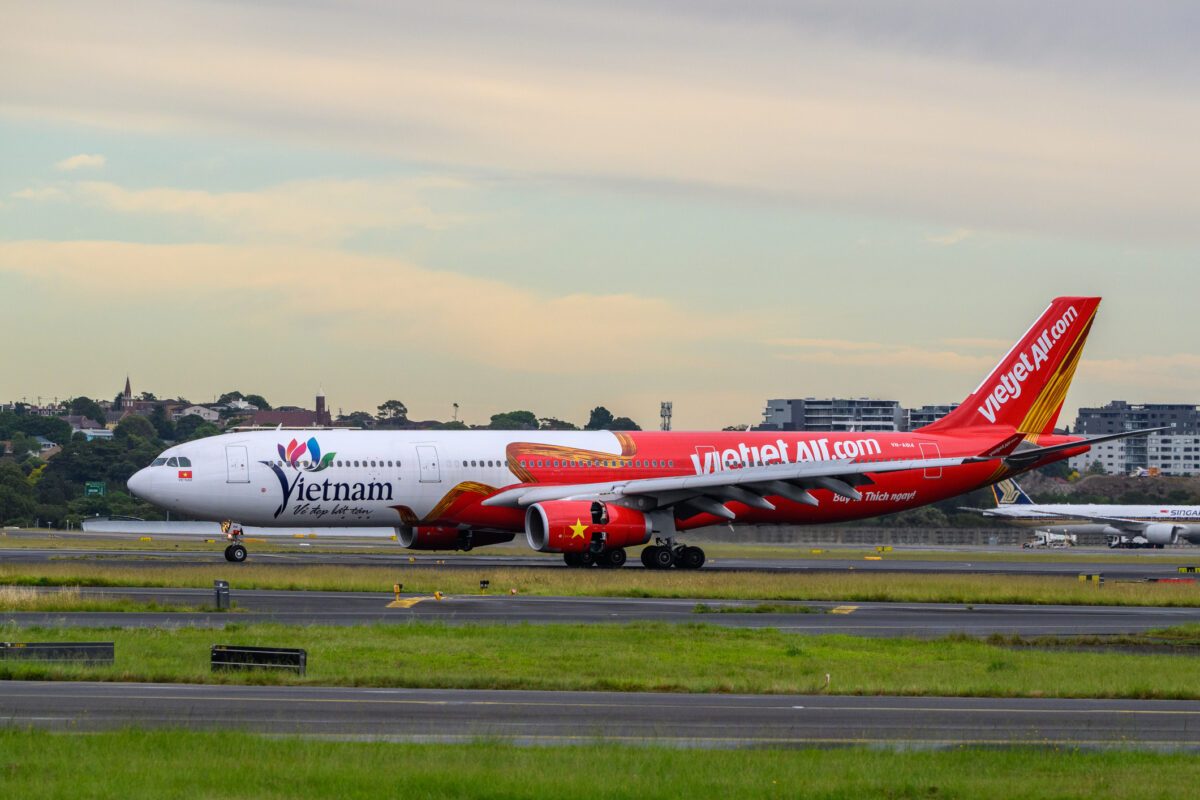
Vietjet has opened its first route into Europe, launching a twice-weekly Airbus A330-300 service from Hanoi (HAN) to Prague (PRG) via Almaty (ALA).

Operations began October 10, 2026, with inaugural events in both Almaty and Prague. The Vietnamese carrier is selling all three sectors, including Almaty-Prague under fifth-freedom traffic rights, rather than using the Kazakhstan stop solely for refueling or operational purposes.
The new services operate on Tuesdays and Saturdays, creating three city-pair products within a single aircraft rotation: Hanoi-Almaty, Almaty-Prague and the through Hanoi-Prague itinerary.
Read our stories in your inbox
Two aviation newsletters. Zero fluff.
A One-Stop Route With Local Traffic Rights
Vietjet’s published schedule has the outbound flight leaving Hanoi at 8:25 a.m. and arriving in Almaty at 12:50 p.m. After a 90-minute stop, it departs at 2:20 p.m. and reaches Prague at 6:55 p.m.

The return leaves Prague at 8:55 p.m., arriving in Almaty at 6:40 a.m. the following morning. It continues at 8:10 a.m. and lands in Hanoi at 4:20 p.m. All times are local.
The schedule gives Vietjet access to two distinct traffic flows. It can carry passengers between Vietnam and the Czech Republic while also competing for local demand between Kazakhstan and Prague. The Almaty city administration confirmed the airline’s fifth-freedom authority, allowing passengers to book the Almaty-Prague sector independently.
That local authority materially changes the economics of the stop. Rather than relying entirely on Hanoi-Prague demand to fill a large widebody, Vietjet can sell seats on each leg and draw passengers from the Central Asian market. It also gives Prague a new link to Almaty alongside the headline connection with Vietnam.
Vietjet Deploys Its 377-Seat A330
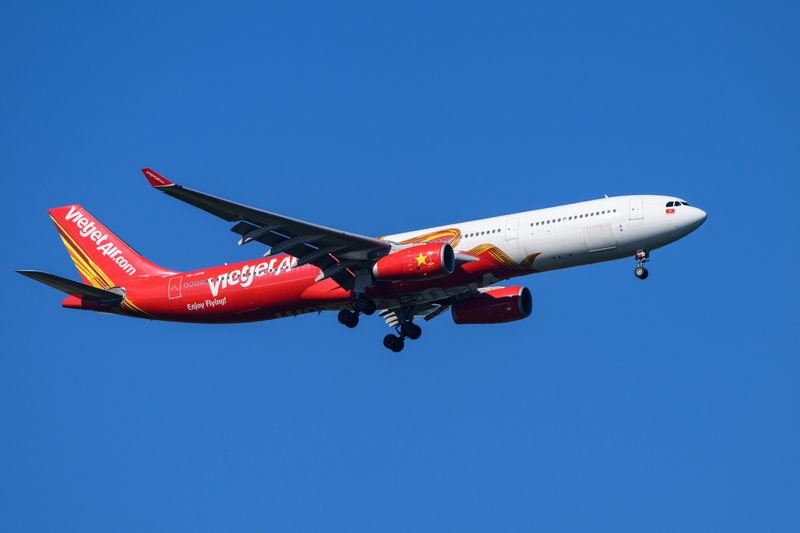
Vietjet is operating the route with a 377-seat Airbus A330-300. The airline’s published configuration pairs a small 12-seat lie-flat business cabin with 365 standard seats, producing a dense layout consistent with its low-cost and hybrid operating model.
The aircraft is a significant step up from the A320-family narrowbodies that underpin most of Vietjet’s network. It provides the capacity, belly volume and premium product needed for a long-haul market that includes visiting-friends-and-relatives traffic, organized tourism and cargo.
Airbus lists the A330-300’s maximum range at 6,350 nautical miles, or 11,750 kilometers. That gives the type ample performance for the individual sectors and, in principle, for a nonstop Hanoi-Prague mission. The Almaty stop instead allows Vietjet to divide the commercial risk across two markets while exercising fifth-freedom rights on the European leg.
The 377-seat configuration also gives the airline relatively low seat costs, but it places considerable importance on filling the aircraft beyond the peak travel periods associated with the Vietnamese community in the Czech Republic. Business-class sales, cargo and local Almaty-Prague traffic will therefore be important components of the route rather than incidental revenue streams.
Prague Gains Its First Scheduled Hanoi Route
Prague Airport describes the service as the first regular Prague-Hanoi route in the modern history of the Czech Republic. The airport said more than 75,000 passengers traveled between the two cities in 2025 despite the absence of a scheduled through service.
That existing indirect market gives Vietjet a base of passengers who previously had to connect elsewhere. The route is expected to serve the Czech Republic’s established Vietnamese community as well as leisure traffic in both directions and passengers connecting through Hanoi to Vietjet’s wider Asian and Australian network.
Prague Airport expects more than 67,000 passengers to use the service during its first year. At an unchanged twice-weekly frequency, Vietjet offers roughly 78,400 seats annually across both directions. Reaching the airport’s forecast would therefore imply an overall load factor in the mid-80% range, before accounting for any seasonal schedule changes.
The airport also sees cargo potential in the route. The A330-300’s underfloor capacity gives Vietjet room to carry freight alongside passenger baggage, adding another revenue source on a service linking manufacturing and trading markets in Southeast Asia, Central Asia and the European Union.
A Measured Start in Europe
Vietjet first placed the route on sale in May, initially describing Prague as its entry point into the European Union. The carrier chose a limited twice-weekly schedule rather than committing several aircraft to a daily or near-daily European operation.
That frequency reduces the amount of capacity Vietjet must absorb while it builds sales channels and brand recognition in two new markets. It also allows the airline to test the operational demands of a European station and a multi-country widebody rotation without creating a major drain on its A330 fleet.
The carrier has said it intends to expand further in Europe. For now, however, the Hanoi-Almaty-Prague service is a controlled first move: one aircraft rotation, two weekly frequencies and three independently sellable sectors.
Bottom Line
Vietjet’s choice of a one-stop, fifth-freedom structure is more consequential than the ceremonial arrival of its first aircraft in Europe. The airline is not approaching Prague as a conventional nonstop long-haul route. It is using Almaty to assemble several traffic pools that may be too small individually for a 377-seat aircraft but can support the rotation when combined.
Prague gains the scheduled Vietnam connection it has pursued for years, while Almaty receives a widebody link to both Southeast Asia and the European Union. Vietjet gains a lower-risk platform for learning how its dense A330 product performs in Europe, including how much revenue it can generate from premium seats, cargo and fifth-freedom passengers.
The next indicators will be frequency, seasonality and the durability of Almaty-Prague sales. If the twice-weekly operation maintains the load factors implied by Prague Airport’s first-year forecast, Vietjet will have a case for adding frequencies or testing another European endpoint. If local traffic remains weak, the carrier may need to rely more heavily on through passengers or reconsider how it structures its next move westward.
Keep reading FlyMag
Get the Daily Brief in the morning or the Route Watch weekly recap on Fridays. Or both.