United Airlines has not even returned to New York John F. Kennedy International Airport (JFK) yet, and CEO Scott Kirby is already looking for ways to make the operation larger.

United is expected to return to JFK as early as 2027 through its Blue Sky partnership with JetBlue Airways, which will provide the carrier with enough slots for up to seven daily roundtrips from the airport’s new Terminal 6.
But Kirby does not want seven flights to become United’s ceiling.
Read our stories in your inbox
Two aviation newsletters. Zero fluff.
In a recent CNBC interview, the United CEO said the airline is exploring several ways to acquire additional JFK access, including potentially obtaining slots from carriers that are operating routes that do not make economic sense for them.
“We got a bunch of irons in the fire to try to find ways to do it,” Kirby said.
The comments are significant because slot availability — not aircraft availability or a lack of interest in New York — is the primary reason United has been absent from JFK since 2022.
JetBlue Is Already Giving United Room For Seven Daily Roundtrips
United’s initial return to John F. Kennedy International Airport (JFK) is already taking shape.
Under the Blue Sky partnership announced by United and JetBlue, JetBlue will provide United access to JFK slots supporting up to seven daily roundtrip flights beginning as early as 2027.
United plans to operate from the new Terminal 6, rather than merely placing its code on JetBlue flights. Blue Sky is an interline and loyalty partnership, not a codeshare, and each airline continues to operate and price its own flights independently.
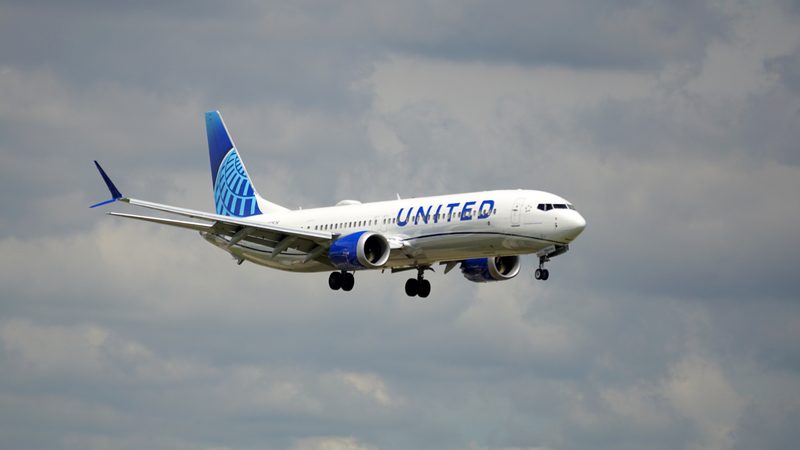
Seven daily roundtrips would equate to as many as 14 United aircraft movements each day at JFK — seven departures and seven arrivals.
That provides a substantially stronger starting point than United had during its last attempt to rebuild at Kennedy.
It may not be enough for Kirby.
Speaking with CNBC, he indicated that United is looking beyond the JetBlue arrangement and could acquire additional slots from airlines whose existing JFK flying is not profitable. Kirby did not identify any specific carrier, disclose how many additional slots United wants or reveal what routes it would operate with them.
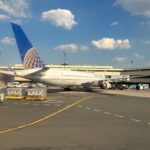
That last point is important. There is currently no announced list of United JFK destinations, and suggestions that the airline will immediately launch a large international network from the airport remain speculation.
JFK Slots Are The Real Prize
Expanding at JFK is considerably more difficult than simply deciding to add another flight.
John F. Kennedy International Airport (JFK) is designated by the Federal Aviation Administration as an IATA Level 3 airport, meaning scheduled operations are tightly controlled because demand for takeoff and landing capacity exceeds what the airport can reliably accommodate during peak periods. The FAA’s scheduling guidance for JFK confirms that the airport remains subject to formal operating limitations.
A carrier therefore cannot simply find an available gate and add 20 departures.
It needs the corresponding operating authority.
JFK slot holders are also generally required to use their allocated slots at least 80% of the time to retain them. The FAA can withdraw slots that fail to satisfy those utilization requirements unless an applicable waiver is in place. FAA slot-usage requirements
Slots can also move between airlines through privately negotiated leases and transfers, subject to applicable FAA procedures.
That is the opportunity Kirby is talking about.
If another carrier concludes that a particular JFK operation produces insufficient returns, the slot itself could potentially be worth more to United than the flight currently being operated with it.
United would not necessarily be “buying an unprofitable route.” It would be seeking the scarce JFK operating rights behind that route and then using those rights for whatever service it believes can generate a better return.
United Has Tried A Small JFK Operation Before — And It Failed
There is a good reason Kirby appears reluctant to return with too few flights.
United already tried that.
The airline originally left John F. Kennedy International Airport (JFK) in 2015 as it consolidated its New York operation around Newark Liberty International Airport (EWR).
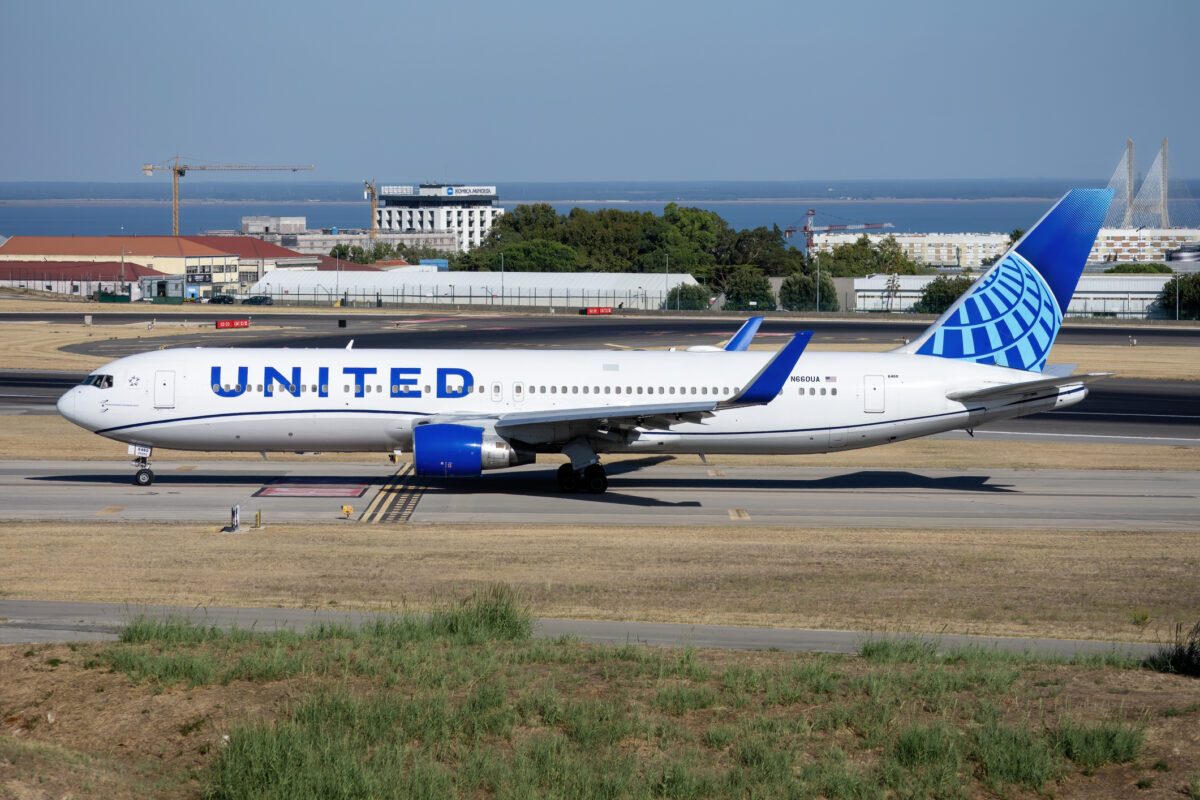
It returned in March 2021 with an unusually premium-focused operation to Los Angeles International Airport (LAX) and San Francisco International Airport (SFO).
United initially used specially configured Boeing 767-300ERs containing 46 lie-flat Business Class seats and 22 Premium Plus premium-economy seats. United’s 2021 JFK return announcement emphasized that premium capacity was central to the strategy.
The 767-300ER was an enormous amount of airplane for a domestic route, but that was intentional. United was targeting the lucrative premium transcontinental market rather than competing primarily on Economy fares.
The problem was frequency.
By 2022, United was operating just two daily flights from JFK to Los Angeles (LAX) and two to San Francisco (SFO). The airline argued that the schedule was simply too small to compete effectively with carriers offering much broader schedules.
United wanted additional slots from the FAA but could not obtain enough permanent capacity.
It finally suspended JFK service on October 29, 2022.
At the time, United explicitly blamed its “too-small-to-be-competitive” schedule and said it would continue pursuing a larger and more attractive JFK operation.
Four years later, that strategy is finally beginning to reappear.
The New A321neo Coastliner Looks Almost Made For JFK
United has not announced which aircraft will operate from JFK in 2027, so any specific fleet assignment remains unconfirmed.
There is, however, one particularly obvious candidate if United returns to the premium transcontinental markets it previously served.
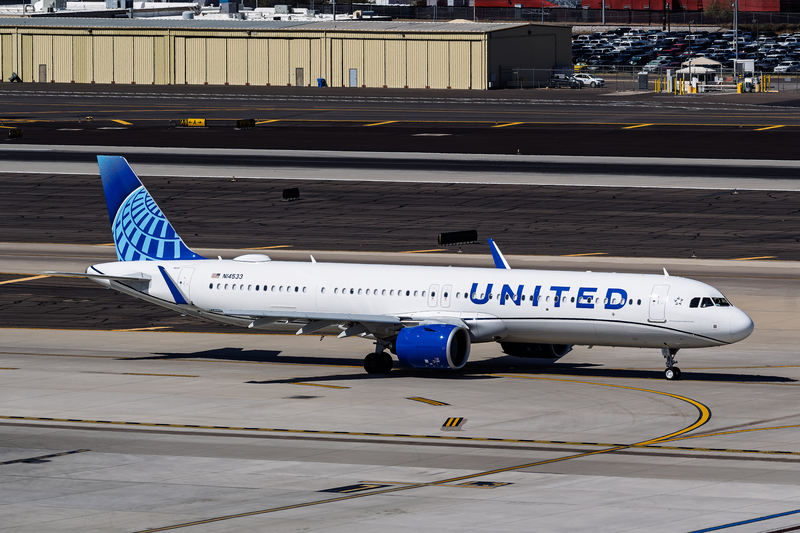
Earlier this year, United unveiled a specialized Airbus A321neo “Coastliner” subfleet designed specifically for high-value flights between New York and its West Coast hubs at Los Angeles (LAX) and San Francisco (SFO).
The aircraft will contain just 161 seats, including:
- 20 all-aisle-access, lie-flat United Polaris seats
- 12 United Premium Plus seats
- 129 Economy seats
The Coastliner represents a major change from United’s standard domestic A321neo. Its Polaris cabin uses lie-flat seats with direct aisle access, while Premium Plus brings a genuine premium-economy cabin to United’s narrowbody transcontinental operation.
United says the aircraft will operate between Newark/New York and Los Angeles and San Francisco, although it has not specifically assigned the type to future JFK service.
The timing is nevertheless difficult to ignore.
United says the first Coastliners will enter service in 2026, with 40 expected in service by early 2028.
If United ultimately restores JFK-Los Angeles (LAX) and JFK-San Francisco (SFO), the Coastliner would provide a natural successor to the premium-heavy 767s used during its previous JFK experiment.
But until United publishes its JFK schedule, those routes should not be treated as confirmed.
Why Seven Daily Flights May Not Be Enough
The economics of a slot-constrained airport explain Kirby’s desire to get bigger quickly.
At an airport such as JFK, a carrier with one or two daily departures to a destination may struggle against competitors offering travelers a choice of departure times throughout the day.
That is especially true in the corporate and premium market.
A business traveler paying thousands of dollars for a premium-cabin ticket may care as much about schedule flexibility as the seat itself. A carrier operating at 8 a.m., noon, 4 p.m. and 8 p.m. has an enormous advantage over one offering a single departure.
United learned that during its 2021-2022 JFK operation.
Seven daily roundtrips would certainly be better than its previous four-flight schedule, but those seven flights could disappear quickly if spread across multiple markets.
For example, three frequencies to Los Angeles, three to San Francisco and one additional destination would already consume the entire allocation.
That helps explain why United is looking for more slots before its first new JFK flight has even departed.
United Does Not Need JFK To Serve New York — But It Wants JFK Customers
United’s position in New York is unusual because the airline already operates one of the country’s largest hubs just across the Hudson River.
Newark Liberty International Airport (EWR) is United’s principal New York-area hub and one of the most important airports in its entire system. It provides extensive domestic connectivity and a massive international network across Europe, Africa, Asia, the Middle East and Latin America.
United therefore does not need JFK to build a traditional connecting hub.
What JFK offers is access to a different segment of the New York market.
For passengers living in Queens, Brooklyn and parts of Long Island, JFK can be far more convenient than Newark (EWR). That becomes especially important in premium transcontinental markets, where Delta and JetBlue have built substantial customer bases.
Serving both EWR and JFK also prevents United from effectively surrendering those customers to competitors simply because of airport preference.
That was one of the strategic mistakes Kirby himself has previously acknowledged about United’s original 2015 JFK withdrawal.
International Flights Are Possible, But None Have Been Announced
United’s enormous international network makes the possibility of overseas JFK routes intriguing, but there is currently no evidence that the airline has committed to them.
The carrier already operates the largest international network among U.S. airlines, with major long-haul gateways at Newark (EWR), Washington Dulles International Airport (IAD), Chicago O’Hare International Airport (ORD), San Francisco International Airport (SFO), Los Angeles (LAX), Houston Intercontinental Airport (IAH) and Denver International Airport (DEN).
United has also continued pushing into unusual international markets that its competitors do not serve nonstop from the United States.
Kirby told CNBC that he intends to continue expanding that international footprint, with United preparing another round of international route announcements.
That does not necessarily mean JFK becomes another Newark.
Duplicating large portions of United’s EWR international operation from an airport roughly 30 miles away would require enormous numbers of additional slots and could split some of the carrier’s existing New York demand.
A more targeted JFK operation — premium transcontinental flights and potentially selected long-haul routes where the Queens/Long Island market is particularly valuable — could make considerably more sense.
The key is that United first needs enough slots to build a schedule worth operating.
United’s Premium Strategy Fits A Slot-Constrained Airport
United’s recent fleet investments also provide some insight into how the airline thinks about scarce airport capacity.
The carrier has increasingly added premium seating rather than simply maximizing the number of Economy seats onboard.
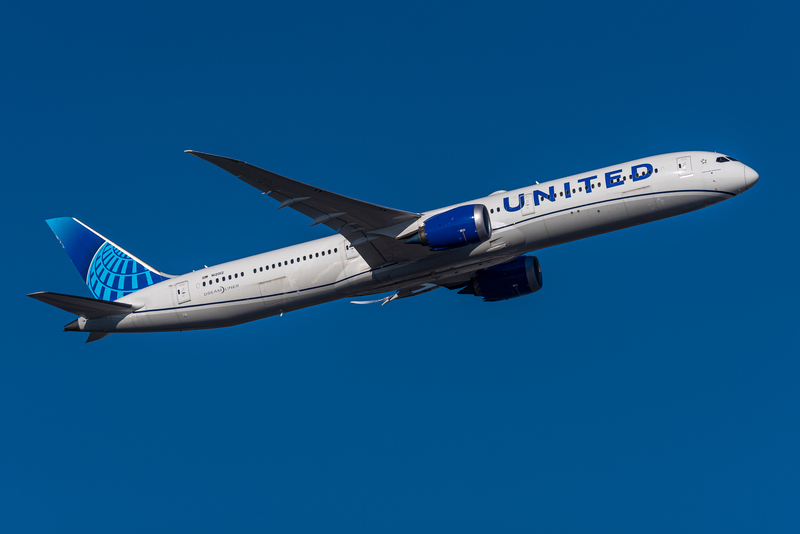
Its new Boeing 787-9 Elevated configuration, for example, contains 99 premium seats, including eight Polaris Studio suites, 56 standard Polaris suites and 35 Premium Plus seats. United’s new 787-9 premium configuration is the most premium-heavy international aircraft in its fleet.
The Coastliner follows the same philosophy domestically.
That strategy becomes especially relevant at airports where additional departures are difficult to obtain.
If an airline cannot easily add another flight, increasing the revenue generated by each existing slot becomes more important. Larger aircraft, more premium seating and higher-yield markets can all improve the economics of a scarce operating authorization.
That does not mean United can automatically generate “three or four times” the revenue of another carrier using the same JFK slot, as has been suggested elsewhere. Route economics vary enormously.
But it does explain why a JFK slot could be substantially more valuable in United’s hands if the airline believes it can deploy it on a high-demand premium market.
Bottom Line
United Airlines already has a path back into New York John F. Kennedy International Airport (JFK), but Scott Kirby clearly wants something larger.
Through its Blue Sky partnership, JetBlue will provide United with enough JFK slots for up to seven daily roundtrips beginning as early as 2027, with United expected to operate from the airport’s new Terminal 6.
Kirby now says United is exploring additional opportunities, including acquiring slots from airlines operating JFK routes that are not generating acceptable returns.
No airline has been identified as a potential seller, and United has not announced how many additional slots it wants, which destinations it will serve or which aircraft it will deploy.
Those details matter because United has been down this road before.
Its 2021 JFK return relied on premium-heavy Boeing 767-300ERs flying to Los Angeles (LAX) and San Francisco (SFO), but the airline withdrew again in October 2022 because four daily departures left it with what it called a “too-small-to-be-competitive” operation.
United appears determined not to make the same mistake twice.
With seven daily roundtrips already potentially available through JetBlue, a growing fleet of premium-heavy Airbus A321neo Coastliners and Kirby openly searching for additional operating rights, the next United return to JFK is shaping up to be considerably more ambitious than the last.