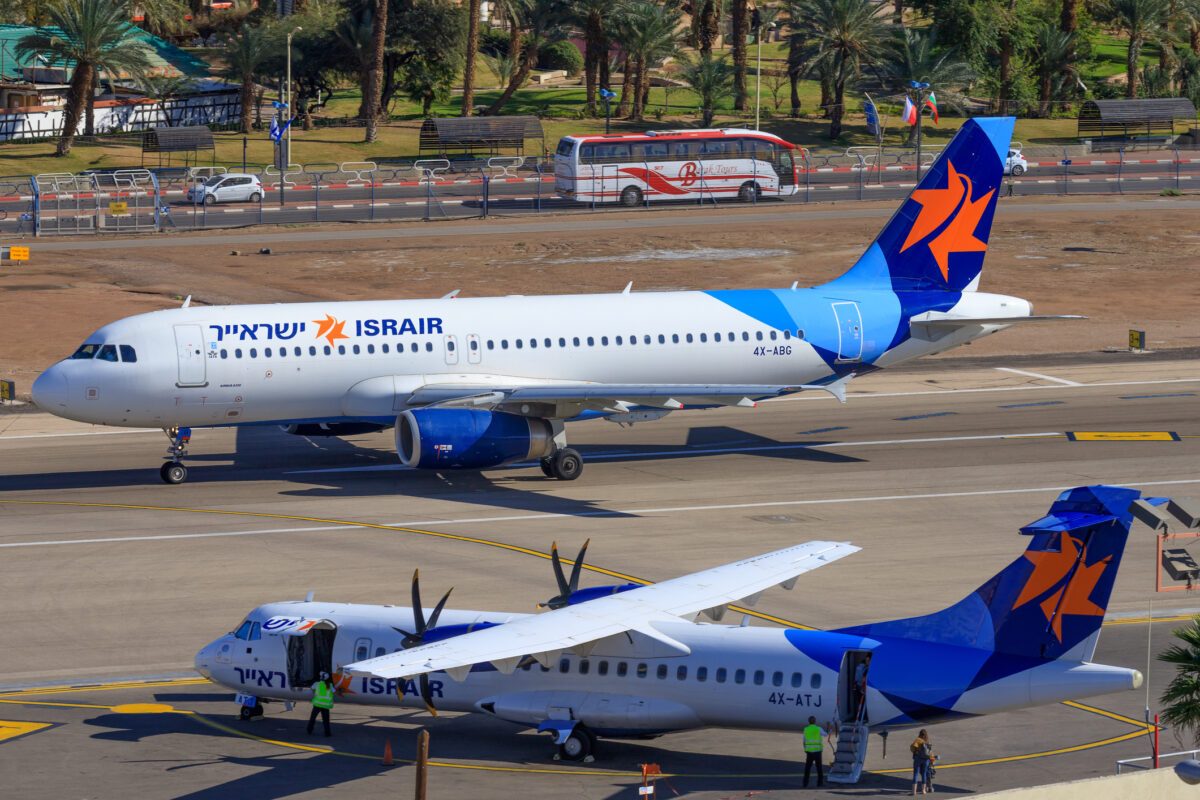
Israir has cleared the final regulatory hurdle for its return to scheduled U.S. flying, setting the stage for new nonstop service between Ben Gurion International Airport (TLV) and New York John F. Kennedy International Airport (JFK) as early as this fall.

The Israeli carrier announced on August 24 that it had received final operational approval from the Federal Aviation Administration (FAA) to operate scheduled commercial flights to the United States. The authorization follows approval from the U.S. Department of Transportation (DOT) and Israeli authorities, completing the regulatory process Israir needed before launching regular transatlantic service.
Israir has been targeting October 19, 2026, for the first scheduled Tel Aviv (TLV)-New York (JFK) flight. With the FAA approval arriving earlier than expected, however, the airline says it may be able to bring the launch forward.
Read our stories in your inbox
Two aviation newsletters. Zero fluff.
Tickets are expected to go on sale shortly.
For Israir, this is more than another route addition. The airline has acquired two Airbus A330-200 widebodies specifically to expand beyond its traditional short- and medium-haul network, and New York will become the centerpiece of that long-haul strategy.
FAA Approval Was The Last Major Step
The U.S. regulatory process involves more than simply receiving permission from one agency.
Israir announced on August 18 that the U.S. Department of Transportation had cleared the carrier to market and sell tickets for U.S. service, but the airline was still waiting for the FAA’s operational approval before regular flights could begin.
That remaining authorization arrived August 24.

“Receiving the FAA approval is the final and decisive step in the regulatory process and joins the previous approvals the company received from aviation authorities in Israel and the US,” Israir said following the decision.
Israir added that the approval represented confidence in its operational and safety standards and said it intends to use the expansion to increase competition between Israel and North America.
The airline has consistently identified New York John F. Kennedy International Airport (JFK) as its planned first scheduled U.S. destination, rather than leaving the New York airport undecided.
Israir Is Targeting JFK From October 19
The planned route will connect Tel Aviv Ben Gurion International Airport (TLV) with New York John F. Kennedy International Airport (JFK), a great-circle distance of approximately 4,923 nautical miles, or 5,665 miles.

Israir has been working toward an October 19 start, although the carrier could potentially move the date forward now that its regulatory approvals are complete.
The exact final schedule was not yet publicly bookable at the time of the FAA announcement.
Israeli business publication Calcalist reported that Israir plans to initially operate four weekly flights, with an eventual goal of increasing the route to daily service. Other reports have described daily service as Israir’s longer-term target.
That distinction is important. Until Israir publishes the flights for sale, frequencies and operating days should still be considered subject to change.
What is now considerably more certain is the airport pair and aircraft: TLV-JFK with the Airbus A330-200.
Two Former American Airlines A330-200s Will Operate The Route
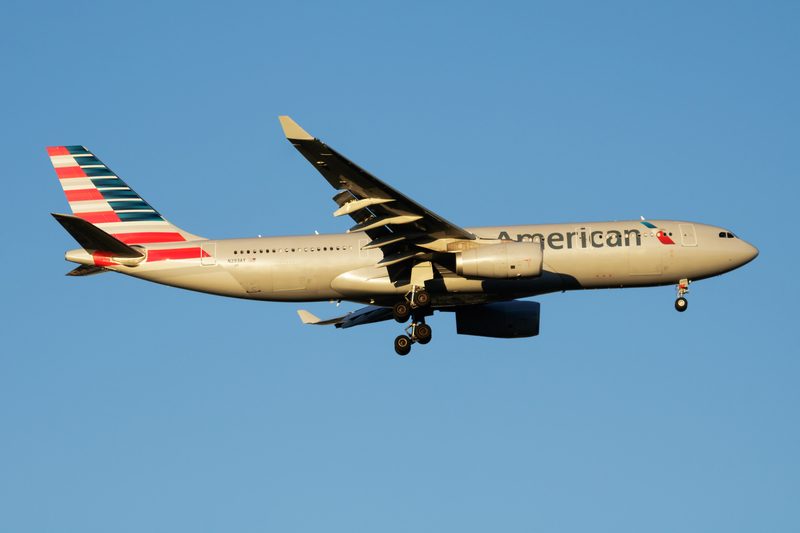
Israir’s expansion to the United States has been made possible by the acquisition of two Airbus A330-243s, registrations 4X-BAK and 4X-BAL.
Both aircraft have considerable history in the U.S. airline industry.
4X-BAK is MSN 1095 and was originally delivered to US Airways as N284AY in March 2010. It subsequently became part of the American Airlines fleet following the US Airways-American merger.
4X-BAL, MSN 1100, followed a nearly identical path. It entered service with US Airways as N285AY in March 2010 before transferring to American.
American retired its Airbus A330 fleet during the COVID-19 pandemic in 2020. Both aircraft subsequently spent several years in storage before being acquired for Israir’s long-haul expansion.
They are now approximately 16 years old, which is not particularly unusual for long-haul widebody aircraft when properly maintained.
The aircraft are specifically A330-243s, indicating A330-200 airframes powered by Rolls-Royce Trent 700-series engines. Both are equipped with Rolls-Royce Trent 772B-60 turbofans.
Israir Is Keeping A Surprisingly Premium Cabin
One of the more interesting aspects of the acquisition is that Israir did not turn the former American A330s into high-density leisure aircraft.
The planes have retained much of their former American Airlines cabin configuration.
Under American, each aircraft was configured with 247 seats, including:
- 20 Business Class seats
- 21 Premium Economy seats
- 206 Economy seats
Within the Economy cabin, American also offered extra-legroom Main Cabin Extra seating.
Aircraft records continue to identify the configuration as C20/W21/Y206, giving Israir a genuine lie-flat Business Class product and a dedicated Premium Economy cabin rather than the more basic premium offering passengers might expect from a leisure-focused carrier.
That could be important in New York.
The TLV-New York market has significant business traffic, visiting-friends-and-relatives demand and a large number of passengers willing to pay for premium cabins on an 11- to 12-hour flight. Israir therefore needs more than a low headline Economy fare if it wants to capture meaningful revenue from established competitors.
The A330s give it that opportunity immediately.
The A330-200 Is Well Suited To Tel Aviv-New York
Although the A330-200 is no longer in production, it remains a capable long-range aircraft.
Airbus lists the A330-200 with a range of approximately 7,250 nautical miles, depending on configuration and operating conditions. That provides ample capability for the roughly 4,923-nautical-mile great-circle distance between Tel Aviv (TLV) and New York (JFK).
The shorter A330-200 was specifically developed as a longer-range counterpart to the A330-300 and became popular with airlines needing widebody capacity on long routes that could not always support larger aircraft.
That description fits Israir’s requirements unusually well.
With only two long-haul aircraft, Israir does not have the scale of EL AL’s Boeing 787 fleet. But a 247-seat A330-200 allows it to enter the New York market with enough seats to achieve reasonable unit costs without flooding the route with excessive capacity.
The tradeoff will be operational resilience.
A two-aircraft widebody fleet provides very little spare coverage when one airplane requires heavy maintenance or suffers a technical problem. Maintaining schedule reliability on a daily or near-daily long-haul route will therefore require careful fleet planning.
For an airline taking its first major step back into scheduled long-haul operations, that may be one of the most important challenges to watch.
Israir Will Enter An Increasingly Crowded New York Market
Israir will not have New York to itself.
EL AL already maintains a substantial operation between Ben Gurion International Airport (TLV) and both New York John F. Kennedy International Airport (JFK) and Newark Liberty International Airport (EWR).
Arkia also operates Airbus A330 service between Tel Aviv (TLV) and JFK, having entered the New York market in February 2025.
Competition from U.S. carriers is also expected to return before Israir launches.
Delta Air Lines is preparing to resume New York JFK (JFK)-Tel Aviv (TLV) service in early September with the Airbus A330-900neo, while United Airlines plans to restore service between Newark (EWR) and Tel Aviv (TLV) with Boeing 787 Dreamliners. American Airlines, meanwhile, has pushed its planned Tel Aviv return into March 2027.
By the time Israir enters the market, travelers could therefore have five airlines competing for New York-Israel traffic across JFK and EWR: EL AL, Arkia, Israir, Delta and United.
That is a dramatic change from periods during the recent regional conflicts when U.S. airlines repeatedly suspended Israel service and much of the nonstop market was left to Israeli carriers.
More Competition Could Put Pressure On Fares
The timing of Israir’s entry may prove particularly important for passengers.
Israel-U.S. fares have remained elevated during periods when foreign airlines withdrew from Ben Gurion Airport (TLV), reducing available seats and leaving Israeli carriers with considerably less competition.
Israir has explicitly said it wants its U.S. expansion to increase competition and offer competitive pricing.
Adding another 247-seat aircraft to the market four or more times each week will not transform capacity on its own, but the combined effect of Israir’s entry and the return of Delta and United could be significant.
Israir also has an incentive to price aggressively at launch.
EL AL has an established long-haul customer base, a much larger widebody fleet and extensive experience in the U.S. market. Delta and United bring enormous frequent-flyer programs and corporate contracts. Arkia has already established itself as the alternative Israeli carrier on JFK-TLV.
Israir will need to persuade passengers to try another operator.
Price will almost certainly be part of that strategy, but its retained A330 premium cabins give the airline another way to compete beyond simply offering the lowest Economy fare.
This Is Actually A Return To New York For Israir
The upcoming flights also should not be described as Israir’s first-ever U.S. service.
Israir previously operated flights between Israel and New York during the 2000s, including service with Boeing 767 aircraft before withdrawing from long-haul operations.
The carrier even previously pursued U.S. authority for scheduled Tel Aviv-New York service. A historical U.S. Department of Transportation filing shows Israir seeking authority to operate scheduled flights between Tel Aviv and New York using a Boeing 767-300ER.
The 2026 launch is therefore better viewed as Israir’s return to scheduled U.S. flying after a long absence, rather than its first entry into the American market.
What is different this time is the aircraft and the scale of Israir’s ambitions.
The two A330-200s represent a significant shift for an airline whose core fleet consists of eight Airbus A320-200 narrowbodies. Israir now operates a fleet of 10 aircraft, with the two A330s providing the range needed to pursue New York and potentially other long-haul markets.
More U.S. Destinations Could Follow
For now, New York is the only U.S. destination Israir has publicly committed to.
That is the logical place to start. New York is by far one of the deepest Israel-U.S. markets, supported by substantial business, tourism and visiting-friends-and-relatives traffic.
But acquiring two A330-200s gives Israir options beyond JFK.
The aircraft’s range theoretically places much of North America within reach from Tel Aviv (TLV), although range alone does not make a route commercially viable. Any expansion would depend on the success of New York, available aircraft time, regulatory requirements and whether Israir can develop enough premium and Economy demand to support additional long-haul destinations.
With only two A330s, expanding too quickly could also create significant operational risk.
For the immediate future, New York is likely to consume a large portion of the widebody fleet’s available flying time.
Bottom Line
Israir has received the final FAA approval necessary to begin scheduled commercial service to the United States, clearing the way for its return to the Tel Aviv-New York market.
The airline is targeting October 19, 2026, for service between Ben Gurion International Airport (TLV) and New York John F. Kennedy International Airport (JFK), although the launch could move forward now that all major regulatory approvals are in place.
Initial service has been reported at four weekly flights, with Israir ultimately targeting daily operations.
The route will be flown with two former US Airways and American Airlines Airbus A330-243s, 4X-BAK and 4X-BAL. Both aircraft retain a relatively premium 247-seat layout with 20 Business Class seats, 21 Premium Economy seats and 206 Economy seats.
Israir’s entry will also arrive just as competition between Israel and New York begins rebuilding. EL AL and Arkia are already in the market, while Delta and United are preparing to resume service in September.
For passengers, the result could be particularly welcome: more seats, another nonstop operator and potentially greater pressure on fares in a market that has experienced severe capacity swings over the past several years.
For Israir, however, the stakes are considerably larger. New York will be the first major test of whether a carrier built primarily around Airbus A320 short-haul operations can successfully turn a two-aircraft A330 fleet into a sustainable long-haul business.