SriLankan Airlines (UL) has no shortage of ambition right now—what it lacks is metal. With demand returning across South Asia and long-haul markets, the carrier says it needs additional aircraft urgently to stabilize operations, increase frequencies on core routes, and open new city pairs from its hub at Bandaranaike International Airport (CMB).
But in 2026, finding lift is easier said than done. A tight global leasing market, long OEM backlogs, and engine and supply-chain constraints have made “just lease another airplane” one of the toughest tasks in airline planning.
A global shortage that’s reshaping airline growth timelines
SriLankan’s situation is far from unique. Across the industry, airlines are discovering that fleet plans written in 2022–2023 no longer match what manufacturers and lessors can actually deliver in 2026–2028. Aircraft delivery delays, limited spare engines, and constrained MRO capacity are all compressing availability—especially for narrowbodies, where demand is relentless and lease rates have remained firm.
Read our stories in your inbox
Two aviation newsletters. Zero fluff.
For a carrier like SriLankan—seeking near-term lift rather than a long-term factory slot—the problem is acute. The government has said it needs at least one or two aircraft immediately, but dry leases are hard to secure in the current market. The airline’s medium-term goal is larger: it is looking for no fewer than seven additional aircraft to support expansion and improve schedule resilience.
Why “one or two aircraft” can change everything at Colombo (CMB)
On paper, adding one aircraft doesn’t sound transformational. In hub operations, it often is.
With a tight fleet, utilization climbs and schedule buffers shrink. That leads to:
-
Less slack for tech delays and recovery
-
Fewer aircraft available for ad-hoc swaps during AOG events
-
More pressure on on-time performance during peak banks at Colombo (CMB)
-
A narrower ability to add frequencies—even when demand supports daily service

In SriLankan’s network, additional frames don’t just enable “new routes.” They allow the airline to convert marginal frequencies into bank-friendly schedules—turning 4x weekly into daily service where it improves connectivity and revenue.
The current fleet: all-Airbus, but split into very different missions
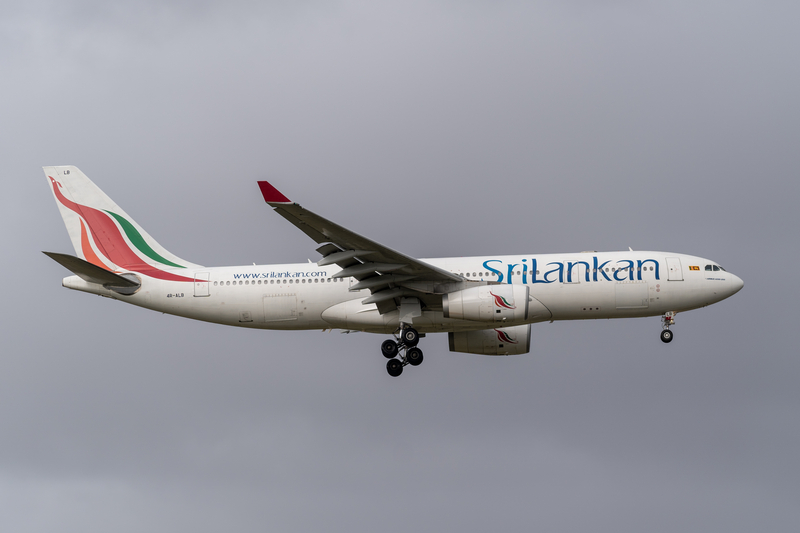
SriLankan operates an all-Airbus fleet of 23 aircraft, but it’s essentially two airlines inside one operation:
Widebody backbone (long-haul): Airbus A330-200 and A330-300
These aircraft underpin longer missions and higher-density regional routes. The A330-300 is the workhorse for sectors where seat cost and cargo matter, while the A330-200 offers more range flexibility and can be useful for thinner long sectors. In SriLankan’s case, the widebody fleet is what makes Colombo (CMB) viable as a long-haul gateway—supporting services to major European markets like London (LHR), Paris (CDG), and Frankfurt (FRA), and long sectors to Australia such as Melbourne (MEL) and Sydney (SYD).
Narrowbody engine room (regional and medium-haul): A320-200, A320neo, and A321neo
This is the day-to-day network platform: high-frequency flying across the Indian Subcontinent and strong regional demand into the Middle East and Southeast Asia. Routes to Gulf gateways such as Dubai (DXB), Doha (DOH), and Riyadh (RUH) live here, as do Southeast Asia links like Singapore (SIN), Kuala Lumpur (KUL), and Bangkok (BKK). For SriLankan, these aircraft are the yield-and-frequency tools that keep Colombo (CMB) fed and competitive.
The challenge is that both halves of the fleet are exposed to the same market reality: tight availability. When leases expire or aircraft require heavier maintenance, replacement options aren’t sitting on the shelf.
The A350 question: an old order that still shapes today’s decisions
SriLankan also has a long-running, unresolved fleet chapter: an outstanding commitment dating back to 2013 for four Airbus A350-900 aircraft. The carrier has repeatedly signaled that it may cancel the order or convert it into an alternative Airbus widebody solution.
For aviation planners, this isn’t just about aircraft preference—it’s about risk and capital structure. The A350-900 is a modern long-haul platform with excellent unit economics, but introducing a new widebody type requires:
-
Training pipelines (flight crew and engineering)
-
Spares, tooling, and maintenance program ramp-up
-
Integration into an operation that is already trying to simplify
In the current shortage environment, the temptation is obvious: take what’s available. But airlines also know that “available” can become “expensive” quickly if it forces complexity into training, maintenance, and scheduling.
What SriLankan can do while the market stays tight
If aircraft can’t be sourced quickly on standard dry leases, airlines typically work the same playbook—especially when they’re trying to protect network integrity:
1) Short-term ACMI/wet lease bridging
Wet leasing can be expensive per hour, but it’s fast. It can protect schedules through peak seasons and prevent network contraction while permanent fleet solutions are pursued.
2) Extend existing leases—even at higher rates
Not ideal, but often cheaper than losing capacity. For carriers with limited spare aircraft, keeping an older aircraft one more year can preserve frequency in key markets.
3) Re-optimize the network around the fleet that exists
That can mean fewer marginal routes, more focus on high-load/high-yield sectors, and smarter bank design at Colombo (CMB) to maximize connections without adding frames.
4) Protect widebody hours for the missions only widebodies can do
A330 time is precious. The more efficiently those aircraft are used on long-haul and high-yield sectors, the easier it is to justify the lease economics—even when the market is tight.
Bottom Line
SriLankan Airlines wants to grow—but like many carriers in 2026, it’s running into a global aircraft availability crunch that makes near-term fleet expansion unusually difficult. With Colombo (CMB) functioning as a true connecting hub across South Asia, the Middle East, Southeast Asia, and long-haul markets, even one or two additional aircraft can materially improve resilience and unlock frequency growth.
For now, SriLankan’s path forward looks less like rapid route-map expansion and more like disciplined capacity management—while the government pursues a faster procurement process and the airline weighs longer-term fleet moves, including what to do with its long-standing A350 commitment.
Keep reading FlyMag
Get the Daily Brief in the morning or the Route Watch weekly recap on Fridays. Or both.