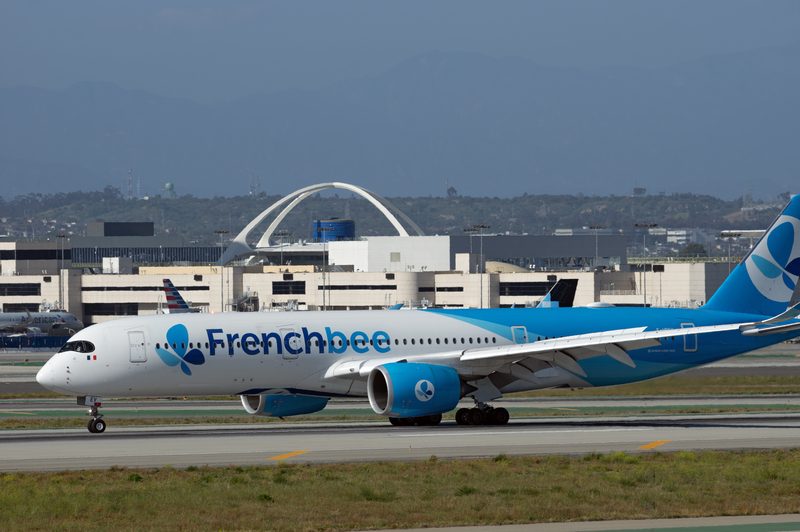
French bee is expanding deeper into the Indian Ocean with two new long-haul destinations from Paris-Orly.

The French long-haul low-cost carrier will launch seasonal service from Paris-Orly Airport (ORY) to Malé in the Maldives and Colombo in Sri Lanka from December 19, 2026.
The new operation will link Paris (ORY), Velana International Airport (MLE) in Malé, and Bandaranaike International Airport (CMB) near Colombo. It will run through May 2, 2027.
Read our stories in your inbox
Two aviation newsletters. Zero fluff.
For French bee, this is a significant network move. The airline is adding two high-profile leisure markets while using a flexible routing pattern that fits its long-haul low-cost model.
It also gives French travelers a new alternative to connecting through Gulf hubs on trips to the Maldives and Sri Lanka.
A Seasonal Route Built Around Two Destinations
French bee’s new Indian Ocean service will begin as a triangular route.
The core routing is Paris-Orly (ORY)–Malé (MLE)–Colombo (CMB)–Paris-Orly (ORY). This allows the airline to serve both the Maldives and Sri Lanka on one long-haul aircraft rotation.
That matters for route economics.
Malé is a strong premium leisure destination. Colombo has a broader mix of leisure, cultural, visiting-friends-and-relatives and wellness traffic. By combining both markets, French bee can improve aircraft utilization while reducing the risk of launching two separate long-haul routes at once.
The airline’s initial schedule filing shows flight BF770 operating twice weekly with the Airbus A350-900. The planned routing departs Paris-Orly (ORY) in the evening, reaches Malé (MLE) the next morning, continues to Colombo (CMB), and then returns to Paris (ORY) later the same day.
That is a long rotation. However, it is the type of mission the A350 was built to handle.
French bee Will Adjust The Schedule During The Season
The route is not a simple fixed schedule for the whole winter.
French bee is planning an evolving program that changes as demand shifts. The early season focuses on triangular Paris–Malé–Colombo flights. Later, the airline adds more direct Paris–Colombo flying.
French-language route information indicates that the schedule will adjust across several phases between December 19, 2026 and May 2, 2027. During part of the season, French bee will operate direct Paris (ORY)–Colombo (CMB) flights alongside the triangular service. Later, the program becomes more focused on Sri Lanka.
That is a smart approach.
The Maldives are strongest during the Northern Hemisphere winter, especially for beach holidays and premium resort stays. Sri Lanka has a broader travel profile, including culture, nature, wellness and touring demand.
French bee is trying to match capacity to those different demand curves.
Malé Gives French bee A Premium Beach Market
Malé (MLE) is the main international gateway to the Maldives.
For most travelers, it is the entry point before continuing by speedboat, domestic flight or seaplane to a resort island. That makes Velana International Airport (MLE) one of the most important leisure gateways in the Indian Ocean.
The Maldives are also highly premium. The market is driven by honeymoons, luxury resorts, diving, wellness travel and high-end winter sun demand.
That can work well for French bee.
The airline is a low-cost long-haul carrier, but it is not a basic short-haul operator. Its product is built around à la carte long-haul flying, with economy and premium options. This gives customers a lower entry fare while still allowing them to add comfort, baggage, meals and services.
For a destination like the Maldives, that flexibility is useful.
Some passengers want the lowest possible fare. Others are willing to pay more for extra space, baggage or the Premium Blue cabin.
Colombo Adds A Different Kind Of Demand
Colombo (CMB) gives French bee a very different market.
Sri Lanka attracts travelers looking for culture, nature, wellness, beaches, wildlife and touring itineraries. The country has also been rebuilding its tourism industry after several difficult years.
For French travelers, direct or one-stop access from Paris-Orly (ORY) to Colombo (CMB) is valuable. It avoids more complex routings through the Gulf, India or other European hubs.
Colombo also has visiting-friends-and-relatives demand, student traffic and business links. That makes the route less dependent on pure resort traffic than Malé.
This is why the triangular model makes sense.
The Maldives can support strong winter leisure demand. Sri Lanka can help extend the season with a wider travel base.
Together, they create a more balanced operation than either market might offer alone.
The Airbus A350-900 Is The Right Tool
French bee will use the Airbus A350-900 on the new Indian Ocean service.
That aircraft is central to the airline’s entire business model. French bee operates a 100% Airbus A350 widebody fleet, with both A350-900 and A350-1000 aircraft in service.
The French bee A350-900 is configured with 411 seats. That includes 35 Premium Blue seats and 376 Eco Blue seats.
The aircraft gives French bee the range to operate long-haul leisure routes from Paris-Orly (ORY) while keeping seat costs low. It also provides enough capacity to support a low-fare model on long sectors.
For the Maldives and Sri Lanka, the A350-900 is a practical choice.
It has the range for Paris–Malé and Paris–Colombo flying. It also offers widebody comfort on routes that can reach or exceed 10 hours depending on the sector and routing.
A High-Density Aircraft With A Modern Cabin
French bee’s A350-900 is dense by traditional network-airline standards.
A 411-seat layout is far higher than what many full-service airlines use on the same aircraft type. However, that density is part of French bee’s model.
The airline uses the A350’s efficiency to lower unit costs. It then sells a flexible product built around fare bundles and optional services.
Passengers can choose a basic fare or add baggage, meals, seat selection, lounge access, extra legroom or premium seating.
French bee’s Premium Blue cabin on the A350-900 has 35 seats in a 2-3-2 layout. The cabin offers 36 inches of pitch, 18-inch-wide seats, leg rests, foot rests, power outlets, USB ports and larger screens.
Economy is more compact, but the aircraft still benefits from the A350 platform. The cabin is quieter than many older widebodies. It also has modern lighting, improved air systems and a long-haul entertainment setup.
For a price-sensitive leisure route, that balance can work.
Why Paris-Orly Matters
Paris-Orly (ORY) is a key part of French bee’s identity.
The airline is based at Orly, not Paris Charles de Gaulle Airport (CDG). That helps separate it from larger network carriers and gives it a more focused long-haul leisure role.
Orly also works well for French outbound travelers.
It is convenient for much of the Paris region. It also supports French bee’s Train + Air model, which allows passengers from several French cities to combine a rail segment with a long-haul flight.
That can be useful for the Maldives and Sri Lanka.
French bee is not only targeting travelers who live in Paris. It wants to pull passengers from across France into Orly and connect them to long-haul leisure destinations.
This is a major advantage for an airline trying to fill a high-density A350.
A Challenge To Gulf Connections
French travelers heading to the Maldives or Sri Lanka often connect through Gulf hubs.
Emirates, Qatar Airways and Etihad Airways have long been strong in these markets. They offer frequent connections via Dubai (DXB), Doha (DOH) and Abu Dhabi (AUH).
French bee is taking a different approach.
It is not trying to match those networks. It is offering a more direct, lower-cost alternative from Paris-Orly (ORY).
That could be attractive to leisure travelers who want fewer connections and a simpler itinerary.
The triangular routing means some passengers will still have a stop, depending on their final destination and direction of travel. But the product remains simpler than connecting through a third-country hub.
For tour operators, that can also be useful. A direct French bee product gives them more control over package pricing and timing.
The Fares Show The Strategy
Introductory fares are central to this launch.
French-language reporting lists return fares from €599 in Eco Blue to Colombo and €649 in Eco Blue to Malé. Premium Blue fares start from €1,365 return to Colombo and €1,399 return to Malé.
French bee’s own booking pages also show low entry fares for both destinations, with Paris–Colombo listed from €459 one-way and Paris–Malé from €589 one-way at the time of publication.
Those prices are a statement.
French bee is not only adding destinations. It is trying to stimulate demand by making two long-haul Indian Ocean markets more accessible from France.
That fits the airline’s “smart cost” model.
The goal is not to replicate a legacy airline experience. It is to offer long-haul flying at a lower base fare, then let customers customize the trip.
The Route Broadens French bee’s Network
French bee has built its network around long-haul leisure and visiting-friends-and-relatives markets.
Its existing destinations include places such as Réunion, French Polynesia, Punta Cana, Montreal, New York, Miami, San Francisco and Los Angeles.
The Maldives and Sri Lanka fit that profile.
They are long-haul destinations with strong leisure appeal. They also help French bee diversify beyond its existing Americas, Caribbean and French overseas markets.
That diversification matters.
Long-haul low-cost airlines need routes with strong demand, clear leisure appeal and enough price sensitivity to reward a lower-fare model. Malé and Colombo both meet that test in different ways.
A Seasonal Test With Long-Term Potential
French bee is launching the routes seasonally, not year-round.
That is the right level of risk.
The winter season is the best time to test the Maldives and Sri Lanka from Europe. Demand is stronger, weather is more attractive, and travelers are looking for warm-weather escapes.
If the route performs well, French bee could extend the season, adjust frequencies or bring back the operation in future winters.
If demand is uneven, the airline can reshape the pattern more easily than it could with a year-round commitment.
That flexibility is important for long-haul leisure flying.
Airlines can make good money on seasonal routes when timing and capacity are right. But they can also lose money quickly if aircraft are flying with weak loads or low yields.
French bee’s phased schedule reduces that risk.
A Smart Expansion, But Not Without Challenges
The route also comes with challenges.
Paris–Malé and Paris–Colombo are long sectors. Fuel burn, crew planning, airport costs and aircraft utilization all matter. The triangular operation adds complexity because one delay can affect multiple destination segments.
The airline also faces strong competition from Gulf carriers and full-service airlines with larger networks.
However, French bee has a clear advantage: cost discipline.
Its A350 fleet, high-density cabins and à la carte product allow it to serve long-haul markets with a different cost base from legacy carriers.
That does not guarantee success. But it gives the airline a credible way to enter leisure markets that remain underserved from France.
Bottom Line
French bee’s new Paris-Orly (ORY) service to Malé (MLE) and Colombo (CMB) is one of the airline’s most interesting long-haul additions.
The seasonal route begins on December 19, 2026 and runs through May 2, 2027. It will use Airbus A350-900 aircraft and will operate with a flexible mix of triangular Paris–Malé–Colombo flights and direct Paris–Colombo service during different parts of the season.
For passengers, the appeal is clear. French bee is adding a lower-cost, more direct option from France to two major Indian Ocean destinations.
For the airline, the move expands its long-haul leisure network and tests a clever way to combine two complementary markets on one aircraft rotation.
The Maldives bring premium beach demand. Sri Lanka adds culture, wellness, nature and broader year-round potential.
Together, they give French bee a strong new Indian Ocean play from Paris-Orly.