SpiceJet has expanded its Gulf footprint with the launch of a new nonstop link between Ahmedabad (AMD) and Sharjah (SHJ), adding another high-demand India–UAE city pair to the carrier’s international map. The service began operating in early February 2026, with Sharjah becoming an increasingly important Gulf gateway for Indian secondary metros and a natural fit for an ultra/low-cost schedule built around visiting-friends-and-relatives traffic, migrant labor flows, and small-business trade.
For Sardar Vallabhbhai Patel International Airport (AMD), the route is a meaningful connectivity upgrade: the UAE remains one of the most consistently strong short-haul international markets out of western India, and a nonstop to Sharjah International Airport (SHJ) opens up a different catchment and onward connectivity pattern than Dubai-centric flying. For Sharjah (SHJ), it’s another incremental step in strengthening its South Asia portfolio at a time when the emirate is actively competing for traffic that might otherwise default to Dubai (DXB) or Abu Dhabi (AUH).
Five weekly flights, timed for utility—not just headlines
SpiceJet is operating the AMD–SHJ route five times per week, providing enough frequency to support steady demand without overcommitting capacity in a price-sensitive market. Filed schedules indicate a pattern that is operationally efficient and customer-friendly for the Gulf corridor: a late-evening departure from AMD and a late-night return from SHJ, which works well for both ends of the market.
Read our stories in your inbox
Two aviation newsletters. Zero fluff.
That timing logic matters. On routes like AMD–SHJ, airlines typically win not on premium cabins but on convenient departure windows, predictable reliability, and competitive all-in pricing once baggage is added—especially for family travelers and passengers traveling with checked bags for extended stays.
The aircraft: Boeing 737-800, a workhorse for short Gulf stage lengths
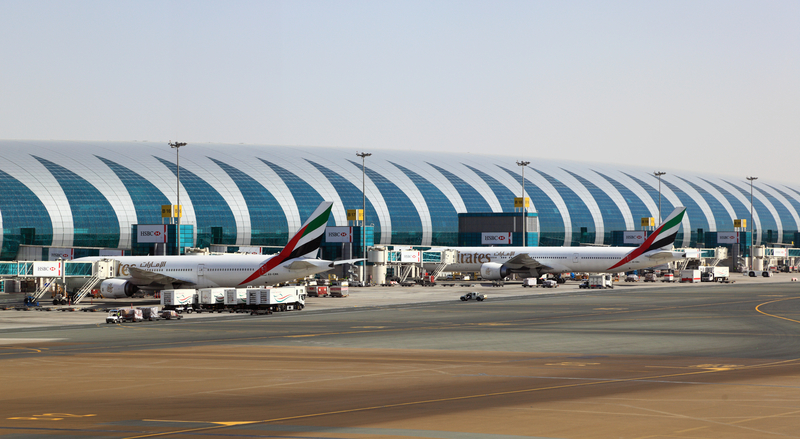
The route is being flown by the Boeing 737-800, the backbone narrowbody type for many carriers operating high-frequency regional international sectors. On a mission like AMD–SHJ—roughly a 3 to 3.5-hour block time—the 737-800 hits an efficient sweet spot:
-
Strong unit economics at leisure/VFR fare levels
-
Quick-turn capability that supports late-night patterns
-
Cargo/belly flexibility for trade-driven lanes, even on passenger flights
It’s also a straightforward aircraft to integrate into rotational planning. For airlines running tight narrowbody schedules, the ability to operate consistent stage lengths with minimal performance drama is key—particularly in markets where maintaining on-time integrity is a bigger commercial differentiator than inflight frills.
Why Sharjah is strategically compelling for Gujarat
Sharjah’s appeal isn’t just geography. SHJ has long carved out a niche as a Gulf gateway that can be highly effective for:
-
VFR flows tied to Indian expatriate communities
-
Price-sensitive leisure traffic that prefers nonstop access over hub connections
-
Small traders and SMEs moving between western India and the UAE
From AMD’s perspective, the new nonstop also diversifies UAE access. Even when multiple UAE airports are “close” on a map, they are not interchangeable for passengers—ground access, travel purpose, visa/entry habits, and where communities live in the UAE all shape demand.
Market dynamics: more nonstop capacity, more fare pressure
The India–UAE corridor is among the most competitive short-haul international markets in the world, and adding another nonstop in a major diaspora lane typically produces two immediate effects:
-
Traffic stimulation: Lower fares and nonstop convenience often grow the market, pulling passengers who previously traveled indirectly or deferred trips due to cost.
-
Yield compression: More seats mean more price competition, particularly during off-peak weeks when airlines rely on promotions to keep load factors stable.
For AMD–SHJ, the sustainability of five-weekly service will depend on SpiceJet’s ability to balance leisure-heavy peaks with consistent midweek demand—while keeping operational reliability high enough that passengers trust the product for time-sensitive trips.
Bottom Line
SpiceJet’s new Ahmedabad (AMD)–Sharjah (SHJ) nonstop is a smart, demand-led addition: five weekly flights on the Boeing 737-800 aimed squarely at Gujarat–Gulf travel flows that value price, nonstop convenience, and usable departure times. For AMD, it broadens UAE access beyond the usual patterns; for SHJ, it strengthens a core South Asia corridor as the airport continues to position itself as a leading regional gateway. If SpiceJet can keep the operation dependable and the all-in pricing competitive, this is the kind of route that can quietly become a high-volume performer—because the underlying demand between western India and the UAE rarely needs to be invented, only served well.
Keep reading FlyMag
Get the Daily Brief in the morning or the Route Watch weekly recap on Fridays. Or both.