Pittsburgh International Airport (PIT) has taken another meaningful step in rebuilding its long-haul network, with Aer Lingus launching nonstop service to Dublin Airport (DUB).

The new route gives Pittsburgh (PIT) three nonstop transatlantic links for the first time in seven years. Aer Lingus now connects Pittsburgh (PIT) with Dublin (DUB), joining British Airways’ year-round service to London Heathrow (LHR) and Icelandair’s seasonal flights to Reykjavík/Keflavík (KEF).
For Pittsburgh, this is more than a new dot on the map. It is the latest sign that the airport’s post-hub international strategy is producing results. Rather than relying on a single megahub carrier, Pittsburgh (PIT) is building a more diverse transatlantic portfolio with three different airlines, three different European gateways, and three very different aircraft strategies.
Read our stories in your inbox
Two aviation newsletters. Zero fluff.
Aer Lingus brings the Airbus A321neo LR. British Airways brings the Boeing 787 Dreamliner. Icelandair brings the Boeing 737 MAX 8. Together, they give Pittsburgh travelers access to Ireland, the United Kingdom, Iceland, and a wide range of onward connections across Europe.
Aer Lingus Launches Pittsburgh–Dublin Service
Aer Lingus operated its first scheduled commercial flight between Dublin (DUB) and Pittsburgh (PIT) on May 25, 2026. The westbound inaugural flight, EI81, touched down in Pittsburgh (PIT) in the early evening, marking the Irish carrier’s first nonstop service to western Pennsylvania.
The route operates four times weekly, with flights on Mondays, Wednesdays, Fridays, and Sundays. The published schedule has EI81 departing Dublin (DUB) at 4:10 p.m. and arriving in Pittsburgh (PIT) at 7:10 p.m. local time. The return flight, EI80, departs Pittsburgh (PIT) at 8:40 p.m. and arrives in Dublin (DUB) at 8:40 a.m. the following morning.
That schedule is commercially useful in both directions. For Pittsburgh-origin passengers, the evening departure from PIT allows a full workday before an overnight transatlantic flight. The morning arrival in Dublin (DUB) supports onward connections across Ireland, the United Kingdom, and continental Europe. For Ireland-origin passengers, the afternoon departure from Dublin and evening arrival in Pittsburgh make the route straightforward for both leisure and business travel.
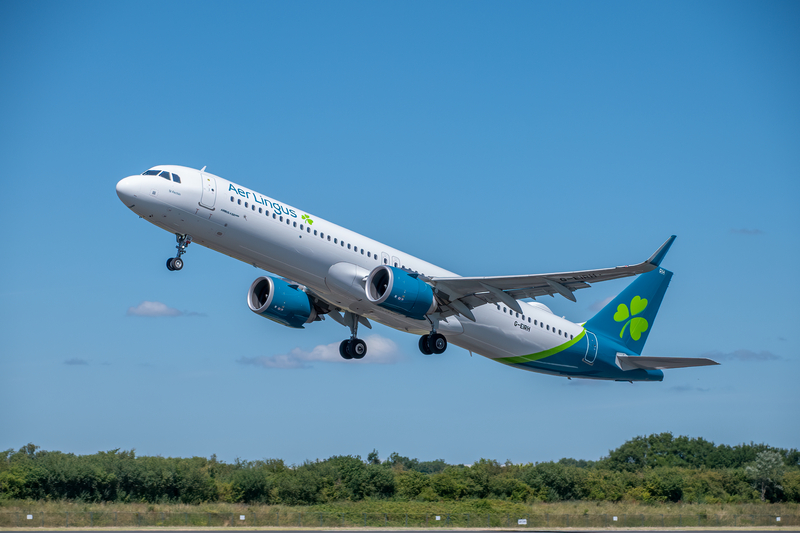
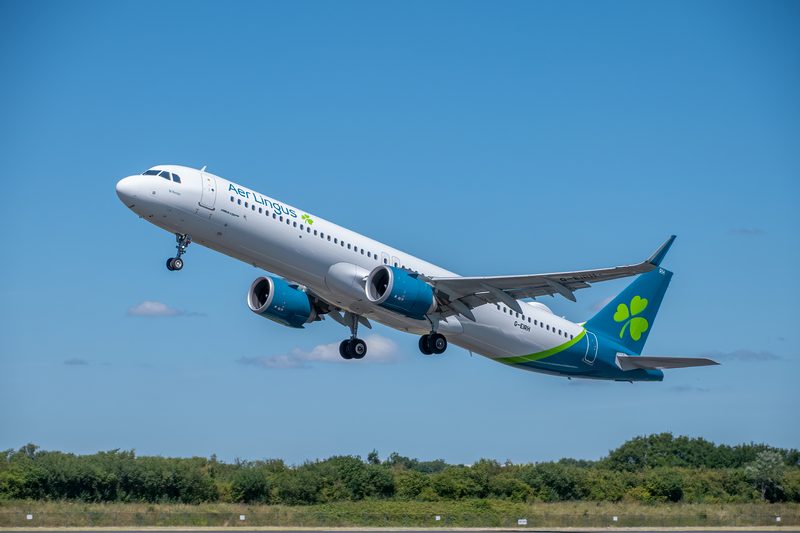
Aer Lingus is operating the route with the Airbus A321neo LR, also commonly referred to as the A321LR. The aircraft is configured with 184 seats, including 16 lie-flat Business Class seats and 168 Economy Class seats.
For a route like Dublin (DUB) to Pittsburgh (PIT), the A321LR is exactly the kind of aircraft that changes the economics of transatlantic service.
Why The A321LR Makes Pittsburgh Work
The Airbus A321LR has become one of the most important aircraft in Aer Lingus’ North American strategy.
The aircraft gives the airline long-haul range in a single-aisle package, allowing it to serve thinner transatlantic markets that may not support a larger Airbus A330 widebody year-round. That is especially important for cities such as Pittsburgh (PIT), where the local market is meaningful but not necessarily large enough to justify daily widebody service from day one.
The A321LR’s range of roughly 4,000 nautical miles puts Dublin (DUB) to Pittsburgh (PIT) comfortably within its operating envelope. The aircraft also gives Aer Lingus a premium product with lie-flat Business Class seats, while keeping total capacity modest enough to support four weekly flights without flooding the market.
That is the core advantage. Pittsburgh (PIT) does not need a 300-seat widebody to prove its value to Ireland and Europe. It needs the right-sized aircraft, the right schedule, and the right connecting hub. Aer Lingus can offer all three through Dublin (DUB).
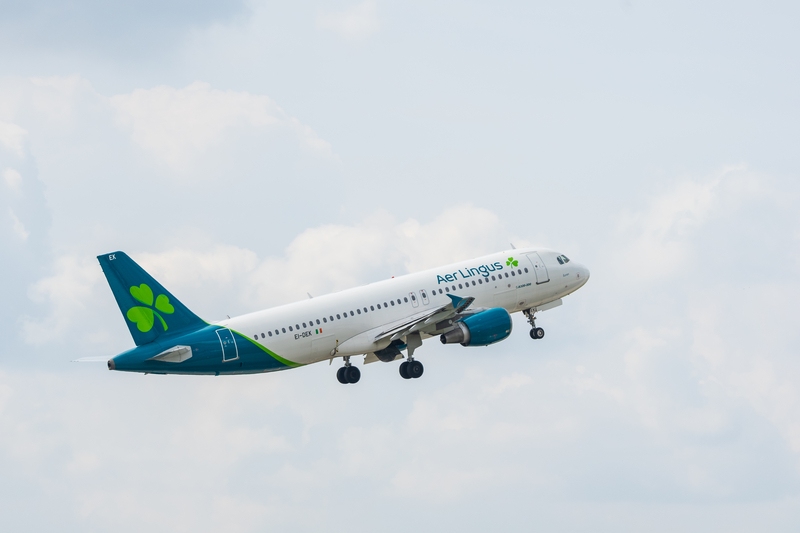
The A321LR is also a passenger-friendly narrowbody for a route of this length. While it is not as spacious as a twin-aisle Airbus A330 or Boeing 787, Aer Lingus equips the aircraft for long-haul service, including seatback entertainment, transatlantic catering, Wi-Fi availability, and a dedicated Business Class cabin. For a flight of around seven hours eastbound and slightly longer westbound, the aircraft provides an efficient compromise between range, comfort, and capacity.
Dublin Gives Pittsburgh More Than Ireland
The most important part of this route may not be Dublin itself, though Ireland is a strong market for Pittsburgh.
Dublin Airport (DUB) is Aer Lingus’ primary transatlantic hub, and the airline has built its network around connecting North America with Ireland, the United Kingdom, and Europe. For Pittsburgh passengers, that means Dublin (DUB) can function as both a destination and a gateway.
Aer Lingus markets connections from Pittsburgh (PIT) through Dublin (DUB) to cities such as London Heathrow (LHR), Manchester (MAN), Paris Charles de Gaulle (CDG), Amsterdam (AMS), Rome Fiumicino (FCO), Geneva (GVA), Edinburgh (EDI), Barcelona (BCN), and other European points.
That is particularly valuable for a mid-sized U.S. market. Pittsburgh travelers previously had to rely heavily on larger U.S. gateways such as New York (JFK), Newark (EWR), Philadelphia (PHL), Boston (BOS), Washington Dulles (IAD), or Chicago O’Hare (ORD) for one-stop access to much of Europe. Aer Lingus now gives the region another option — and one that avoids a domestic U.S. connection.
Dublin (DUB) also provides U.S. Customs and Border Protection preclearance for flights to the United States. That means passengers flying from Dublin to Pittsburgh clear U.S. immigration, customs, and agriculture inspections before boarding in Ireland. When they arrive at Pittsburgh (PIT), they arrive as domestic-style passengers, avoiding the need to clear U.S. border formalities after the long flight.
For business travelers, families, and connecting passengers, that is a meaningful advantage.
Pittsburgh’s Third Transatlantic Route
With Aer Lingus now serving Dublin (DUB), Pittsburgh (PIT) has three nonstop transatlantic routes.
British Airways operates Pittsburgh (PIT) to London Heathrow (LHR), using Boeing 787 Dreamliner aircraft. Heathrow (LHR) remains one of the most important long-haul hubs in the world, and British Airways gives Pittsburgh passengers access not only to London but also to the broader British Airways and oneworld network.
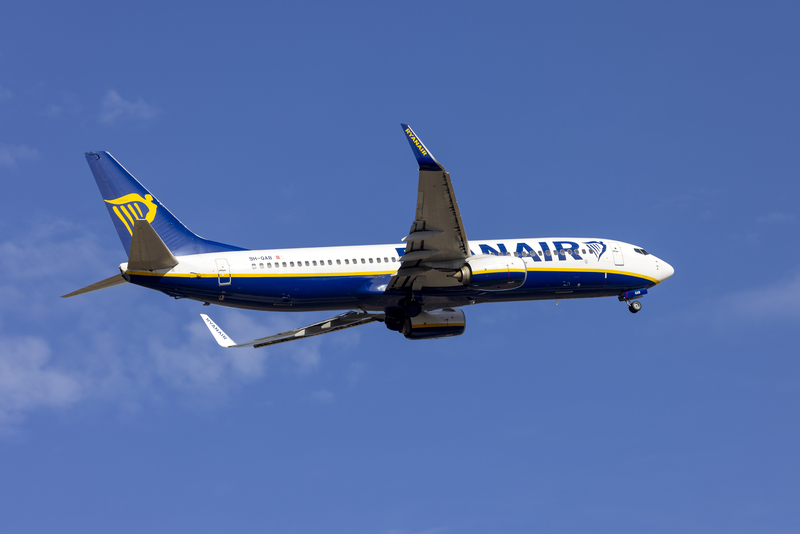
Icelandair operates Pittsburgh (PIT) to Reykjavík/Keflavík (KEF) seasonally, using Boeing 737 MAX 8 aircraft. The Icelandair route is shorter than a typical Western Europe transatlantic flight, but it serves a strategic purpose. Keflavík (KEF) is Icelandair’s connecting hub between North America and Europe, and the carrier’s stopover model gives Pittsburgh passengers another one-stop path to cities across Scandinavia, the UK, Germany, France, and beyond.
Aer Lingus now adds Dublin (DUB), giving PIT a third gateway and another connecting platform across the Atlantic.
The three routes are different enough that they do not simply duplicate each other. London Heathrow (LHR) is the premium global hub. Dublin (DUB) is the Irish gateway with U.S. preclearance and strong UK/Europe connections. Reykjavík/Keflavík (KEF) is the northern connecting bridge with seasonal leisure and stopover appeal.
That variety matters.
Pittsburgh Last Saw This Level Of Long-Haul Variety In 2019
Pittsburgh last had three separate long-haul or transatlantic operators on its schedule in 2019, though that year’s network looked very different.
British Airways launched London Heathrow (LHR) service in 2019, operating Boeing 787-8 Dreamliner aircraft. Condor served Frankfurt (FRA) seasonally with Boeing 767 widebodies. WOW air, the Icelandic low-cost carrier, had served Reykjavík/Keflavík (KEF), although its Pittsburgh presence was short-lived and ended before the carrier itself collapsed in March 2019.
The 2026 lineup is more stable and arguably more strategically useful.
British Airways has matured into a year-round Pittsburgh–London Heathrow route. Icelandair has returned seasonally and is now in its third consecutive year at Pittsburgh (PIT). Aer Lingus adds a year-round Dublin (DUB) route with four weekly flights.
That is a stronger foundation than the airport had in 2019. The current network is built around three established flag carriers with defined hub strategies, rather than a mix that included an ultra-low-cost Icelandic carrier that was already under financial pressure.
For Pittsburgh (PIT), that difference is significant.
British Airways Anchors The Long-Haul Network
British Airways remains the anchor of Pittsburgh’s transatlantic schedule.
The Pittsburgh (PIT) to London Heathrow (LHR) route gives the city nonstop access to one of Europe’s most important business and connecting hubs. In summer 2026, British Airways is scheduled to operate the route daily, with Boeing 787 Dreamliner family aircraft appearing on the service.
The Boeing 787 is a strong aircraft for this market. British Airways can adjust capacity by using different Dreamliner variants, including the 787-8, 787-9, and 787-10, depending on season and demand. The 787-8 is the smallest and most common long-haul Dreamliner in BA’s fleet, while the larger 787-9 and 787-10 provide additional capacity when needed.
For Pittsburgh, Heathrow (LHR) is a premium route. It serves local corporate demand, university and medical travel, inbound tourism, and onward connections across Europe, Africa, the Middle East, and South Asia. It also gives Pittsburgh a direct link to one of the highest-yield airports in the world.
That is why the BA route is so important. Aer Lingus and Icelandair add breadth, but British Airways provides the main global gateway.
Icelandair Adds Seasonal Network Reach
Icelandair’s Pittsburgh (PIT) to Reykjavík/Keflavík (KEF) service plays a different role.
The route operates seasonally, with up to four weekly flights scheduled through October 18, 2026. Icelandair uses Boeing 737 MAX 8 aircraft on the route, a 160-seat narrowbody well suited to the roughly 2,786-mile sector between Pittsburgh (PIT) and Keflavík (KEF).
The route is shorter than Pittsburgh’s flights to London (LHR) or Dublin (DUB), but it is still a transatlantic service and provides valuable network connectivity. Icelandair’s hub at KEF is designed around connecting banks that link North America with European destinations, particularly in Northern and Western Europe.
For Pittsburgh passengers, that means one-stop access to destinations such as Copenhagen (CPH), Stockholm (ARN), Oslo (OSL), Helsinki (HEL), Paris (CDG), Amsterdam (AMS), Berlin (BER), Frankfurt (FRA), and others, depending on schedule and season.
Icelandair’s stopover product is also part of the appeal. Passengers can spend time in Iceland on the way to or from Europe without adding a separate airfare, a model the airline has used successfully for decades.
The route may be seasonal, but it gives Pittsburgh a useful additional European gateway during the peak transatlantic travel period.
Why Aer Lingus Is Different From The Other Two
Aer Lingus occupies the middle ground between British Airways and Icelandair.
It offers a full-service transatlantic product, like British Airways, but uses a narrowbody aircraft more similar in size to Icelandair’s Boeing 737 MAX 8. It also offers an unusually strong U.S.-bound arrival experience because of Dublin preclearance.
The Aer Lingus route is also deeply tied to local demand. Pittsburgh has strong Irish heritage, and the region has business connections with Ireland through major institutions and companies. Pittsburgh-area organizations such as UPMC, PPG, and BNY have been cited in discussions around the route’s business case, while local officials have pointed to the region’s Irish ancestry and tourism potential as part of the rationale.
The route also benefits from sports and cultural ties. Aer Lingus has served as an airline partner of the Pittsburgh Steelers, and the University of Pittsburgh is scheduled to play Wisconsin in the Aer Lingus College Football Classic in Dublin in 2027. Those events do not make a route viable on their own, but they help build awareness and strengthen the Pittsburgh–Ireland story.
For an airline route, narrative matters. Aer Lingus is not just selling a flight to Dublin. It is selling a bridge between western Pennsylvania, Ireland, and Europe.
Economic Impact For The Region
Pittsburgh officials have estimated that the Aer Lingus route could generate roughly $23 million in economic impact for the region.
That figure reflects more than passenger fares. International air service affects tourism, conventions, corporate recruitment, university travel, medical-sector connectivity, cargo opportunities, and regional brand perception. A nonstop route can make a city feel more globally connected, especially for companies deciding where to invest or expand.
For Pittsburgh, that is important. The region has spent years reshaping its economy around healthcare, technology, robotics, education, energy, advanced manufacturing, and financial services. Direct international connectivity helps support that transformation.
A nonstop Dublin (DUB) flight may not be the same as a broad hub operation, but it gives Pittsburgh another direct link to Europe and another way to market itself internationally.
It also arrives as Pittsburgh International Airport (PIT) continues its broader modernization effort. The airport’s new terminal project and growing route map are part of the same story: PIT is trying to position itself as a modern, right-sized international gateway rather than a legacy hub that never fully recovered from the loss of US Airways’ connecting operation.
The Narrowbody Transatlantic Era Benefits Pittsburgh
One of the biggest reasons this route exists is the rise of long-range narrowbody aircraft.
A generation ago, a route such as Dublin (DUB) to Pittsburgh (PIT) would likely have required a widebody aircraft. That meant more seats, higher trip costs, and more revenue risk. Unless a route could support enough passengers and cargo, it was difficult to justify.
The Airbus A321LR and A321XLR have changed that equation. Airlines can now open smaller transatlantic markets with aircraft that offer widebody-like range but narrowbody economics. Aer Lingus has been one of the most aggressive users of this strategy, connecting Dublin (DUB) with cities that might not otherwise support year-round long-haul service.
Pittsburgh is exactly the type of market that benefits.
It has a large enough metropolitan area, meaningful business demand, strong universities, sports and cultural ties, and a growing tourism profile. But it is not New York, Boston, Chicago, or Washington. The A321LR allows Aer Lingus to serve Pittsburgh at a scale that fits the market.
That is why the aircraft should be seen as central to the story, not merely a technical detail.
A More Resilient Transatlantic Map
The most encouraging part of Pittsburgh’s current transatlantic network is that the routes serve different purposes.
London Heathrow (LHR) supports business travel, global connections, and premium demand. Dublin (DUB) adds Ireland, U.S. preclearance, Aer Lingus’ European network, and strong local cultural ties. Reykjavík/Keflavík (KEF) adds seasonal leisure connectivity and a northern bridge to Europe.
This is healthier than relying on one route or one airline.
If one market underperforms seasonally, another may still be strong. If business traffic favors London, leisure may support Iceland and Ireland. If European travelers are looking for an under-the-radar U.S. destination, Aer Lingus and Icelandair can help feed inbound tourism to Pittsburgh.
That is how a mid-sized airport builds sustainable international service: not by chasing every glamorous long-haul destination, but by adding routes with clear strategic roles.
Pittsburgh now has three of them.
Bottom Line
Aer Lingus’ new Dublin (DUB) to Pittsburgh (PIT) service marks a major milestone for Pittsburgh International Airport.
The route gives PIT its first nonstop service to Ireland and brings the airport back to three transatlantic routes for the first time in seven years. Aer Lingus joins British Airways to London Heathrow (LHR) and Icelandair to Reykjavík/Keflavík (KEF), creating a more diverse European network for western Pennsylvania.
The aircraft choice is just as important as the destination. Aer Lingus’ Airbus A321neo LR gives the airline the right economics for a mid-sized transatlantic market, with 16 lie-flat Business Class seats and 168 Economy seats on a route that might be too thin for daily widebody service.
For travelers, the new flight means nonstop access to Ireland and easier one-stop connections across Europe through Dublin (DUB). For Pittsburgh, it is another sign that the region’s international air service strategy is gaining traction.
The city may not be returning to its old hub-era aviation footprint, but it is building something more focused: a practical, modern transatlantic network built around the right airlines, the right aircraft, and the right gateways.