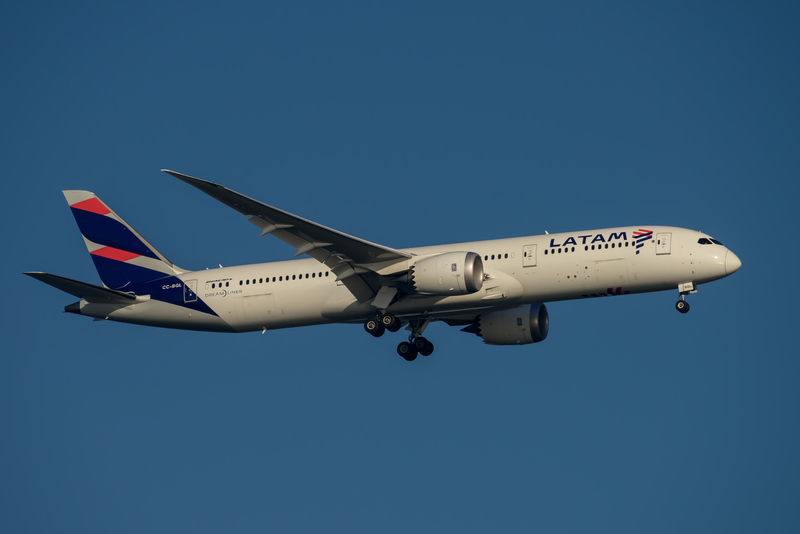
A LATAM Airlines Boeing 787-8 Dreamliner was damaged on the apron at Easter Island’s Mataveri International Airport (IPC/SCIP) after arriving from Santiago (SCL), creating a potentially difficult repair situation at one of the most isolated airports in scheduled airline service.

The aircraft involved was LATAM Chile Boeing 787-8 registered CC-BBD, operating flight LA841 from Santiago Arturo Merino Benítez International Airport (SCL) to Easter Island/Mataveri International Airport (IPC/SCIP) on May 29, 2026. After arrival at IPC, the aircraft reportedly suffered damage when an airstairs truck contacted the aircraft and tore off the L2 passenger door.
The incident appears to have occurred on the ground after the flight had reached Easter Island safely. There were no immediate public reports of injuries in the initial accounts, but the aircraft damage is significant enough to raise a more complicated question: how quickly can a Boeing 787 be repaired at such a remote airport?
Read our stories in your inbox
Two aviation newsletters. Zero fluff.
A Ground Incident After Arrival At Mataveri
Flight LA841 is LATAM’s scheduled service linking Santiago (SCL) with Easter Island (IPC), also known as Rapa Nui. The route is one of the most unusual domestic flights in the world: a widebody-operated sector across more than 2,000 miles of open Pacific Ocean, connecting mainland Chile with one of its most remote territories.
On May 29, CC-BBD operated the westbound flight from Santiago (SCL) to Mataveri (IPC). After the aircraft arrived at IPC, the reported damage occurred during ground handling, when an airstairs vehicle struck the aircraft in the area of the L2 door.
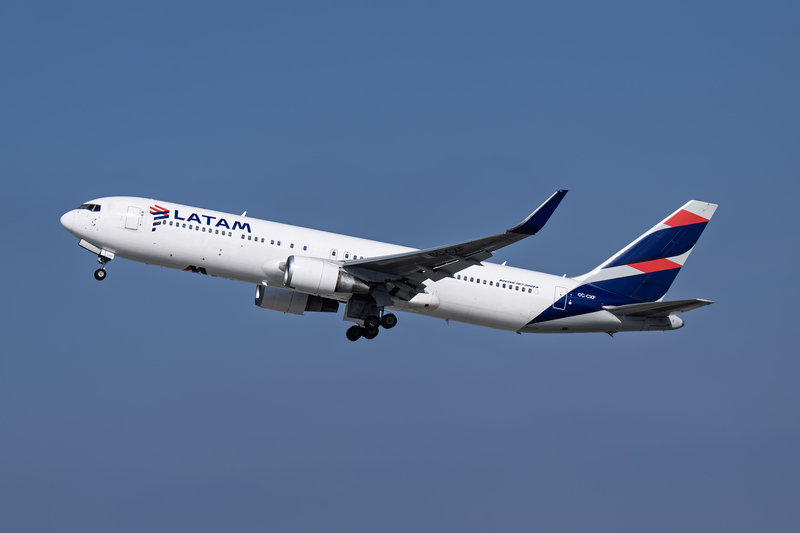
The L2 door is the second passenger door on the aircraft’s left side. On a widebody such as the Boeing 787-8, this is not a minor panel or cosmetic item. A passenger door is part of the pressurized fuselage structure, and damage in this area can involve the door itself, hinges, fittings, seals, sensors, surrounding frames, fuselage skin, and local structural members.
That means the aircraft cannot simply be “patched up” like a superficial ramp scrape. A door strike severe enough to remove the L2 door requires a formal engineering assessment before the aircraft can return to service.
The Aircraft: Boeing 787-8 CC-BBD
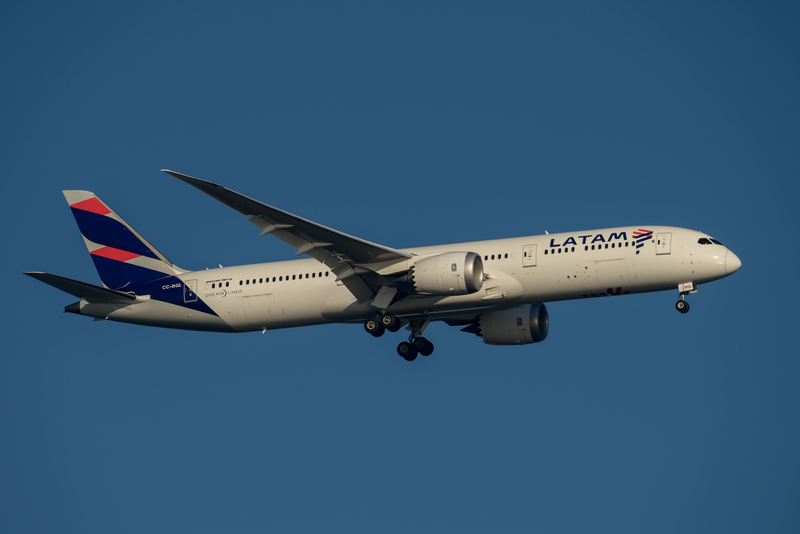
The damaged aircraft, CC-BBD, is a Boeing 787-8 Dreamliner operated by LATAM Airlines Chile.
The 787-8 is the smallest member of the Dreamliner family, but it remains a highly capable long-haul aircraft. LATAM has used the type across international services as well as some longer domestic and regional missions where widebody range and capacity are useful. The aircraft’s composite fuselage, modern flight deck, efficient Rolls-Royce Trent 1000 engines, and long-range capability make it a core part of LATAM’s long-haul fleet.
CC-BBD is manufacturer serial number 38484 and is a relatively early Boeing 787-8 airframe. It first flew in 2013 and has been part of LATAM Chile’s Dreamliner operation for years. The aircraft is configured with 247 seats, including 30 Business Class seats and 217 Economy Class seats.
That makes it a meaningful capacity asset for LATAM. Losing a 787-8 to an extended ground event is not just a local Easter Island issue. It can ripple into the airline’s broader widebody schedule, particularly if the aircraft was planned for international flying after returning to Santiago (SCL).
Why Easter Island Makes The Repair More Complicated
The location is the key operational challenge.
Mataveri International Airport (IPC/SCIP) is the only airport on Easter Island and the main air gateway for Rapa Nui. It has a single runway measuring roughly 3,318 meters, long enough to handle widebody aircraft such as the Boeing 787, but the airport is not a major maintenance base. Its role is primarily passenger handling, tourism access, and basic airport operations, not heavy widebody repair.
That matters because aircraft such as the Boeing 787 require specialized support when structural damage occurs. A serious door-area impact may require Boeing-approved repair procedures, LATAM engineering oversight, non-destructive testing, replacement parts, specialized tooling, technicians, and potentially support from the aircraft manufacturer or a contracted MRO provider.
At a large hub such as Santiago (SCL), Miami (MIA), Los Angeles (LAX), or Madrid (MAD), that kind of support is much easier to coordinate. At Mataveri (IPC), everything is harder. Parts may have to be flown in. Technicians may need to travel to the island. Tooling may not be available locally. If the aircraft cannot be made airworthy for a ferry flight, repairs must be performed on site.
That is why even a ground-handling incident can become a major logistical event when it happens in a remote location.
Why Door Damage Is Treated Seriously
A torn-off passenger door is not comparable to a dented service panel or a scraped wingtip.
The door area on a pressurized transport aircraft is structurally important. During flight, the fuselage is pressurized, and the door, seals, stops, warning systems, locking mechanisms, and surrounding structure all contribute to maintaining pressure integrity and aircraft safety.
Before a damaged 787 can fly again, engineers would need to confirm several things. The replacement door must fit and seal correctly. The door frame must be within structural limits. Hinges and fittings must not be distorted. Adjacent fuselage skin and composite structure must be inspected. Sensors and cockpit indications must function normally. Any damage to wiring, interior panels, insulation, or cabin systems must be addressed.
On the Boeing 787, the composite fuselage adds another layer of complexity. Composite repairs are highly controlled and require approved procedures, material handling, curing processes where applicable, and careful inspection. That does not mean the aircraft is difficult to repair, but it does mean repairs must follow very specific engineering standards.
The aircraft may eventually be repaired locally enough to fly back to Santiago (SCL), or it may require a more extensive on-site repair before any ferry flight is possible. Until LATAM or investigators provide further details, the exact repair timeline remains unclear.
Operational Impact On LATAM’s Easter Island Service
LATAM’s Santiago (SCL) to Easter Island (IPC) route is unique within the airline’s domestic network.
It is a long overwater sector typically flown by widebody aircraft. The route supports local residents, tourism, cargo, government movement, and the broader connection between mainland Chile and Rapa Nui. Because IPC has limited air service and no nearby alternate airport in the normal sense, reliability on this route is especially important.
If CC-BBD remains grounded at IPC for an extended period, LATAM may need to adjust aircraft rotations, substitute another widebody, or modify schedules. That is easier said than done. A replacement aircraft must be available at Santiago (SCL), crew scheduling must be aligned, and the aircraft must be suitable for the long Pacific sector.
The aircraft stuck at IPC also occupies parking space and requires local ground coordination. While Mataveri has a runway capable of handling widebodies, it is not designed to absorb long-term unplanned widebody maintenance events in the same way as a major hub.
For passengers, the most immediate concern would be continuity of service between Easter Island (IPC) and Santiago (SCL). For LATAM’s operations team, the broader issue is how to recover a damaged 787-8 from one of the most remote points in its network.
Mataveri’s Unusual Aviation Role
Mataveri International Airport (IPC/SCIP) has an outsized place in aviation because of its geography.
The airport sits on Easter Island in the southeastern Pacific, thousands of kilometers from the Chilean mainland. Its runway was lengthened in connection with its historical designation as a possible emergency landing site for the U.S. Space Shuttle, which is one reason such a remote island has a runway capable of supporting widebody operations.
That long runway is a major asset for LATAM. It allows the airline to use Boeing 787 aircraft on the Santiago (SCL)–Easter Island (IPC) route, giving the service enough range, payload, and passenger capacity for a long domestic mission across the Pacific.
But runway length does not solve every problem. A long runway makes it possible to land and depart a widebody. It does not automatically provide the MRO infrastructure, spare parts inventory, engineering manpower, or specialized tooling required when a widebody suffers structural damage on the apron.
That is the central issue in this incident. The airport can receive the aircraft, but repairing it may be a much more complicated matter.
Ground Handling Risk Around Widebody Aircraft
The incident also highlights a familiar risk in airline operations: ground damage.
Aircraft are often most vulnerable when they are parked. A modern widebody may spend cruise flight operating under highly automated, carefully monitored conditions, but once it reaches the stand, it is surrounded by vehicles and equipment. Airstairs, catering trucks, belt loaders, baggage carts, fuel trucks, potable water trucks, lavatory service vehicles, ground power units, and passenger buses all operate close to the fuselage.
A door-area strike is especially serious because airstairs must be positioned close enough for safe boarding or deplaning but not so close that they damage the aircraft. Positioning errors, brake issues, ramp slope, wind, communication breakdowns, or procedural lapses can all contribute to contact.
On smaller aircraft, a ground strike can still be serious. On a Boeing 787, the stakes are higher because the aircraft is a high-value long-haul asset and because structural repairs may require manufacturer-guided procedures.
For airlines and airport operators, ground damage is expensive not only because of repair costs, but because aircraft downtime disrupts schedules. A single widebody grounded unexpectedly can affect multiple flights, crews, passengers, and downstream rotations.
What Happens Next
The next steps will depend on the extent of the damage.
LATAM’s engineering team will need to determine whether the damage is limited to the door assembly or whether the surrounding fuselage structure was also affected. If the door frame, fittings, pressure seals, sensors, or composite structure suffered damage, the repair could be more involved.
A replacement door may need to be sourced and transported to Easter Island (IPC). Technicians and tooling may have to be flown from Santiago (SCL) or another maintenance location. Boeing or a certified MRO provider may need to support the repair plan, especially if the aircraft requires structural work beyond routine line maintenance.
Once repairs are completed, the aircraft would need appropriate inspections and approvals before returning to service. If a ferry flight is required, the aircraft must still be in a condition that meets the required safety standards for that ferry operation.
Until those steps are completed, CC-BBD is likely to remain out of revenue service.
A Rare Problem In A Difficult Place
This is not a crash, and it does not appear to have involved an in-flight safety event. The aircraft arrived safely at Easter Island (IPC), and the reported damage occurred on the ground.
But the location makes the story unusually important.
At a major hub, a damaged door on a 787 would still be serious, but the airline would have more immediate access to parts, tooling, engineers, hangar space, and alternate aircraft. At Mataveri (IPC), the logistics are far more difficult. Every technician, part, tool, and engineering approval matters more because the aircraft is sitting on a remote island in the South Pacific.
For LATAM, the priority will be to secure the aircraft, assess the damage, protect the airframe from further exposure, and build a repair plan that returns CC-BBD safely to service.
Bottom Line
LATAM Airlines Chile Boeing 787-8 CC-BBD was damaged on May 29, 2026, at Easter Island’s Mataveri International Airport (IPC/SCIP) after arriving from Santiago (SCL) as flight LA841. Initial reports indicate the aircraft’s L2 passenger door was torn off by an airstairs truck during ground handling.
The aircraft is a Boeing 787-8 Dreamliner, MSN 38484, configured with 30 Business Class seats and 217 Economy Class seats. Because the damage involves a passenger door and potentially the surrounding fuselage structure, the aircraft will require a careful engineering assessment before it can fly again.
The biggest complication is location. Mataveri (IPC/SCIP) has a runway long enough for widebody operations, but it is one of the most remote commercial airports in the world and is not a major 787 maintenance base. If significant structural repair is required, LATAM may need to bring parts, tooling, technicians, and engineering support to the island.
The aircraft landed safely. The hard part now is getting a damaged Dreamliner repaired and out of one of aviation’s most isolated operating environments.