Afghanistan’s Kam Air has entered talks with officials in Uzbekistan over the creation of a new international airline based in Fergana.

Fergana regional governor Khayrullo Bozorov received a Kam Air delegation led by Omar Mohammad Sulaymon on September 4. Timur Khalilov, head of the commercial activities department at Uzbekistan Airports, also participated.
According to the Fergana regional administration’s account of the meeting, the parties examined the infrastructure, ground services and specialist support needed to advance the proposed carrier. They agreed on further steps intended to move the initiative toward implementation under international standards.
Read our stories in your inbox
Two aviation newsletters. Zero fluff.
The announcement establishes the project as an active initiative rather than a certified airline or a confirmed launch. Any Uzbek operator would still need to complete the country’s certification and aircraft-registration processes before beginning commercial flights.
Fergana Project Follows Afghan Trade Talks
The airline discussions grew out of a July 26-27 visit to Afghanistan by a Fergana delegation comprising about 150 businesspeople. The program included meetings in Kabul and Mazar-i-Sharif intended to expand trade, investment and logistics links between the region and Afghanistan.

Fergana subsequently opened trade houses in Kabul and Mazar-i-Sharif. Kam Air chairman Zamaray Kamgar met Bozorov in Fergana on August 15 as the two sides worked to convert the agreements reached during the visit into joint projects.
The regional government said after that meeting that Afghan investors had expressed interest in aviation alongside construction, textiles and agriculture. Officials called for the projects to be accelerated with local partners.
That broader commercial program gives the airline proposal a purpose beyond adding another passenger operator to Uzbekistan’s increasingly diverse aviation market. A Fergana-based carrier could support passenger flows while also providing belly-cargo capacity for agricultural products, textiles and other time-sensitive goods moving between the Fergana Valley, Afghanistan and overseas markets.
Kam Air Already Has a Growing Uzbekistan Operation
Kam Air is not entering Uzbekistan without an existing commercial base. The carrier operates between Kabul (KBL) and Tashkent (TAS), and increased the route to three weekly flights from July 2, 2026.
Its published schedule gives the northbound service a block time of one hour and 45 minutes. The expanded operation followed an earlier increase to twice-weekly flying in April.
Kam Air has also established an interline relationship with Uzbekistan Airways through TAS. That arrangement gives passengers traveling from Afghanistan access to destinations beyond Tashkent on the Uzbek flag carrier’s network.
The combination of additional capacity and interline distribution gives Kam Air direct experience selling Uzbekistan-origin traffic and working inside the country’s aviation system. A locally certificated airline would represent a considerably deeper commitment, placing aircraft, crews and operational control in Uzbekistan rather than simply adding international frequencies from Kabul.
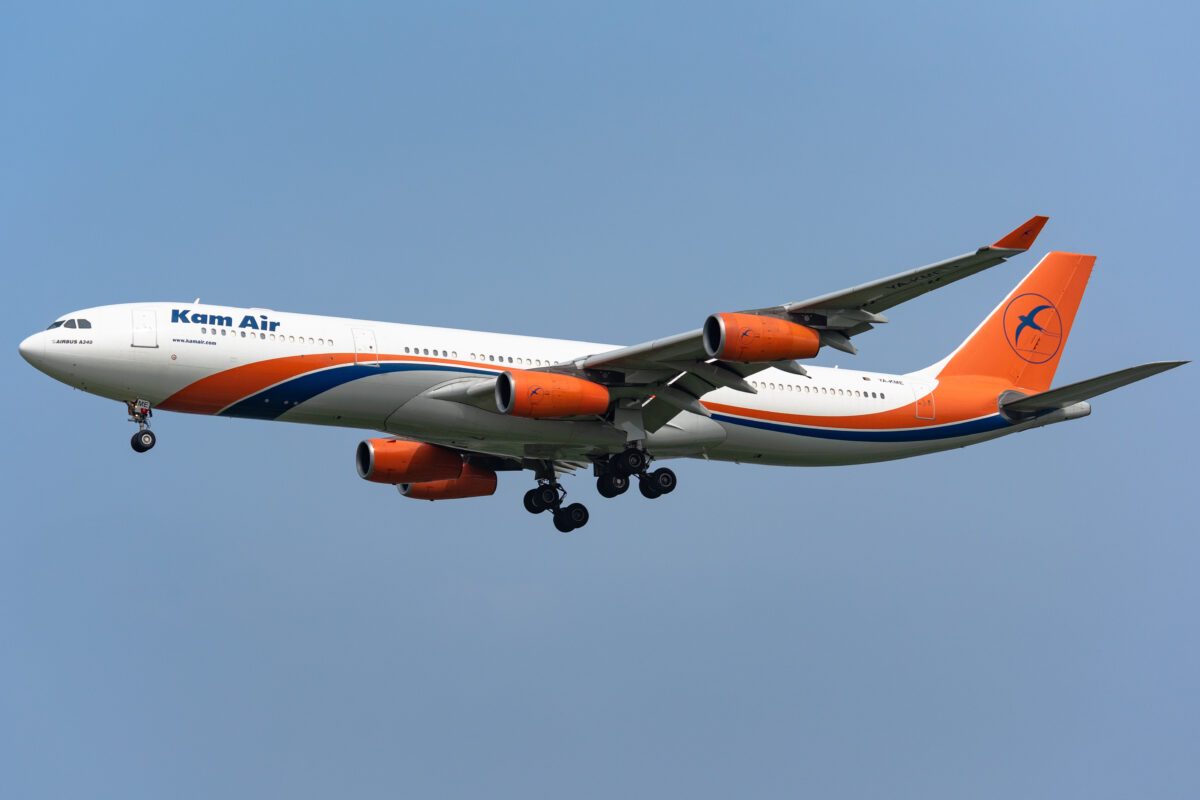
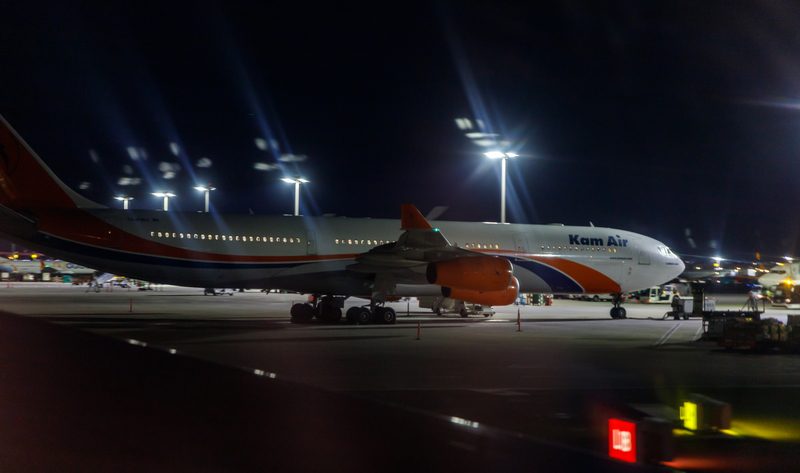
Kam Air’s own fleet presentation lists the Boeing 737-300, Boeing 737-500 and Airbus A340-313. The airline says its A340-313s accommodate 346 passengers and have intercontinental range, while its 737 Classics provide a more relevant operating template for short- and medium-haul regional markets. The 737-300 and 737-500 offer lower trip capacity than the four-engine widebody and are suited to developing routes where frequency is more valuable than large numbers of seats on each departure.
Fergana Airport Is Due for Major Expansion
The proposed airline would be based at Fergana (FEG), where the Uzbek government is preparing a substantial airport redevelopment.
President Shavkat Mirziyoyev reviewed the development concept in April. The government plan covers an extension and widening of the runway, modernization of the airfield, new passenger and cargo terminals and additional aircraft parking positions.
The planned 20,000-square-meter passenger terminal is designed to handle as many as 1,200 passengers, double the airport’s present capability. The project would also increase aircraft parking capacity to 10 stands. Officials want an experienced foreign operator involved in the terminal’s design, construction and subsequent management.
Those investments align with the requirements of a home carrier. Additional stands and terminal capacity would allow an airline to schedule aircraft around its own departure banks instead of treating FEG solely as an outstation. Cargo facilities would also support the export-oriented economic program being developed between Fergana and Afghan businesses.
Certification Is the Decisive Next Step
Uzbekistan requires a commercial airline to operate as a locally established legal entity and hold an air operator certificate. The carrier’s principal operating base and its aircraft base must be inside Uzbekistan.
The Civil Aviation Agency’s requirements cover operational manuals, a safety management system, qualified flight and technical personnel, approved maintenance arrangements and certificates for aircraft registration, airworthiness, radio equipment and noise compliance.
Uzbek law does not require an Uzbek resident to hold a controlling interest in an applicant airline. The regulator cautions, however, that foreign control can affect traffic rights where bilateral air-service agreements include substantial ownership and effective-control provisions.
That issue will matter if Kam Air takes an equity position rather than acting as an operating, technical or commercial partner. The eventual ownership structure will determine how readily the new airline can be designated by Uzbekistan for international routes.
Bottom Line
A Fergana-based airline would give the regional government a tool to develop routes around the valley’s own trade and travel demand rather than relying entirely on services centered on Tashkent. Kam Air would gain a platform inside a faster-growing Central Asian aviation market, while FEG would gain an anchor customer for its planned passenger and cargo infrastructure.
The project also signals a shift from straightforward cross-border flying toward deeper industrial cooperation between Afghanistan and Uzbekistan. Kam Air already knows the Kabul-Tashkent market and can feed Uzbekistan Airways at TAS; establishing or supporting a resident carrier would extend that relationship into aircraft basing, local employment, maintenance planning and network development.
The milestones to watch are the formation of an Uzbek legal entity, an air operator certificate application, aircraft commitments and a defined first-phase network. Progress on the FEG redevelopment will be equally important: a home carrier can help justify the investment, but its operating plan will depend on stands, terminal capacity and ground infrastructure arriving on a workable timetable.
Keep reading FlyMag
Get the Daily Brief in the morning or the Route Watch weekly recap on Fridays. Or both.