Vienna (VIE) adds a new Caucasus link as FlyOne Armenia enters the Austrian market
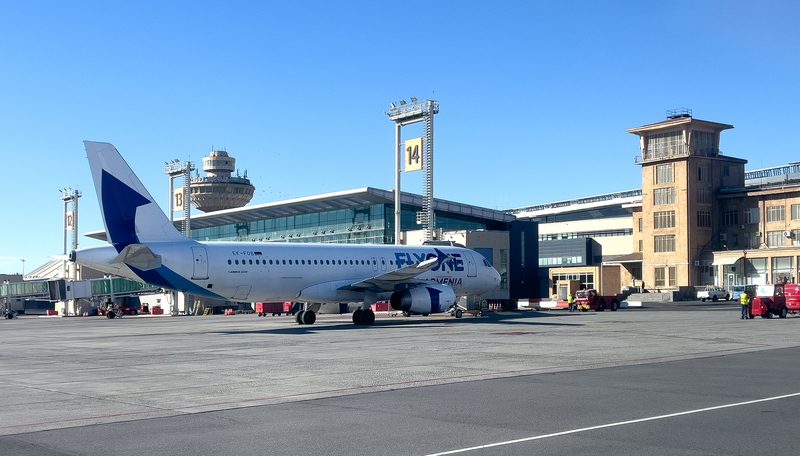
Vienna International Airport (VIE) is set to welcome FlyOne Armenia with a new nonstop link to Yerevan Zvartnots (EVN), expanding Vienna’s reach into the South Caucasus and giving the market a fresh low-cost option alongside existing service.


The route is slated to launch on April 3, 2026, operated by an Airbus A320—a familiar, high-utilization workhorse for short-to-medium haul flying, and an aircraft that fits neatly into the stage length between Austria and Armenia.
Read our stories in your inbox
Two aviation newsletters. Zero fluff.
Route profile: schedule, timings, and the operational logic behind them
FlyOne Armenia’s filed timings are built around an afternoon departure bank at EVN and an early-evening turnaround at VIE:
-
EVN 15:40 → VIE 17:30
-
VIE 18:30 → EVN 23:50

On the clock, the eastbound rotation typically blocks longer—about 3h 50m is currently shown for EVN–VIE, while VIE–EVN is generally around 3h 20m, consistent with prevailing winds and routing.
For airline ops teams, the one-hour ground time at VIE stands out. A 60-minute turn is very achievable on an A320 with disciplined processes—especially if the carrier is running a single-class, quick-boarding cabin and keeps catering complexity low. It’s also a clear signal this is being designed for aircraft productivity, not for long sit-times on the ground.
On frequency, the plan is a phased ramp. Schedules and airport communications have pointed to an initial start with limited weekly flying in early April, building toward a higher cadence for peak season. The headline expectation is up to three weekly flights from June, which is the point where the route stops being “trial capacity” and starts behaving like a proper seasonal city pair with enough frequency to be relevant for both leisure and VFR flows.

Why the Airbus A320 is the right tool for VIE–EVN
At roughly 2,375 km / 1,280 nm, VIE–EVN is a comfortable mission for the A320. In typical low-cost layouts, the A320 commonly seats around 180 passengers in an all-economy cabin, and that seat count is a useful gauge for this market: big enough to keep unit costs competitive, but not so large that the airline has to rely on deep discounting to fill a widebody-size footprint.
The A320 is also operationally well matched to the airports on both ends:
-
Yerevan (EVN) has a long primary runway (3,850 meters), giving generous performance margins even in hot-and-high summer conditions.
-
Vienna (VIE) operates with two long runways (3,500m and 3,600m) and robust infrastructure designed for sustained European hub operations.

That’s the practical backdrop to why airlines like the A320 on routes like this: strong dispatch resilience, predictable turns, and abundant global maintenance experience—especially important when you’re opening a new station and want reliability to be part of the launch story.
Competitive dynamics: what changes in the Vienna–Yerevan market
Vienna (VIE)–Yerevan (EVN) isn’t an unserved city pair. Austrian Airlines has been a consistent operator on the route, typically positioning it as an overnight service—useful for connectivity on one end and time-efficient flying on the other.
FlyOne Armenia’s schedule adds a different proposition: daytime/early-evening departures that are easier to sell as pure point-to-point, with arrival times that suit travelers who want to land, clear, and still have the evening ahead of them in either city. In practice, that can pull demand from three buckets:
-
Leisure traffic (summer travel to Armenia and the region)
-
VFR flows (diaspora and family travel, which tends to be frequency-sensitive)
-
Price-led demand stimulation (low-cost carriers often grow the market, not just share it)
There’s also a broader Vienna angle here. With low-cost capacity in Vienna reshuffling in early 2026, new entrants and new routes become more significant—not just for passengers, but for the airport’s network balance and yield ecosystem.
Yerevan (EVN) as a gateway: beyond the nonstop
FlyOne Armenia is also positioning EVN as more than an endpoint. While it’s not a traditional hub-and-spoke network in the legacy sense, carriers like FlyOne often design waves that enable practical same-day onward options—especially to leisure and diaspora-heavy markets.
For Vienna (VIE) travelers, that can mean smoother access to secondary points that don’t warrant nonstop service from Austria, with EVN acting as a manageable connection point rather than a mega-hub. For Armenia-bound travelers, the nonstop itself is the win: fewer missed-connection risks, less baggage complexity, and a cleaner trip start—particularly valuable during peak summer when European transfer hubs can be unforgiving.
Destination pull: why Yerevan is rising on the Europe leisure map
Yerevan (EVN) is increasingly pitched as a high-value city break: café culture, Soviet-era architecture, a modern dining scene, and immediate access to Armenia’s broader landscapes. For travelers—and for the airlines selling them—Armenia’s strongest card is how quickly you can move from city to experience: dramatic mountain scenery, monastery routes, and day-trip UNESCO sites within realistic driving distance.
For route development watchers, that mix matters. Leisure destinations that deliver “variety density” (city + nature + heritage without needing multiple flights or long internal journeys) often perform better than expected in seasonal European markets—especially when paired with an affordable narrowbody product.
Bottom Line
FlyOne Armenia’s planned Vienna (VIE)–Yerevan (EVN) launch on April 3, 2026 is a classic example of how to build a route the industry respects: start with a measured frequency, scale into peak season, and operate it with an aircraft that fits the stage length and the demand profile. The Airbus A320 gives FlyOne Armenia the economics and flexibility to grow the market, while the schedule design—tight turns at VIE and sensible local times—signals an operation built around utilization and reliability. If the airline executes consistently and reaches the advertised summer cadence, VIE–EVN has the ingredients to become a durable seasonal performer rather than a one-summer experiment.
Keep reading FlyMag
Get the Daily Brief in the morning or the Route Watch weekly recap on Fridays. Or both.