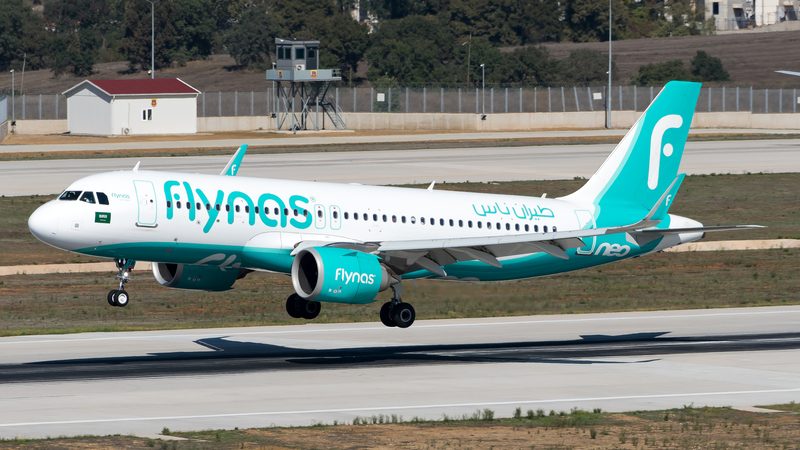
Saudi low-cost carrier flynas (XY) and Syria’s General Authority of Civil Aviation and Air Transport have signed an agreement to create a new airline branded “flynas Syria,” structured as a 51% Syrian / 49% flynas joint venture. The parties say the carrier is aiming for a Q4 2026 launch, with the concept positioned squarely in the low-cost space and framed as a fast-track way to rebuild Syria’s commercial connectivity across the Middle East, Africa, and Europe.

In practical terms, this is not just an airline announcement—it’s an operating model decision: Syria retains majority ownership and (presumably) the “national capacity rebuild” narrative, while flynas brings a proven LCC playbook that’s optimized for rapid scale, tight turn times, and a standardized fleet.
What was announced—and what wasn’t
Read our stories in your inbox
Two aviation newsletters. Zero fluff.
The announcement is clear on ownership, branding, and intended geographic scope. It is notably lighter on the mechanics that airline professionals will immediately ask about:
-
AOC and oversight pathway: Which authority signs the operating certificate, and under what technical framework will continued airworthiness, training, and safety management be audited?
-
Fleet sourcing: Will aircraft be transferred from flynas, leased on the open market, or introduced through short-term ACMI/wet lease while the local operation builds capability?
-
Network sequencing: Which routes are commercially and politically viable first, and which are aspirational until demand and operational reliability stabilize?

Those details matter because the new carrier’s first 6–12 months will be judged less on its brand promise and more on dispatch reliability, on-time performance, and its ability to process disruption recovery like a modern LCC.
Context: a broader Saudi–Syrian investment package
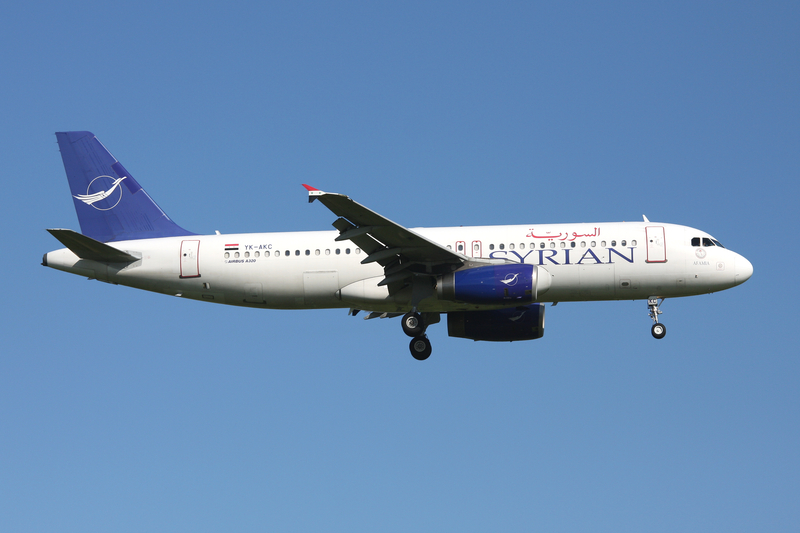
This JV sits inside a wider set of Saudi–Syrian investment announcements unveiled in Damascus (DAM) on February 7, 2026, with Reuters describing the aviation initiative as part of a larger infrastructure and connectivity push. That context is important: aviation projects of this type are rarely purely commercial in their early stages. They tend to be enabled—directly or indirectly—by state-level priorities around reconstruction, trade corridors, and regional mobility.
For airline planners, the implication is that route rights, airport access, and early commercial support (ground handling arrangements, incentives, even preferred slots) can move faster than they would for a purely private startup—provided certification and oversight steps keep pace.
flynas’ existing Syria footprint: RUH/JED/DMM–DAM
flynas is not walking into Syria cold. The carrier highlights that it already operates 23 weekly flights from Saudi Arabia into Damascus International Airport (DAM) from three major origin points:
-
Riyadh (RUH)
-
Jeddah (JED)
-
Dammam (DMM)
flynas also notes it resumed scheduled service to DAM on June 5, 2025, which positioned it as an early mover in restoring Saudi–Syrian air links. The JV is effectively the next step: shifting from being a foreign operator serving Syria to becoming a local-market participant with a Syria-branded platform.
Why the 51/49 structure is meaningful
A 51% Syrian stake does more than satisfy a headline. It can materially shape:
-
Bilateral access and traffic rights: Majority local ownership can simplify designation under certain air service agreements and strengthen the carrier’s position when negotiating beyond the immediate region.
-
Political durability: A locally majority-owned airline can be framed as rebuilding national capacity rather than outsourcing it.
-
Operational control balance: Even at 49%, flynas can still exert significant influence through management contracts, operational support agreements, and fleet/maintenance provisioning—if that’s how the JV is structured behind the scenes.
For professionals, the “real” control mechanism to watch isn’t the equity split—it’s who controls operational decision-making: network planning, revenue management, training standards, MRO contracting, and disruption-handling policy.
Fleet likely signals: why an Airbus A320-family play makes sense
No fleet has been announced, but the most logical pathway—especially if flynas is exporting its LCC template—is an Airbus A320-family narrowbody operation.
flynas today is heavily concentrated in the Airbus A320neo, a type that’s well-suited to the stated mission profile: medium-haul flying with strong unit economics, consistent performance in hot-and-high regional environments, and broad leasing-market availability. The A320neo’s efficiency gains (and lower fuel burn per seat versus prior-generation aircraft) matter even more in a market where yields can be volatile and recovery can be uneven.
From an operations standpoint, an A320neo family fleet also aligns with how an LCC scales:
-
Single-type training and crewing: streamlined pilot type rating, standardized cabin procedures, and easier rostering
-
Common spares and maintenance planning: simplified inventory and vendor management
-
High utilization economics: tight turns, dense schedules, and robust aircraft productivity—assuming airport constraints don’t erode turn performance
Engine selection is also not a trivial detail for an LCC. flynas has publicly tied its A320neo growth to CFM LEAP-1A powerplants, which may inform any fleet strategy if aircraft or support capabilities are shared.
Network reality check: the “Europe” question
The press framing includes Europe, but network sequencing will likely start closer to home. In early-stage rebuild environments, the first routes that tend to make sense are those with:
-
strong VFR (visiting friends and relatives) flows,
-
clear labor mobility demand,
-
and manageable operational complexity (shorter sectors, more alternates, fewer long-range recovery issues).
Europe can absolutely be in the medium-term plan, but it becomes viable only when you can reliably deliver the basics that the European market and regulators punish quickly when they fail: schedule integrity, consistent customer recovery, and clear compensation handling.
The more immediate opportunity is to build a dense regional web anchored on DAM, where short-to-medium stage lengths let the airline protect utilization while gradually proving reliability.
The operational “unknowns” that will determine whether this works
For all the strategic logic, the JV’s success will hinge on execution details that don’t fit into a press release:
-
Certification timeline discipline: Q4 2026 is achievable only if AOC workstreams, manuals, training programs, and oversight align early—not late.
-
Ground ops and disruption recovery: The fastest way to damage a new LCC brand is not fares or seats—it’s refund friction, baggage disputes, and slow irregular-ops handling.
-
Fleet availability vs. ambition: If aircraft supply is tight, the network plan will be constrained. If supply is easy but staffing is not, reliability becomes the constraint.
-
Airport readiness and connectivity: A carrier can sell “connectivity,” but the airport and its ecosystem must deliver it—handling, security throughput, and predictable operating conditions.
Bottom Line
“flynas Syria” is a classic hybrid rebuild strategy: majority local ownership (51%) to anchor the carrier politically and structurally in Syria, paired with a 49% flynas stake to import a proven low-cost operating model. With an intended Q4 2026 start and a stated focus on the Middle East, Africa, and Europe, the opportunity is real—but the make-or-break variables are the unglamorous ones: AOC and oversight credibility, fleet sourcing (likely A320-family), and whether the airline can deliver modern LCC reliability and service recovery from day one. If those pieces land, the JV could scale Syria’s connectivity faster than a traditional greenfield national carrier ever could—especially with flynas already operating RUH/JED/DMM–DAM at meaningful frequency.
Keep reading FlyMag
Get the Daily Brief in the morning or the Route Watch weekly recap on Fridays. Or both.