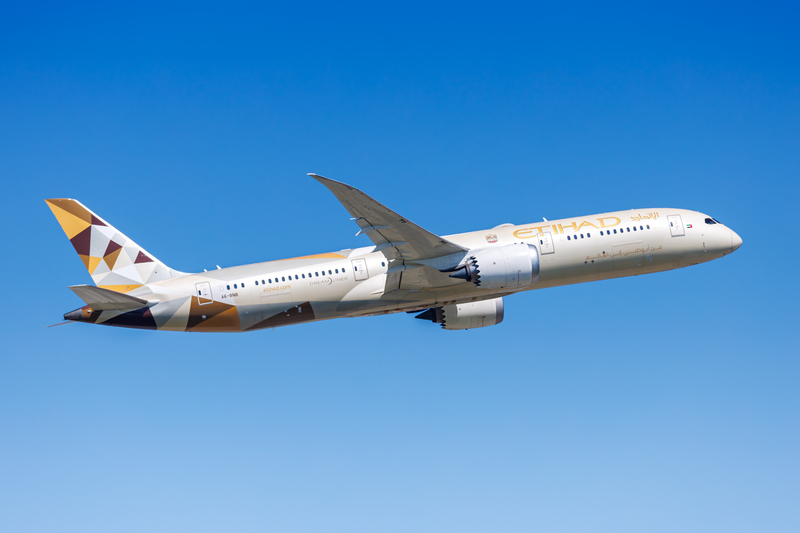
Etihad Airways is heading into summer 2026 with the largest U.S. operation in its history, and the numbers are striking. In June, the Abu Dhabi-based carrier is scheduled to average 7.1 daily departures to the United States, up from 5.0 daily a year earlier.

That 42% increase sounds dramatic, and it is. But the more important story is not the percentage alone. It is how Etihad is growing, where the extra capacity is going, and what that says about the airline’s confidence in its rebuilt long-haul strategy.
For years, Etihad’s U.S. network was a symbol of overreach. Now it is starting to look like something much more disciplined.
Read our stories in your inbox
Two aviation newsletters. Zero fluff.
Etihad Will Serve Six U.S. Cities This Summer
In June 2026, Etihad is scheduled to operate six U.S. routes from Abu Dhabi International Airport (AUH):
-
Atlanta (ATL)
-
Boston (BOS)
-
Charlotte (CLT)
-
Chicago O’Hare (ORD)
-
New York JFK (JFK)
-
Washington Dulles (IAD)
That is a meaningful network for an airline that, not long ago, was shrinking rather than expanding. More importantly, this is not growth for growth’s sake. The route map is concentrated, deliberate, and built around markets where Etihad appears to believe its connecting proposition is strongest.
This is a very different look from the old era when cities such as Dallas/Fort Worth (DFW), Los Angeles (LAX), and San Francisco (SFO) were part of a much broader and ultimately unsustainable U.S. push.
Charlotte Is The Route Everyone Will Be Watching
The most intriguing addition is Charlotte Douglas International Airport (CLT), where flights begin on March 20.
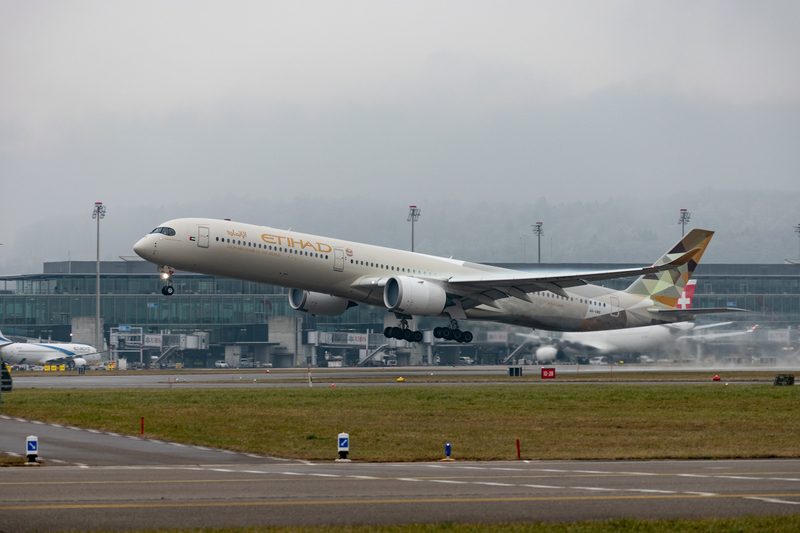
At first glance, Charlotte may seem like an unusual choice. It is not an obvious Gulf gateway in the way New York or Chicago is, and it does not have the global profile of some other U.S. airports. But that is also what makes it so interesting.
Etihad is not entering Charlotte because of sheer local Abu Dhabi demand. It is entering because it believes the airport can support a substantial volume of one-stop traffic beyond Abu Dhabi, particularly to South Asia. That is how this airline’s U.S. network works. The local market matters, but the connecting market matters more.
What makes the launch more notable is the aircraft change. The route was initially expected to begin with the Boeing 787-9, but the Airbus A350-1000 is now scheduled from the outset. That is a sizeable upgauge and a strong signal that Etihad wants to enter the market with a larger, more premium-capable aircraft than first planned.
Whether that proves commercially justified is another question. But from a network-strategy standpoint, it is a bold move.
Chicago Is Becoming The True Heavyweight
If Charlotte is the most unusual route, Chicago O’Hare (ORD) may be the most important one strategically.
Etihad is increasing Chicago from daily to as much as double-daily from mid-June, both with the Airbus A350-1000. That is a major step. It turns ORD into one of the airline’s largest U.S. stations and suggests strong confidence in the market’s performance.
Chicago makes sense for several reasons. It is a vast metropolitan area, a major corporate center, and, crucially for Etihad, a powerful source of traffic to India, Pakistan, and other South Asian markets. That is the real engine here.
A second daily service is not just about adding seats. It improves schedule utility, creates more connection options over Abu Dhabi, and makes the route more competitive against one-stop alternatives via Europe and the Gulf.
For Etihad, Chicago is no longer simply a U.S. destination. It is becoming a pillar of the network.
New York Remains Essential, Even Without The A380
New York JFK remains central to Etihad’s U.S. identity, but the route is changing shape.
The A380 is no longer part of the June 2026 plan, with the service now relying on the Airbus A350-1000 and Boeing 787-9. That is telling. The A380 once gave Etihad prestige and visibility on JFK, but today the airline appears more interested in efficient widebody deployment than symbolic capacity.
That fits the broader pattern of the airline’s current strategy. The new Etihad is not built around spectacle. It is built around tighter economics, better fleet discipline, and more selective growth.
New York remains hugely important, of course. But the way Etihad serves it now says a lot about how the airline has changed.
Atlanta Quietly Proved The Model Can Work
Atlanta (ATL) may not generate the same intrigue as Charlotte, but it has already become one of Etihad’s more important success stories.
The route launched in July 2025 and moved to daily service by late 2025. That quick ramp-up suggests it performed well enough to justify more capacity, which is significant because Atlanta is one of the most competitive and commercially demanding aviation markets in the world.
If Etihad can make Atlanta work, it gives the airline credibility in the Southeast and strengthens the case that its rebuilt U.S. strategy is not just theoretical. It is also another clear indication that the airline is no longer choosing U.S. cities based purely on prestige. It is choosing markets where it believes transit flows can sustain a long-haul operation.
This Is Still Fundamentally A South Asia Story
The most important point in understanding Etihad’s U.S. expansion is this: it is not primarily about demand between the United States and Abu Dhabi.
It is about what happens beyond Abu Dhabi.
Etihad’s U.S. traffic is heavily dependent on connecting passengers, and South Asia remains the core of that transfer model. India is the largest piece of the puzzle by far, with Pakistan and other regional markets also contributing heavily. That is why routes such as New York, Chicago, Washington, Atlanta, and Charlotte can make sense even if point-to-point UAE demand is limited.
Etihad is not trying to copy Emirates or Qatar Airways in scale. But it is still using the same underlying logic: build a coordinated hub, bank flights tightly, and use the U.S. network to feed high-volume markets beyond the Gulf.
That is what ties the entire expansion together.
The Timing Makes The Expansion Even More Interesting
There is another layer here as well.
Etihad is building this larger U.S. operation during a period of continued Middle East disruption. That makes the expansion notable not just because of its scale, but because of the confidence it implies.
Airlines do not normally add this much long-haul flying into an uncertain operating environment unless they believe the demand is real and the network can support it. That does not guarantee every filing will hold exactly as published. Schedules can still shift. But the broader direction is unmistakable: Etihad is pushing ahead, not stepping back.
That alone is a major change from the caution that defined much of the airline’s recent past.
Bottom Line
Etihad’s 42% increase in U.S. flights for June 2026 is its biggest-ever expansion across the Atlantic, but the real significance lies in the structure of the growth.
Charlotte is launching. Chicago is going double-daily. Atlanta has already matured into a daily route. New York remains a cornerstone, while Boston and Washington continue to provide stable coverage. All of it is built around Abu Dhabi’s role as a tightly coordinated transfer hub, with South Asia still doing most of the heavy lifting behind the scenes.
This is not the old Etihad returning to reckless expansion. It is a more selective, more disciplined airline testing just how far its rebuilt strategy can go in one of the world’s most important long-haul markets.
Keep reading FlyMag
Get the Daily Brief in the morning or the Route Watch weekly recap on Fridays. Or both.