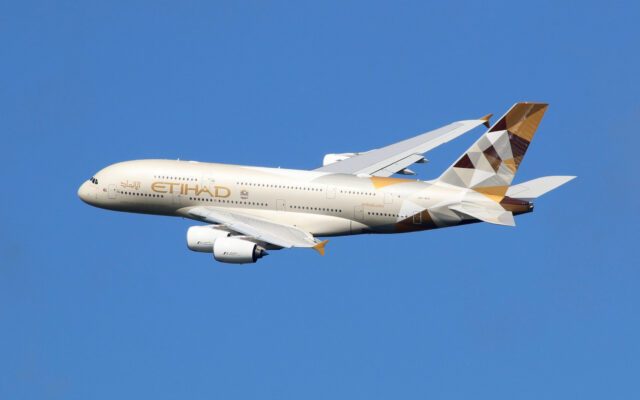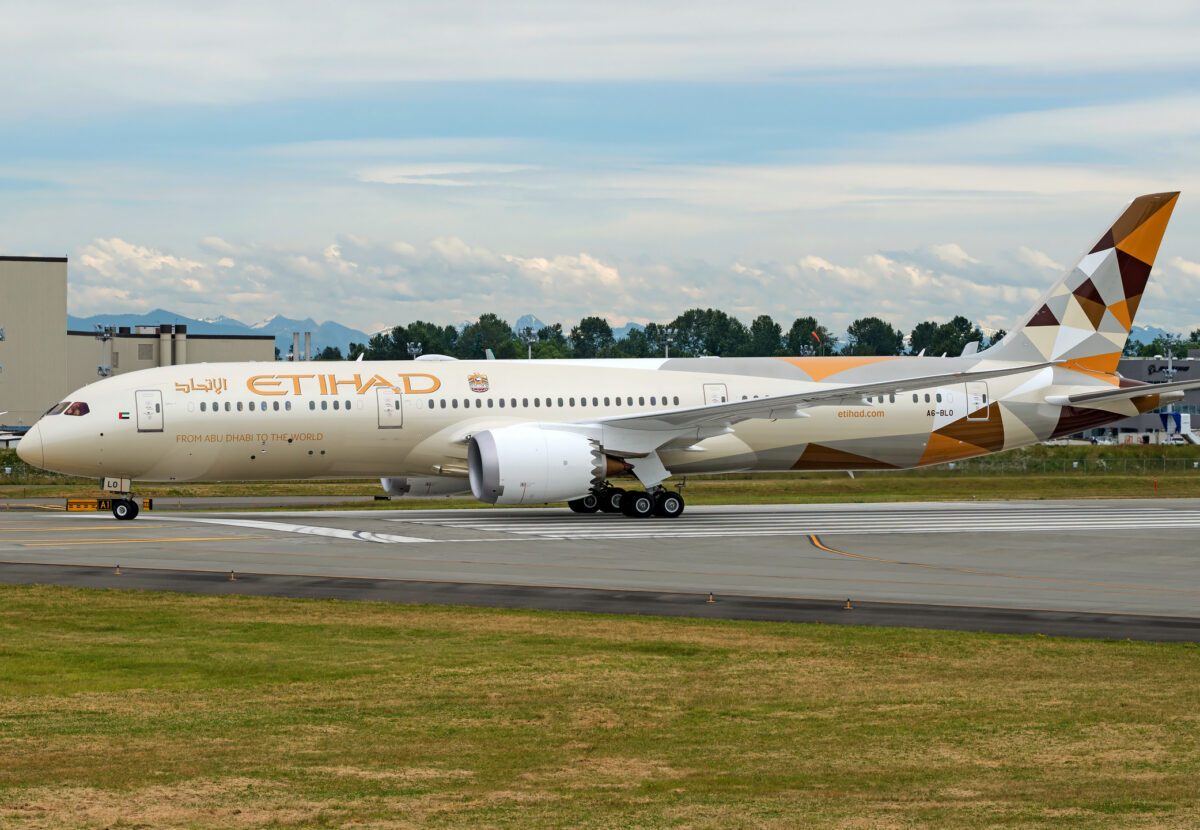
An Etihad Airways Boeing 787-9 crossed an active runway at Boston Logan (BOS) without clearance on October 15, prompting air traffic control to send an approaching Delta Connection flight around.

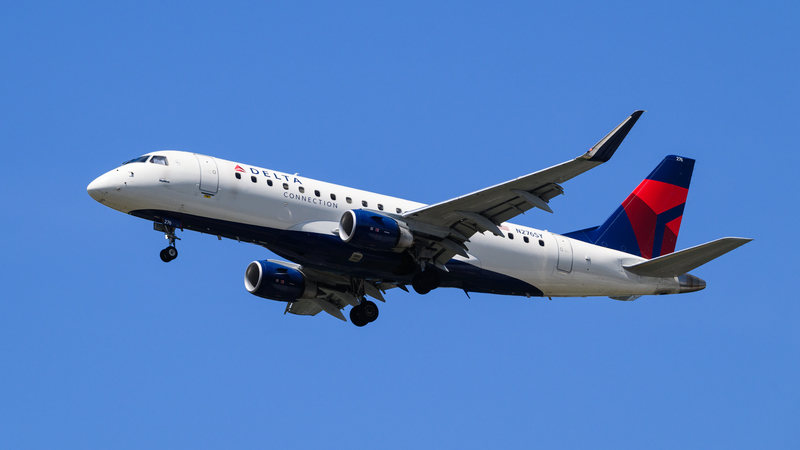
The Etihad aircraft had arrived from Abu Dhabi (AUH) as flight EY7 and was taxiing toward the terminal when it entered runway 4L. Republic Airways flight 5739, operating from New York LaGuardia (LGA) as Delta Connection flight DL5739, was approaching the same runway in an Embraer E175.
The controller stopped the 787 and instructed the Republic crew to discontinue its approach. The E175 subsequently returned for another approach and landed at BOS.
Read our stories in your inbox
Two aviation newsletters. Zero fluff.
The Etihad Crew Read Back the Hold-Short Instruction
Archived Boston tower and ground communications available through LiveATC capture the sequence after EY7 landed. The controller directed the crew to taxi on taxiways R and N and hold short of runway 4L. The Etihad pilots correctly read back the route and hold-short instruction.
The aircraft nevertheless continued beyond the holding position and onto the runway. The tower controller told the Etihad crew to stop, then immediately directed Republic 5739 to go around.

Once the landing conflict had been removed, the controller instructed the 787 to continue across 4L on taxiway N and hold short of runway 15L. The aircraft later received clearances to cross the additional runways between that position and the terminal area.
Near the end of the taxi, ground control advised the Etihad crew of a possible pilot deviation and provided a telephone number. That notification begins a reporting and review process; it is not, by itself, a finding that a regulatory violation occurred.
Boston’s Layout Requires Several Separate Runway Clearances
The FAA airport diagram effective on the date of the incident shows taxiway N crossing runway 4L/22R on the north side of the airfield. Aircraft continuing toward the international terminal from that area can also encounter runway 15L/33R and runway 15R/33L.
Runway 4L/22R is 7,864 feet long and 150 feet wide. The diagram lists both ASDE-X surface surveillance and runway status lights at BOS, alongside a prominent warning for crews to remain alert to runway crossing clearances and read back all runway holding instructions.
Under the FAA’s taxi and ground-movement rules, a clearance is required for every runway crossed by an aircraft’s route. A taxi clearance along N therefore did not authorize EY7 to enter 4L. The controller’s instruction to hold short was the controlling limit until a separate crossing clearance was issued.
The correct readback establishes that the hold point was communicated and acknowledged. The remaining question is why the aircraft did not stop before the runway boundary. That will require evidence beyond the radio exchange, including the crew’s account and any relevant cockpit or surface-surveillance information.
The Go-Around Contained the Conflict
The Republic crew responded to the go-around instruction and remained airborne while the widebody cleared the runway. The action prevented the E175 from continuing toward a runway occupied by another aircraft and gave the controller time to restore an orderly traffic sequence.
Public flight-tracking records identify the Republic aircraft as an Embraer E175 and the Etihad aircraft as A6-BNJ. Tracking data also shows that the 787 remained in service, operating the return EY8 departure from Boston to Abu Dhabi at 5:28 p.m. local time. FlightAware’s history for EY8 lists a Boeing 787-9 on the October 15 sector.

The 787-9 is the middle member of the Dreamliner family and is well matched to Etihad’s nonstop Abu Dhabi-Boston operation. Boeing lists a range of up to 8,300 nautical miles and typical two-class capacity of 250 to 325 passengers. The type is 206 feet long with a wingspan of just over 197 feet, giving an unauthorized runway entry by the widebody a substantial surface footprint.
FAA Classification Will Depend on Separation and Reaction Time
The FAA defines a runway incursion as the incorrect presence of an aircraft, vehicle or person in the protected area of a surface designated for takeoff and landing. The agency specifically gives an aircraft crossing a runway without clearance while taxiing to a gate as an example of a pilot deviation.
Runway incursions are assigned severity categories ranging from Category D, where there are no immediate safety consequences, to Category A, where a collision is narrowly avoided. The assessment considers proximity, aircraft speed, environmental conditions, available reaction time and whether corrective or evasive action was required.
The controller-ordered go-around will therefore be one part of the eventual assessment, but it does not establish the category on its own. The aircraft’s positions and closure rate at the moment the E175 began climbing away will be central to any FAA determination.
Bottom Line
The immediate safety barriers worked: the tower controller identified the runway occupancy, the Republic crew complied with the go-around, and the Etihad aircraft cleared the landing surface. That outcome should not obscure the central operational issue. A correct readback did not translate into compliance at the hold line, demonstrating the limit of radio confirmation when it is not backed by accurate surface awareness in the cockpit.
Boston’s compact, intersecting-runway layout makes disciplined taxi monitoring especially important. EY7’s route toward the terminal involved several runway boundaries in close succession, each requiring crews to confirm both their position and the specific clearance in effect. Airport moving maps, runway status lights and surface surveillance add defenses, but none replaces active monitoring by both pilots during taxi.
The next points to watch are whether the FAA assigns a formal severity category and whether Etihad identifies a procedural, human-factors or navigation issue behind the crossing. Those findings will determine whether the event remains an isolated deviation or produces changes to taxi briefing and runway-crossing procedures within the airline.
Keep reading FlyMag
Get the Daily Brief in the morning or the Route Watch weekly recap on Fridays. Or both.