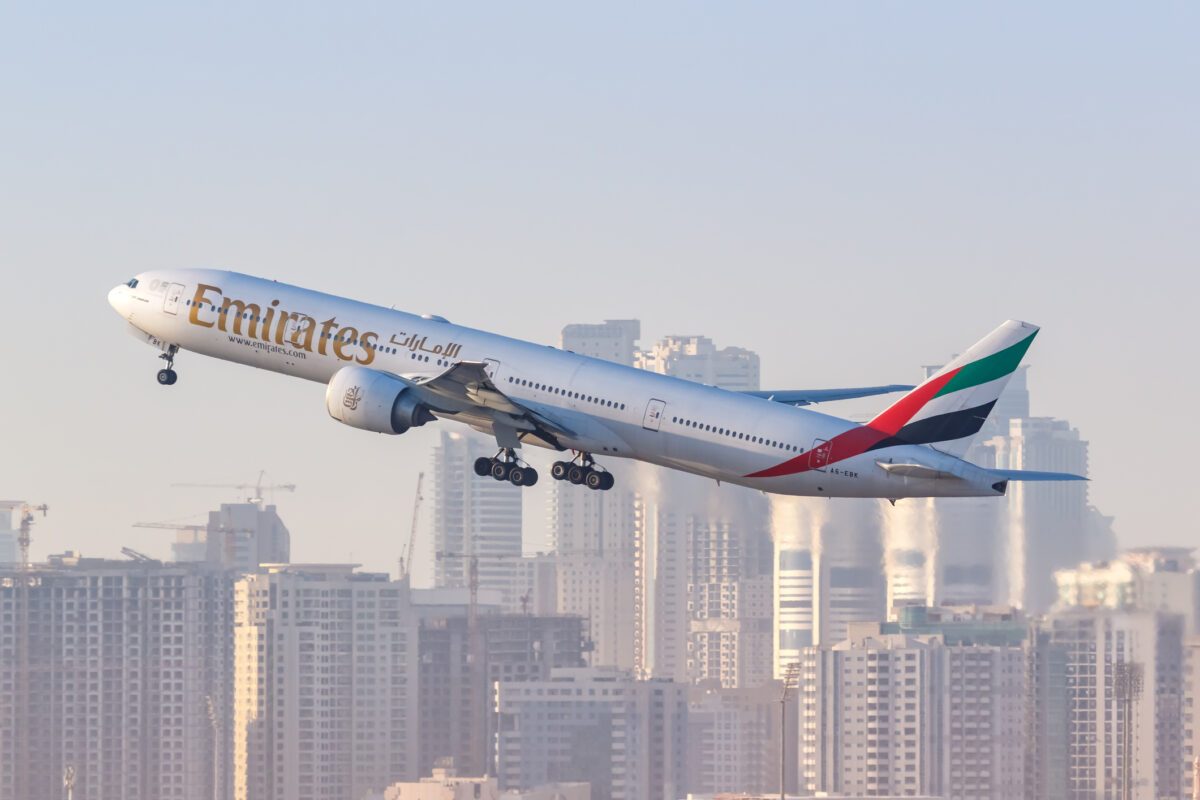
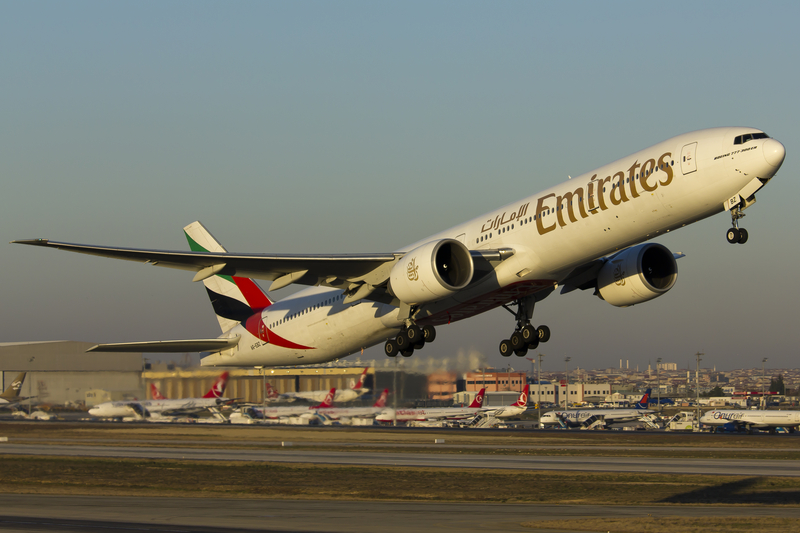
An Emirates Boeing 777-300ER departed Delhi more than 17 hours late Sunday morning after a bird strike damaged the aircraft’s nose radome on arrival from Dubai.

The aircraft, registered A6-EGS, landed at Delhi Indira Gandhi International Airport (DEL) at about 3:10 p.m. local time on Saturday, October 17. It had operated the inbound sector from Dubai International Airport (DXB) as EK516 and was scheduled to return as EK517 at 4:25 p.m., leaving little more than an hour for the planned turnaround.
Emirates said the bird strike occurred on arrival and that the aircraft required repairs before it could operate the return sector. Video recorded on the apron showed a large area of deformation around the 777’s nose cone as ground personnel examined the damage.
Read our stories in your inbox
Two aviation newsletters. Zero fluff.
The airline initially moved EK517 to 7 a.m. Sunday and arranged hotel accommodation for affected passengers. Emirates apologized for the disruption and said the aircraft would not return to service until the necessary work had been completed.
The Same 777 Returned to Dubai
Aircraft movement records for A6-EGS show that the 777 remained at DEL overnight rather than being replaced by another aircraft. It eventually departed at approximately 10:01 a.m. local time on October 18, about 17 hours and 36 minutes after its original scheduled departure.
The flight took two hours and 57 minutes and landed in Dubai at approximately 11:28 a.m. local time. The completed sector confirmed that Emirates had repaired and released the same airframe involved in the strike.
That matters operationally because dispatching a substitute widebody to Delhi would have required Emirates to take another aircraft out of its tightly planned Dubai rotation. Repairing A6-EGS locally avoided a positioning flight and returned the airframe directly to the carrier’s main engineering base, although the additional three-hour slip beyond the initially revised departure suggests that the inspection and release process continued well into Sunday morning.
Emirates’ published Delhi-Dubai schedule identifies EK517 as a Boeing 777 service. The approximately 2,200-kilometer sector is short by 777-300ER standards, but the type gives Emirates substantial passenger and belly-cargo capacity while feeding connections over DXB.
Radome Damage Requires More Than a Visual Check
The nose cone is a nonmetallic radome built around the aircraft’s weather-radar antenna. Although the visible result of a bird strike can appear to be a localized dent, the repair has to preserve both the radome’s structural condition and its ability to transmit radar energy accurately.
FAA radome maintenance guidance identifies dents and scratches from bird impacts as recognizable forms of radome damage. It also warns that repairs can affect transmissivity, reflection and diffraction, potentially degrading or distorting the radar picture if the radome is not restored correctly.
For a 777 undergoing an overnight line repair, the work can therefore involve removing or opening the radome, inspecting its layered structure and the equipment behind it, completing the approved repair or replacement, and conducting the required functional checks before the aircraft is released. Emirates did not describe the specific repair performed on A6-EGS.
Nose and radome strikes are common impact locations because they form the aircraft’s forward-most surface. An FAA analysis of civil-aircraft wildlife strikes lists the nose and radome among the components most frequently hit by birds. Engines, wings and windshields can present more immediate hazards, but radome damage can still make an aircraft unserviceable until engineers establish that its structure and radar performance meet dispatch requirements.

A6-EGS and the Delhi Operation
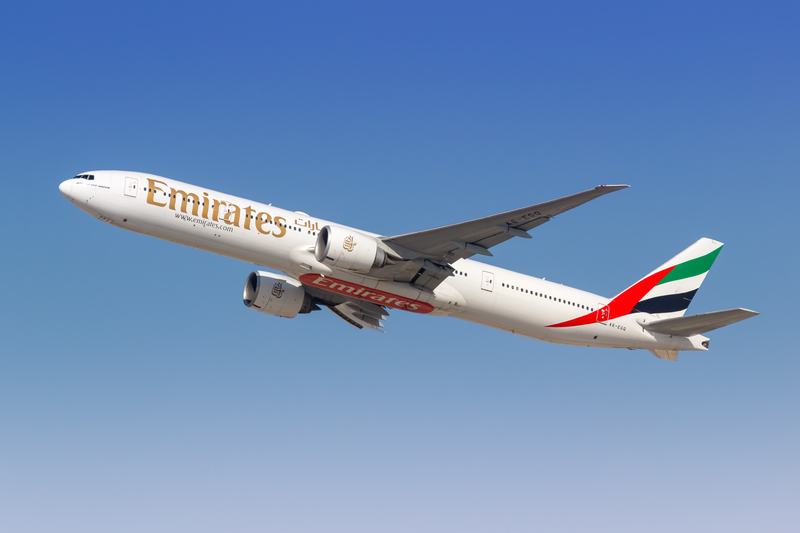
A6-EGS is a Boeing 777-31H(ER), the manufacturer-specific designation for an Emirates 777-300ER. The GE90-powered aircraft is part of the world’s largest 777 fleet. Emirates lists passenger capacities ranging from 354 to 364 seats on its three-class aircraft and from 427 to 442 on two-class versions.
The airline’s 777 specifications give the -300ER a length of 242 feet 4 inches and a wingspan of 212 feet 7 inches. Emirates quotes a maximum range of 7,880 nautical miles, far beyond what is needed between Delhi and Dubai but useful for maintaining fleet flexibility across the carrier’s mix of regional and long-haul flying.
Boeing’s specifications place typical two-class capacity between 350 and 425 seats and maximum takeoff weight at 775,000 pounds. On a high-volume regional route such as DEL-DXB, that size supports connecting demand and cargo without requiring the aircraft’s full range capability.
Emirates operates four daily flights between Delhi and Dubai. The airline plans to introduce the Airbus A380 on EK512/513 from October 25, while EK517 will remain a Boeing 777 operation. That keeps the 777 central to the Delhi schedule even as Emirates adds larger A380 capacity to one of the other daily rotations.
The Strike Occurred at the Start of Migration Season
India’s Aeronautical Information Publication says more than 90% of reported bird strikes occur at or below 3,000 feet above ground level, concentrating exposure around takeoff and landing. The same official aviation guidance identifies October through April or May as the principal migratory period over the Indian subcontinent.
The timing does not establish which species hit A6-EGS, but it underlines why wildlife monitoring around large airports remains an active operational requirement. Even when a strike does not injure occupants or affect an engine, the resulting inspection and repair can remove a high-capacity aircraft from service for an entire operating cycle.
Bottom Line
The disruption shows how a localized airframe impact can quickly become a network and passenger-handling problem. Emirates lost the aircraft for the remainder of Saturday’s schedule, accommodated customers overnight and carried the delay into Sunday, all because the 777 could not be released without completing a specialized repair and inspection.
Emirates benefited from returning A6-EGS directly to Dubai rather than mounting a replacement operation from its hub. The aircraft’s eventual departure also indicates that Delhi had access to the engineering capability, parts and approvals needed to make the 777 serviceable locally. For a carrier operating several daily widebody rotations on the route, that support can be the difference between an overnight delay and a cancellation followed by a recovery flight.
Attention now shifts to whether the incident produces any regulatory or airport wildlife-management response. It also comes days before Emirates expands Delhi capacity with the A380, increasing the number of passengers exposed when a single widebody rotation is disrupted and placing greater value on resilient local maintenance and recovery arrangements.
Keep reading FlyMag
Get the Daily Brief in the morning or the Route Watch weekly recap on Fridays. Or both.