Air India’s March 19 Delhi–Vancouver turnaround stands out because the aircraft itself was not reportedly broken. The problem was that the wrong aircraft type had been assigned to the route.

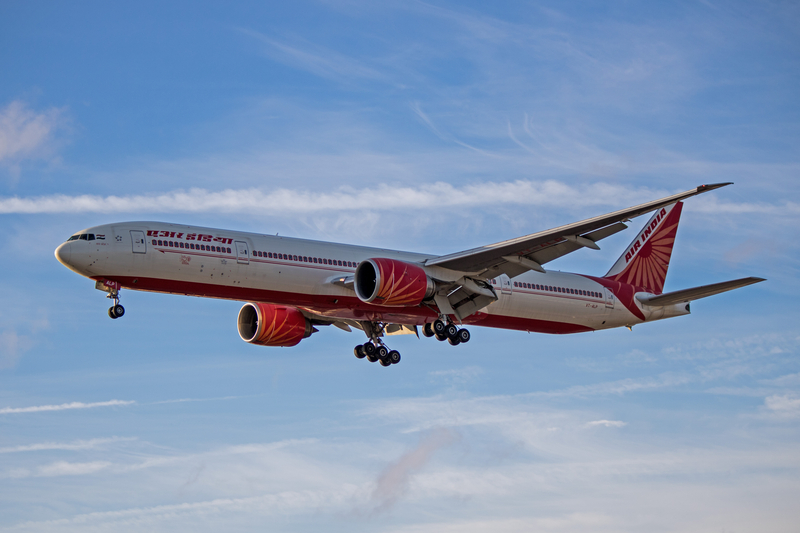
Flight AI185 departed Indira Gandhi International Airport (DEL) for Vancouver International Airport (YVR) as scheduled, but several hours into the journey the airline realized it had sent a Boeing 777-200LR instead of the Boeing 777-300ER authorized for the service into Canada. The aircraft turned back while near Kunming and returned to Delhi after nearly eight hours in the air.
For aviation readers, that is what makes the incident so unusual. Airlines deal with technical issues, medical diversions, and weather all the time. What happened here was different: a compliance problem serious enough to force a mid-flight return even though the aircraft was otherwise capable of operating the route physically.
Read our stories in your inbox
Two aviation newsletters. Zero fluff.
The Aircraft Type Was The Problem
At the center of the incident was the specific Boeing 777 variant Air India used on the flight.
The aircraft involved, registered VT-AEI, was a Boeing 777-200LR. Reports indicate Air India currently had route approval into Canada for the Boeing 777-300ER on this service, not the -200LR. That distinction may sound minor to outsiders, but in international airline operations it is not.
Regulatory approvals can be tied not just to the airline as a whole, but to aircraft type, subfleet, configuration, or route-specific authorizations. When the wrong type is dispatched on a route with aircraft-specific restrictions, the issue stops being an internal planning error and becomes an international compliance problem.
That is why AI185 could not simply continue to Vancouver (YVR) once the mismatch was identified.
A Long Flight To Nowhere
The operational cost of the mistake was significant.
AI185 reportedly spent around four to five hours outbound before turning around, then nearly the same amount of time flying back to Delhi (DEL), for roughly eight hours total airborne. That means a full widebody long-haul sector consumed crew time, fuel, aircraft availability, airport resources, and passenger goodwill — all without ever reaching its destination.
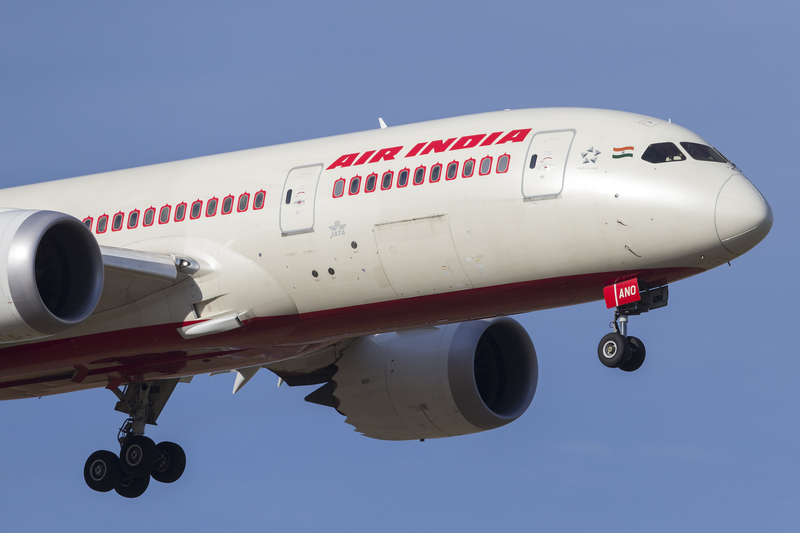
These are the sorts of disruptions airlines fear because they produce the worst possible combination: high direct cost, no transport value delivered, and a public impression of avoidable error rather than unavoidable disruption.
This Was A Dispatch And Oversight Failure
The bigger story is not the turnback itself. It is how the aircraft was dispatched in the first place.
An incident like this suggests a gap somewhere between fleet planning, route authorization tracking, dispatch control, and operational execution. On a route as established as Delhi (DEL)–Vancouver (YVR), aircraft assignment should not be an improvisational matter. Widebody deployment, especially into countries with aircraft-specific permissions, is one of the most tightly controlled parts of airline operations.
That is why the event has resonated so strongly. It does not point to bad luck. It points to an internal systems lapse.

Air India’s Public Framing Was More General Than Specific
Air India publicly described the incident as an “operational issue” and said the aircraft returned in line with standard procedures.
That is a standard and understandable public line, especially while passengers are being reaccommodated and regulators may still be reviewing the event. But for an aviation audience, the underlying issue is much more specific than that wording suggests.
This was not an ordinary operational hiccup. It was a route-compliance failure involving aircraft assignment. That is a more serious category of error because it touches directly on regulatory control, not just day-of-operation execution.
The Passenger Impact Was Real — And Avoidable
For passengers, the incident was particularly frustrating because there was no dramatic onboard trigger.
The flight departed, progressed normally for hours, then had to reverse course and return to Delhi (DEL), leaving travelers with a major delay and a lost day. Air India reportedly provided accommodation and support, and later dispatched a replacement service to complete the journey. That mitigates the customer impact somewhat, but it does not erase the fact that the disruption appears to have been entirely preventable.
That is the part that hurts airlines most in public perception. Passengers will forgive storms and technical defects more readily than an avoidable internal planning error.
The Broader Lesson For Airlines
This incident is also a reminder that long-haul reliability depends on far more than aircraft performance.
A Boeing 777-200LR can obviously fly from Delhi to Vancouver in range terms. But airline operations are governed by a larger web of permissions, route authorizations, bilateral compliance, and fleet-specific approvals. If that administrative and regulatory layer fails, the flight can become untenable even with a perfectly serviceable aircraft and crew.
For professionals, that is the key lesson. Operational discipline is not just maintenance and flight crew performance. It is also dispatch integrity and regulatory awareness.
Bottom Line
Air India’s March 19 turnaround on flight AI185 from Delhi (DEL) to Vancouver (YVR) was unusual because it was caused not by a technical fault, but by the use of the wrong aircraft type for the route.
The Boeing 777-200LR that operated the flight reportedly lacked the specific approval needed for Air India’s Canada operation, which had been authorized for the Boeing 777-300ER. Once that was recognized, the only practical option was to turn the aircraft around and return to Delhi.
For aviation readers, this was not just a strange “flight to nowhere.” It was a serious dispatch and compliance lapse — the kind of error that costs money, disrupts passengers, and raises uncomfortable questions about operational controls inside the airline.
Keep reading FlyMag
Get the Daily Brief in the morning or the Route Watch weekly recap on Fridays. Or both.