Delta Air Lines’ latest earnings call left very little doubt about where management believes the next margin gains will come from. Premium demand, premium revenue, premium seating density, and premium segmentation were all central to the airline’s message.

That matters because Delta is no longer talking about premium as a supporting strength inside the business. It is increasingly framing premium as the business model itself, particularly on long-haul international flying.
The numbers support that shift. Delta said its diversified revenue streams now account for 62% of total revenue, while premium revenue grew 14% year over year in the March quarter. Corporate sales also hit a quarterly record, and the airline said transatlantic remained its largest and most profitable international entity.
Read our stories in your inbox
Two aviation newsletters. Zero fluff.
For an airline that already sees the North Atlantic as one of its strongest profit pools, that framing makes one thing clear: future aircraft deliveries are not just about replacing old metal. They are about replacing it with more profitable metal.
Delta’s New Aircraft Are Being Built Around Higher-Yield Seats
The most revealing line of the call was not in the formal earnings release, but in management’s explanation of what new aircraft are actually doing to the cabin mix.
Delta Opens First-Ever New York-Olbia Flights, Giving Sardinia Its First U.S. Nonstop
Delta said the aircraft now entering the fleet are coming in at close to 50% premium seating, compared with older aircraft being retired that were only about 30% premium. That is an enormous shift in cabin philosophy.
It means Delta is no longer simply modernizing. It is rebalancing the economics of the aircraft around a much larger share of higher-yield seats. On long-haul international routes, that matters enormously. A few extra premium seats can help. A structural move from around one-third premium to around one-half premium changes the entire revenue profile of the airplane.
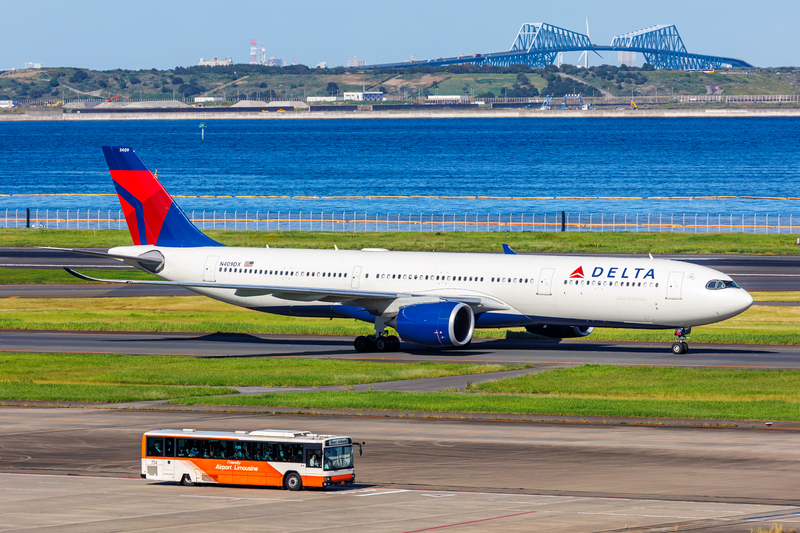
This is why the speculation around the Airbus A330-900neo matters so much. Delta has already made clear that the aircraft it wants for the future will look more premium-heavy than the aircraft they replace. The real question is how far it is willing to go.
London Heathrow Would Be the Most Logical Showcase
Well-sourced industry reporting now suggests Delta may be preparing an even more premium-heavy Airbus A330-900neo layout, potentially with more than 50 Delta One seats and more than 60% of the cabin devoted to premium products overall. Just as importantly, London Heathrow Airport (LHR) has emerged in that reporting as the most likely place for the new configuration to debut.
Delta has not confirmed any of that publicly, and that point needs to be handled carefully. At this stage, it remains informed industry chatter rather than an announced product rollout.
Even so, LHR would make obvious strategic sense. Delta has already said that the transatlantic market is its largest and most profitable international segment. Heathrow is not just another European airport. It is one of the most premium-heavy long-haul markets in the world, where business demand, alliance connectivity, and corporate contracts all matter more than pure seat volume.
If Delta wants to prove just how far its premium strategy can go, LHR is exactly where it would do it.
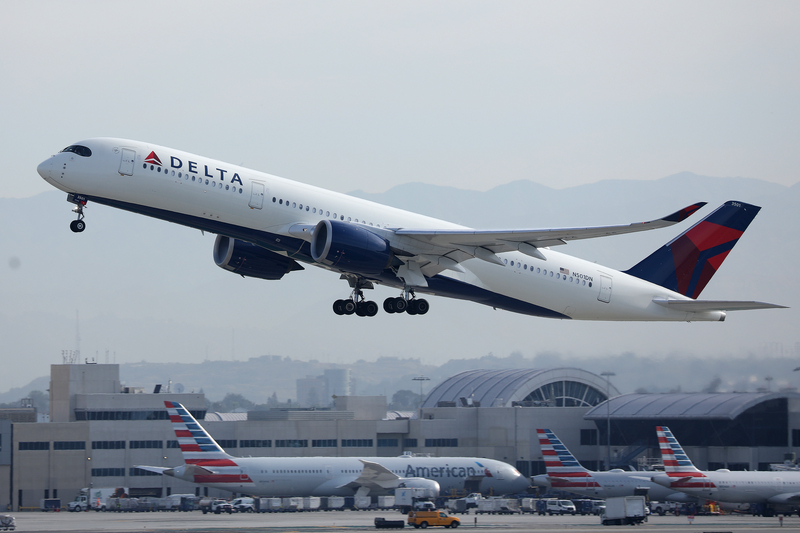
The Current A330-900neo Is Already a Strong Premium Aircraft
What makes the rumor especially interesting is how much it would change an aircraft that is already far from low-yield.
Delta’s current Airbus A330-900neo seats 281 passengers in four cabins: 29 Delta One suites, 28 Delta Premium Select seats, 56 Comfort+ seats, and 168 Main Cabin seats. That means 113 seats, or roughly 40% of the cabin, are already positioned in Delta’s higher-yield product stack.
That is not a low-premium layout by any standard. It is already a serious long-haul aircraft for premium traffic. But a shift to more than 50 Delta One seats and more than 60% premium seating overall would move the aircraft into a very different category.
At that point, the A330-900neo would stop being a relatively balanced long-haul workhorse and start looking more like a precision premium tool aimed at routes where margin matters more than maximum seat count.
This Would Be About More Than Seats
The significance of a premium-heavy A330-900neo would not only be the number of flatbeds.
It would also show how Delta is thinking about network design. A highly premium-configured aircraft is not meant for every market. It is meant for sectors where the airline believes premium demand is deep, durable, and worth building the aircraft around. That usually means a combination of strong corporate travel, premium leisure demand, alliance feed, and limited tolerance for overcapacity in the back of the aircraft.
London fits that profile better than almost anywhere. It is one of the few markets where Delta could plausibly justify turning an A330-900neo into a margin-maximizing transatlantic specialist rather than a general-purpose long-haul jet.
That is what makes this so interesting to airline professionals. If Delta really does take the A330-900neo this far, the aircraft will say as much about route strategy as it does about product design.
The Next Battle Is Not Just Premium Seating, but Premium Segmentation
There is another layer to all of this. Delta is not only adding premium seats. It is also preparing to sell them more aggressively through segmentation.
On the same call, management said Delta is on track to advance premium fare segmentation by the end of the year, with more details expected in the next couple of quarters. That matters because it suggests the airline wants to grow premium in two ways at once: first by physically increasing the number of premium seats on the aircraft, and then by creating more ways to price and package those seats.
That is exactly the direction the industry is heading. United has already moved to introduce Base, Standard, and Flexible fares in Polaris and Premium Plus. Delta clearly wants its own version of that playbook.
If a more premium-heavy A330-900neo does appear, it would therefore not be just a cabin story. It would be the hardware side of a broader commercial strategy built around yield management, upsell ladders, and more sophisticated premium merchandising.
Delta’s Wider Fleet Strategy Supports the Idea
None of this would feel credible if Delta were not already building its fleet around the same idea.
In January, the airline placed another widebody order with Airbus, adding 16 more A330-900s and 15 A350-900s. Delta explicitly said those aircraft would support international growth with more premium capacity while improving fuel efficiency and margins.
That is the bigger backdrop here. The rumored London A330-900neo would not be an isolated oddity. It would be a visible extension of the fleet strategy Delta has already announced publicly.
In other words, the rumor is unconfirmed. But the strategic logic behind it is already sitting in Delta’s own earnings commentary and aircraft orders.
Bottom Line
Delta has not officially announced a new ultra-premium Airbus A330-900neo layout, and it has not confirmed London Heathrow Airport (LHR) as the launch market. That point matters, and it should not be blurred.
What Delta has confirmed is almost as telling. Premium revenue is growing faster than the rest of the business. Transatlantic remains its most profitable international entity. New aircraft are arriving with a much larger premium share than the ones being retired. And premium segmentation is still moving forward.
That makes the reported London A330-900neo plan feel plausible even before it is official. If it happens, it would be one of the clearest signs yet that Delta no longer sees premium as an enhancement to long-haul flying. It sees premium as the central organizing principle of long-haul flying itself.
Keep reading FlyMag
Get the Daily Brief in the morning or the Route Watch weekly recap on Fridays. Or both.