Delta Air Lines’ newly confirmed Los Angeles–Newark service may be only the next step in a much broader transcontinental buildout from Los Angeles International Airport (LAX).
After confirming twice-daily nonstop flights between Los Angeles (LAX) and Newark Liberty International Airport (EWR) from April 12, 2027, Delta is now reportedly looking at additional nonstop routes from Los Angeles (LAX) to Philadelphia International Airport (PHL) and Washington Dulles International Airport (IAD). If those routes materialize, a launch around 2028 has been suggested by industry sources, though Delta has not officially announced either market.
That distinction matters. Los Angeles (LAX)–Philadelphia (PHL) and Los Angeles (LAX)–Washington Dulles (IAD) are not yet scheduled Delta routes. But the fact that both are being discussed tells us something important about Delta’s larger strategy: the airline wants Los Angeles (LAX) to function less like a collection of selective West Coast routes and more like a serious coast-to-coast corporate gateway.
Read our stories in your inbox
Two aviation newsletters. Zero fluff.
Delta’s Confirmed Newark Route Sets The Stage
Delta’s confirmed move is Los Angeles (LAX)–Newark (EWR), launching April 12, 2027 with two daily round trips.
That route alone is significant because Newark (EWR) is United Airlines territory. United dominates Newark as a hub, and Newark–Los Angeles is one of the most important premium transcontinental markets in the United network. Delta entering that route does not mean it will threaten United’s scale immediately, but it does give Delta a new New York-area option for Los Angeles-based customers who prefer Newark over New York JFK (JFK) or LaGuardia (LGA).
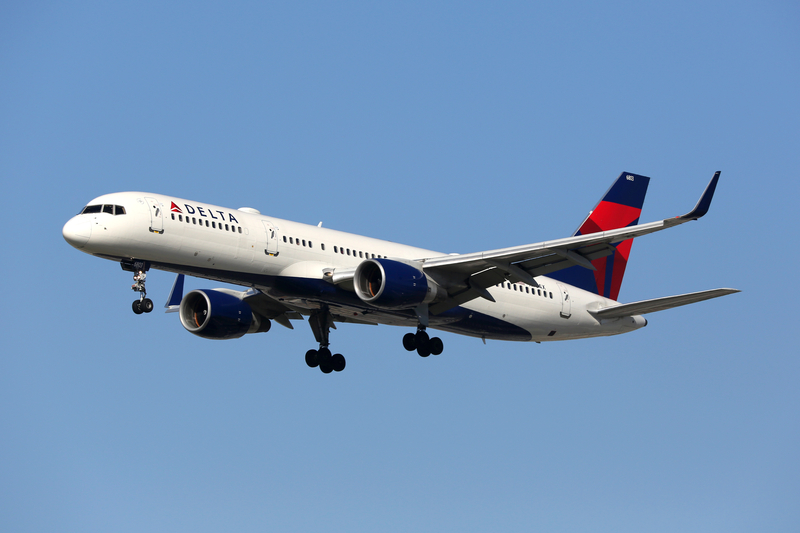
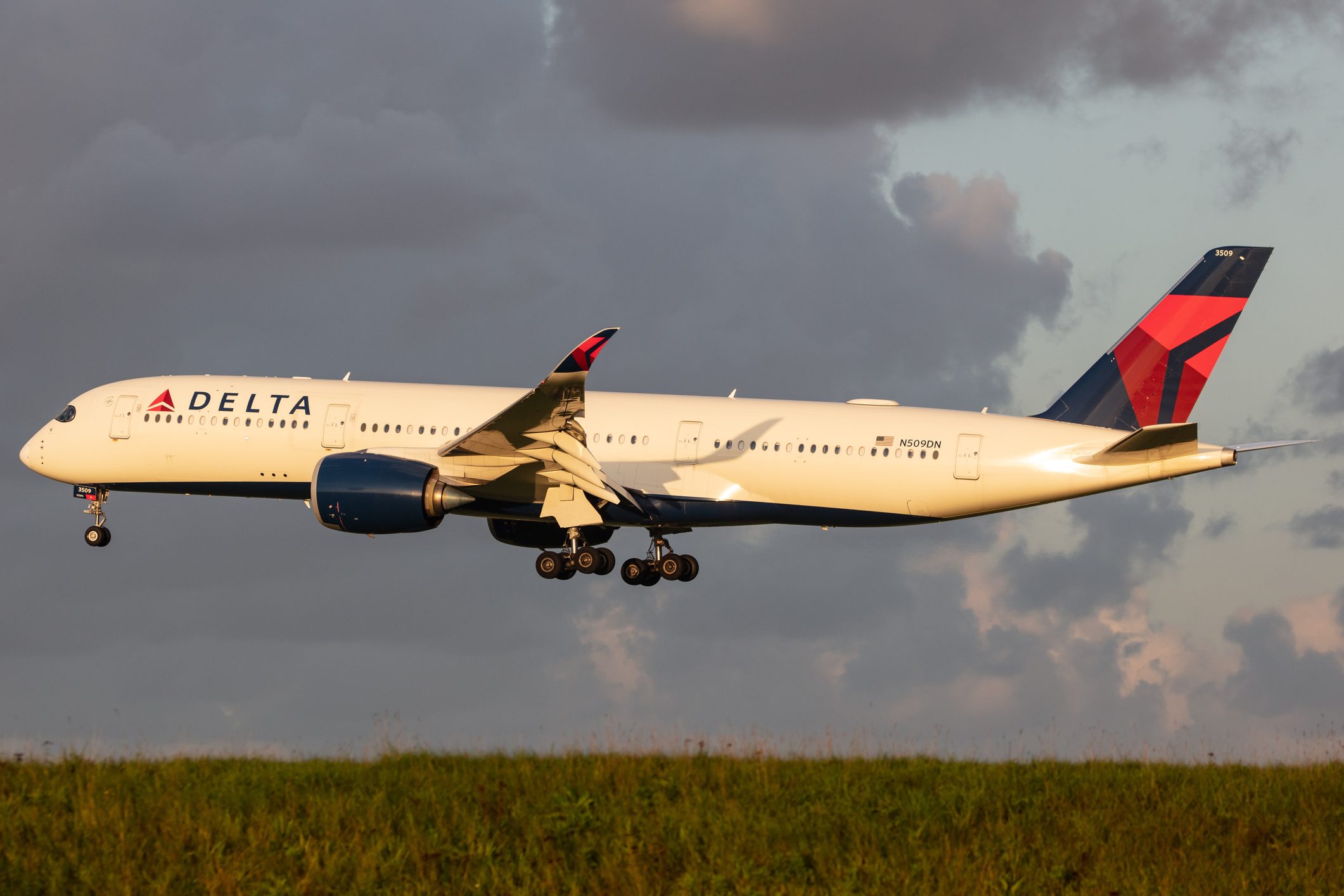
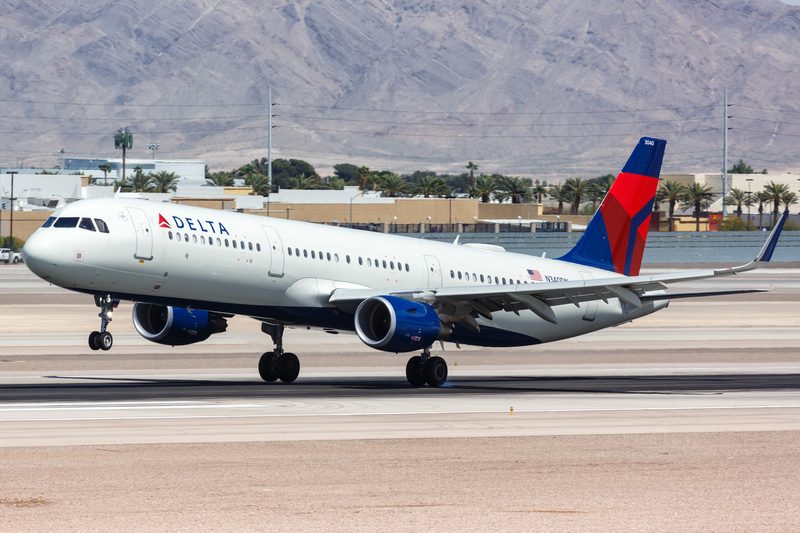
The route will be operated with Delta’s standard Airbus A321neo. That aircraft carries 194 passengers: 20 in Delta First, 60 in Delta Comfort+, and 114 in Main Cabin. It is not the special 44-seat First Class version, and it is not a lie-flat Delta One aircraft.
That is an important product point. On Newark (EWR)–Los Angeles (LAX), United can offer a true lie-flat premium product on many flights. Delta will initially compete with a strong domestic narrowbody product, but not a flat-bed seat. Its argument will be network relevance, LAX strength, SkyMiles loyalty, airport experience, and schedule choice rather than the best premium seat in the market.
Philadelphia And Dulles Would Fill Two Major Gaps
Los Angeles (LAX)–Philadelphia (PHL) and Los Angeles (LAX)–Washington Dulles (IAD) would make sense because they fill obvious holes in Delta’s LAX map.
Philadelphia (PHL) is a major American Airlines hub and one of the most important business and population centers in the Northeast. Washington Dulles (IAD) is a major United Airlines hub serving Northern Virginia, Washington, D.C., federal contractors, technology firms, international organizations, and long-haul connecting traffic.
From a corporate-sales perspective, both are attractive. A Los Angeles-based company with travelers going to New York, Chicago, Washington, Philadelphia, Boston, Seattle, San Francisco, Atlanta, and other major business markets wants nonstop coverage. If Delta wants to win more Southern California corporate contracts, it needs to be credible in the markets those customers actually use.
That is why the rumored routes are strategically logical even if they are not yet official. Delta does not need Philadelphia (PHL) or Dulles (IAD) to be massive connecting plays. It needs them to make the LAX network feel complete.
The Competitive Picture Would Be Difficult
If Delta launches Los Angeles (LAX)–Philadelphia (PHL), it would be challenging American Airlines at one of American’s most important hubs.
American already has a major presence at Philadelphia (PHL), with strong domestic feed and transatlantic relevance. A Delta LAX–PHL flight would likely be aimed at local Los Angeles–Philadelphia demand, corporate accounts, and Delta loyalists rather than large-scale connecting traffic over PHL. American would still have the local hub advantage.
Washington Dulles (IAD) would be a different fight, but equally difficult. United dominates Dulles and already has deep connectivity there. A Delta LAX–IAD route would compete against United’s frequency, corporate base, and Star Alliance network feed.
That is the theme across Delta’s possible LAX expansion. Newark (EWR), Philadelphia (PHL), and Washington Dulles (IAD) are not soft targets. They are competitor strongholds. But Delta may not need to win them outright. It only needs enough presence to give LAX-based customers a Delta option in markets where those customers now often have to choose a rival.
Why LAX Is Worth The Fight
Los Angeles (LAX) is one of the most valuable aviation markets in the United States because it is both a huge local market and a premium gateway.
Unlike Atlanta (ATL), Dallas/Fort Worth (DFW), Charlotte (CLT), or Denver (DEN), no single airline can truly dominate Los Angeles in a traditional fortress-hub sense. LAX is too competitive, too slot- and gate-constrained, and too important to too many airlines. Delta, United, American, Alaska, Southwest, JetBlue, international carriers, and low-cost operators all fight for different pieces of the market.
Delta’s strategy has been to become the most polished premium operator at LAX. The airline has invested heavily in the Delta Sky Way, Terminal 3, Delta One check-in, Delta Sky Club capacity, and the Delta One Lounge. It has also added or restored key routes, including Los Angeles (LAX)–Hong Kong (HKG), Los Angeles (LAX)–Chicago O’Hare (ORD), Los Angeles (LAX)–Melbourne (MEL), and Los Angeles (LAX)–Shanghai Pudong (PVG).
That broader investment matters because transcontinental routes are not judged only by the onboard seat. For premium passengers, the ground experience at LAX is part of the product. Delta’s dedicated premium check-in and lounge strategy gives the airline a strong starting point, especially for high-value travelers beginning their trip in Los Angeles.
The Airbus A321neo Is The Likely Workhorse
If Delta adds Los Angeles (LAX)–Philadelphia (PHL) or Los Angeles (LAX)–Washington Dulles (IAD), the Airbus A321neo would be the logical aircraft.
The A321neo has become one of Delta’s most important domestic narrowbody aircraft. The standard version seats 194 passengers and gives Delta a large Comfort+ cabin, 20 First Class seats, seatback entertainment, in-seat power, and efficient economics on longer domestic routes. Delta lists the standard A321neo with a range of 3,370 miles, enough for any of the likely LAX transcontinental missions.
Los Angeles (LAX)–Philadelphia (PHL) is roughly 2,400 miles. Los Angeles (LAX)–Washington Dulles (IAD) is roughly 2,300 miles. Both are well within A321neo range and sit directly in the aircraft’s sweet spot: long enough for fuel efficiency and premium seating to matter, but not so long that Delta needs a widebody.
The aircraft question becomes more interesting if Delta’s premium-heavy A321neo program matures by 2028. Delta has already introduced a temporary 164-seat A321neo configuration with 44 Delta First seats, 54 Delta Comfort+ seats, and 66 Main Cabin seats. That layout was created as an interim solution while the airline waits for flatbed suites originally intended for a future premium A321neo subfleet.
If the lie-flat version is ready by the time Philadelphia (PHL) or Dulles (IAD) launches, Delta could have a much stronger competitive product. If not, the airline would likely rely on the standard A321neo or the temporary 44-seat First Class configuration, depending on demand and aircraft availability.
The Lie-Flat Question Still Hangs Over Delta’s Transcon Plan
Delta’s biggest product question is whether its future premium A321neo will be ready in time to support these routes.
The airline originally planned a subfleet of Airbus A321neos with flatbed Delta One-style suites for premium transcontinental flying. Those aircraft were intended to help replace some of the role historically played by Boeing 757s on long domestic and thinner international routes. However, seat certification and supply-chain delays have pushed the program back, forcing Delta to use a temporary layout with a very large domestic First Class cabin.
That temporary aircraft is unusual. With 44 recliner-style First Class seats, it has more forward-cabin capacity than any standard Delta narrowbody. But it is still not a lie-flat product. For a daytime Los Angeles (LAX)–Philadelphia (PHL) flight, that may be acceptable. For a red-eye from Los Angeles (LAX) to Washington Dulles (IAD), premium passengers may expect more.
This is where United has an advantage on routes such as Newark (EWR)–Los Angeles (LAX). United’s premium transcontinental aircraft can offer flat-bed seating, and that matters on flights of five hours or more.
If Delta wants to challenge United at Dulles (IAD) or American at Philadelphia (PHL), aircraft economics may not be enough. The product has to match the customer base Delta is trying to win.
Why Philadelphia Makes Sense
Philadelphia (PHL) is a logical Delta target because it is a major Northeast business market that connects naturally with Southern California.
The Los Angeles–Philadelphia market includes entertainment, media, healthcare, pharmaceuticals, universities, finance, law, sports, tourism, and visiting-friends-and-relatives traffic. It is not as large or as premium-heavy as Los Angeles–New York, but it is important enough that a serious LAX carrier should want nonstop coverage.
For Delta, the challenge is American’s hub strength. American can support the market with local Philadelphia demand, connecting traffic over PHL, and corporate relationships in the region. Delta would likely rely more heavily on LAX-side strength, SkyMiles loyalty, corporate contracts, and travelers who prefer Delta’s West Coast experience.
A Delta LAX–PHL route would also have symbolic value. Philadelphia is not just another Northeast city; it is American’s primary Northeast hub. Entering that market would signal that Delta wants LAX to compete against the other major carriers’ strongholds, not just in unserved or lightly served leisure markets.
Why Dulles May Be Even More Strategic
Washington Dulles (IAD) could be even more strategically valuable.
The Washington region is a high-yield travel market, but Dulles specifically serves a different catchment from Washington Reagan National (DCA). DCA is closer to central Washington and is more convenient for many domestic travelers, but its perimeter and slot constraints limit what airlines can do. Dulles is the region’s long-haul international airport and United’s main Washington-area hub.
For Delta, Los Angeles (LAX)–Washington Dulles (IAD) would be about Northern Virginia as much as Washington, D.C. The market includes government contractors, defense firms, technology companies, cybersecurity businesses, data-center operators, international organizations, diplomatic travel, and affluent suburbs.
Those are the exact types of travelers Delta wants in Los Angeles. Many of them are premium customers. Many are frequent flyers. Many care about schedule, reliability, lounge access, and loyalty benefits.
But again, United would be difficult to displace. United’s Dulles hub gives it frequency, feed, loyalty, and international connectivity. Delta’s route would need to be carefully timed and product-appropriate to avoid becoming a token presence.
The Newark Route Shows Delta’s Strategy
Delta’s Los Angeles (LAX)–Newark (EWR) route helps explain how the airline may approach Philadelphia (PHL) and Dulles (IAD).
The Newark route is not large by United standards. Twice daily is meaningful, but it does not come close to United’s scale. Delta is not trying to out-hub United at Newark. It is trying to give Los Angeles-area customers a Delta nonstop to a key East Coast airport.
That same logic would apply to Philadelphia and Dulles. Delta would not need to match American at PHL or United at IAD. It would need enough schedule presence to be taken seriously by corporate accounts and frequent flyers.
In that sense, these routes are less about winning individual city pairs and more about making Delta’s LAX network stronger as a whole. Every added business market improves the value of the entire LAX proposition.
Timing Around 2028 Is Not Accidental
A potential 2028 launch window would be well timed.
Los Angeles will be at the center of global attention in 2028 because of the Summer Olympics. Airlines will be under pressure to strengthen LAX connectivity before that event, especially from major domestic and international business markets. Even beyond the Olympics, Delta’s LAX investments are clearly designed for a longer-term premium push.
By 2028, Delta may also have more clarity on its premium A321neo strategy. If flatbed suites are finally certified and installed, the airline could introduce a more competitive product on key transcontinental routes. If the original seat program remains delayed or is replaced, Delta may need to decide whether the 44-seat First Class layout is a bridge or a longer-term compromise.
That product decision could shape which markets come first, how often they operate, and whether Delta targets business-heavy red-eyes, daytime leisure/business mixes, or both.
A More Complete LAX Network Would Help Delta’s Sales Team
The practical value of LAX–PHL and LAX–IAD is sales leverage.
When Delta negotiates with corporate clients in Southern California, it can point to its strong LAX terminal, premium ground experience, international growth, and domestic network. But gaps matter. If a company’s travelers regularly need Philadelphia or Dulles, Delta’s sales pitch is weaker without nonstop service.
Adding those routes would allow Delta to present a more complete map. That does not guarantee corporate share, but it removes a major objection.
Corporate travel programs are rarely decided by one route. They are shaped by network coverage, schedule reliability, loyalty benefits, pricing, service recovery, lounges, premium cabins, and global partnerships. Delta has invested heavily in many of those pieces at LAX. The remaining challenge is route coverage.
Philadelphia and Dulles would help close that gap.
Bottom Line
Delta has not officially announced Los Angeles (LAX)–Philadelphia (PHL) or Los Angeles (LAX)–Washington Dulles (IAD), so both routes should be treated as unconfirmed targets rather than scheduled additions.
Still, the rumored markets make strategic sense. After adding Los Angeles (LAX)–Newark (EWR) from April 2027, Delta appears to be building toward a more complete coast-to-coast LAX network aimed at corporate and premium travelers.
Philadelphia (PHL) would put Delta into American Airlines’ Northeast hub market. Washington Dulles (IAD) would challenge United at one of its most important East Coast hubs. Neither route would be easy, and Delta would not match its rivals’ hub strength from day one.
The aircraft question will matter. The standard Airbus A321neo gives Delta efficient 194-seat transcontinental capacity, but the airline’s delayed lie-flat A321neo program remains the key product variable. If the premium A321neo is ready by 2028, Delta’s competitive position would be far stronger. If not, Delta may still add the routes, but it will be competing more on network, loyalty, ground experience, and LAX convenience than on the onboard premium seat.
Either way, the message is clear: Delta is not treating Los Angeles as a secondary West Coast station. It wants LAX to be a serious national gateway, and Philadelphia and Dulles may be the next pieces of that map.
Keep reading FlyMag
Get the Daily Brief in the morning or the Route Watch weekly recap on Fridays. Or both.