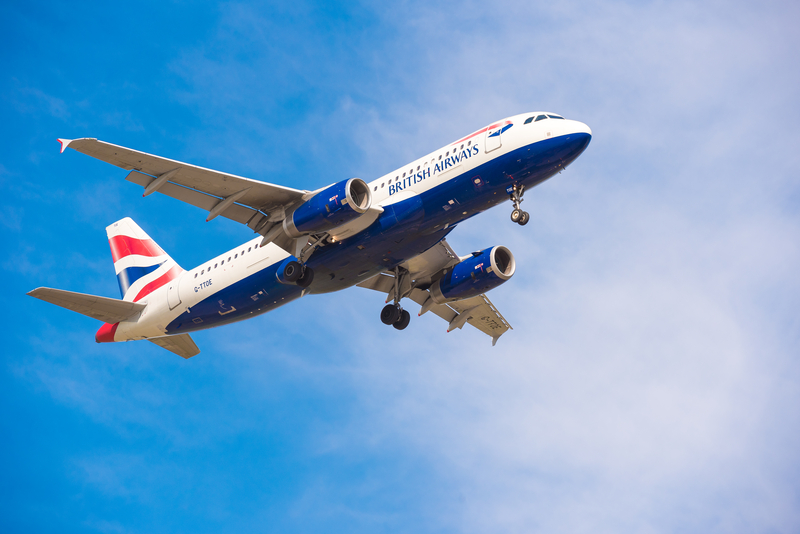
A British Airways Airbus A320 that could not clear London Gatwick Airport’s only available runway set off an extraordinary chain of events early Wednesday, forcing 14 arriving flights to divert and prompting 10 flight crews to declare fuel emergencies.
Nine of the emergency aircraft diverted to London Stansted Airport (STN) or London Luton Airport (LTN). A 10th, British Airways flight BA2591 from Verona Villafranca Airport (VRN), remained in the Gatwick area and landed at London Gatwick Airport (LGW) shortly after the runway reopened.
The disruption followed the arrival of British Airways flight BA2673 from Palma de Mallorca Airport (PMI). The Airbus A320 landed safely, but a problem with its nose-gear steering left the aircraft unable to taxi from Runway 08L/26R without assistance.
Read our stories in your inbox
Two aviation newsletters. Zero fluff.
The incident lasted less than an hour, yet it exposed the operational vulnerability created when an airport handling hundreds of movements each day is temporarily reduced to a single strip of pavement with no immediate alternative.
BA2673 Could Not Clear Gatwick’s Runway
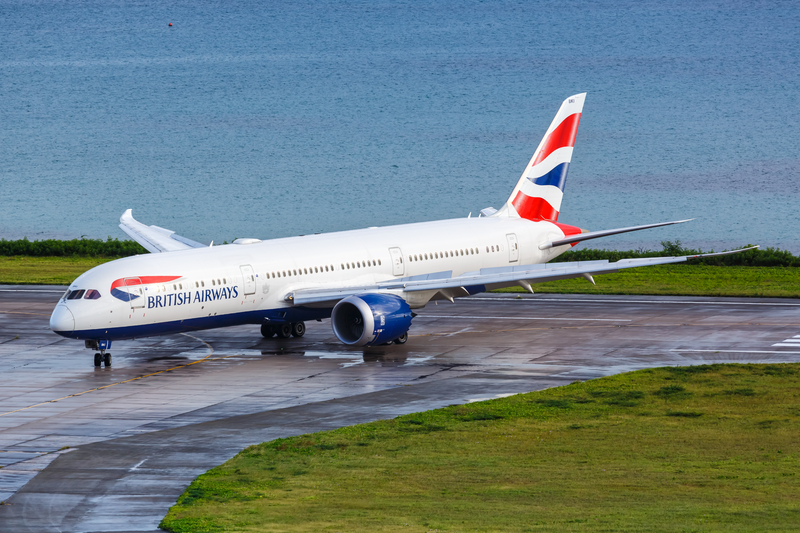
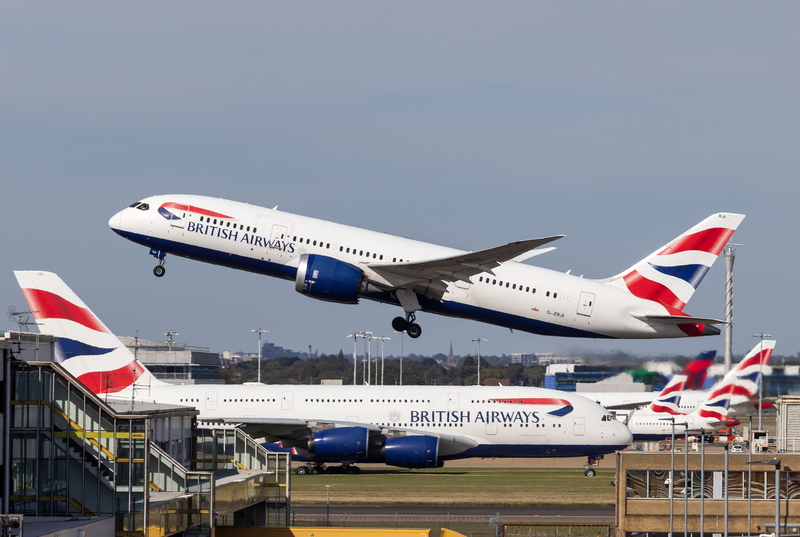
Flight BA2673 was operated by G-GATS, an Airbus A320-232 assigned to BA Euroflyer, British Airways’ Gatwick-based short-haul subsidiary. The aircraft carries manufacturer serial number 1672 and is part of the original A320ceo generation rather than the newer A320neo family. (British Airways)
The flight departed Palma de Mallorca Airport (PMI) at 11:00 p.m. local time and approached London Gatwick Airport (LGW) shortly before midnight on Tuesday, July 14.
While inbound, the pilots informed air traffic control that a technical problem had prevented them from operating the aircraft’s nose-gear steering. This was not a nose-gear collapse, nor is there evidence that the landing gear failed structurally. The issue meant the crew expected to stop on the runway and require a tug before the Airbus could be moved to the terminal.
Tracking data places the touchdown at 11:12 p.m. UTC, or 12:12 a.m. British Summer Time on Wednesday, July 15. Emergency vehicles met the aircraft as a precaution, and British Airways said the customers subsequently disembarked normally.
G-GATS remained on Runway 08L/26R for approximately 30 minutes. Because towing and runway inspections were required, London Gatwick Airport (LGW) could not immediately resume arrivals.
British Airways later removed the aircraft from its planned BA2654/BA2655 round trip between London Gatwick Airport (LGW) and Alicante-Elche Miguel Hernández Airport (ALC) that morning. Both sectors were canceled.
Gatwick’s Main Runway Was Already Closed
The timing of the technical problem made the disruption considerably worse.
London Gatwick Airport (LGW) has two paved runways:
- Main Runway 08R/26L
- Northern Runway 08L/26R
Despite appearances on an airport diagram, the two runways do not currently provide the same resilience as two independently operated runways at airports such as London Heathrow Airport (LHR), Amsterdam Airport Schiphol (AMS), or Paris-Charles de Gaulle Airport (CDG).
The northern runway is positioned too close to the main runway for both to be used together under Gatwick’s current configuration. Runway 08L/26R is normally used as a taxiway and becomes a standby runway when 08R/26L is closed for maintenance or an emergency.
On the night of the incident, Runway 08R/26L was closed as part of scheduled overnight work. That left Runway 08L/26R as Gatwick’s only usable landing and departure surface.
When BA2673 stopped on 08L, the airport effectively had no runway available. Arriving aircraft already descending toward London Gatwick Airport (LGW) were placed into holding patterns while controllers and airline operations centers assessed whether the British Airways A320 could be removed quickly.
Nine Diverting Flights Declared Fuel Emergencies
The runway closure was relatively brief, but it came during a tightly concentrated wave of late-night arrivals from southern Europe and North Africa.
These flights had already completed most of their journeys before reaching London. Several then spent additional time holding near London Gatwick Airport (LGW), consuming fuel that had been loaded for contingencies, holding, and diversion.
As the duration of the closure remained uncertain, nine crews declared fuel emergencies while diverting. Each aircraft selected the internationally recognized transponder code 7700, advising air traffic control that the flight required priority handling.
The nine emergency diversions were:
| Airline and Flight | Original Route | Aircraft | Diversion Airport |
|---|---|---|---|
| British Airways BA2607 | Bari Karol Wojtyła Airport (BRI)–London Gatwick Airport (LGW) | Airbus A321-200, G-EUXL | London Stansted Airport (STN) |
| British Airways BA2703 | Tenerife South Airport (TFS)–London Gatwick Airport (LGW) | Airbus A321-200, G-EUXF | London Stansted Airport (STN) |
| easyJet U28704 | Agadir Al Massira Airport (AGA)–London Gatwick Airport (LGW) | Airbus A321neo, G-ZXIE | London Luton Airport (LTN) |
| easyJet U28012 | Valencia Airport (VLC)–London Gatwick Airport (LGW) | Airbus A320, G-EJCF | London Luton Airport (LTN) |
| easyJet U28042 | Fuerteventura Airport (FUE)–London Gatwick Airport (LGW) | Airbus A321neo, G-UZMM | London Luton Airport (LTN) |
| easyJet U28186 | Athens International Airport (ATH)–London Gatwick Airport (LGW) | Airbus A319, G-EZFV | London Luton Airport (LTN) |
| easyJet U28330 | Rome Fiumicino Airport (FCO)–London Gatwick Airport (LGW) | Airbus A320, G-EJCD | London Stansted Airport (STN) |
| Jet2 LS3104 | Lanzarote Airport (ACE)–London Gatwick Airport (LGW) | Airbus A321neo, G-SUNL | London Stansted Airport (STN) |
| TUI Airways BY4249 | Rhodes International Airport (RHO)–London Gatwick Airport (LGW) | Boeing 737-800, G-TUKF | London Stansted Airport (STN) |
Tracking histories confirm that British Airways’ two Airbus A321s diverted to London Stansted Airport (STN). Both aircraft were later repositioned to London Gatwick Airport (LGW).
Four of the easyJet aircraft diverted to London Luton Airport (LTN), while the airline’s Airbus A320 arriving from Rome Fiumicino Airport (FCO) diverted to London Stansted Airport (STN). The affected easyJet fleet ranged from the 156-seat Airbus A319 to the larger A321neo, which easyJet generally operates with more than 230 seats.
Jet2’s Airbus A321neo from Lanzarote Airport (ACE) and TUI Airways’ Boeing 737-800 from Rhodes International Airport (RHO) also landed at London Stansted Airport (STN).
The emergency diversions therefore included five flights to London Stansted Airport (STN) and four to London Luton Airport (LTN). Five additional Gatwick-bound aircraft diverted without being included among the nine emergency diversions, bringing the total number of diversions to 14.
Other aircraft were sent to Birmingham Airport (BHX), Bristol Airport (BRS), and London Heathrow Airport (LHR).
A 10th Fuel Emergency Still Landed at Gatwick
The widespread reports of nine emergency aircraft describe the flights that diverted while squawking 7700. They do not represent the complete number of fuel emergencies during the disruption.
British Airways flight BA2591 from Verona Villafranca Airport (VRN) also declared a fuel emergency while waiting for London Gatwick Airport (LGW) to reopen.
Unlike the other nine aircraft, BA2591 did not divert. The flight, operated by Airbus A321-200 G-EUXC, landed on Runway 08L at approximately 1:08 a.m. local time, shortly after operations resumed.
Wizz Air flight W95736 was the first arrival after the runway reopened, touching down at approximately 1:02 a.m. local time. BA2591 followed several minutes later.
That brings the incident total to:
- 14 diverted flights
- Nine fuel emergencies involving aircraft that diverted
- One additional fuel emergency that landed at London Gatwick Airport (LGW)
- 10 fuel-emergency declarations overall
The distinction is important because the original headline figure of nine refers to the group of simultaneous 7700 squawks associated with diversions, not every fuel-related declaration made during the closure.
What a Fuel Emergency Actually Means
A fuel emergency does not necessarily mean an aircraft is moments away from exhausting its tanks.
Commercial flights depart with several categories of fuel. These normally include taxi fuel, trip fuel, contingency fuel, fuel to reach an alternate airport, final reserve fuel, and any discretionary fuel added by the captain or dispatcher.
Under European Union Aviation Safety Agency fuel rules, final reserve fuel for a turbine-powered airplane is generally calculated as enough fuel to fly for 30 minutes at holding speed at 1,500 feet above the airport in standard conditions.
Final reserve fuel is not intended to be routinely consumed. It is the protected quantity expected to remain when the aircraft lands.
There is also an important difference between minimum fuel and a fuel emergency.
A crew may advise air traffic control of “minimum fuel” after committing to a particular airport when any additional delay or change in clearance could cause the airplane to land with less than its planned final reserve. Minimum fuel is an advisory condition, not automatically an emergency declaration.
A formal fuel emergency is more serious. Under the applicable operating framework, the commander broadcasts “Mayday” with the fuel declaration when the calculated usable fuel upon landing at the nearest suitable airport will be below the planned final reserve.
Selecting transponder code 7700 makes the aircraft highly visible to controllers and gives it priority over normal traffic. The code itself indicates a general emergency; it does not identify the specific nature of the problem.
In the Gatwick event, the emergency declarations told controllers that the aircraft could not accept further holding or unpredictable delays. The crews needed direct routing and priority approaches to airports where safe landings could be completed.
The aircraft were not necessarily close to fuel starvation, but the declarations were not merely precautionary radio calls either. Once predicted landing fuel falls below the protected reserve threshold, the situation meets the formal criteria for an emergency.
Why Several Crews Reached the Same Decision
Nine near-simultaneous fuel emergencies may appear to suggest that the flights had departed without adequate reserves. The operational context provides a different explanation.
Many of the aircraft were scheduled to arrive within the same late-night bank. They encountered the same unexpected runway closure at approximately the same stage of their flights and had similar decisions to make:
- Continue holding for an uncertain period.
- Wait for confirmation that the disabled A320 had been removed.
- Preserve sufficient fuel to reach a viable alternate.
- Account for traffic congestion at the diversion airport.
- Declare an emergency when further delay threatened final reserve requirements.
Airline dispatchers plan alternates before departure, but the most suitable airport can change while a flight is airborne. Weather, runway availability, airport operating hours, ground handling, available parking stands, and the volume of other diversions all influence the final choice.
London Stansted Airport (STN) and London Luton Airport (LTN) became the principal alternates because both could accept narrowbody aircraft during the overnight period and were reasonably close to London Gatwick Airport (LGW).
Once multiple aircraft began diverting at the same time, however, those airports also had to sequence emergency arrivals, find parking positions, arrange ground crews, and coordinate potential return flights to Gatwick.
Heathrow Does Not Have an Absolute Night Curfew
One of the 14 aircraft was accepted at London Heathrow Airport (LHR) during the overnight period.
Some reports described that landing as an exception to Heathrow’s “strict night curfew.” Technically, London Heathrow Airport (LHR) does not have a complete legal ban on overnight flights.
The airport has extensive night-flight restrictions, including movement and noise quotas during the Night Quota Period between 11:30 p.m. and 6:00 a.m. Heathrow does not ordinarily schedule departures during much of the night, and scheduled arrivals are concentrated in the early morning.
Unscheduled movements may still be permitted because of disruption, technical problems, emergencies, or passenger hardship. Heathrow’s own reporting states that there is no formal ban on night flights, although the airport is limited to 5,800 takeoffs and landings annually during the Night Quota Period.
Accepting a Gatwick diversion was therefore unusual and operationally sensitive, but it did not require Heathrow to disregard an absolute curfew.
An easyJet Flight Encountered Problems After Diverting
Landing at an alternate airport did not immediately end the disruption for every passenger.
EasyJet flight U28330 from Rome Fiumicino Airport (FCO), operated by Airbus A320 G-EJCD, diverted to London Stansted Airport (STN). Once on the ground, the unscheduled arrival reportedly encountered a shortage of available handling personnel.
The aircraft could not immediately be refueled or prepared to continue to London Gatwick Airport (LGW). Passengers remained aboard for more than two hours before disembarking during the night.
EasyJet said the circumstances were outside its control and that passengers could arrange onward ground transportation, with reasonable costs eligible for reimbursement.
The experience illustrates a frequently overlooked part of diversion planning. An airport may be physically capable of accepting an Airbus A320, but that does not guarantee that gates, stairs, buses, baggage staff, security personnel, fuel trucks, or passenger transportation will be available with little warning in the middle of the night.
Several other diverted aircraft were able to refuel and operate short repositioning flights back to London Gatwick Airport (LGW) after the runway reopened.
Gatwick Reopened in About 45 Minutes
Runway 08L/26R reopened approximately 45 minutes after BA2673 touched down.
From an airport-recovery standpoint, that was a relatively quick response. The A320 had to be connected to towing equipment and removed without causing additional damage. Airport personnel then had to inspect the runway and confirm that it was safe before arrivals could resume.
Nevertheless, 45 minutes is a long time for aircraft already nearing the end of multi-hour flights.
Holding an Airbus A320-family aircraft at low altitude can consume fuel considerably faster than level cruise. Crews must also preserve enough fuel not only to reach the alternate but to fly an approach, account for possible congestion, and land with the required reserve.
The critical decision must be made before the airplane reaches a point at which diversion is no longer comfortably possible. Waiting until fuel is nearly exhausted would eliminate options and create a much more dangerous situation.
The diversions and emergency declarations therefore reflect conservative decision-making rather than evidence that the aircraft were negligently dispatched.
Gatwick’s Two Runways Cannot Yet Operate Together
London Gatwick Airport (LGW) is frequently described as the world’s busiest single-runway airport. It handles more than 263,000 annual aircraft movements while relying almost entirely on Runway 08R/26L for routine operations.
The airport’s layout creates an unusual distinction: Gatwick has two runways, but it functions operationally as a single-runway airport.
The northern strip, Runway 08L/26R, is normally used as a taxiway and standby runway. Its centerline is currently too close to the main runway for routine simultaneous operations.
Gatwick is pursuing a £2.2 billion Northern Runway Project that would move the centerline of 08L/26R approximately 12 meters, or 39 feet, farther north. The change, along with taxiway, terminal, and airfield improvements, would allow the northern runway to enter routine use and provide dual-runway capacity. (London Gatwick’s Northern Runway Project)
The British government granted development consent in September 2025, and the High Court upheld that decision on June 23, 2026.
The project will not provide an immediate solution to incidents such as the BA2673 blockage. Construction and commissioning will take several years, and Gatwick’s proposed operation will still differ from a fully independent parallel-runway system with unrestricted simultaneous arrivals and departures.
It should, however, create additional capacity and resilience by allowing the northern runway to handle routine departures instead of serving primarily as a taxiway and emergency substitute.
Bottom Line
A technical problem affecting nose-gear steering on one British Airways Airbus A320 was enough to temporarily suspend all runway operations at London Gatwick Airport (LGW).
The aircraft landed safely, and the runway reopened in less than an hour. Yet the timing of the event—during an overnight closure of Gatwick’s main runway—left arriving flights with no immediate place to land.
Fourteen aircraft diverted, nine declared fuel emergencies while heading to alternates, and British Airways flight BA2591 from Verona Villafranca Airport (VRN) became the 10th aircraft to declare before landing at Gatwick after the runway reopened.
The incident was not a case of 10 airplanes suddenly approaching fuel exhaustion. It was a concentrated operational event in which multiple crews reached their reserve thresholds at nearly the same time and correctly advised air traffic control that they could accept no further delay.
For London Gatwick Airport (LGW), the disruption demonstrated both the efficiency and vulnerability of its current runway arrangement. The airport can process an enormous volume of traffic through one primary runway, but when its standby runway is also blocked, even a routine towing event can produce emergency declarations, diversions across southern England, stranded passengers, and hours of downstream disruption.