A bomb threat at Nuuk Airport (GOH) forced a full evacuation of the terminal and triggered a major police response, in an incident that shows just how seriously aviation security is treated in Greenland’s rapidly growing capital gateway.
Authorities said the alert was received on Tuesday afternoon, prompting immediate emergency procedures at Nuuk Airport (GOH). Police cleared the terminal, secured the site, and began an investigation while passengers and airport staff were moved away from the affected area. A woman was later arrested in connection with the threat.
For aviation professionals, the key point is not simply that an arrest was made. It is that the response followed the same zero-tolerance logic seen at much larger international airports: treat the threat as real, isolate the facility, control the scene, and only restore operations once the airport is confirmed safe.
Read our stories in your inbox
Two aviation newsletters. Zero fluff.
Nuuk Airport Was Evacuated Immediately
Once the threat was reported, police moved quickly to evacuate Nuuk Airport (GOH) and lock down the area.
That is exactly how a bomb threat in an airport environment is supposed to be handled. Authorities do not wait to determine whether a threat is credible before acting. In aviation, the operational assumption has to be that any mention of an explosive device may represent a real danger until proven otherwise.

At a commercial airport, even one smaller than the major hubs of Europe or North America, the consequences of hesitation are too severe. That is why an immediate evacuation remains the standard response.
A Woman Was Arrested As Police Opened Their Investigation
Greenland Police confirmed that a suspect was taken into custody following the incident.
While officials have released only limited details, the arrest itself is significant because it shows the matter was treated not as a disturbance or misunderstanding, but as a serious airport-security event with potential criminal consequences. Authorities are also understood to be assessing whether formal detention or additional legal action is warranted.
That measured approach is typical in aviation-related security cases. Police must first establish exactly what was said, how the threat was communicated, whether there was any real device or wider plan, and what level of intent was involved before moving further.
No Dangerous Object Was Found
One of the most important operational details is that no dangerous object was ultimately found at Nuuk Airport (GOH).
That sharply changes the nature of the event. Once police determine there is no explosive device on site, the incident moves from a possible live bombing threat to a false-threat or hoax-threat case. But that does not make it minor.
A false bomb threat still carries major consequences in aviation. Terminal operations are interrupted, passengers are displaced, police and security resources are diverted, and confidence in the airport environment is temporarily shaken. In practical terms, even a hoax can create real disruption and cost.
That is why airports treat these incidents so seriously regardless of the outcome.
The Airport’s Reopening Was A Critical Step
After the site was searched and cleared, Nuuk Airport (GOH) was able to reopen.
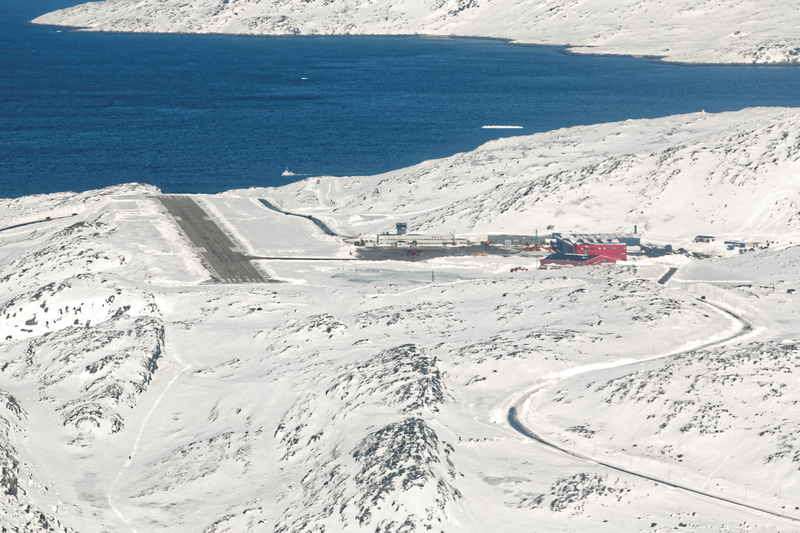
That matters because Nuuk is not just a local airfield. It is a strategically important airport for Greenland’s capital and an increasingly visible gateway for domestic and international traffic. Any extended closure would have had wider operational implications for passengers, connectivity, and confidence in the airport’s security handling.
The relatively swift reopening suggests that emergency procedures worked as intended. Authorities were able to isolate the threat, investigate it, confirm the absence of any dangerous device, and return the airport to operation without allowing the incident to spiral into a prolonged shutdown.
For airport operators, that is exactly the balance they aim for: maximum caution first, then a disciplined return to service.
Why Incidents Like This Matter Even More In Smaller Aviation Networks
In a large network with multiple nearby airports, disruption at one facility can sometimes be absorbed elsewhere. Greenland’s aviation system does not have that luxury to the same extent.
That is what makes an event at Nuuk Airport (GOH) especially important. Airports in Greenland are not just transport nodes. They are critical pieces of national infrastructure linking communities across vast distances and challenging terrain. When one of them is disrupted, the operational effects can be felt more sharply than passenger volume alone might suggest.
For that reason, airport security in Greenland cannot be treated as somehow secondary because the facilities are smaller. If anything, the opposite is true. A disruption at a key airport such as GOH can carry outsized operational consequences.
Bomb Threats In Airports Are Never Treated As “Just Talk”
Officials have stressed that even discussing explosives in an airport environment is treated as a serious offense.
That should not surprise anyone in aviation. Airports operate under strict security doctrine because the stakes are uniquely high. A comment that might be dismissed elsewhere cannot be treated casually in a terminal, at a check-in desk, or near an airside security zone.
This is one of the clearest examples of how aviation security differs from many other public environments. Intent is important legally, but operationally the threshold for action is low. The airport and police must react first and sort out motive later.
That is why even false threats can lead to arrest, fines, and longer-term legal consequences.
The Incident Also Highlights Nuuk’s Growing Importance
Nuuk Airport (GOH) is becoming more significant in Arctic and North Atlantic aviation, and that raises the importance of how incidents there are handled.
As the airport grows in strategic importance, every security event becomes a test not just of policing, but of airport readiness, procedural discipline, and public confidence. In that sense, the response to this bomb threat was about more than one suspect or one evacuation. It was also about demonstrating that Greenland’s aviation-security procedures function to the same standard expected anywhere else in the commercial aviation system.
That matters for passengers, airlines, and regulators alike.
Bottom Line
The evacuation at Nuuk Airport (GOH) after a bomb threat was a serious airport-security incident, even though no dangerous object was ultimately found. Police cleared the terminal, arrested a woman, investigated the threat, and reopened the airport once the site was confirmed safe.
The broader lesson is straightforward. In aviation, bomb threats are never treated lightly, and they should not be. Nuuk Airport’s response showed exactly why: act immediately, secure the airport, investigate thoroughly, and only resume operations once there is no doubt that the facility is safe.
Keep reading FlyMag
Get the Daily Brief in the morning or the Route Watch weekly recap on Fridays. Or both.