Asiana Airlines will leave Star Alliance on December 16, 2026, ending a 23-year membership that helped make Seoul one of the alliance’s most important Asian gateways.
The departure will take effect at 23:59 Korea Standard Time. It comes as Asiana moves toward full integration with Korean Air, a founding member of SkyTeam.
For travelers, this is more than an alliance logo change.
Read our stories in your inbox
Two aviation newsletters. Zero fluff.
It affects mileage earning, award redemptions, elite benefits, lounge access and future connectivity through Incheon International Airport (ICN).
It also marks the final stage of one of Asia’s most important airline consolidations.
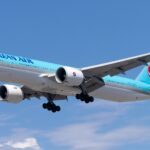
Asiana Leaves Star Alliance On December 16
Asiana will formally exit Star Alliance just before midnight on December 16, 2026.
The airline joined the alliance in 2003 and became a major Star Alliance presence in Northeast Asia. From Seoul Incheon (ICN), Asiana connected the alliance to cities across East Asia, Southeast Asia, Europe, Australia and North America.
Its departure follows Korean Air’s acquisition of Asiana.
Korean Air completed its purchase of a 63.88% stake in Asiana in December 2024. Since then, Asiana has continued operating as a subsidiary while the two airlines prepare for full integration.
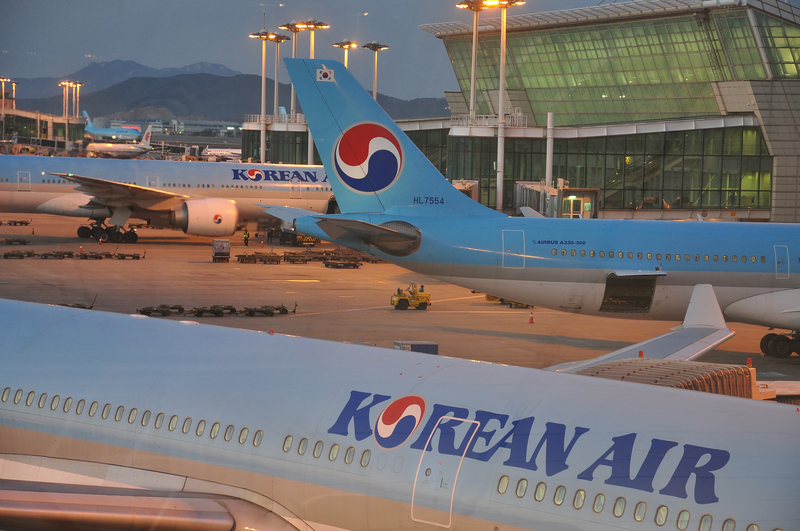
The next step is the end of Asiana’s Star Alliance participation.
That transition clears the way for Asiana’s operations to be absorbed into Korean Air’s SkyTeam-aligned network.
Key Dates For Frequent Flyers
The most important dates are now set.
Travelers enrolled in Star Alliance frequent flyer programs can continue to earn miles on Asiana-operated flights departing on or before October 15, 2026.
Award redemptions and Star Alliance upgrade awards on Asiana remain available for travel completed on or before December 16, 2026. These bookings are still subject to each frequent flyer program’s own rules, deadlines and award availability.
Star Alliance Gold and Silver benefits also continue on Asiana until December 16, 2026.
That includes priority services for eligible members. Star Alliance Gold members can also continue using eligible Star Alliance and Asiana lounges when traveling on qualifying itineraries until the exit date.
After that, Star Alliance members should not assume Asiana flights will earn miles, support redemptions or provide elite benefits through Star programs.
What This Means For United, Aeroplan And KrisFlyer Members
The change will be especially relevant for members of programs such as United MileagePlus, Air Canada Aeroplan, Singapore Airlines KrisFlyer and ANA Mileage Club.
Those programs have long allowed members to earn and redeem miles on Asiana.
Asiana was useful because it offered strong access between North America and Seoul, plus onward links across Asia. Award travelers also valued Asiana for premium-cabin availability, especially on long-haul routes.
That window is now closing.
Travelers with Star Alliance miles who want to fly Asiana should plan carefully. Booking rules will vary by program, and some programs may impose earlier cutoffs than Star Alliance’s final travel date.
The safest approach is to book early and complete travel before December 16.
Incheon Loses Its Home Star Alliance Carrier
Asiana’s departure will leave Star Alliance without a South Korean home carrier.
That is significant.
Incheon (ICN) has been one of Asia’s most important international transfer airports. Asiana gave Star Alliance a local carrier with domestic Korean presence, regional Asia coverage and long-haul links to Europe and North America.
Star Alliance says it will still have a strong presence in Seoul.
Fourteen member airlines will continue serving Incheon (ICN), including United Airlines, Air Canada, Air India, Lufthansa, Singapore Airlines, EVA Air, Turkish Airlines, Thai Airways, SWISS and others.
That keeps Star Alliance connected to Seoul.
However, there is a difference between serving ICN and having a local hub airline there. Once Asiana leaves, Star Alliance will rely on foreign member carriers rather than a Korean anchor.
A Major Win For Korean Air And SkyTeam
The shift strengthens Korean Air’s position.
Korean Air is already South Korea’s largest airline and one of SkyTeam’s most important Asian members. Once Asiana is fully integrated, Korean Air will control a much larger combined network from Seoul.
That will strengthen SkyTeam at Incheon (ICN).
It will also affect long-haul competition across the Pacific. Asiana currently flies to five U.S. cities: Los Angeles (LAX), New York JFK (JFK), San Francisco (SFO), Seattle (SEA) and Honolulu (HNL).
Those routes overlap with some of Korean Air’s own North America network.
As the integration progresses, Korean Air will have the ability to coordinate schedules, aircraft and capacity across the combined network. That could improve efficiency, but it may also reduce some duplicate flying over time.
The Aircraft Side Of The Integration
Asiana brings a meaningful widebody fleet into the Korean Air group.
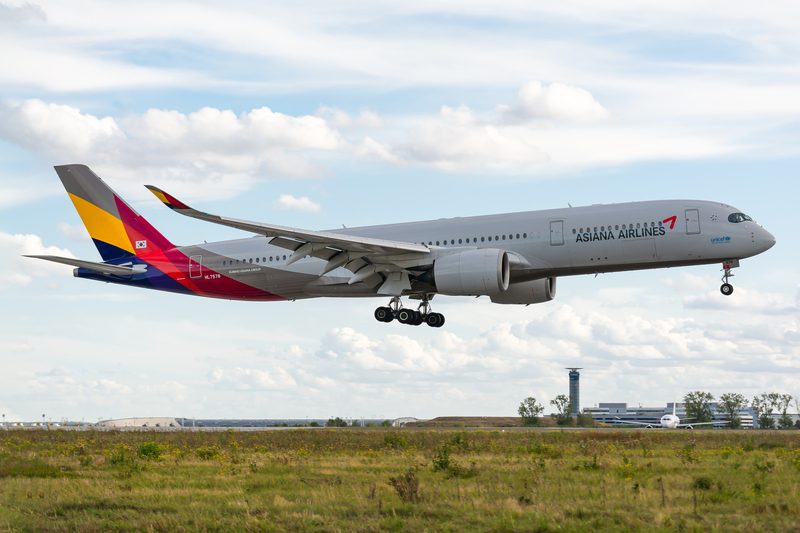
Its fleet includes the Airbus A350-900, Airbus A380-800, Boeing 777-200ER, Airbus A330-300 and Airbus A321-family aircraft.
The A350-900 is especially important.
Asiana lists 15 A350-900 aircraft in its fleet. The type is one of the airline’s most modern long-haul aircraft and is used across major international routes.
The A380 is more symbolic.
Asiana remains one of the few airlines still operating the Airbus A380. The aircraft has been visible on major long-haul markets, including North America. However, the future of those aircraft under the combined Korean Air structure will depend on fleet planning, maintenance costs and network needs.
Korean Air already has its own long-haul fleet, including Boeing 777s, Boeing 787s, Airbus A330s and Airbus A380s. Absorbing Asiana’s aircraft will be a major fleet-planning project.
Why Regulators Took Years To Approve The Deal
The Korean Air–Asiana merger was first announced in 2020.
It took years to complete because regulators in multiple jurisdictions raised competition concerns. Korean Air had to make concessions, including giving up some route rights and selling Asiana’s cargo business.
That explains why Asiana’s alliance exit is happening years after the takeover was first proposed.
Korean Air completed its acquisition in December 2024, but full operational integration was always expected to take longer.
Airline mergers are complicated under normal conditions. This one was especially complex because both carriers were large international airlines with overlapping routes, major cargo operations and important positions in South Korea’s aviation market.
Now the alliance transition is one of the final visible steps.
What Happens To Asiana Club?
Asiana Club members will need to watch future announcements closely.
The Star Alliance exit affects alliance earning, redemption and elite benefits. The broader loyalty transition will depend on how Asiana Club is integrated into Korean Air’s SKYPASS.
Korean Air has previously said it would submit plans for merging frequent flyer programs to Korean regulators.
For passengers, the practical advice is simple.
Do not assume current Asiana Club or Star Alliance benefits will continue unchanged after December 16, 2026.
Members with Asiana miles, Star Alliance redemption plans, or elite-status strategies tied to Asiana should review their options before the transition date.
This is especially important for travelers who use Asiana to qualify for Star Alliance Gold.
Star Alliance Still Has Seoul Coverage
Star Alliance is not leaving Seoul.
The alliance will still have major carriers serving Incheon (ICN). United connects Seoul with the United States. Air Canada links Korea with Canada. Lufthansa, SWISS and LOT connect Seoul with Europe. Singapore Airlines, Thai Airways, EVA Air and others provide strong Asian coverage.
That gives travelers options.
However, the alliance loses something important with Asiana’s departure: a Korean airline based at ICN.
That affects connectivity, local sales, domestic Korean feed and regional Asian scheduling.
For passengers, the impact will depend on where they are flying.
A United passenger traveling between Seoul and San Francisco may see little immediate change. A passenger connecting from a smaller Asian city through ICN on Asiana to a Star Alliance carrier will likely feel the change more.
North America Will Be Closely Watched
Asiana’s North America network will be one of the most important parts of the integration.
The airline’s U.S. routes connect Seoul (ICN) with Los Angeles, New York, San Francisco, Seattle and Honolulu. These are all high-value markets with strong business, leisure, diaspora and connecting demand.
Korean Air already has a strong U.S. presence.
That means the combined carrier will need to decide how to manage overlapping capacity. Some routes may keep strong frequency. Others could see aircraft changes, schedule adjustments or brand transitions.
For now, passengers should not assume immediate route cuts.
The alliance exit is a loyalty and partnership change. Operational route changes may come separately as Korean Air continues the integration.
That said, North America is too important to ignore.
It will be one of the clearest places to watch how the merged Korean Air reshapes its long-haul network.
A Big Change For Award Travelers
Award travelers may feel this change more than casual passengers.
Asiana has long been a useful Star Alliance redemption option. Its premium cabins, Seoul hub and North America routes made it popular with members using miles from United, Aeroplan, ANA and other Star programs.
Once Asiana leaves Star Alliance, those redemption paths disappear.
That does not mean the capacity disappears. It means access changes.
In the future, Asiana’s routes and aircraft will likely be folded into Korean Air and SkyTeam-related booking channels. That could eventually benefit Delta SkyMiles, Air France-KLM Flying Blue, Korean Air SKYPASS and other SkyTeam-linked travelers.
But the transition may not be seamless.
Award availability, mileage prices and partner access could all change.
The End Of A 23-Year Alliance Chapter
Asiana’s Star Alliance membership began in 2003.
At the time, Asiana helped Star Alliance deepen its reach in Northeast Asia. The airline gave the group a major Korean partner alongside carriers such as ANA, Singapore Airlines, Thai Airways and United.
For more than two decades, Asiana played that role.
Its aircraft carried Star Alliance passengers through Seoul. Its lounges supported alliance elites. Its long-haul routes gave Star members another way to cross the Pacific.
That chapter is now ending.
The departure is not the result of a failed alliance relationship. It is the result of consolidation. Once Asiana becomes part of Korean Air, it can no longer remain in a rival alliance.
Bottom Line
Asiana Airlines will leave Star Alliance on December 16, 2026 at 23:59 Korea Standard Time, ending 23 years as a member of the world’s largest airline alliance.
The move follows Korean Air’s acquisition of Asiana and prepares the way for full integration into a SkyTeam-aligned carrier.
For travelers, the deadlines matter. Star Alliance members can earn miles on Asiana-operated flights departing on or before October 15, 2026. Award tickets, upgrades and elite benefits can continue on eligible Asiana flights through December 16, subject to each program’s rules.
For Star Alliance, this means the loss of its South Korean home carrier. The alliance will still serve Incheon (ICN) through 14 member airlines, but it will no longer have Asiana as a local hub partner.
For Korean Air and SkyTeam, the change strengthens their position in Seoul.
This is more than an alliance shuffle. It is the end of Asiana as an independent global alliance player, and one of the final public steps in the creation of a much larger Korean Air.