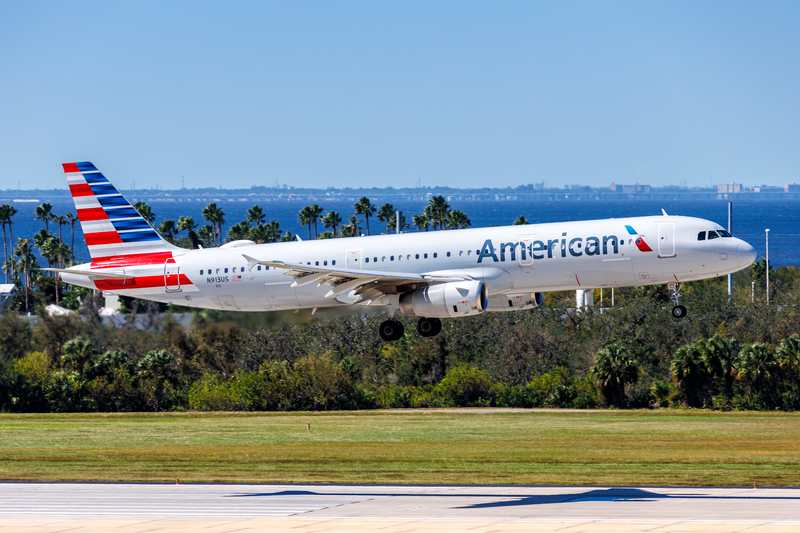
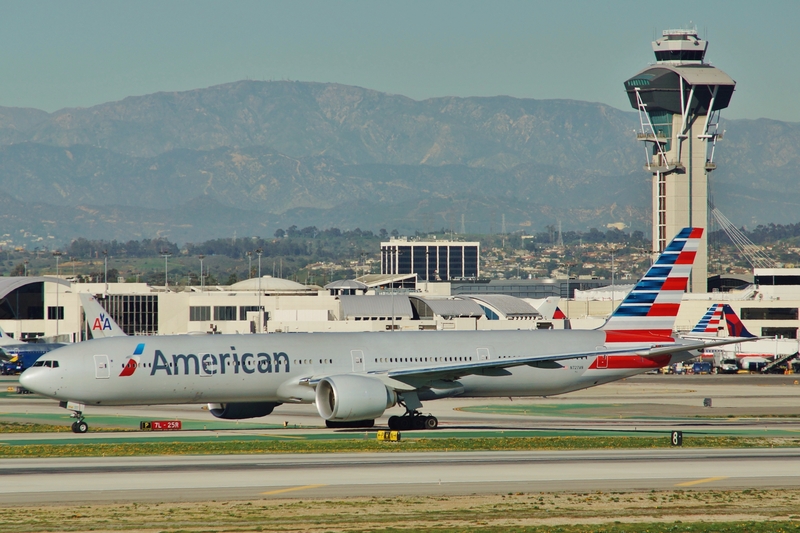
An American Airlines Airbus A321-200 had to return to Queen Beatrix International Airport (AUA) in Aruba on March 12 after the crew reported a hydraulic-related issue shortly after departure for Philadelphia International Airport (PHL). The aircraft remained airborne for more than two hours before landing safely back on Runway 11 at AUA, a timeline that may sound dramatic to casual readers but was operationally logical from the moment the crew decided not to continue north.

That is the real story here. This was not just an aircraft “circling Aruba.” It was a textbook example of how a relatively contained technical problem can become a longer airborne event when it occurs immediately after takeoff on a transborder sector with a full fuel load.
The Flight Did Exactly What Crews Are Trained To Do
American Airlines flight AA870 had only just left Aruba (AUA) for Philadelphia (PHL) when the crew decided the aircraft should not continue the mission. American has said the issue was hydraulic-related and has specifically pushed back on online claims that the aircraft suffered a tail strike.
Read our stories in your inbox
Two aviation newsletters. Zero fluff.
That distinction matters.
Hydraulic issues on modern Airbus narrowbodies are taken seriously because hydraulic power supports a range of high-value aircraft functions, including flight controls, landing gear actuation, braking, and other core systems. Modern aircraft are designed with redundancy, so a hydraulic issue does not automatically mean the aircraft is in immediate danger. But it does mean the crew has to evaluate whether continuing a multihour overwater and international flight makes sense. In this case, the answer was clearly no.
Returning to Aruba was the conservative and correct choice.
Why The Aircraft Stayed Airborne For So Long
The two-hour hold was not caused by indecision. It was caused by weight.
A flight departing Aruba (AUA) for Philadelphia (PHL) leaves with a meaningful fuel load. On an Airbus A321-200, that includes trip fuel, reserves, contingency fuel, and any additional discretionary fuel the crew may carry. Shortly after takeoff, most of that fuel is still onboard. That creates an immediate problem if the aircraft needs to land back at departure airport: it may be above maximum landing weight.
Unlike some larger long-haul aircraft, the A321 does not have a fuel-jettison system. So if it needs to get lighter, the only practical option is to stay airborne and burn fuel.
That is why AA870 remained at relatively low altitude, reportedly around 4,000 feet, in a holding pattern off Aruba over the Caribbean. The crew was not simply waiting. They were bringing the aircraft down to a safer landing weight while keeping the situation controlled.
Aruba Was The Right Place To Go Back To
Once the crew decided against continuing to Philadelphia (PHL), returning to Queen Beatrix International Airport (AUA) was the obvious move.
Aruba was close, known, and already prepared to support the aircraft. The airport could keep emergency services on standby, inspect the runway environment, and receive the aircraft without forcing the crew into a longer diversion decision with an active technical issue in play. That is especially important on an island departure, where the early post-takeoff phase gives crews fewer easy options than a mainland domestic sector might.
Reports from Aruba indicate inbound traffic was temporarily managed while the runway and surrounding area were checked, including inspections for possible foreign object debris. That also fits the pattern of a cautious and orderly response rather than a panic event.

The A321 Is A Workhorse, But It Is Still Bound By Physics
The aircraft involved, an American Airlines Airbus A321-200, is one of the carrier’s core narrowbody types and a major part of its Caribbean and East Coast operation. The A321 is well suited to sectors like AUA–PHL because it combines narrowbody economics with strong seat count and enough range for longer domestic and near-international missions.
But the same attributes that make it useful on routes like this also explain why a return can take time.
A transborder A321 leaving Aruba is not lightly fueled. Once it gets airborne, it is a fairly heavy airplane until it has either flown a significant part of the route or deliberately burned off enough fuel to reduce landing weight. So while the headline may suggest the aircraft “just circled,” the more precise description is that the crew was managing a standard but important performance constraint after an early technical event.
That is often how these situations look in real life: not dramatic aerobatics, not visible chaos, just a long and disciplined hold while the airplane becomes light enough to come back safely.
Why Hydraulic Issues Trigger Conservative Decision-Making
For a professional aviation audience, the hydraulic angle is the most important part of the story.
Airbus narrowbodies have multiple hydraulic systems precisely so that a single failure does not immediately compromise safe flight. But redundancy is not a license to keep going automatically. The key question is whether the aircraft still has enough system integrity, dispatch confidence, and operational margin to safely complete the flight all the way to destination.
On a route from Aruba (AUA) to Philadelphia (PHL), that would have meant pressing on for several more hours after a system alert, then landing at a much busier U.S. hub after an international segment. Returning early to AUA instead kept the problem contained geographically and operationally.
That kind of decision is less about alarm and more about margin. Airline crews are trained to protect it.
The Online Tail-Strike Chatter Missed The More Important Point
One of the more revealing aspects of the story is how quickly speculation focused on a possible tail strike. American has said that was not the issue and that the aircraft returned because of a hydraulic problem.
That matters not just factually, but analytically.
A tail strike and a hydraulic issue lead to very different maintenance paths and different operational interpretations. A tail strike raises immediate structural inspection concerns around the rear fuselage and pressure bulkhead area. A hydraulic problem can range from something relatively contained, like a leak or system fault, to something more consequential that requires deeper maintenance and troubleshooting. Conflating the two obscures the actual story.
And the actual story is already important enough: an A321 departing Aruba with a heavy fuel load, a crew that chose caution over continuation, and an aircraft that remained out of service afterward for inspection.
The Aircraft Staying In Aruba Says Plenty
The aircraft reportedly remained on the ground in Aruba after the incident rather than returning quickly to service. That is not proof of catastrophic damage, but it does suggest the issue required more than a quick reset and dispatch release.
At an outstation like Aruba (AUA), that also introduces a logistical layer. American Airlines has a meaningful Caribbean presence and regular service to Aruba from multiple hubs, so the airline is not unsupported there. But AUA is still not the same as troubleshooting the aircraft at a major maintenance base in Miami (MIA), Charlotte (CLT), or Dallas/Fort Worth (DFW). Parts, technical staff, inspection scope, and recovery planning all become part of the equation.
That is another reason these events are more complex than the public often assumes. The flight may land safely, but the operational disruption can continue for days.
Bottom Line
American Airlines flight AA870 from Aruba (AUA) to Philadelphia (PHL) returned safely to Queen Beatrix International Airport after a hydraulic-related issue shortly after takeoff, then spent more than two hours airborne burning fuel before landing.
The long hold was not unusual in context. It reflected the reality of a heavily fueled Airbus A321-200 that needed to get below maximum landing weight before coming back. Because the A321 cannot dump fuel, time in the air was the safest and most practical solution.
For aviation readers, that is the real takeaway. This was not a sensational mystery over Aruba. It was a disciplined handling of a narrowbody systems issue, with the crew choosing the safer short-field solution early, then managing aircraft weight and risk exactly the way they are trained to do.
Keep reading FlyMag
Get the Daily Brief in the morning or the Route Watch weekly recap on Fridays. Or both.