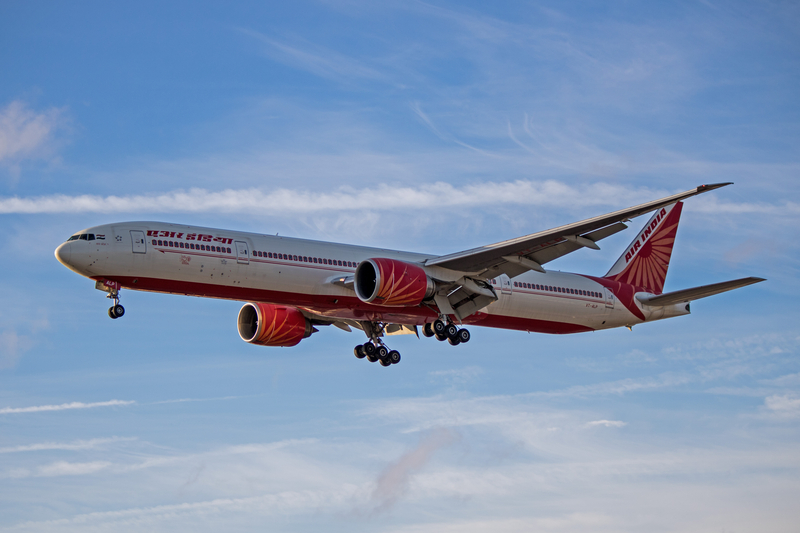
An Air India pilot has been denied entry into the United States after marijuana was allegedly found in his baggage on arrival at San Francisco International Airport (SFO), in a case that raises questions not only about compliance, but also about professional judgment.

The pilot was not operating the inbound flight. He was traveling as deadheading crew from Indira Gandhi International Airport (DEL) to SFO, reportedly positioning to operate a subsequent Air India service from San Francisco to Netaji Subhas Chandra Bose International Airport (CCU). Instead, U.S. authorities deemed him inadmissible and sent him back to India on the next available flight.
For airline professionals, the most striking part of the story is not simply the substance involved. It is that a line pilot, traveling internationally on official duty, allegedly arrived at a U.S. port of entry with marijuana in his luggage despite the legal, regulatory, and employment consequences being so obvious.
Read our stories in your inbox
Two aviation newsletters. Zero fluff.
The Pilot Was Positioning, Not Operating The Flight
According to Indian reporting, the Air India pilot was traveling from Delhi Airport (DEL) to San Francisco International Airport (SFO) as staff on duty rather than as operating crew. In other words, this was a deadhead movement intended to position him for later flight duty, reportedly on Air India’s SFO-CCU service.
That distinction matters operationally. He was not at the controls of the aircraft arriving in California, and there is no indication that this was an inflight impairment issue. But that does not make the matter minor. Deadheading crew are still traveling on company business, still subject to company standards, and still representing the airline at an international border inspection point.

In practical terms, this was a compliance failure before it ever became an aviation story.
Why This Became A U.S. Border Issue Even In California
At first glance, some readers may see an obvious contradiction. California permits recreational marijuana under state law, and San Francisco International Airport (SFO) is located in a state where local possession rules are far more permissive than in many other parts of the world.
But that is not the law that governs admission into the United States.
At the border, U.S. Customs and Border Protection applies federal law, not California state law. Federal authorities have long stated that marijuana remains prohibited under U.S. federal law, and that arriving at a U.S. port of entry with it can lead to denied admission, seizure, fines, or other enforcement consequences. That means a traveler can be legal under state law once inside California, yet still be denied entry by federal border authorities for carrying marijuana into the country.
For an international airline pilot, that legal distinction should be basic professional knowledge.
Why This Is Especially Serious For A Pilot
This case carries additional weight because it involves a flight crew member.
Pilots operate under far stricter drug rules than the average traveler, and for good reason. In the United States, the FAA has made clear that marijuana is incompatible with pilot certification standards and that the knowing transportation of marijuana on aircraft is prohibited under federal law. FAA guidance also states that a verified positive marijuana test can make a pilot unqualified to hold an FAA medical certificate.
Qatar Airways Trims San Francisco Flights for Summer 2026 as the DOH–SFO Market Cools
Even setting aside any U.S. certificate implications, airline pilots worldwide operate in a tightly controlled environment of medical fitness, random testing, regulatory oversight, and employer discipline. Whether a pilot personally agrees with the policy is irrelevant. The rule set is clear, and careers can be damaged very quickly when controlled substances enter the picture.
That is why this incident reads less like an ambiguous policy misunderstanding and more like a sharp lapse in judgment.
The Operational Context Makes The Story More Notable
The pilot was reportedly due to operate a later flight from San Francisco International Airport (SFO) to Kolkata Airport (CCU), a route that had recently required crew repositioning because of service disruption. That adds another layer to the event.
When an airline repositions pilots to restore or operate long-haul flying, it is doing so because crew availability is operationally important. A long-haul aircraft rotation, particularly one involving U.S. operations, is built on tight planning around legal rest, crew duty windows, immigration compliance, and aircraft utilization. If a repositioning pilot is denied entry at the border, the impact can ripple beyond the individual and into the wider operation.
For Air India, this was not just an embarrassing crew issue. It had direct implications for flight planning and staffing integrity on an intercontinental service.
Air India’s Response Leaves Little Room For Ambiguity
Air India has publicly confirmed that one of its crew members traveling from Delhi Airport (DEL) to San Francisco International Airport (SFO) on April 14 was found inadmissible under local law and sent back to India. The airline also said it maintains zero tolerance for violations of law and would take strict disciplinary action in line with company policy.
That is exactly the sort of response one would expect from a major international carrier.
Airlines have little flexibility in a case like this. Once a crewmember becomes the subject of a cross-border drug-related admissibility issue, the company has to prioritize regulatory credibility, operational integrity, and its standing with authorities. A softer response would be hard to defend, especially when the crew member involved is not cabin staff or ground staff, but a pilot.
The Big Question Is Whether This Was Intentional Or Negligent
The oddest aspect of the case is not the rule itself. It is the logic behind the alleged possession.
If the marijuana was knowingly packed, the decision is difficult to understand. A pilot traveling on duty to the United States should know that federal border controls apply and that a controlled substance in checked or carry-on baggage can trigger immediate consequences. It would represent unusually poor judgment for any traveler, and even more so for a commercial pilot.
If, on the other hand, the substance was in the bag unintentionally, that still opens an uncomfortable question about personal responsibility. Airline pilots are trained and expected to operate with procedural discipline. Their luggage, documents, duty items, and controlled access obligations are part of that professional standard. “I didn’t realize it was there” is not a persuasive explanation in a security-sensitive profession.
Either way, this is not a good look.
This Is Also A Reminder About Deadheading Crew Exposure
There is a tendency outside the industry to assume that crew are only under scrutiny when they are actively flying. That is not how international operations work.
Deadheading crew remain subject to immigration checks, customs enforcement, security protocols, and company standards. In many respects, deadhead travel is operationally sensitive because the airline is relying on that individual to arrive lawfully, on time, and fit for duty. Any disruption during that positioning process can create immediate knock-on effects for the scheduled operation.
For pilots, especially those moving between major international gateways such as Delhi Airport (DEL), San Francisco International Airport (SFO), and Kolkata Airport (CCU), deadheading is not off-duty leisure travel with a company ticket. It is part of the operation.
That is why mistakes made during positioning can carry consequences far beyond the airport inspection hall.
Bottom Line
An Air India pilot traveling from Delhi Airport (DEL) to San Francisco International Airport (SFO) as deadheading crew was denied entry into the United States after marijuana was allegedly found in his luggage, and he was deported back to India rather than continuing to operate a later flight from SFO to Kolkata Airport (CCU).
The legal irony is obvious: marijuana may be legal under California state law, but U.S. border authorities enforce federal law, and pilots are subject to even stricter standards than ordinary travelers. For aviation professionals, though, the larger takeaway is simpler. This was not just a customs problem. It was a major lapse in judgment by someone in a safety-critical profession, and the consequences were entirely predictable.
Keep reading FlyMag
Get the Daily Brief in the morning or the Route Watch weekly recap on Fridays. Or both.