Air Astana’s incoming Boeing 787-9 fleet is supposed to open a new chapter for the Kazakh flag carrier. Instead, before the first aircraft has even entered service, the airline is already confronting the biggest limit on what those jets can do: geopolitics.

On paper, the Boeing 787-9 is exactly the aircraft Air Astana needs to launch nonstop service from Kazakhstan to the United States. It has the range, the efficiency, and the cabin product to make a long, thin intercontinental route commercially plausible. But in practice, the most efficient routings from Kazakhstan to North America depend heavily on Russian airspace. And that remains the core obstacle.
For aviation readers, that is what makes this story interesting. The aircraft is ready for long-haul growth. The airspace still is not.
Read our stories in your inbox
Two aviation newsletters. Zero fluff.
The Boeing 787-9 Is Supposed To Transform Air Astana’s Long-Haul Fleet
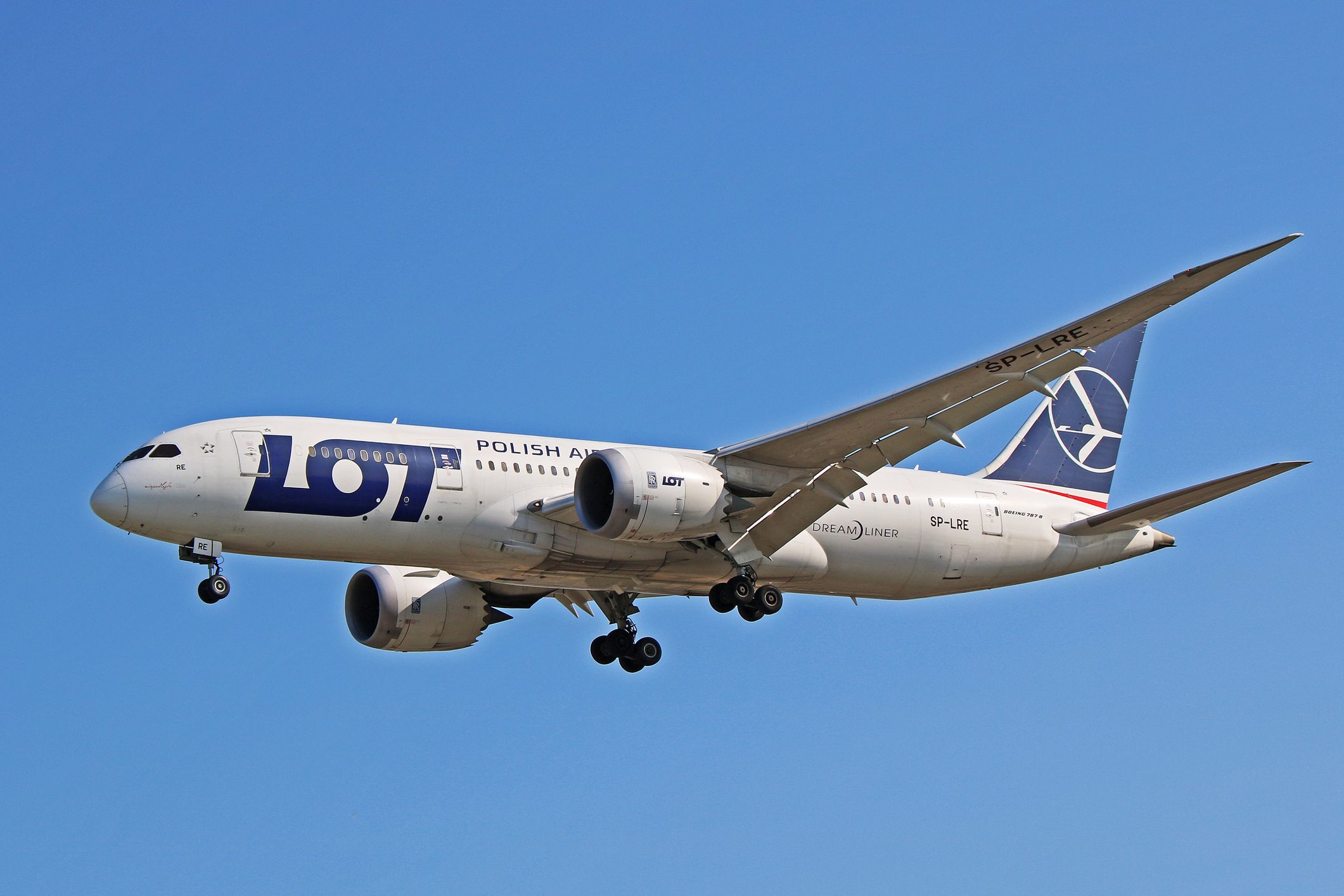
Air Astana has committed to a major Dreamliner expansion, with up to 15 Boeing 787-9s in the program. The structure of the order is important: five firm aircraft, five options, and five purchase rights. The airline also expects to add three leased 787-9s, which means its eventual Dreamliner fleet could rise to 18 aircraft.
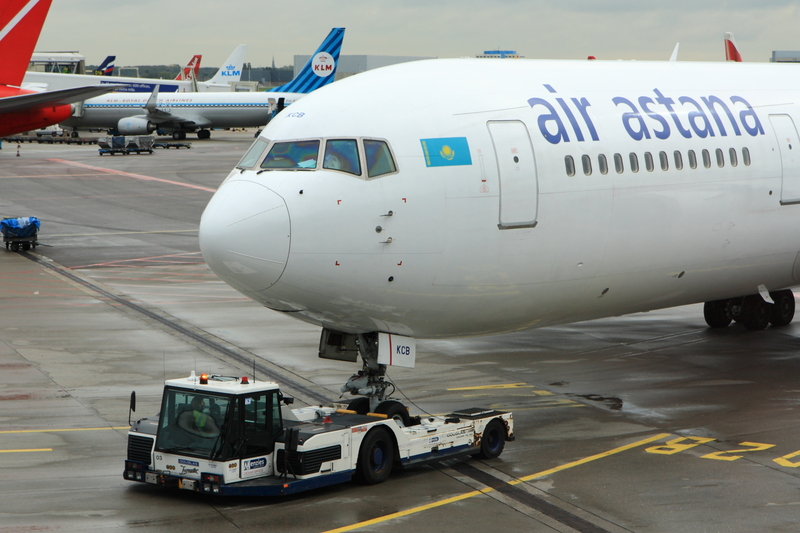
That is a substantial leap for a carrier whose current widebody footprint remains relatively modest. At present, Air Astana’s long-haul backbone is still built around three Boeing 767-300ERs, aircraft that continue to serve routes from Almaty International Airport (ALA) to markets such as Dubai International Airport (DXB), Velana International Airport (MLE) in Malé, Phuket International Airport (HKT), and Seoul Incheon International Airport (ICN).
The 787-9 changes the scale of what becomes possible.
The First Aircraft Arrives This Year
The timing matters as much as the order itself.
Air Astana says the first Boeing 787-9 is due in September 2026, with a second aircraft expected before the end of the year. That means the carrier’s long-haul planning is no longer theoretical. It is entering the stage where training, route planning, maintenance preparation, and commercial deployment all become live issues.
And like many airlines taking delivery of a new widebody type, Air Astana does not plan to throw the aircraft immediately onto its longest sectors.

The Airline Will Start With Shorter Flights First
Air Astana management has said the early 787 flying will focus on shorter sectors while pilots and cabin crews build experience on the type.
That is normal. Airlines often begin new widebody programs with regional or medium-haul sectors before handing the aircraft over to the most demanding long-haul missions. It lets crews become comfortable with the aircraft in a lower-risk operational environment and gives the airline time to embed the new fleet into the system properly.
For Air Astana, that means the 787’s first months will likely be about familiarization and controlled rollout rather than immediate U.S. expansion.
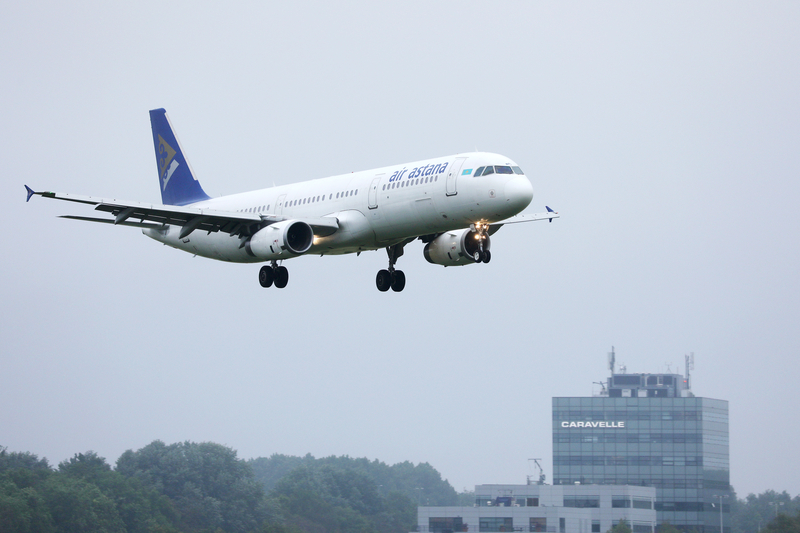
The U.S. Is An Obvious Target — But The Route Structure Is The Problem
The United States has long been one of the most intriguing potential additions to Air Astana’s future network.
A nonstop route from Almaty (ALA) or potentially Astana Nursultan Nazarbayev International Airport (NQZ) to North America would fit the 787-9’s capabilities well in aircraft terms. The Dreamliner was built for exactly these kinds of markets: long-range, moderate-density city pairs where a larger widebody would be too much airplane and an older aircraft would be too expensive to run.
But this is where the geography becomes political.
Russian Airspace Is Still The Critical Obstacle
The problem is not that Air Astana lacks the aircraft to fly to the United States. It is that the most practical routings require Russian airspace, and Air Astana cannot currently use that airspace in the way it would need to for a commercially viable nonstop U.S. operation.
That makes a huge difference.
Avoiding Russian airspace on Central Asia–North America services can add enough distance and complexity to make a route less efficient, less competitive, and in some cases much harder to justify economically. The 787-9 is a capable aircraft, but range is not the only issue. Crew time, fuel burn, payload, and scheduling viability all matter.
So the obstacle is not merely technical. It is structural.
This Is A Sanctions Story, But Also An Airspace Story
It is important to frame the issue carefully.
This is not about sanctions directly prohibiting Air Astana from owning Boeing 787s or operating U.S. routes. The real hurdle is that the geopolitical environment around Russia has changed the airspace equation. Russian airspace has become inaccessible or impractical in the way Air Astana would ideally need for direct U.S. flying, and that undermines the route economics.
For an airline based in Kazakhstan, that is a serious limitation. Geography is usually one of its greatest advantages. In this case, politics has turned geography into a constraint.
Air Astana’s U.S. Ambitions Are Delayed, Not Dead
The key takeaway is that the U.S. remains a target, but not an immediate one.
Air Astana has not abandoned the idea. Instead, it is effectively saying that a direct U.S. launch has to wait until the routing environment becomes workable. That is a much narrower and more practical position than saying the market is not attractive or the aircraft is not suitable.
The demand logic can still make sense. The airspace logic currently does not.
The 787s Still Have Plenty To Do Without America
That said, the inability to launch U.S. routes immediately does not make the Dreamliner order any less important.
The Boeing 787-9 will still allow Air Astana to expand across Europe, Asia, and other long-haul markets that do not depend on Russian overflight in the same way. It will also give the airline a much stronger onboard product and a more competitive position against regional and global rivals.
In other words, the aircraft can still transform the network even if the most politically sensitive route family remains blocked.
The Cabin Upgrade Matters Too
Air Astana’s management has also been clear that the new 787 product will be a major step up from the existing Boeing 767 experience.
That matters because long-haul fleet renewal is not only about range and cost. It is also about how competitive the cabin feels. On routes where airlines are trying to attract premium travelers, business traffic, and higher-yield leisure passengers, product matters. The Dreamliner gives Air Astana a stronger platform in that regard than the older 767 fleet it relies on today.
So even if the U.S. must wait, the customer-facing value of the 787 fleet starts much sooner.
Bottom Line
Air Astana’s Boeing 787-9s are exactly the aircraft the airline would want for a future nonstop push to the United States. But the key route ingredient is still missing: access to the most efficient airspace.
The first 787 arrives in September 2026, and the fleet will still transform Air Astana’s long-haul operation across Europe and Asia. But as things stand, the most direct U.S. operation remains blocked less by airplane capability than by geopolitics. For now, the Dreamliner can open many doors — just not the American one Air Astana would most like to use next.
Keep reading FlyMag
Get the Daily Brief in the morning or the Route Watch weekly recap on Fridays. Or both.