Shenzhen Airlines to Convert Seven A320neos to 174-Seat All-Economy Layout
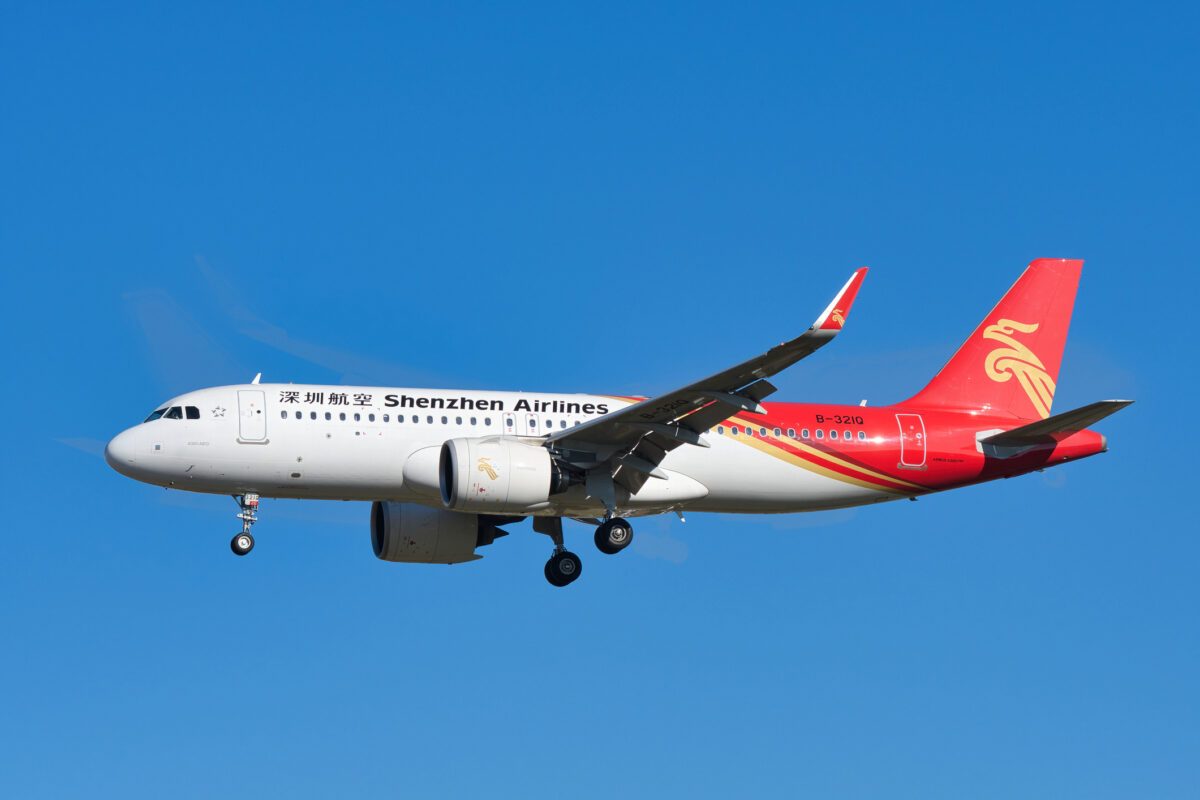
Shenzhen Airlines is preparing to increase capacity on seven Airbus A320neo aircraft by removing their existing premium cabins and converting them to a 174-seat all-economy configuration.

The plan was disclosed through a procurement notice issued by the airline’s maintenance engineering department on August 5, 2026. Importantly, the final capacity is not expected to approach the A320neo’s 194-seat certified maximum, as some reports have suggested.
The actual Shenzhen Airlines procurement notice specifies that seven A320neo aircraft will be converted from a 152-seat, three-cabin configuration to a 174-seat all-economy layout.
Read our stories in your inbox
Two aviation newsletters. Zero fluff.
That adds 22 seats to each aircraft, increasing available capacity by approximately 14.5% without adding another airplane or another flight.
Seven A320neos Will Lose Their Three-Cabin Layout
Shenzhen Airlines currently uses a relatively spacious configuration on many of its Airbus A320 aircraft.
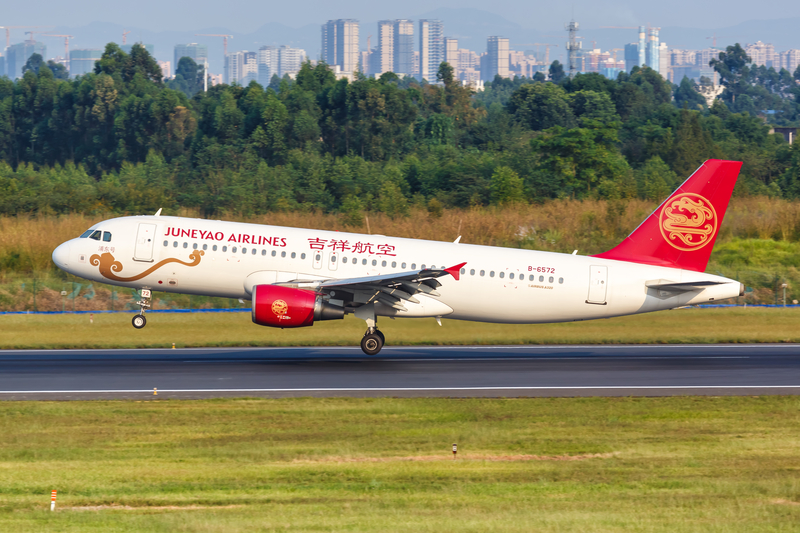
The airline’s published A320 cabin specifications show 152 seats divided between:
- Eight Business Class seats
- 18 Comfort Economy seats
- 126 Economy seats
Business Class is listed with 56 inches of pitch, Comfort Economy with 34 inches and standard Economy with 29.5 inches.
Under the new configuration, all 174 seats will be Economy.
That means the retrofit is more significant than simply squeezing another 22 seats into the back of the aircraft. Shenzhen Airlines is eliminating 26 Business and Comfort Economy seats and replacing that space with additional standard Economy capacity.
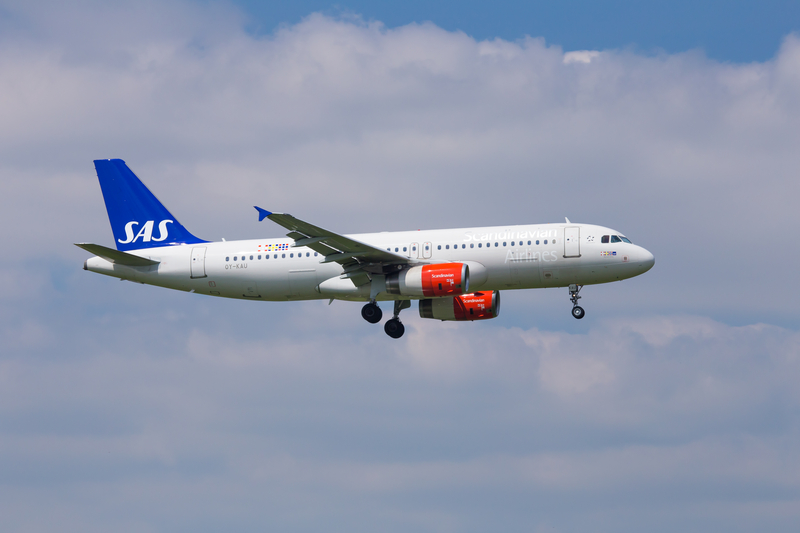
The number of Economy seats effectively rises from 126 to 174, an increase of 48, while the disappearance of the two premium sections produces a net aircraft capacity increase of 22 seats.
Shenzhen Airlines has not yet published the new seat pitch, seat model, row count, galley configuration or lavatory arrangement. It would therefore be premature to say exactly how much personal space Economy passengers will lose.
What is confirmed is that travelers aboard the seven modified aircraft will no longer have access to the current Business Class or Comfort Economy sections.
174 Seats Is Well Below the A320neo Maximum
The Airbus A320neo is certified to accommodate substantially more passengers than Shenzhen Airlines plans to install.
According to Airbus’ official A320 Family specifications, the A320neo typically carries between 150 and 180 passengers and has a maximum certified capacity of 194.
Shenzhen’s 174-seat layout will therefore remain 20 seats below the absolute maximum.
That distinction matters because a 194-seat A320neo would require an exceptionally dense cabin optimized almost entirely around maximizing passenger count. A 174-seat configuration gives Shenzhen Airlines considerably more flexibility in seat pitch, galley placement and onboard service.
The A320neo also has a published maximum range of approximately 3,400 nautical miles and a maximum takeoff weight of 79 metric tons. It uses newer-generation CFM International LEAP-1A or Pratt & Whitney PW1100G engines and is designed to reduce fuel consumption compared with the previous-generation A320ceo.
For Shenzhen Airlines, however, the most important number in this retrofit is not range. It is seats per departure.
Each Converted Aircraft Gains 14.5% More Capacity
Moving from 152 to 174 seats increases the available passenger capacity of each aircraft by approximately 14.5%.
If all seven converted A320neos were departing at roughly the same time, Shenzhen Airlines would have 154 more seats available than it could offer with the existing layouts.
That capacity comes without:
- Purchasing seven additional aircraft
- Hiring enough crews to operate seven additional flights
- Obtaining additional departure and arrival times
- Paying another set of landing and navigation charges
- Adding another aircraft movement at already busy airports
There are costs associated with carrying the additional passengers, including fuel, baggage handling, catering and airport charges where fees are passenger-based. However, the incremental cost of placing another passenger onto an aircraft already scheduled to operate is generally much lower than adding another complete flight.
The economics can therefore be attractive on high-volume domestic routes where Shenzhen Airlines believes demand is strong enough to fill the additional seats.
Shenzhen Airlines Is Growing Much Faster Than China’s Domestic Market
The timing of the cabin change coincides with strong growth at Shenzhen Airlines.
China’s domestic airline market has approximately 83.7 million scheduled seats in August 2026, up 6% from August 2025, according to OAG’s latest China aviation market data.
Shenzhen Airlines is growing considerably faster.
OAG lists approximately 4.19 million Shenzhen Airlines domestic seats in August, compared with 3.66 million one year earlier. That represents growth of 14.4%, making Shenzhen the fastest-growing of China’s 10 largest airlines by scheduled domestic capacity this month.
For comparison, Air China is up 9.2%, Sichuan Airlines 7.9%, China Eastern 5.5% and China Southern 1.2%.
The airline’s home airport, Shenzhen Bao’an International Airport (SZX), is also one of China’s busiest. OAG lists 3.21 million domestic seats at Shenzhen Airport (SZX) during August, making it the country’s third-largest domestic airport behind Guangzhou Baiyun International Airport (CAN) and Beijing Capital International Airport (PEK).
Shenzhen Airport itself is growing more slowly, at approximately 3.5% year over year, meaning Shenzhen Airlines is expanding significantly faster than its home airport overall.
That is exactly the type of situation in which increasing the number of seats aboard existing flights can become useful.
Beijing and Hangzhou Are Among Shenzhen’s Largest Trunk Markets
Two routes from Shenzhen Airport (SZX) are among the 10 largest domestic air markets in China.
OAG estimates that Beijing Capital Airport (PEK)–Shenzhen Airport (SZX) has approximately 474,500 scheduled seats in August 2026, up 7.4% year over year.
Hangzhou Xiaoshan International Airport (HGH)–Shenzhen Airport (SZX) is even faster-growing, with approximately 403,100 seats, up 19.3%.
That makes them China’s fifth- and sixth-largest domestic routes by scheduled capacity this month.
The suggestion that these are primarily price-sensitive leisure routes is questionable, particularly in the case of Beijing–Shenzhen. Shenzhen is one of China’s most important technology and financial centers, while Beijing–Shenzhen is a major corporate and government travel market.
Hangzhou–Shenzhen similarly links two major technology and business centers, although it also carries significant leisure traffic.
Higher-density A320neos could certainly appear on these routes, but Shenzhen Airlines has not identified which services will receive the seven converted aircraft. It would therefore be speculative to assume the new 174-seat configuration is being created specifically for Beijing Airport (PEK) or Hangzhou Airport (HGH).
Shenzhen Will Perform the Aircraft Modifications Itself
The procurement documents also provide an interesting look at how the conversion will be completed.
Shenzhen Airlines is seeking a supplier to provide the modification design, required regulatory approvals and some of the necessary components. The airline’s own maintenance organization will then perform the physical modifications.
The project requires a cabin-conversion design approved by the Civil Aviation Administration of China or through an appropriately authorized design organization.
That is important because changing an aircraft’s certified seating arrangement involves much more than removing one seat and installing another.
The modified aircraft must continue meeting regulatory requirements covering emergency evacuation, exits, aisle dimensions, passenger oxygen, emergency equipment, cabin weight and balance, seat strength and attachment points, signage and numerous other systems.
Increasing capacity may also require changes to life vests, oxygen equipment, overhead passenger-service units and other safety equipment based on the new maximum passenger count.
The tender process opened in early August, with Shenzhen Airlines planning the seven-aircraft conversion program during the second half of 2026.
This Is Not Evidence of a Fleet-Wide All-Economy Conversion
Converting seven aircraft does not necessarily mean Shenzhen Airlines intends to remove premium seating from every A320neo.
The airline operates a large and varied narrowbody fleet, and retaining different configurations can be useful.
A 152-seat aircraft with Business Class and extra-legroom seating may make sense on routes with strong corporate demand. A 174-seat all-economy aircraft may generate better financial results on dense leisure, migrant, student or highly price-sensitive domestic routes.
Maintaining both layouts would allow Shenzhen Airlines to match the cabin to the market.
There is currently no published procurement notice confirming that the rest of the A320neo fleet will eventually be converted. Calling the seven-aircraft project the beginning of a fleet-wide densification program would therefore go beyond the available evidence.
The airline could expand the program if the economics are attractive, but it could just as easily retain a subfleet of higher-density aircraft for selected routes.
Shenzhen Is Still Buying More Aircraft
The cabin conversion should also not be interpreted as Shenzhen Airlines choosing densification instead of purchasing new airplanes.
Just weeks before the retrofit tender appeared, Shenzhen Airlines signed an agreement for 40 new Airbus A320neo-family aircraft.
Air China, which owns 51% of Shenzhen Airlines, disclosed the purchase in a July 17 regulatory filing. Deliveries are planned between 2029 and 2032.
Air China said the Shenzhen aircraft transaction would increase the wider group’s capacity by approximately 4.3% when measured against its available-ton-kilometer capacity at the end of 2025, before accounting for older aircraft that may leave the fleet.
Some of the new aircraft will therefore support growth, while others are expected to replace aging airplanes.
That makes the seven-aircraft densification program more interesting. Shenzhen Airlines is pursuing both short- and long-term capacity solutions.
Adding 22 seats to aircraft already in the fleet provides additional capacity almost immediately. Forty factory-new A320neo-family aircraft provide the larger structural fleet expansion needed toward the end of the decade.
Passengers Will Notice the Difference
For passengers, the implications depend heavily on the fare and cabin they normally purchase.
Travelers who typically fly standard Economy may simply encounter a larger number of passengers aboard the aircraft. Whether their individual seat becomes tighter cannot be confirmed until Shenzhen Airlines releases the 174-seat seat map.
Business Class passengers face a much clearer change: there will be no Business Class cabin on these seven aircraft.
The same applies to travelers who currently select Shenzhen’s 34-inch-pitch Comfort Economy section.
That could create noticeable product differences within the A320neo fleet. A passenger booking the same route on different days could potentially receive a 152-seat aircraft with Business and Comfort Economy on one departure and a 174-seat all-economy jet on another.
How Shenzhen Airlines markets those differences—and whether the converted aircraft are restricted to particular routes—will be worth watching once the first retrofit enters service.
Bottom Line
Shenzhen Airlines is converting seven Airbus A320neo aircraft from a 152-seat, three-cabin configuration to a 174-seat all-economy layout during the second half of 2026.
The change adds 22 seats per aircraft, increasing passenger capacity by approximately 14.5% without requiring another aircraft or additional flight frequency.
Importantly, the final configuration is not approaching the A320neo’s 194-seat certified maximum. Shenzhen Airlines will remain 20 seats below that figure.
The biggest passenger-experience change is the elimination of the current Business Class and Comfort Economy cabins. Shenzhen’s existing 152-seat A320 arrangement contains eight Business, 18 Comfort Economy and 126 Economy seats; the modified aircraft will contain 174 Economy seats.
The exact seat pitch and cabin arrangement have not yet been disclosed.
The decision comes as Shenzhen Airlines is growing much faster than China’s overall domestic market, with August 2026 scheduled capacity up 14.4% year over year. At the same time, the carrier has committed to 40 additional A320neo-family aircraft for delivery between 2029 and 2032.
Rather than replacing future fleet expansion, the seven-aircraft densification program gives Shenzhen Airlines a relatively quick way to extract more capacity from aircraft it already owns or operates while it waits for the next major wave of new deliveries.
Keep reading FlyMag
Get the Daily Brief in the morning or the Route Watch weekly recap on Fridays. Or both.