WestJet Grounds Mainline Network as 4,400 Flight Attendants Walk Out
WestJet has suspended its scheduled Boeing 737 and Boeing 787 passenger operations after approximately 4,400 flight attendants began a strike during one of Canada’s busiest summer travel weekends.

The work stoppage took effect at 12:01 a.m. Mountain Time on Sunday, August 2, 2026, after last-minute negotiations between WestJet and the Canadian Union of Public Employees Local 8125 failed to produce a new collective agreement.
WestJet’s official travel advisory says its flights remain suspended, while WestJet Encore continues operating. As of early August 3, neither WestJet nor CUPE had announced a tentative settlement or a date for mainline service to resume.
Read our stories in your inbox
Two aviation newsletters. Zero fluff.
The airline had canceled 615 flights through Tuesday, according to the latest operational tally reported by Reuters, disrupting travel for approximately 250,000 passengers. Those figures could rise substantially if the strike continues beyond the Canadian holiday weekend.
WestJet’s Boeing 737 and 787 Network Is Suspended
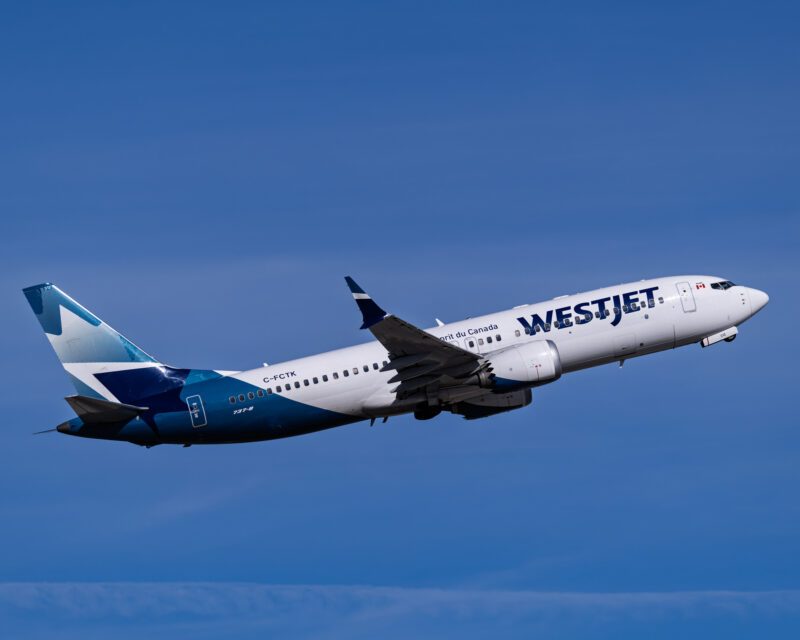
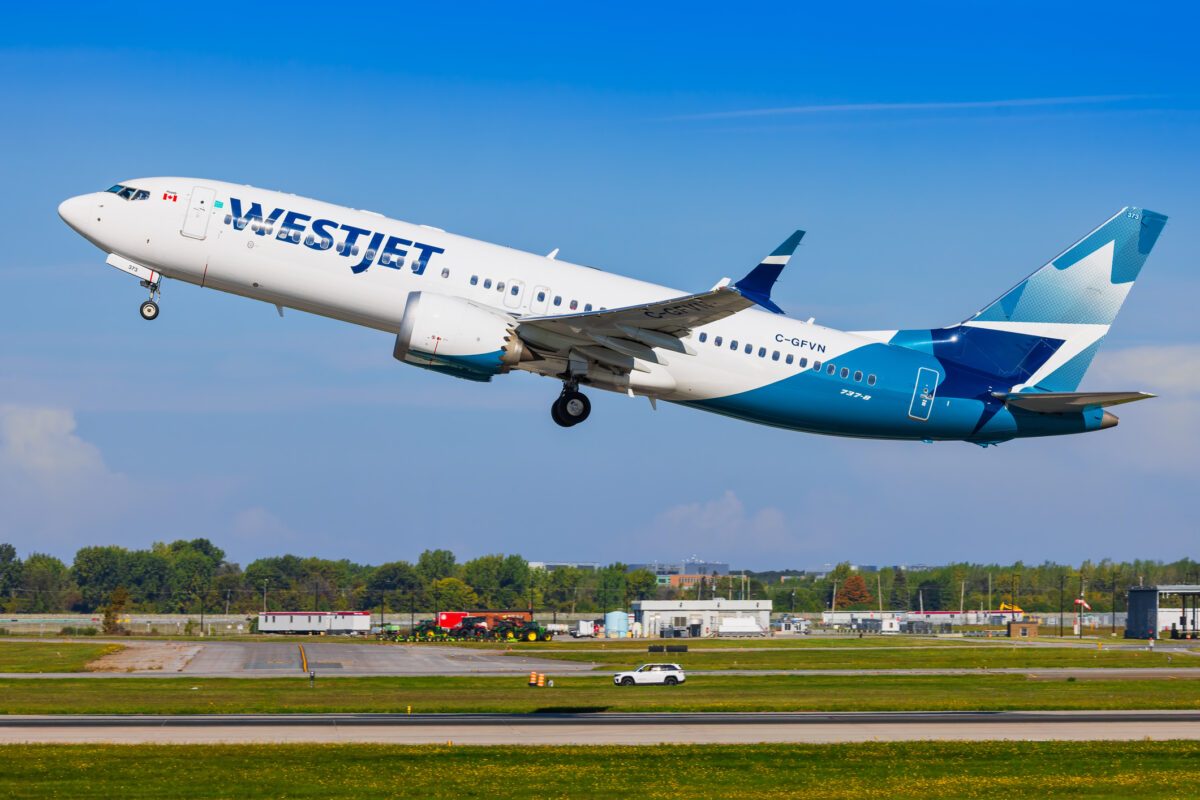
The strike affects WestJet’s mainline fleet, which includes the Boeing 737-700, Boeing 737-800, Boeing 737-8 MAX, and Boeing 787-9 Dreamliner.
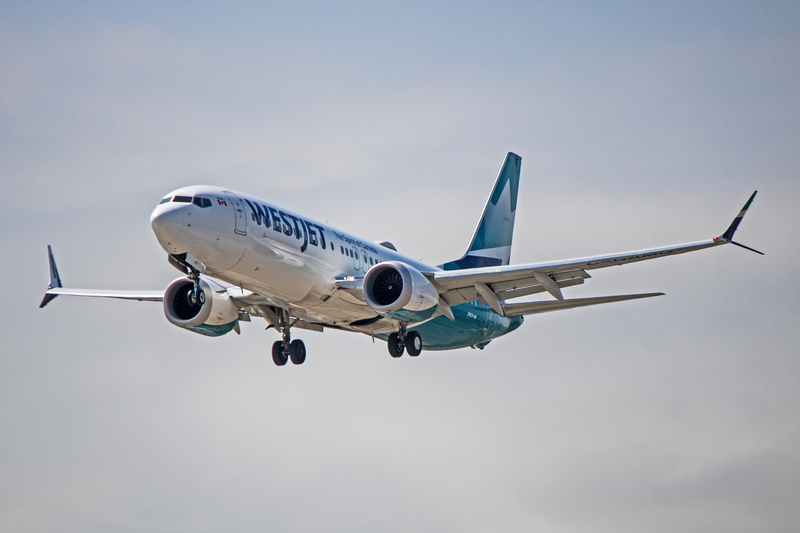
The Boeing 737 family handles most of WestJet’s domestic, transborder, Mexican, Caribbean, and Central American services. The larger Boeing 787-9 is the airline’s only widebody aircraft and operates selected long-haul routes from Canada to Europe, Asia, and other international markets.
As a result, the work stoppage reaches far beyond WestJet’s primary hub at Calgary International Airport (YYC). Flights have also been removed from major operating stations such as Vancouver International Airport (YVR), Edmonton International Airport (YEG), Toronto Pearson International Airport (YYZ), and Halifax Stanfield International Airport (YHZ).
WestJet had already begun parking aircraft and winding down the network before the strike. That process was intended to avoid leaving airplanes, crews, and passengers stranded at international destinations once cabin crew became unavailable. The airline described the action as an organized reduction of its operation rather than an abrupt grounding.
Although headlines may describe every WestJet 737 and 787 as “grounded,” some non-revenue maintenance, positioning, or recovery movements may still occur. The suspension specifically prevents WestJet from operating its normal scheduled passenger network with those aircraft.
WestJet Cuts 10 U.S. Routes From Winter 2026/27 Schedule as Vancouver Network Shrinks
Flight Attendants Are Required Safety Crew
WestJet cannot simply replace striking cabin crew with pilots, airport employees, or other company personnel.
Flight attendants are federally regulated safety professionals who must complete aircraft-specific training covering emergency evacuations, firefighting, decompression, first aid, dangerous goods, security events, and other abnormal situations.
Under the Canadian Aviation Regulations, an airline cannot operate a passenger aircraft without the minimum required number of qualified flight attendants on each deck.
That requirement explains why the absence of cabin crew brings the mainline operation to a stop even though WestJet’s pilots, maintenance employees, dispatchers, and airport teams are not part of the strike.
Flight attendants’ primary regulatory role is passenger safety. Beverage service, meals, and other customer-facing duties are only one part of the job.
WestJet Encore Flights Continue Operating
The strike does not include cabin crew at WestJet Encore, the group’s regional airline.
Encore continues operating its De Havilland Canada Dash 8-400 turboprops. Those flights serve regional and shorter-distance markets across Canada and may continue using WestJet flight numbers and branding despite the mainline shutdown.
Partner-operated codeshare flights also remain eligible to operate. For example, a ticket sold by WestJet but flown by another airline may still depart if the operating carrier’s employees are not involved in the dispute. WestJet confirmed before the strike that Encore and partner-operated codeshare services would be unaffected.
Passengers should check the “operated by” line in their reservation rather than relying only on the WS flight number. A WestJet-marketed itinerary may include an unaffected partner flight, a canceled WestJet-operated segment, or both.
More Than 600 Flights Have Been Canceled
WestJet began canceling flights before the legal strike deadline as it gradually returned aircraft to suitable parking locations and reduced the risk of crews timing out away from their bases.
The airline initially canceled 86 flights on Saturday. By Sunday morning, aviation analytics data showed 615 cancellations scheduled through Tuesday, while WestJet estimated that approximately 250,000 passengers had already lost their original travel plans.
The strike is particularly disruptive because it began during the August long weekend, when flights across Canada and to popular international vacation destinations were already heavily booked.
Reaccommodating passengers is difficult even when another airline serves the same route. Competing carriers may have few empty seats during peak summer travel, particularly for families seeking to remain together or travelers trying to return from smaller airports and seasonal destinations.
Long-haul passengers face an additional challenge. Replacing a canceled nonstop Boeing 787-9 flight may require an indirect itinerary through another Canadian, American, or European hub.
WestJet Is Offering Rebooking or Refunds
WestJet says passengers whose flights are canceled will be notified by email or text message using the contact details attached to their booking.
The airline will attempt to place affected customers on the next available flight, including services operated by other airlines. Travelers can also request a refund to their original form of payment through WestJet’s Manage Trips system.
Customers who purchased tickets through a travel agency, another airline, or a third-party booking website may need to request the final refund through the original seller.
WestJet has advised passengers not to travel to the airport after a cancellation unless they have received a confirmed replacement itinerary. Travelers booked through August 6 who have not yet been canceled can make a one-time change or cancellation without an additional fee under the airline’s temporary flexibility policy.
WestJet Vacations and Sunwing Vacations customers may face additional complications because their booking can include hotels, transfers, cruises, or other services alongside the canceled flight. Those passengers are being directed to their vacation-package provider for revised arrangements.
Ground Pay Is at the Center of the Dispute
One of the largest disagreements involves how flight attendants are compensated for duties performed before departure and after arrival.
CUPE wants members paid from the time they report for duty until they are released at the end of the workday. The union argues that cabin crew perform safety checks, prepare emergency equipment, assist passengers during boarding, manage baggage issues, and work through ground delays without receiving their full hourly rate for all of that time.
The union has characterized the issue as unpaid work and says flight attendants can perform dozens of uncompensated duty hours during a month.
WestJet disputes that description. The airline says flight attendants are compensated through a credit-hour system that incorporates duty periods, minimum guarantees, scheduled flight time, and other contractual payments rather than paying a conventional hourly wage for every minute on duty.
The disagreement is therefore not simply about whether flight attendants receive a paycheck. It concerns whether the current formula adequately values boarding, delays, airport standby, and work performed when the aircraft is not moving.
CUPE said the strike also involves a broader set of contract issues and should not be reduced solely to ground pay. The union said it remained prepared to return to negotiations but believed WestJet’s final proposal did not go far enough after nearly 11 months of bargaining.
WestJet Publicized Its Final Offer
After the strike began, WestJet released details of the proposal it said had been presented to CUPE.
The airline said its offer included a 13% wage increase effective October 1, 2026, followed by 2.5% annual increases in 2027, 2028, and 2029. Retroactive wage payments would have applied from January 1, 2026.
WestJet also proposed a new duty-pay premium covering hours worked before and after flights. The airline estimated that provision would be equivalent to an additional 12% increase in compensation.
Other proposed changes included higher per diem payments, an annual healthcare spending account, and a fifth week of vacation for employees with at least 25 years of service. WestJet published the proposal after negotiations failed.
Those figures represent WestJet’s valuation of its offer. CUPE has not accepted the airline’s calculation that the duty premium fully resolves the ground-work issue and says the complete agreement must provide sufficient wages, scheduling protections, and working conditions.
Strong Strike Mandate Preceded the Walkout
WestJet flight attendants voted overwhelmingly to authorize strike action in July.
CUPE reported a voter turnout of 97.3%, with 99.4% of participating members supporting a strike mandate. That vote did not automatically trigger a work stoppage, but it gave the union leadership the authority to proceed once the required cooling-off and notice periods had passed.
CUPE issued its formal 72-hour strike notice on July 30. WestJet responded with a lockout notice, giving both sides the legal ability to begin a work stoppage at the end of the notice period.
Negotiations continued until shortly before the deadline, but no agreement was reached.
Ottawa Has Not Yet Ordered an End to the Strike
Canadian Jobs Minister Patty Hajdu called the breakdown in negotiations disappointing and urged both sides to reach an agreement at the bargaining table.
As of early August 3, the federal government had not announced binding arbitration or issued a return-to-work order in the WestJet dispute.
The possibility of government intervention remains closely watched because Ottawa acted during the Air Canada flight attendant strike in August 2025. That dispute also focused heavily on compensation for work performed while aircraft were on the ground.
CUPE has specifically asked the government not to interfere and to allow the collective bargaining process to continue.
Flights Will Not Resume Immediately After an Agreement
Even if WestJet and CUPE reach a tentative agreement, the airline will not be able to restore its entire schedule instantly.
Aircraft have been parked at different airports, while pilots, cabin crew, maintenance employees, and ground teams will need to be assigned to new rotations. International aircraft may need to be repositioned, and some airplanes could require maintenance inspections before returning to passenger service.
WestJet must also rebuild crew pairings, update flight plans, recall airport employees, reopen check-in systems, and decide which services should operate first. At the same time, it will be attempting to transport passengers whose original flights were canceled.
A restart would therefore likely occur in stages, with high-volume domestic and hub routes returning before the complete international schedule stabilizes. That is an operational inference based on WestJet’s organized network takedown rather than a recovery plan formally announced by the airline.
Bottom Line
WestJet’s approximately 4,400 mainline flight attendants began a strike at 12:01 a.m. Mountain Time on August 2, 2026, forcing the airline to suspend its scheduled Boeing 737 and Boeing 787 passenger operations.
At least 615 flights had been canceled through Tuesday, affecting approximately 250,000 travelers. Additional cancellations are likely if the dispute continues.
WestJet Encore’s De Havilland Dash 8-400 services remain operational, as do eligible codeshare flights operated by partner airlines. Passengers should confirm the actual operating carrier before assuming every WestJet-marketed flight has been canceled.
The dispute centers heavily on compensation for work performed during boarding, delays, and other ground duties. WestJet says its final offer included a 13% initial wage increase and a duty-pay premium worth another 12% in compensation, while CUPE says the proposal did not adequately resolve its members’ concerns.
Both parties say they are willing to return to negotiations, but no settlement or firm restart date had been announced as of early August 3. Even after an agreement, restoring WestJet’s domestic and international network will require a phased operational recovery rather than an immediate return to the full schedule.
Keep reading FlyMag
Get the Daily Brief in the morning or the Route Watch weekly recap on Fridays. Or both.