Air North Extends Toronto Service Into Winter With Boeing 737-500 Flights
Air North will continue connecting northern Canada with Toronto during the 2026/27 winter season, operating limited one-stop flights between Erik Nielsen Whitehorse International Airport (YXY), Yellowknife Airport (YZF), and Toronto Pearson International Airport (YYZ).

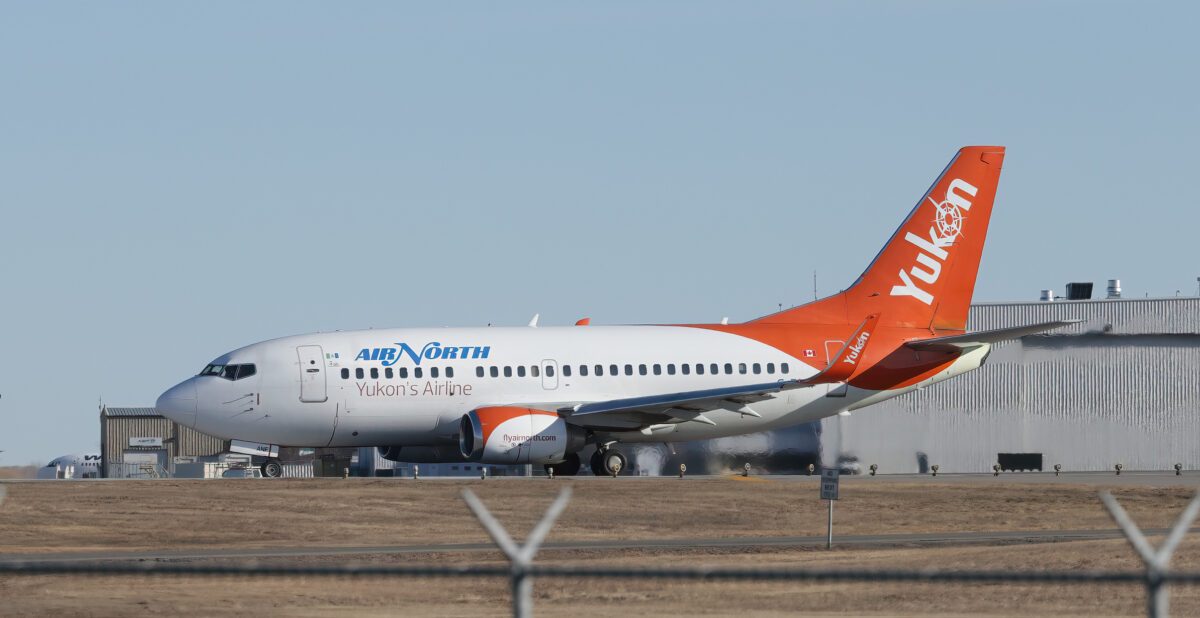
The Yukon-based carrier will offer up to three weekly flights over the Christmas and New Year travel period, followed by additional service during February and March 2027. The route will be operated with Air North’s 122-seat Boeing 737-500.
According to the airline’s latest winter schedule filing, the Toronto operation will run in several short seasonal blocks rather than continuously throughout the winter.
Read our stories in your inbox
Two aviation newsletters. Zero fluff.
Toronto Flights Focused on Peak Winter Demand
Air North has filed the following frequency pattern:
December 8–18, 2026: One weekly flight
December 19, 2026–January 5, 2027: Three weekly flights
February 9–March 13, 2027: One weekly flight
March 16–23, 2027: Two weekly flights
The three-times-weekly holiday schedule will be Air North’s highest winter frequency at Toronto Pearson Airport (YYZ). With 122 seats aboard each Boeing 737-500, the airline can offer up to 366 seats in each direction during the busiest weeks.
Because the same aircraft serves both sectors, those seats can be sold to passengers traveling between Whitehorse Airport (YXY) and Yellowknife Airport (YZF), Yellowknife Airport (YZF) and Toronto Airport (YYZ), or across the entire one-stop Whitehorse–Toronto itinerary.
Air North’s own flight schedule page summarizes Toronto service as operating from December 15, 2026, through January 6, 2027, and again from February 16 through March 24. Those dates differ slightly from the more detailed reservation filing, suggesting that the exact operating days may still be adjusted as the winter schedule is finalized.
Representative Whitehorse–Toronto Schedule
For the once-weekly period between February 9 and March 13, Air North has filed the following through schedule:

Porter Adds Austin and Levels Up Chicago to O’Hare as Toronto Flying Gets More Choice
4N823: Erik Nielsen Whitehorse International Airport (YXY) 9:00 a.m. – Toronto Pearson International Airport (YYZ) 5:40 p.m., with a 45-minute stop at Yellowknife Airport (YZF), on Tuesdays.
4N824: Toronto Pearson International Airport (YYZ) 10:00 a.m. – Erik Nielsen Whitehorse International Airport (YXY) 3:20 p.m., with a stop at Yellowknife Airport (YZF), on Wednesdays.
All times are local.
The eastbound journey is scheduled to take approximately six hours and 40 minutes from Whitehorse Airport (YXY) to Toronto Airport (YYZ), including the Yellowknife stop. The return is scheduled for approximately seven hours and 20 minutes.
The detailed return line published in the schedule filing contains an apparent one-hour inconsistency in its Yellowknife Airport (YZF) timing. The overall Toronto–Whitehorse departure and arrival times match Air North’s established 4N824 schedule pattern, but passengers should verify the intermediate times shown on their individual reservations.
A Direct Flight, but Not a Nonstop Flight
Air North markets the service as a direct connection between Whitehorse Airport (YXY), Yellowknife Airport (YZF), and Toronto Pearson Airport (YYZ).
For passengers traveling between Whitehorse and Toronto, however, the flight is not nonstop. The aircraft lands at Yellowknife Airport (YZF), where additional passengers can board and others can leave before the same flight continues east.
The distinction matters because “direct” means the journey retains the same flight number and generally uses the same aircraft. A nonstop flight would travel between Whitehorse Airport (YXY) and Toronto Airport (YYZ) without landing along the way.
Passengers traveling between Yellowknife Airport (YZF) and Toronto Pearson Airport (YYZ) receive a conventional nonstop service.
The triangle-style operation allows Air North to combine demand from Yukon and the Northwest Territories on one aircraft. That makes a long eastern Canada route more practical than operating separate low-frequency flights from Whitehorse and Yellowknife.
Boeing 737-500 Matches the Limited Winter Schedule
Air North will use the Boeing 737-500 rather than one of its larger Boeing 737-800s on the winter Toronto flights.
The airline operates four Boeing 737-500s, each configured with 122 economy seats. Air North lists a maximum range of 3,500 miles, a cruise speed of 495 mph, and a maximum altitude of 37,000 feet for the type. The aircraft are powered by two CFM International CFM56-3C1 engines.
The 737-500 is a member of Boeing’s second-generation 737 Classic family. It has the same basic fuselage cross-section as other 737 models but is considerably shorter than the Boeing 737-800.
Air North’s Boeing 737-800s carry 174 passengers, 52 more than the 737-500. Using the smaller aircraft allows the airline to maintain the Toronto connection during narrow periods of winter demand without placing substantially more capacity into the market. That capacity-matching explanation is an inference; Air North has not publicly stated why the 737-500 was selected.
Both individual sectors are comfortably within the aircraft’s published range. The longer Yellowknife Airport (YZF)–Toronto Pearson Airport (YYZ) leg covers approximately 1,900 miles, while Whitehorse Airport (YXY)–Yellowknife Airport (YZF) is approximately 690 miles.
Toronto Route Dates Back to 2022
Air North launched its first scheduled Whitehorse–Yellowknife–Toronto service in May 2022.
Flight 4N823’s inaugural arrival at Toronto Pearson Airport (YYZ) marked the first scheduled direct air service linking Toronto with both Whitehorse and Yellowknife. The original route operated twice weekly from May through September and was introduced primarily as a summer seasonal service.
Air North later began adding selected Christmas, New Year, and late-winter flights. The 2026/27 schedule continues that pattern, concentrating capacity around periods when demand is likely to be supported by holiday travel, family visits, winter tourism, school breaks, and movement between northern communities and southern Canada.
The service also provides Yukon and Northwest Territories residents with access to Canada’s largest air transportation market. Toronto Pearson Airport (YYZ) offers extensive domestic and international connectivity, although passengers connecting to another airline may need separate tickets unless an interline arrangement applies to their itinerary.
Yellowknife Stop Strengthens the Route
The Yellowknife Airport (YZF) stop is central to the route’s economics and wider value.
Passengers in Yellowknife gain a nonstop link to Toronto Pearson Airport (YYZ), while Whitehorse travelers receive a same-aircraft service without needing to connect through Vancouver International Airport (YVR), Calgary International Airport (YYC), or Edmonton International Airport (YEG).
The route also provides direct air connectivity between Whitehorse Airport (YXY) and Yellowknife Airport (YZF), linking the capitals of Yukon and the Northwest Territories.
Air North plans to operate Whitehorse–Yellowknife service as often as six times weekly year-round beginning in December 2026. That broader schedule should provide more travel options between the two territories, although only selected flights will continue to Toronto Airport (YYZ).
Air North Offers More Than a Typical Economy Fare
Although the Toronto route uses an all-economy Boeing 737-500, Air North’s onboard and baggage policies differ from those of many larger Canadian airlines.
The carrier includes two checked bags with its published fare classes, along with light meals, beverages, and snacks. Air North is also known for serving complimentary freshly prepared food and warm cookies on many flights.
Those inclusions can be particularly valuable on northern itineraries, where passengers may be traveling with winter clothing, sports equipment, supplies, or baggage for extended stays.
Air North is based in Whitehorse and is entirely Yukon-owned. The Vuntut Gwitchin First Nation holds a 49% ownership interest in the airline, which also operates cargo and charter services supporting communities and businesses across northern Canada.
Bottom Line
Air North will continue serving Toronto Pearson International Airport (YYZ) during selected periods of the Northern Winter 2026/27 season.
The airline will operate one-stop Boeing 737-500 flights from Erik Nielsen Whitehorse International Airport (YXY) through Yellowknife Airport (YZF), with frequencies ranging from one to three weekly.
Service will peak at three weekly flights during the Christmas and New Year period, providing up to 366 seats in each direction. Additional flights will operate during February and March 2027.
The route gives Yellowknife Airport (YZF) a nonstop connection to Toronto and provides Whitehorse Airport (YXY) with a direct, same-aircraft service through Yellowknife. Air North’s smaller 122-seat Boeing 737-500 also allows the carrier to maintain the strategically important link without committing the capacity of its larger 174-seat 737-800.
Exact operating dates differ slightly between Air North’s public schedule page and the latest reservation filing. Travelers should therefore confirm their specific departure date and Yellowknife stop time before booking connecting arrangements.
Keep reading FlyMag
Get the Daily Brief in the morning or the Route Watch weekly recap on Fridays. Or both.